Enzyme Exfoliant: The Gentlest Way to Exfoliate, and What It Can't Reach
How papain and bromelain loosen dead skin without acid, why water controls the whole reaction, and where the ceiling sits
The appeal of an enzyme exfoliant is easy to understand. You want the smoother surface that exfoliation delivers, you have been burned by an acid that stung for twenty minutes, and here is a product built from fruit proteins that promises to dissolve dead cells without any of that.
The promise is largely true. The interesting part is why it is true, because the same chemistry that makes enzymes gentle also puts a hard ceiling on what they can accomplish.
Your skin already does this with enzymes
Shedding is not passive. Cells in the outermost layer are riveted together by structures called corneodesmosomes, protein clasps that hold neighbouring cells in place. For a cell to release and flake away invisibly, those clasps have to be cut.
Your skin cuts them with its own proteases. Two enzymes in the kallikrein family, KLK5 and KLK7, degrade the specific proteins that make up corneodesmosomes, and that degradation is what allows orderly, invisible shedding [1]. Every day, quietly, this is running.
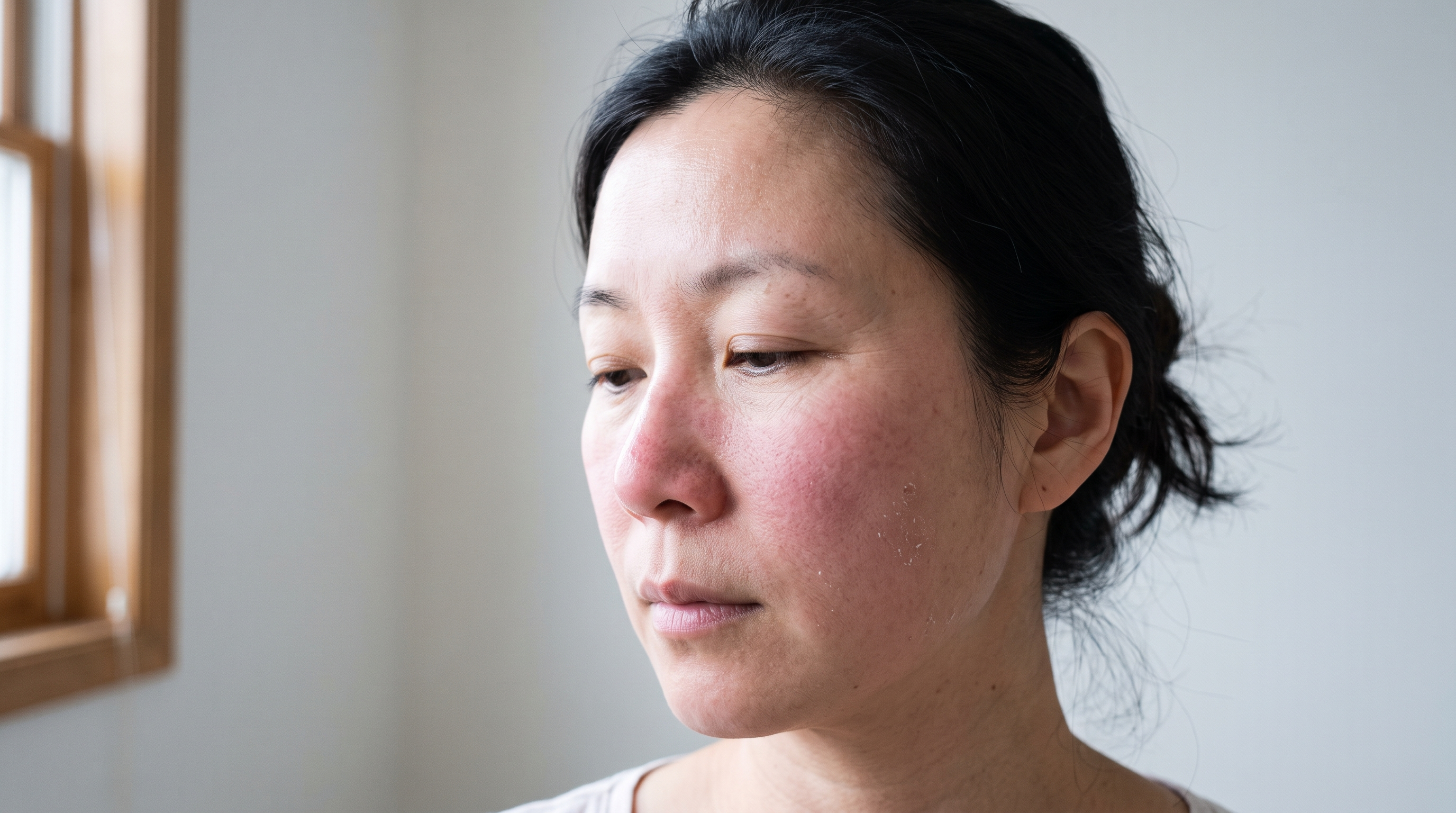
It also slows down. Measurements comparing desquamation rate across age groups show that older skin sheds more slowly than younger skin [2]. The cells linger, they pile up unevenly, and the surface starts to scatter light instead of reflecting it. That is a large part of what people are describing when they say their skin looks dull or rough rather than wrinkled.
An enzyme exfoliant is, in the most literal sense, topping up a process your own biology has begun to under-perform.
You cannot dose-escalate an enzyme the way you can escalate an acid from 5% to 10% glycolic.
What papain and bromelain actually do
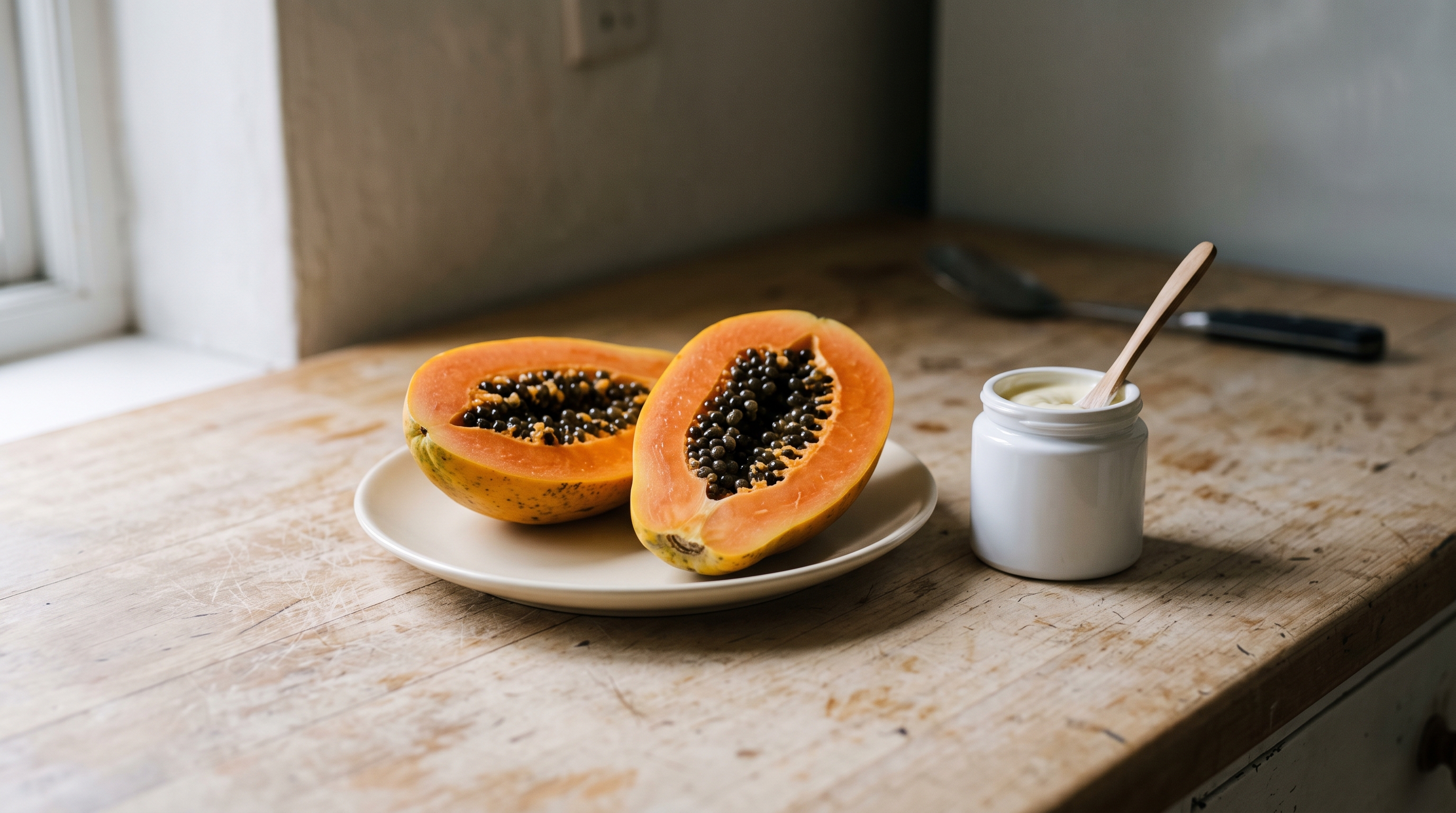
The two workhorses are papain, from papaya, and bromelain, from pineapple. Both are proteolytic enzymes, meaning they cleave peptide bonds in proteins. Applied to the skin surface, they hydrolyse the protein bonds holding loosened dead cells to one another, which lets those cells release [3].
Note the precision of that. An acid works by chemistry, lowering pH and weakening cohesion broadly across the surface. An enzyme works by shape, docking onto a particular kind of bond and cutting it. Anything the enzyme’s active site does not fit, it leaves alone. That specificity is the entire source of the gentleness, and it is also the source of the limitation.
The water rule nobody mentions
Here is the single most practical thing to know, and it explains a great deal of disappointing experience with these products.
Proteases need water. Not as a nice-to-have, but as a requirement of the reaction itself, since hydrolysis consumes a water molecule at every bond it breaks. Work on the skin’s own chymotryptic enzyme demonstrated exactly this dependence: activity and the resulting desquamation are governed by the water content of the tissue [4].
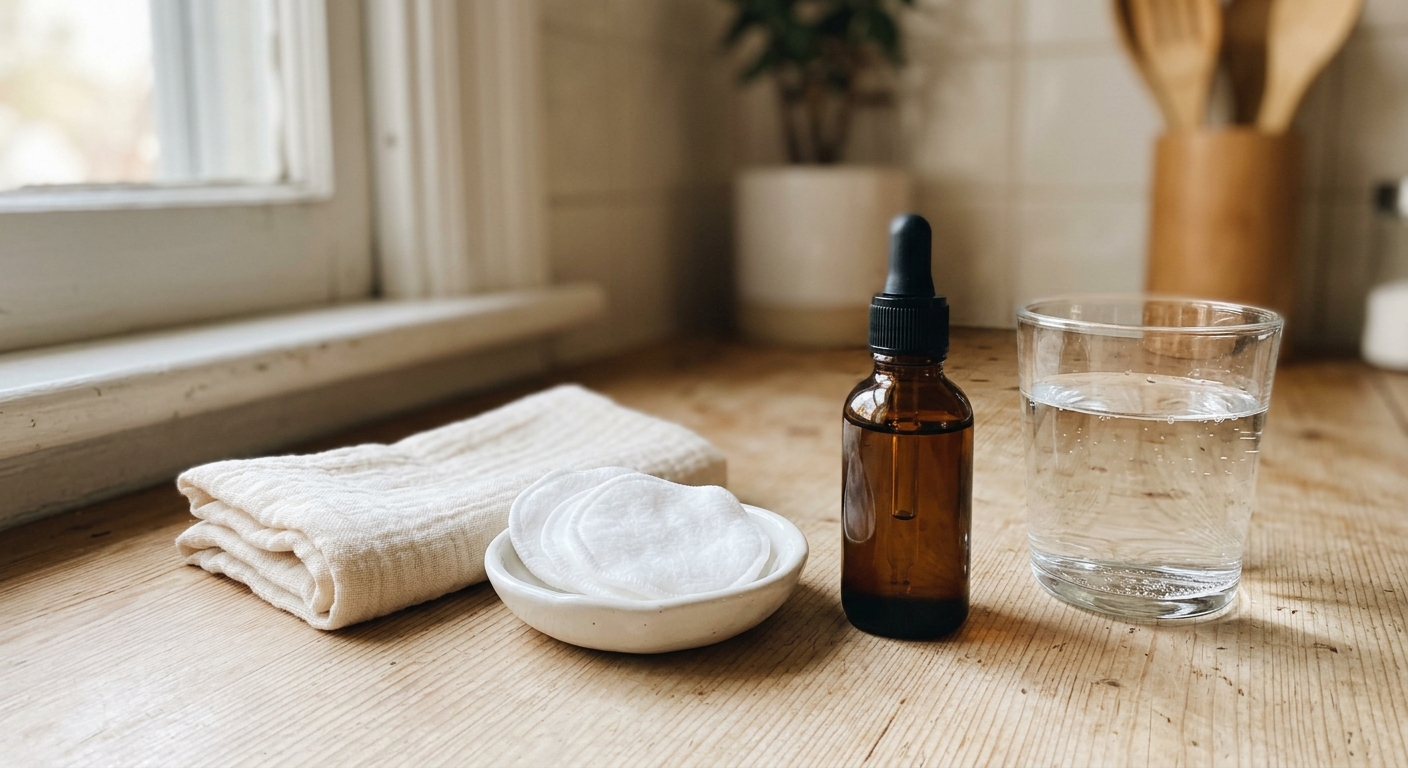
This is why a rice enzyme powder does absolutely nothing sitting in its jar and nothing in your dry palm. It activates when you wet it, and it stays active only while that water is present. It is also why an enzyme mask that has dried to a tight film on your face stopped working several minutes before you rinsed it off.
Which leads to the second practical consequence. You cannot dose-escalate an enzyme the way you can escalate an acid from 5% to 10% glycolic. The enzyme is limited by its substrate, by the surrounding moisture, and by its own rapid loss of stability on skin. Applying it to damp skin, keeping it damp, and rinsing before it dries extracts most of the available benefit. Doubling the contact time does not.
Nanoretinol takes the opposite route, encapsulating retinol in biomimetic lipid nanoparticles that the skin reads as self and admits without damage.
The one real safety caveat
Gentle is not the same as inert. Papain is a documented sensitiser, well characterised in occupational settings where repeated exposure produced genuine allergic responses confirmed by skin testing and provocation [5]. Sensitisation is a different mechanism from irritation, and it is one you develop through repetition rather than notice on first use.
For most people using a rinse-off enzyme product twice a week this is a small risk, and it is far smaller than the irritation risk from an aggressive acid. But if you have reacted to a fruit enzyme product before, the correct response is to stop rather than to persist and hope your skin adapts.
Enzyme versus acid, decided properly
Alpha hydroxy acids do something structurally comparable at the surface. Ultrastructural work on glycolic acid shows it selectively weakens cell cohesion in the outer stratum corneum without disorganising the deeper barrier [6]. On that measure, enzyme and acid are competing on similar ground, and the enzyme wins on comfort.
The separation appears when you look deeper. Glycolic acid at appropriate concentrations has been shown to increase type I collagen messenger RNA and hyaluronic acid content in human skin [7]. It is reaching past the dead layer and changing what living cells are doing. No comparable evidence exists for topical papain or bromelain, and mechanistically you would not expect it, since a large protein enzyme applied to intact skin is not crossing into the dermis.
So the decision is not which one is better. It is which problem you have. If you want comfort, immediate smoothness, and something usable on skin that reacts to everything, the enzyme is the better tool, and it slots neatly into the framework in our guide to AHAs versus BHAs. If you want structural change, you have chosen the wrong category. Either way, frequency matters more than intensity, which is covered in how often to exfoliate.
Where the ceiling actually is
Everything above happens in a layer of cells that are already dead. Exfoliation of any kind manages the exit, and it does not touch the rate at which new cells are made or the dermal collagen that determines firmness.
Retinoids do reach that far. Tretinoin has been shown to restore collagen formation in photodamaged human skin, which is a fundamentally different order of effect from loosening cells on the way out [8]. The catch has always been tolerability, and the reason so many people end up shopping for enzyme products in the first place is that a retinoid irritated them into quitting.
That irritation is largely a delivery problem rather than an inevitable cost of the molecule. Conventional retinol struggles to cross the epithelial barrier, so formulations lean on solvents that disrupt the barrier to force passage, and the burning and peeling follow from the disruption. Nanoretinol takes the opposite route, encapsulating retinol in biomimetic lipid nanoparticles that the skin reads as self and admits without damage. North Biomedical’s clinical study recorded 232% greater collagen recovery and 73% greater elastin recovery than conventional retinol, alongside markedly reduced cytotoxicity, which is what allows a stabilised 0.2% to be used continuously rather than abandoned in week three.
Using one well
Treat an enzyme exfoliant as a surface finisher and it will not disappoint you. Apply it to damp skin, rinse it before it dries, run it twice a week rather than nightly, and stop if you ever see a reaction that looks allergic rather than merely pink. Then judge it on the thing it genuinely delivers, which is a smoother, more even surface on skin that could not tolerate the alternative. Ask it to firm anything and it will fail, not because it is a weak product, but because you have pointed it at the wrong layer.
References
- Caubet C, Jonca N, Brattsand M, Guerrin M, Bernard D, Schmidt R, Egelrud T, Simon M, Serre G. “Degradation of Corneodesmosome Proteins by Two Serine Proteases of the Kallikrein Family, SCTE/KLK5/hK5 and SCCE/KLK7/hK7.” Journal of Investigative Dermatology. 2004;122(5):1235-1244. doi:10.1111/j.0022-202X.2004.22512.x
- Roberts D, Marks R. “The Determination of Regional and Age Variations in the Rate of Desquamation: A Comparison of Four Techniques.” Journal of Investigative Dermatology. 1980;74(1):13-16. doi:10.1111/1523-1747.ep12514568
- Venetikidou M, Lykartsi E, Adamantidi T, Prokopiou V, Ofrydopoulou A, Letsiou S, Tsoupras A. “Proteolytic Enzyme Activities of Bromelain, Ficin, and Papain from Fruit By-Products and Potential Applications in Sustainable and Functional Cosmetics for Skincare.” Applied Sciences. 2025;15(5):2637. doi:10.3390/app15052637
- Watkinson A, Harding C, Moore A, Coan P. “Water Modulation of Stratum Corneum Chymotryptic Enzyme Activity and Desquamation.” Archives of Dermatological Research. 2001;293(9):470-476. doi:10.1007/s004030100257
- Baur X, Fruhmann G. “Papain-induced Asthma: Diagnosis by Skin Test, RAST and Bronchial Provocation Test.” Clinical Allergy. 1979;9(1):75-81. doi:10.1111/j.1365-2222.1979.tb01525.x
- Fartasch M, Teal J, Menon GK. “Mode of Action of Glycolic Acid on Human Stratum Corneum: Ultrastructural and Functional Evaluation of the Epidermal Barrier.” Archives of Dermatological Research. 1997;289(7):404-409. doi:10.1007/s004030050212
- Bernstein EF, Lee J, Brown DB, Yu R, Van Scott E. “Glycolic Acid Treatment Increases Type I Collagen mRNA and Hyaluronic Acid Content of Human Skin.” Dermatologic Surgery. 2001;27(5):429-433. doi:10.1046/j.1524-4725.2001.00234.x
- Griffiths CEM, Russman AN, Majmudar G, Singer RS, Hamilton TA, Voorhees JJ. “Restoration of Collagen Formation in Photodamaged Human Skin by Tretinoin (Retinoic Acid).” New England Journal of Medicine. 1993;329(8):530-535. doi:10.1056/NEJM199308193290803