Gentle Exfoliator for Sensitive Skin: The Chemistry That Predicts Stinging
Molecular weight and pH tell you how an exfoliant will feel long before the word 'gentle' on the front does
Almost every exfoliant on the shelf says gentle. The word costs nothing to print, has no definition behind it, and is applied equally to a polyhydroxy acid lotion and to a walnut scrub. Meanwhile the people reading it are the ones who cannot afford to guess wrong.
There is a better way to predict how a product will behave, and it comes down to two measurable properties: how big the molecule is, and what pH it sits at. Both are knowable before you buy, and together they explain nearly every stinging incident people blame on their skin.
How many people this describes
When a representative phone survey of 994 American adults asked directly, 44.6% described their skin as sensitive or very sensitive [1]. Reviews of the international data put prevalence in the same broad territory, with the majority of surveyed women in most countries reporting some degree of sensitivity [2]. It is closer to a majority experience than an edge case.
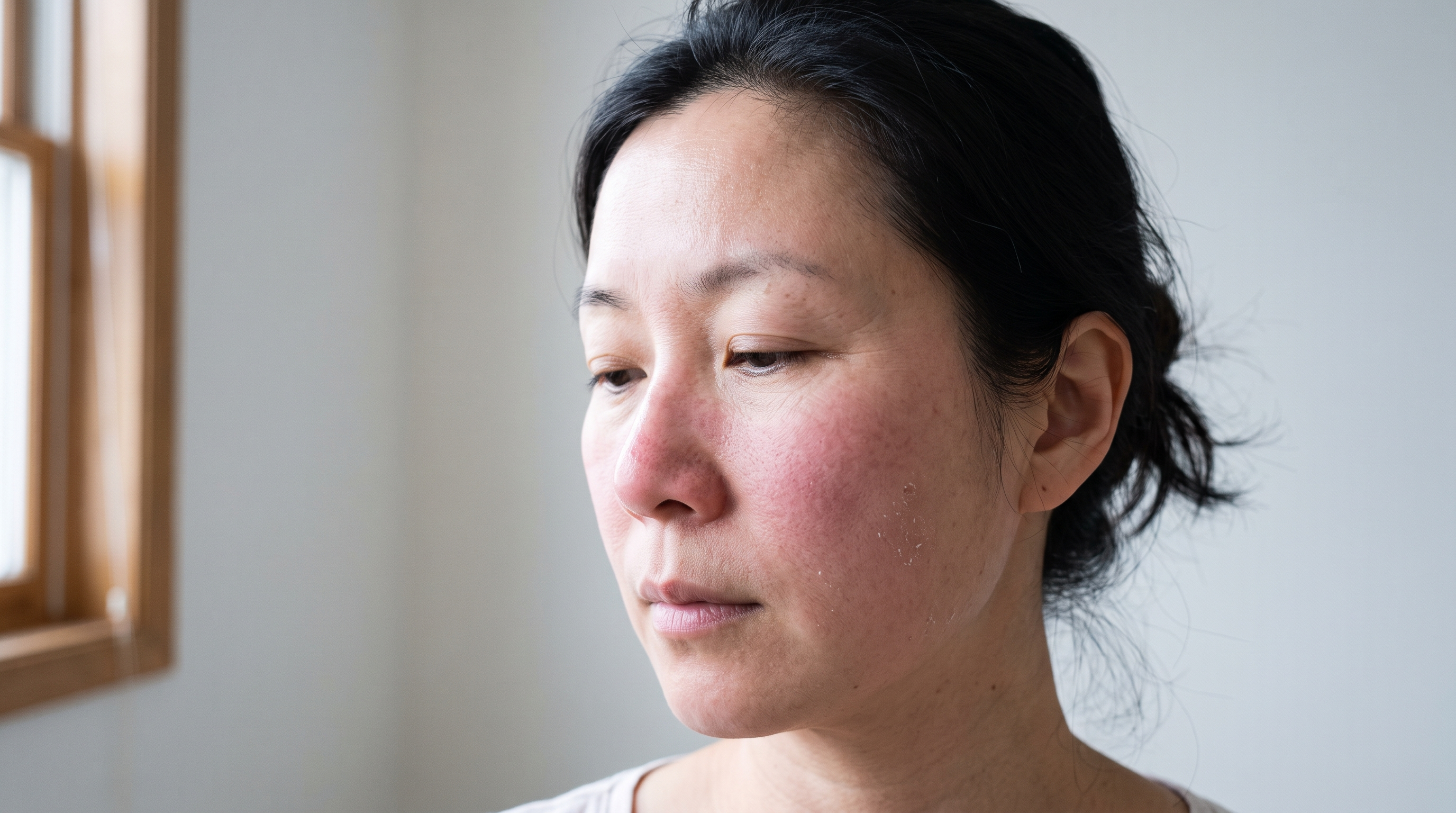
Sensitive skin is also defined by sensation rather than appearance. Stinging, burning and tightness in response to things most people tolerate are the diagnostic features, and the skin can look entirely normal while reporting all of them. That matters here because a product can leave no visible redness and still be damaging the barrier quietly.
Gentleness is mostly a size problem
Alpha hydroxy acids are small. Glycolic acid weighs about 76 g/mol, which is why it penetrates the stratum corneum quickly and why it does the most per application. Lactic acid is 90, mandelic acid 152 with a lipophilic ring that slows it further.
Polyhydroxy acids are the next generation of the same family and sit near 180 g/mol for gluconolactone, with lactobionic acid over 350. The extra bulk means slower, shallower penetration, which is the entire basis of their tolerability. The PHA literature is consistent on the result: they produce substantially less sensory irritation than classical AHAs, are compatible with clinically sensitive skin including rosacea and atopic dermatitis, and can be used after cosmetic procedures [3]. They also carry humectant and antioxidant properties that the smaller acids lack.
A polyhydroxy acid is roughly twice the size of glycolic acid, and that single fact explains most of why one stings and the other does not.
The exfoliating action itself is the same across the family. Hydroxy acids reduce the cohesion between corneocytes so the outermost layers release on their own schedule [4]. Speed of arrival is what differs, and speed of arrival is what your nerve endings are reporting.
The pH trap that makes percentages meaningless
The second variable defeats label comparison entirely. An acid works only in its free, undissociated form, and how much of it exists in that form depends on the pH of the finished product and on how much the formulator neutralised it [5]. A 10% glycolic acid buffered to pH 4.5 can deliver less free acid than a 7% version sitting at pH 3.2.
So two products with identical percentages on the front can behave nothing alike, and the more aggressive one is frequently the lower number. If a brand publishes the pH, that is a stronger signal of formulation care than any percentage.
The comparison that settles the ranking
Berardesca and colleagues did the experiment properly. Eleven subjects received four different 8% hydroxy acids, glycolic, lactic, tartaric and gluconolactone, applied twice daily for 4 weeks to randomised sites, followed by a sodium lauryl sulphate challenge patch to stress the barrier [6].
At week 4, before the challenge, the four acids looked alike on water loss and redness. The difference appeared only under stress: the gluconolactone and tartaric acid sites showed significantly lower transepidermal water loss than vehicle, untreated skin and glycolic acid at both 24 and 48 hours after the irritant, with redness reduced in parallel. The conclusion was that hydroxy acids can modulate barrier function and prevent irritation, and that the effect is not equal across the family.
Four acids at the same strength looked identical until the skin was stressed, and only then did the gentle ones separate from the harsh one.
That is exactly the scenario sensitive skin lives in. Cold weather, a fragranced detergent, one bad night of sleep, and the product that was fine last month is suddenly a problem.
How to tell whether you are actually damaging the barrier
Transepidermal water loss is the validated instrumental measure of permeability barrier status, tracking barrier integrity across human and animal models [7]. You do not have a meter at home, but the domestic proxies are reliable enough.
Water stinging on application is the clearest signal. So is skin that feels tight within a minute of cleansing, a new inability to tolerate products you used for years, and any flush that lingers past a few minutes. Those are not signs of an exfoliant working. Stop for 2 weeks, run barrier repair only, and restart at a lower frequency.
The ranking, gentlest first
Start with polyhydroxy acids, gluconolactone or lactobionic acid, which is where our PHA exfoliants for mature skin guide begins for the same reasons. Enzyme exfoliants sit alongside them, since they act on protein bonds at surface level without an acid pH at all, covered in detail in our enzyme exfoliant guide. Mandelic acid comes next, the most tolerable of the true AHAs thanks to its size. Lactic acid follows, with the side benefit of being a natural moisturising factor component. Glycolic acid is the most effective and the least forgiving, and it belongs at the end of a tolerance ladder rather than the start of one.
Physical scrubs with hard irregular particles sit outside the ranking. Their abrasion is uncontrolled and uneven, and on reactive skin there is no version of that which qualifies as gentle.
Frequency beats strength every time
Once weekly is the correct starting point for sensitive skin, moving to twice only if 4 weeks pass with nothing to report. The most common mistake is not choosing a harsh product; it is using a reasonable one too often, which is the argument made at length in how often to exfoliate your face. Patch test behind the ear or on the jaw for 3 nights, apply to dry skin rather than damp, never on the same night as a retinoid, and follow with a bland moisturiser.
Where Nanoretinol fits
Everything above concerns the surface. Exfoliation refines texture and clarity by managing dead cells, and it does not build collagen, which is the part of ageing that reactive skin usually leaves untreated because the standard tool for the job has such a reputation.
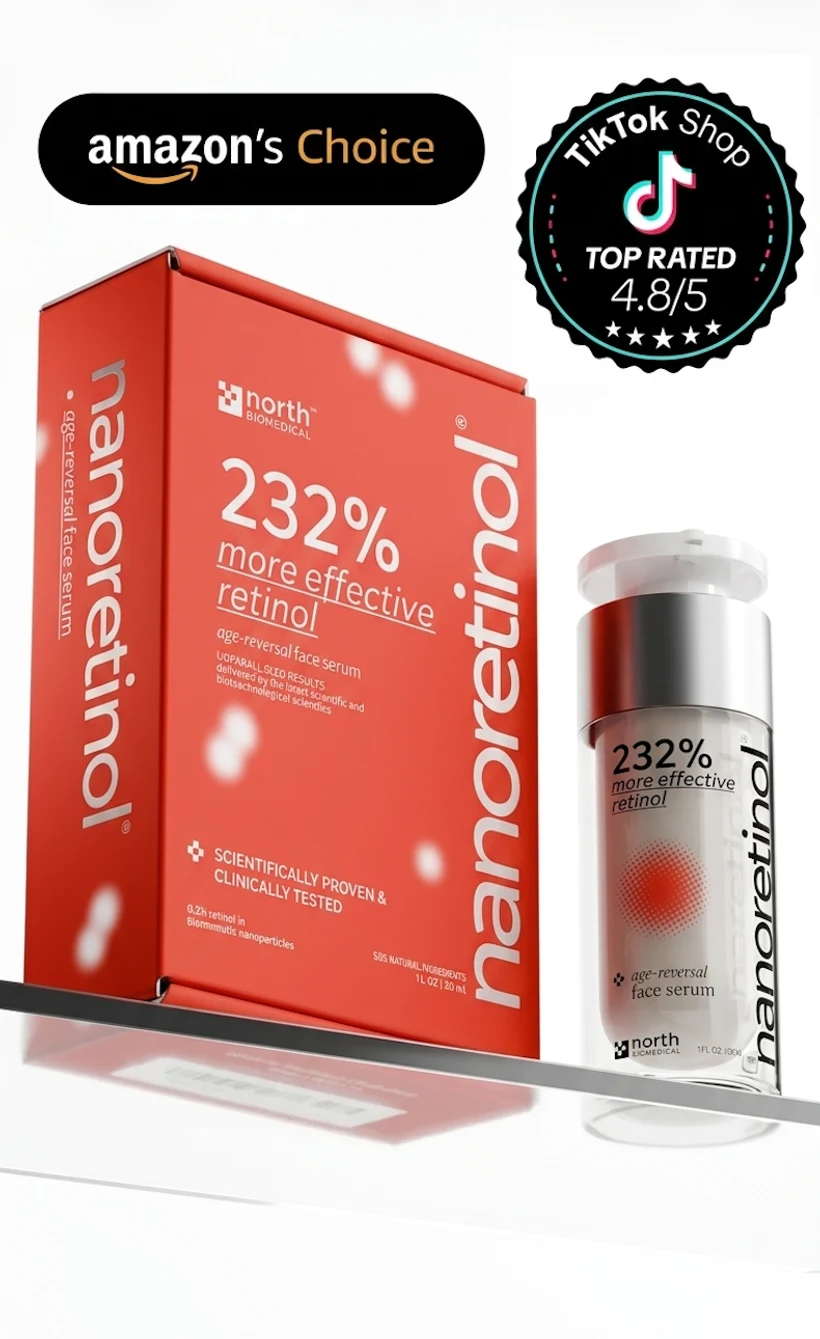
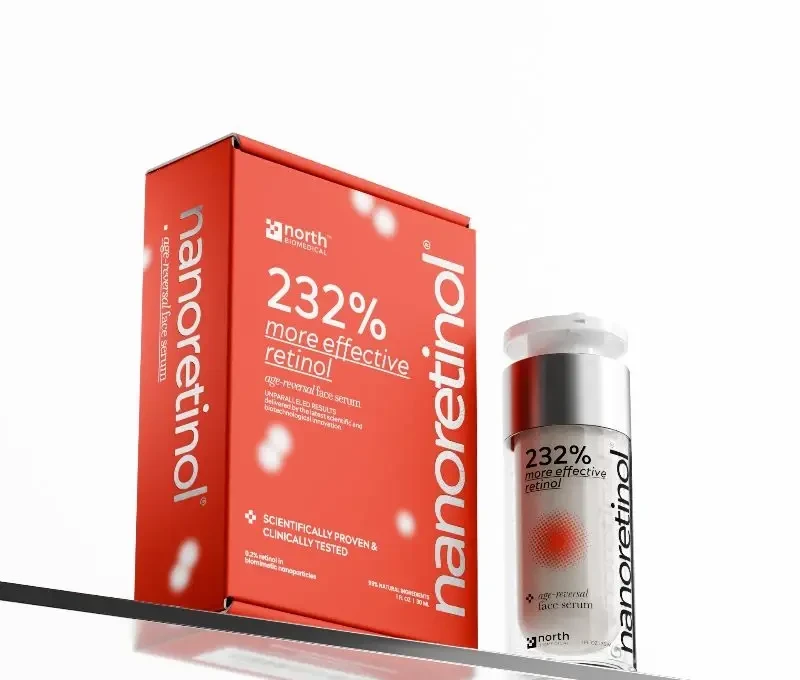
That reputation is earned by the delivery system rather than by retinol itself. Conventional formulations use solvents and petroleum-derived enhancers to push retinol through the stratum corneum by disrupting it, so irritation is built into the mechanism. Nanoretinol encapsulates stabilised 0.2% retinol in biomimetic lipid nanoparticles that the skin recognises as its own and admits intact, with no barrier disruption required. North Biomedical’s clinical study summary reports 232% greater effectiveness in collagen recovery and 73% greater in elastin recovery than conventional retinol, alongside drastically reduced cytotoxicity, in a water-based gel formulated for all skin types including sensitive. Our guide to retinol for sensitive skin covers how to introduce one without losing the fortnight.
Buying by chemistry instead of by adjective
Ignore the word gentle. Look for a polyhydroxy acid, a mandelic formulation or an enzyme, check whether the brand is confident enough to publish a pH, and start at once a week. Sensitive skin does not need weaker results. It needs a molecule that arrives slowly enough for the barrier to keep up.
References
- Misery L, Sibaud V, Merial-Kieny C, Taieb C. “Sensitive skin in the American population: prevalence, clinical data, and role of the dermatologist.” International Journal of Dermatology. 2011;50(8):961-967. doi:10.1111/j.1365-4632.2011.04884.x
- Farage MA. “The prevalence of sensitive skin.” Frontiers in Medicine. 2019;6:98. doi:10.3389/fmed.2019.00098
- Grimes PE, Green BA, Wildnauer RH, Edison BL. “The use of polyhydroxy acids (PHAs) in photoaged skin.” Cutis. 2004;73(2 Suppl):3-13. PMID: 15002656
- Green BA, Yu RJ, Van Scott EJ. “Clinical and cosmeceutical uses of hydroxyacids.” Clinics in Dermatology. 2009;27(5):495-501. doi:10.1016/j.clindermatol.2009.06.023
- Kornhauser A, Coelho SG, Hearing VJ. “Applications of hydroxy acids: classification, mechanisms, and photoactivity.” Clinical, Cosmetic and Investigational Dermatology. 2010;3:135-142. doi:10.2147/CCID.S9042
- Berardesca E, Distante F, Vignoli GP, Oresajo C, Green B. “Alpha hydroxyacids modulate stratum corneum barrier function.” British Journal of Dermatology. 1997;137(6):934-938. PMID: 9470910
- Fluhr JW, Feingold KR, Elias PM. “Transepidermal water loss reflects permeability barrier status: validation in human and rodent in vivo and ex vivo models.” Experimental Dermatology. 2006;15(7):483-492. PMID: 16761956