Facial Cupping: What the Science Actually Says It Can (and Can't) Do for Aging Skin
Those little suction cups boost circulation and reduce puffiness — but here's what the evidence says about wrinkles and firmness
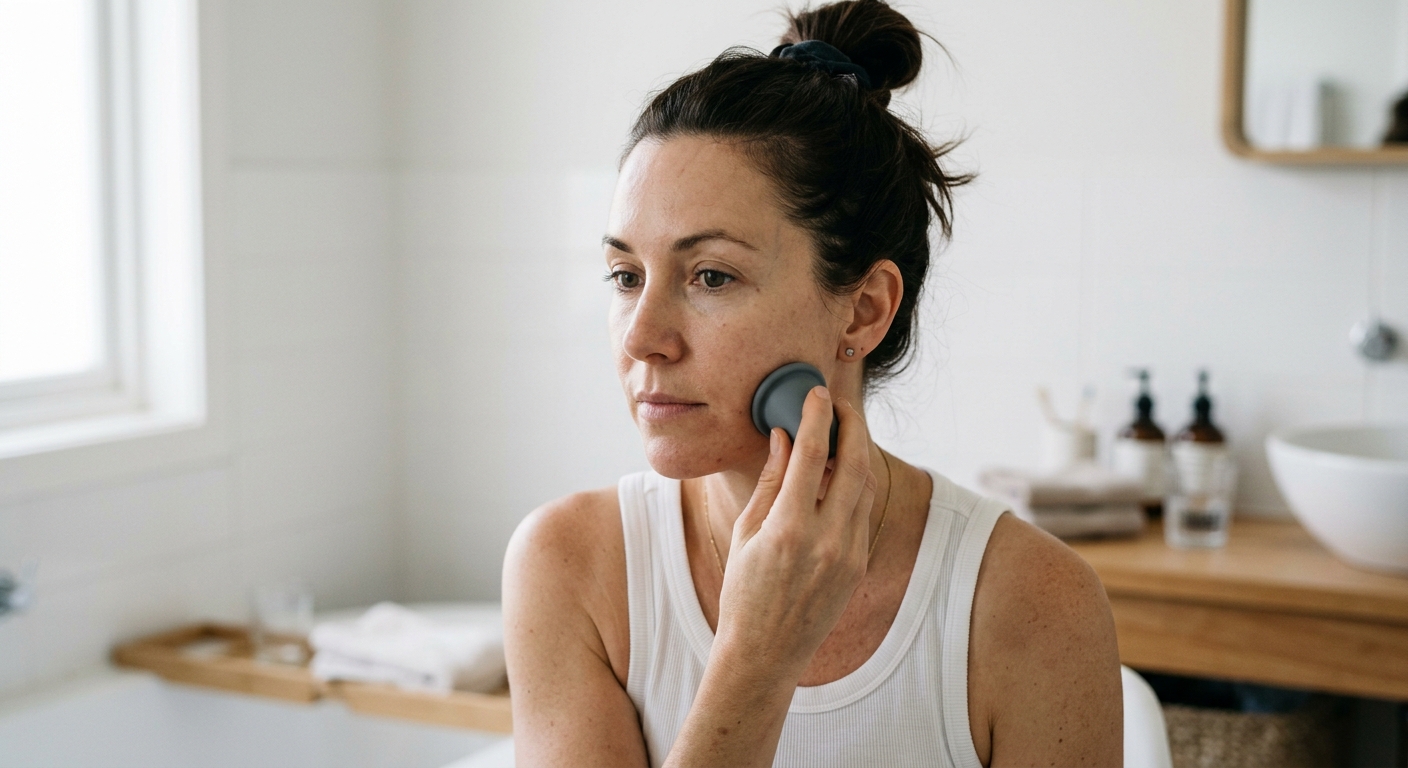
Facial cupping has traveled a long way from its origins in traditional medicine to the shelves of beauty stores, where small silicone bulbs now promise a “natural face lift” you can do at the bathroom mirror. The pitch is appealing: press a soft cup to your cheek, create a little suction, glide it along your jaw, and supposedly lift, sculpt, and smooth your face — no needles, no clinic, no recovery. Millions of people have bought a set. The real question is whether the suction does anything lasting, or whether the glow you see afterward is borrowed time.
The honest answer is that facial cupping does something measurable — just not the thing the marketing implies. Understanding the difference between a temporary effect and a structural one is the key to spending your time and money wisely.
What cupping actually does to skin
Cupping works by negative pressure. The cup creates suction that pulls the skin and the tissue just beneath it upward, which sharply increases local blood flow. This isn’t folklore — it’s been measured. In a controlled study using laser monitoring, researchers found that cupping pressure produced large, quantifiable spikes in skin blood flow, with the strongest response at higher suction and shorter durations [1]. A separate body of research describes the core mechanism plainly: cupping’s primary effect is enhanced circulation and vasodilation in the treated area, with blood vessels widening and oxygen delivery rising [2].
A closely related technique, gua sha, shows the same pattern. When researchers measured the skin after gua sha, microcirculation jumped roughly fourfold immediately afterward and stayed elevated for about 25 minutes [3]. Cupping and gua sha are, physiologically, cousins: both flood the surface with blood.
Understanding the difference between a temporary effect and a structural one is the key to spending your time and money wisely.
That rush of circulation is exactly why your face looks brighter and more sculpted right after a session. More blood means a rosier flush; the suction and massage also help move lymphatic fluid, the watery fluid that pools in facial tissue overnight and creates morning puffiness. By nudging that fluid toward the lymph nodes near the jaw and neck, cupping can visibly de-puff under-eye bags and soften a bloated jawline for a few hours. For a morning when you want to look refreshed before an event, that’s a genuine, if fleeting, benefit — and it costs nothing once you own the cups.
It’s also worth being clear about what “increased circulation” does and doesn’t mean. Better blood flow delivers oxygen and nutrients to skin cells and helps clear metabolic waste, which is good for general skin health. But circulation is a maintenance process, not a construction one. It keeps the existing tissue nourished; it does not lay down new structural protein. That single distinction explains almost every realistic expectation you should have about cupping.
The catch: temporary is the operative word
Here’s where expectations need recalibrating. The vasodilation and de-puffing that cupping produces are short-lived. In the blood-flow studies, circulation normalized within roughly one to two hours of treatment. The “lift” you see is your skin briefly engorged and de-swollen — not your collagen rebuilt or your elastin restored.
And that distinction matters enormously, because wrinkles, sagging, and loss of firmness are structural problems. They come from the slow breakdown of collagen and elastin in the dermis — the deep scaffolding of the skin. No amount of suction rebuilds that scaffolding. A broad review mapping the evidence for cupping across many conditions found that the quality of supporting research is generally low and that claims tend to outrun the data [4]. There is, to date, no robust clinical trial showing that facial cupping increases collagen, reverses wrinkles, or produces lasting lifting. It moves fluid and blood; it does not remodel tissue.
The “lift” you see is your skin briefly engorged and de-swollen — not your collagen rebuilt or your elastin restored.
There’s also a real downside to overdoing it. Aggressive suction on the delicate skin of the face can rupture tiny capillaries, leaving the small bruises and broken vessels that cupping is famous for on the back. Facial skin is thin and forgiving of far less than back skin. That is the argument for keeping suction gentle and brief when you fold it into an at-home facial.
So is facial cupping worthless? No — it’s just the wrong tool for the wrong job
Think of facial cupping the way you’d think of a cold compress or a good night’s sleep: a legitimate way to make tired skin look temporarily better, supported by a real circulatory mechanism. Used gently, it can ease puffiness, add a short-term glow, and turn your skincare routine into a few relaxing minutes of self-massage. Those are fine reasons to use it. The mistake is expecting a circulation tool to do a collagen tool’s job. If you want to understand the broader category of massage-based techniques, our deep dives into gua sha, the jade roller, and face yoga cover the same evidence gap.
What actually rebuilds the structure
If your goal is to address the wrinkles and laxity that genuinely age a face, the work has to happen in the dermis — and that means stimulating fibroblasts, the cells that manufacture collagen and elastin. Topical retinoids remain the most clinically validated way to do this, because they signal those cells to produce new collagen rather than merely flushing the surface with blood. The science of how that works is covered in our article on retinol and collagen.
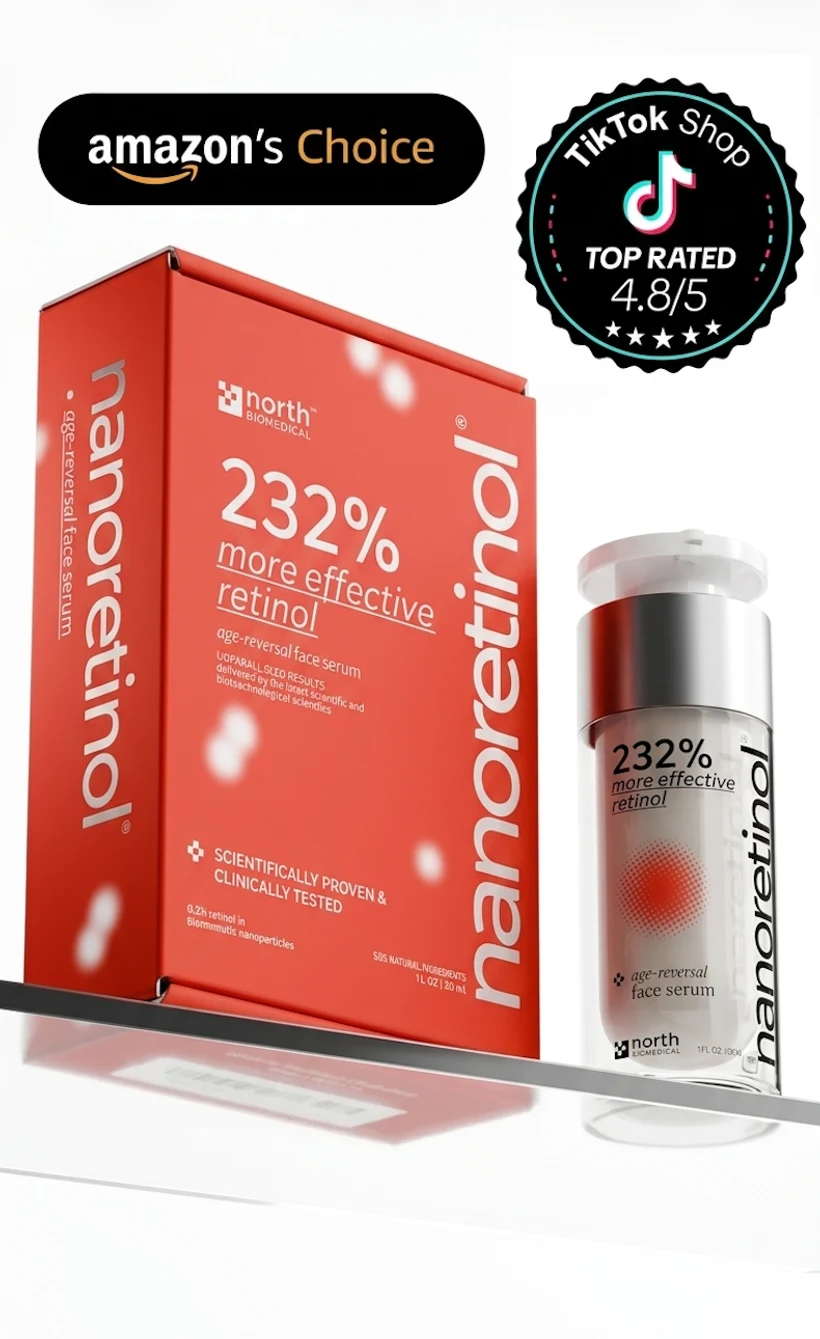
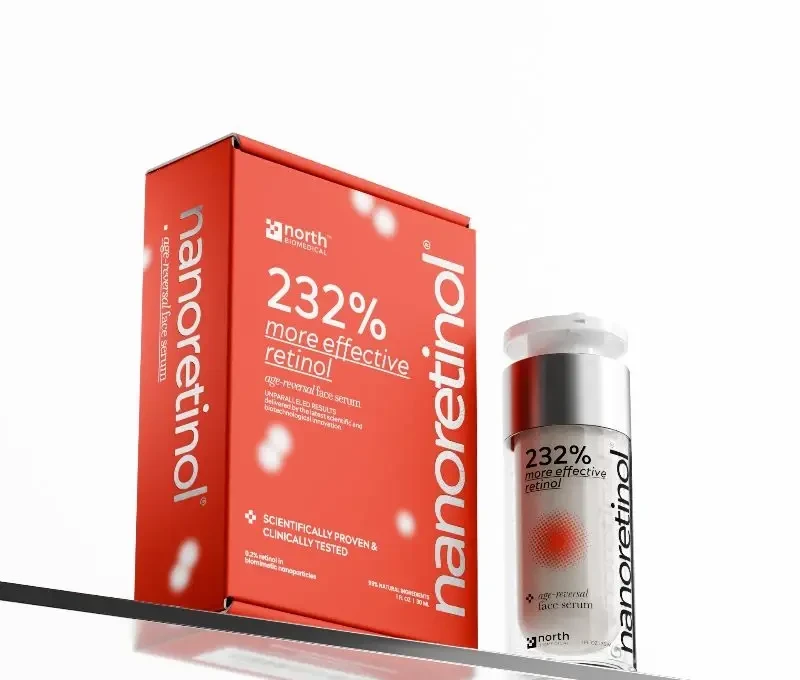
The persistent obstacle has always been getting retinol deep enough to act, since it degrades easily and struggles to cross the skin barrier. This is the problem North Biomedical engineered around with Nanoretinol, which encapsulates retinol inside biomimetic lipid nanoparticles that the skin recognizes as “self” and lets pass through the barrier intact. Delivered efficiently to the dermis, a gentle 0.2% formula proved 232% more effective at collagen recovery and 73% more effective at elastin recovery than conventional retinol in laboratory testing, and in an eight-week clinical evaluation users measured a 61% increase in firmness and a 56% increase in elasticity. Those are structural changes — the kind suction can mimic for an hour but never create.
A sensible way to think about it
There’s nothing wrong with keeping a facial cup in your routine for what it genuinely offers: a quick, pleasant boost in circulation and a temporary reduction in puffiness. Just pair it with realistic expectations. Use it gently, never on broken or irritated skin, and treat it as the equivalent of a warm-up — not the workout. For lasting firmness and fewer lines, the lifting has to come from rebuilding collagen, and that is a job for a proven active delivered where it can actually work.
References
- Wang X, Zhang X, Elliott J, Liao F, Tao J, Jan YK. “Effect of pressures and durations of cupping therapy on skin blood flow responses.” Frontiers in Bioengineering and Biotechnology. 2020;8:608509. doi:10.3389/fbioe.2020.608509
- Al-Bedah AMN, Elsubai IS, Qureshi NA, et al. “The medical perspective of cupping therapy: effects and mechanisms of action.” Journal of Traditional and Complementary Medicine. 2019;9(2):90-97. doi:10.1016/j.jtcme.2018.03.003
- Nielsen A, Knoblauch NTM, Dobos GJ, Michalsen A, Kaptchuk TJ. “The effect of Gua Sha treatment on the microcirculation of surface tissue: a pilot study in healthy subjects.” Explore (NY). 2007;3(5):456-466. PubMed: 17905355
- Choi TY, Ang L, Ku B, Jun JH, Lee MS. “Evidence map of cupping therapy.” Journal of Clinical Medicine. 2021;10(8):1750. doi:10.3390/jcm10081750