
Face Yoga Exercises: Do They Actually Work? What the Science Says
The clinical evidence behind facial exercises for anti-aging — which ones work, what to expect, and how to combine them with active skincare
Face yoga has exploded on social media — TikTok videos of women puffing their cheeks, stretching their jaws, and massaging their temples have racked up billions of views. The promise is irresistible: a natural facelift, no needles, no surgery, no cost.
But does it actually work? The answer is more nuanced than Instagram influencers suggest — and more interesting than skeptics admit.
What Is Face Yoga?
Face yoga is a series of targeted facial exercises, stretches, and massage techniques designed to strengthen and tone the 43 muscles in your face and neck. The premise is simple: just as body exercise builds and tones skeletal muscle, facial exercise should do the same for the muscles that support your skin’s structure.
The idea isn’t new — facial exercise programs have existed since at least the 1960s. But the term “face yoga” caught on in the 2010s, and the practice went viral during the pandemic as people searched for at-home anti-aging alternatives.
The Landmark Northwestern University Study
The most rigorous scientific study on facial exercises was published in JAMA Dermatology in 2018 by researchers at Northwestern University’s Feinberg School of Medicine. It remains the gold standard in this space.[1]
Study design: 27 women aged 40–65 learned 32 distinct facial exercises from certified instructor Gary Sikorski (Happy Face Yoga). They performed 30 minutes of exercises daily for the first 8 weeks, then every other day for weeks 9–20.
Key findings:
- An independent panel of dermatologists rated participants’ “after” photographs as approximately three years younger than their “before” photographs
- Significant improvement in upper cheek fullness and lower cheek fullness — two areas that lose volume with age
- Participants reported high satisfaction with results across nearly all facial features
The mechanism: Lead author Dr. Murad Alam explained that the exercises “enlarge and strengthen the facial muscles, so the face becomes firmer and more toned and shaped like a younger face.”[1]
This study is important because it used blinded physician assessment with validated rating scales (Merz-Carruthers Facial Aging Photoscales), not just participant self-reports.
Face yoga is a series of targeted facial exercises, stretches, and massage techniques designed to strengthen and tone the 43 muscles in your face and neck.
What the Muscle Science Shows
A 2025 study published in the PMC database used objective muscle measurements (Myoton®PRO device) to assess what happens to facial muscles after an 8-week face yoga program in women with a mean age of 49.75 years.[2]
Results:
- Decreased muscle tonus and stiffness in the frontalis (forehead) and corrugator supercili (between eyebrows) — the muscles responsible for frown lines and forehead wrinkles
- Improved muscle elasticity in the orbicularis oculi (around the eyes) and zygomaticus major (cheek/smile muscle)
- Statistically significant changes measured objectively, not subjectively
This matters because it shows face yoga doesn’t just look like it works in photos — it produces measurable biomechanical changes in facial tissue.
A systematic review of facial exercise research found that exercises increased skin elasticity, facial muscle thickness and cross-sectional area, and cheek fullness — though the authors noted the overall level of evidence remains low and called for larger controlled trials.[3]
Which Face Yoga Exercises Have Evidence?
Based on the Northwestern study protocol, these exercises showed the most promise:
The Cheek Lifter
Open your mouth to form an “O,” fold your upper lip over your teeth. Smile to lift cheek muscles, place fingers on the top of your cheeks, release and lower. Repeat 10 times.[1]
Target: Upper and lower cheek volume — the area where age-related volume loss is most visible.
The Forehead Smoother
Place both hands on your forehead facing inward. Spread fingers between eyebrows and hairline. Gently sweep fingers outward while trying to raise your eyebrows against resistance.
Target: Frontalis muscle tension — reduces the appearance of forehead wrinkles.
The Jaw and Neck Firmer
Tilt your head back slightly. Press your tongue to the roof of your mouth. Smile broadly. Swallow while keeping your tongue pressed. Repeat 5 times.
Target: Platysma and submental muscles — addresses jowling and neck laxity.
The Eye Firmer
Place index fingers under each eyebrow. Push up gently while trying to close your eyes. Hold for 5 seconds. Repeat 10 times.
Target: Orbicularis oculi — fights crow’s feet and upper eyelid drooping.
The time commitment is real. 16 of the original 27 participants completed the full study — a 41% dropout rate.
The Realistic Expectations
Let’s be honest about limitations:
What face yoga CAN do:
- Increase cheek fullness and facial volume (supported by clinical data)
- Improve muscle tone and reduce tension-related lines
- Boost circulation, temporarily reducing puffiness (lymphatic drainage effect)
- Provide a low-cost complement to other anti-aging strategies
What face yoga CANNOT do:
- Replace lost collagen (that requires actives like retinol or vitamin C)
- Reverse deep photodamage or sun damage
- Match the results of professional procedures like microneedling or chemical peels
- Work without consistency — the Northwestern study required 30 minutes daily or every other day for 20 weeks
The time commitment is real. 16 of the original 27 participants completed the full study — a 41% dropout rate. If 30 minutes every other day sounds unsustainable, that’s worth factoring into your decision.
Face Yoga + Active Skincare: The Combination Approach
The smartest anti-aging strategy isn’t choosing between exercise and skincare — it’s combining them. Face yoga addresses the muscular and structural layer. Active ingredients address the cellular and molecular layer.
A science-backed combination routine:
- Face yoga (20–30 min, every other day) — builds volume, improves muscle tone
- Retinol — accelerates cell turnover, stimulates collagen synthesis
- Antioxidant serum — fights oxidative damage from UV and pollution
- Sunscreen — prevents the UV damage that destroys collagen
- Hyaluronic acid — maintains hydration that plumps skin
This layered approach works because each element targets a different mechanism of aging. Face yoga handles structure. Actives handle biology.
Why Nanoretinol® Complements Face Yoga
Face yoga restores muscular volume from the inside. But the skin overlying those muscles still needs cellular-level support — collagen production, accelerated turnover, and oxidative defense.
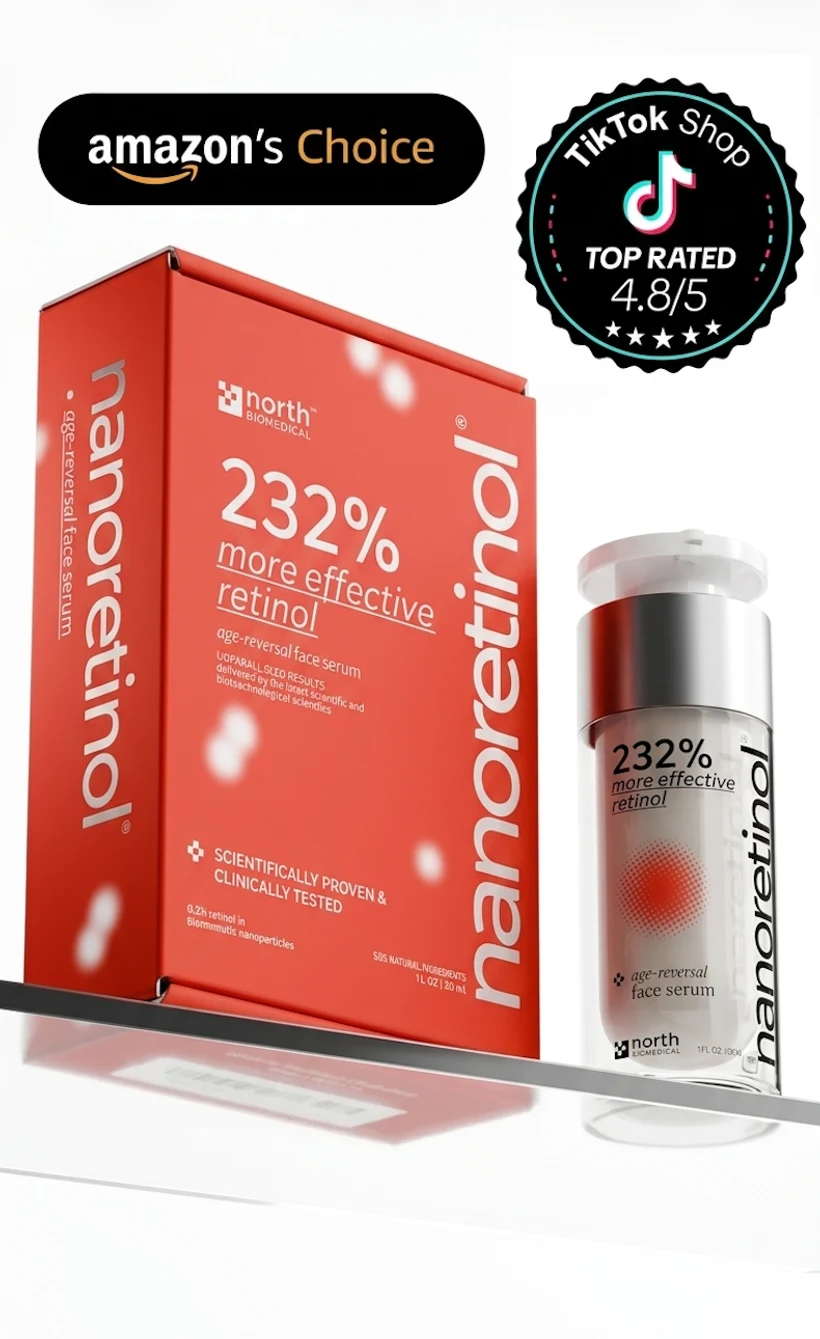
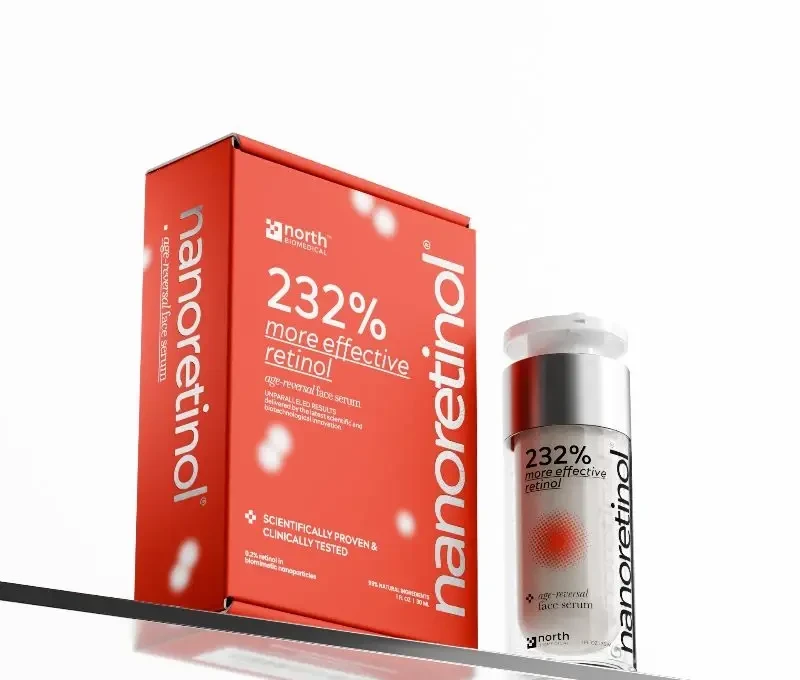
Nanoretinol® delivers retinol via lipid nanoparticle encapsulation, ensuring stable, deep penetration without the irritation that often accompanies traditional retinol. For women 40+ who are already committing 20–30 minutes to face yoga, adding a well-formulated retinol takes seconds and addresses the collagen and cellular aspects that exercise can’t reach.
The combination targets both the deep structural loss (muscle atrophy) and the surface-level changes (fine lines, texture, tone) that together create the appearance of aging.
The Bottom Line
Face yoga has legitimate scientific backing — particularly from the Northwestern JAMA Dermatology study showing measurable improvement in facial appearance and cheek fullness over 20 weeks. It’s free, non-invasive, and low-risk.
But it’s not a magic bullet. The time commitment is significant, the evidence base is still limited to small studies, and it works best as one component of a comprehensive anti-aging approach that includes proven active ingredients.
If you’re willing to put in the 30 minutes every other day, the science says you’ll likely see real results — especially in the cheeks and mid-face area where volume loss is most noticeable.
References
-
Alam M, Walter AJ, Geisler A, et al. “Association of Facial Exercise With the Appearance of Aging.” JAMA Dermatology. 2018;154(3):365-367. doi:10.1001/jamadermatol.2017.5142 — PMCID:PMC5885810
-
Soysal Tomruk M, et al. “Effect of Intensive Face Yoga on Facial Muscles Tonus, Stiffness and Elasticity in Middle-Aged Women.” Medicina. 2025;61(5). PMCID:PMC12112979
-
Hwang UJ, et al. “Effects of Facial Exercise for Facial Muscle Strengthening and Rejuvenation: A Systematic Review.” Journal of Korean Physical Therapy. 2023. Available at: kptjournal.org
-
Wysong A, Joseph T, Kim D, et al. “Quantifying soft tissue loss in facial aging: a study in women using magnetic resonance imaging.” Dermatologic Surgery. 2013;39(12):1895-1902. doi:10.1111/dsu.12362