Green Tea for Skin: What EGCG Actually Does for Aging, Wrinkles, and UV Damage
The polyphenol that protects collagen, fights free radicals, and might be the most underrated ingredient in your routine
What Makes Green Tea Different From Other Antioxidants
Every skincare brand talks about antioxidants. Few explain what makes one antioxidant meaningfully different from another. With green tea, the difference comes down to a specific molecule: epigallocatechin-3-gallate, or EGCG.
EGCG is a catechin — a type of polyphenol found almost exclusively in Camellia sinensis (the tea plant). Green tea contains four major catechins, but EGCG accounts for 50–80% of the total catechin content and carries the strongest biological activity [1]. Unlike many plant-derived antioxidants that simply neutralize individual free radicals, EGCG operates through multiple simultaneous mechanisms: it scavenges reactive oxygen species (ROS), inhibits the enzymes that break down collagen, and directly modulates inflammatory signaling pathways.
A 2019 review in Nutrients catalogued green tea’s effects on skin across 21 studies — six in vitro, nine reviews, and six controlled trials — and found consistent evidence for anti-wrinkle activity, increased cell proliferation, and reduced oxidative damage across both topical and oral applications [2].
The practical implication: green tea isn’t just another “antioxidant” checkbox ingredient. It’s a multi-pathway protector that acts on the same biological targets as dedicated anti-aging actives.
How EGCG Protects Your Skin From UV Damage
Ultraviolet radiation is the primary driver of premature skin aging. It damages skin in two ways simultaneously: directly breaking DNA strands and generating massive quantities of free radicals that degrade collagen and elastin fibers. EGCG addresses both routes.
In a controlled human study, 18 volunteers aged 21–71 applied green tea extract topically before UV exposure. Biopsy analysis showed that green tea pretreatment significantly reduced the number of sunburn cells compared to placebo [3]. A follow-up study tested concentrations ranging from 0.25% to 10% and found that even 0.5% showed measurable photoprotective activity, with 2.5% providing excellent protection.
What’s particularly notable: the whole green tea extract was more effective than any individual catechin (EGCG, EC, or EGC) used alone at the same concentration. This suggests synergistic activity between green tea’s polyphenols — the components work better together than in isolation [3].
At the molecular level, EGCG inhibits UV-induced activation of AP-1 and NF-κB — transcription factors that trigger matrix metalloproteinase (MMP) production. MMPs are the enzymes that actively degrade collagen and elastin in the dermis [1]. By suppressing this inflammatory cascade, EGCG helps preserve the structural proteins that keep skin firm, thick, and wrinkle-resistant.
Green tea contains four major catechins, but EGCG accounts for 50–80% of the total catechin content and carries the strongest biological activity.
EGCG and Collagen: The Preservation Strategy
If retinoids are the “builders” that stimulate new collagen production, EGCG is the “security guard” that protects existing collagen from destruction.
A 2023 study in Clinical, Cosmetic and Investigational Dermatology investigated EGCG’s effects on human skin fibroblasts exposed to UVA radiation. The researchers found that EGCG treatment significantly reduced MMP-1 and MMP-3 expression — the primary collagen-degrading enzymes — while increasing the expression of collagen type I and procollagen [4].
In animal models, mice fed green tea polyphenols and then subjected to UV-induced photoaging showed significantly higher hydroxyproline content (a marker of collagen density), increased catalase activity, and decreased protein carbonyl content compared to controls [3]. Aqueous green tea extract also increased the levels of both collagen and elastin fibers while reducing expression of collagen-degrading MMP-3 enzymes.
This “preservation” effect is complementary to — not a replacement for — active collagen stimulation. The most effective anti-aging strategies combine collagen builders (retinoids, peptides) with collagen protectors (antioxidants like EGCG, vitamin C, and sunscreen).
Beyond Antioxidant: EGCG’s Anti-Inflammatory Properties
Chronic low-grade inflammation — sometimes called “inflammaging” — is increasingly recognized as a driver of skin aging distinct from UV damage alone. Stress, pollution, poor diet, and even the aging process itself create a persistent inflammatory state in the dermis that accelerates collagen breakdown and impairs skin repair.
EGCG is one of the most potent natural anti-inflammatory compounds identified in dermatological research. It inhibits the NF-κB pathway, which is the master switch for inflammatory cytokine production in skin cells [5]. It also suppresses COX-2 expression and reduces prostaglandin E2 levels — the same inflammatory mediators targeted by medications like ibuprofen, but without systemic side effects.
For conditions like redness, rosacea-prone skin, and post-inflammatory hyperpigmentation, EGCG’s anti-inflammatory properties offer benefits beyond basic antioxidant activity.
Concentration matters — studies showing significant benefits typically used 2–5% green tea extract.
The Stability Problem: Why Green Tea in Your Moisturizer May Not Work
Here’s the catch: EGCG is notoriously unstable. It degrades rapidly when exposed to oxygen, light, heat, and alkaline pH — meaning the EGCG in your green tea-infused moisturizer may have lost significant potency before you ever apply it [2].
A 2024 study in the International Journal of Pharmaceutics investigated this exact problem and found that encapsulating EGCG in mesoporous silica nanoparticles dramatically improved both stability and skin penetration compared to free EGCG [6]. The encapsulated form maintained its biological activity through the stratum corneum and reached dermal fibroblasts at therapeutically relevant concentrations.
This delivery challenge mirrors what happens with retinol: the molecule works, but getting it through the skin barrier intact is the real engineering problem. Nanoparticle delivery systems — whether for EGCG or retinol — represent the direction dermatological science is heading.
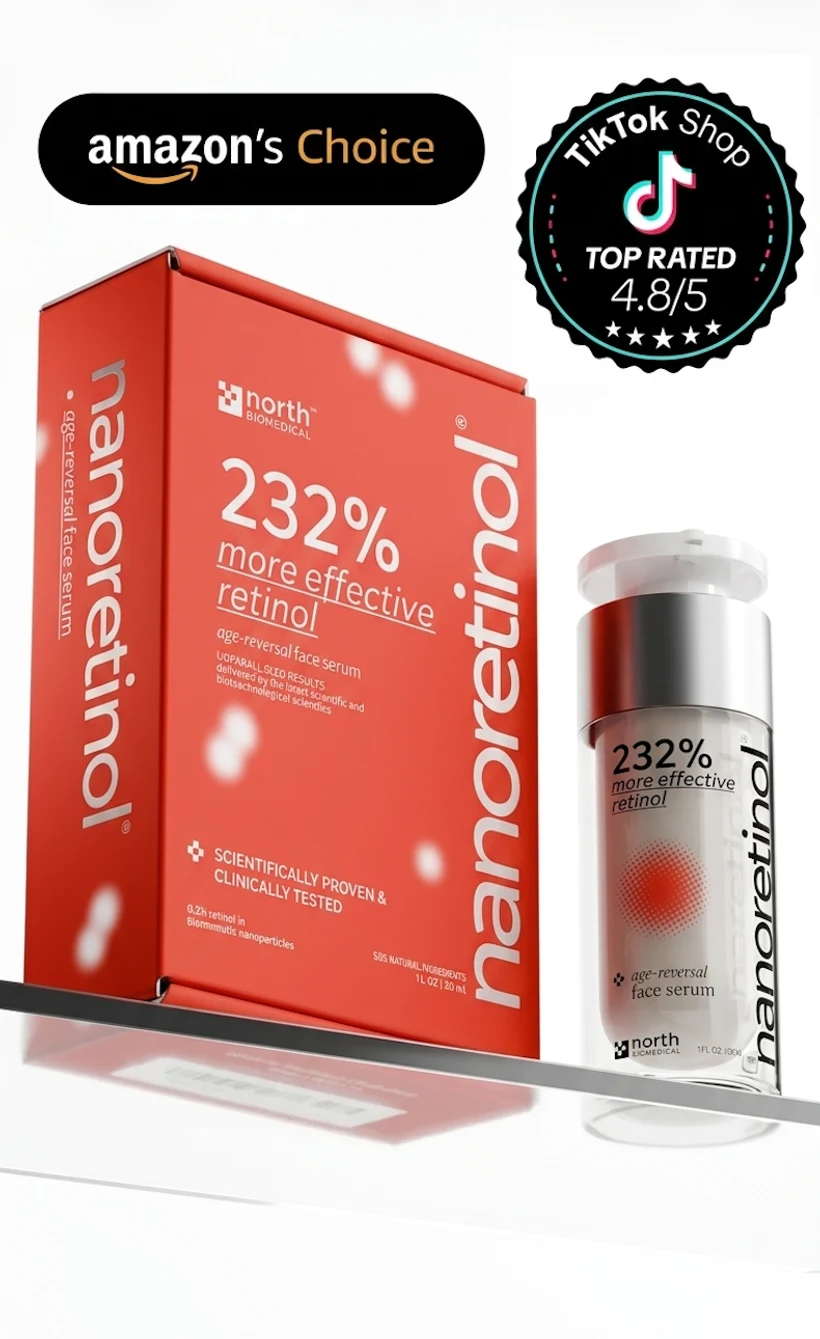
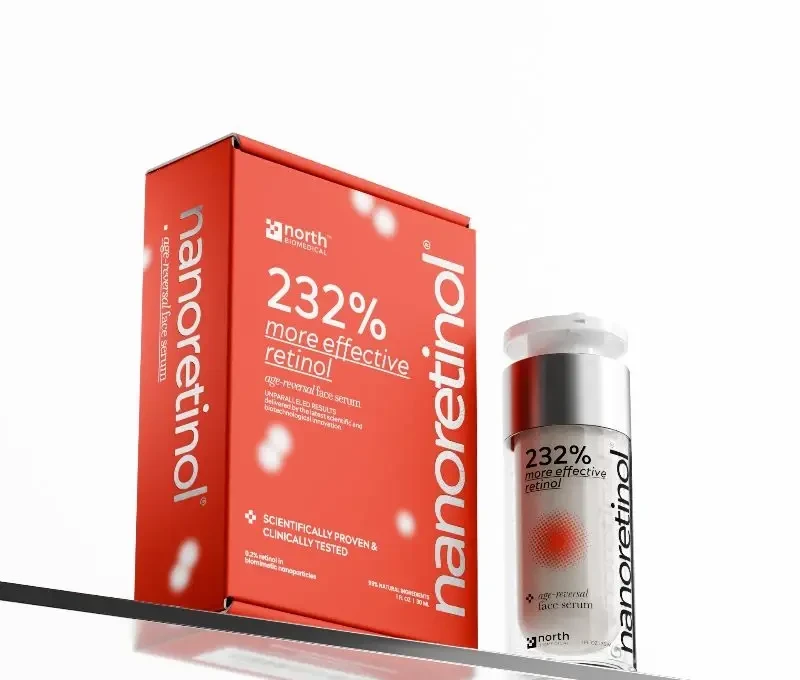
Nanoretinol® applies this same biomimetic nanoparticle technology to retinol delivery. Lipid nanoparticles that mimic cell membranes protect the retinol from degradation and ferry it directly past the skin barrier to dermal fibroblasts, achieving +232% greater collagen recovery than conventional retinol formulations [7]. The principle is identical to what EGCG researchers are now pursuing: advanced delivery for proven actives.
How to Use Green Tea in Your Skincare Routine
Topical Application
Look for serums or treatments listing EGCG, green tea extract, or Camellia sinensis extract high in the ingredient list. Concentration matters — studies showing significant benefits typically used 2–5% green tea extract [3].
Products in opaque, airless packaging preserve EGCG stability better than open jars or clear bottles. Apply green tea-based products in the morning, when their UV-protective and antioxidant properties provide the most benefit — layered under sunscreen.
Oral Consumption
Drinking green tea delivers catechins systemically. Research has confirmed that green tea catechins and their metabolites appear in plasma, blister fluid, and skin biopsy samples after oral consumption [3]. Two to four cups daily provides approximately 200–400mg of catechins.
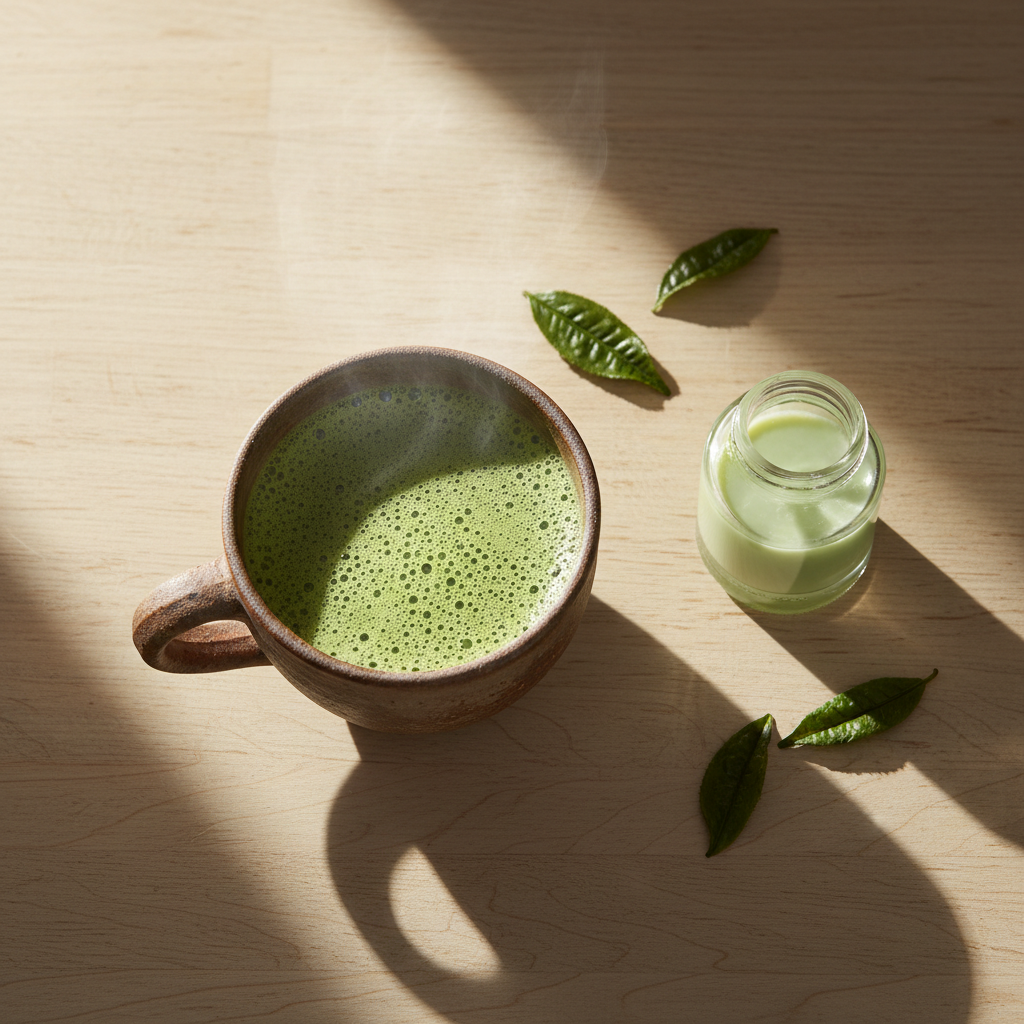
Matcha delivers higher catechin concentrations than brewed green tea because you consume the entire leaf rather than an infusion. For purely skin-focused supplementation, standardized EGCG supplements (300–500mg daily) have been used in clinical studies.
Combining With Other Actives
Green tea pairs well with most skincare actives. It complements retinoids by providing antioxidant protection that reduces retinoid-induced irritation. It enhances vitamin C’s photoprotective effects. It does not interfere with niacinamide, hyaluronic acid, or peptide-based products.
The one caution: avoid layering green tea extract with strong acidic products (pH below 3.5), which can degrade catechins on the skin surface before they absorb.
What Green Tea Can and Cannot Do
Green tea is a genuinely effective skincare ingredient with a growing evidence base. It protects collagen from degradation, reduces UV-induced damage, calms inflammation, and provides broad-spectrum antioxidant defense.
What it cannot do is replace dedicated collagen-stimulating actives like retinoids. EGCG excels at preservation and protection — preventing damage rather than reversing it. For people already dealing with wrinkles, volume loss, or significant photoaging, green tea is a valuable supporting player, not the lead treatment.
The most effective approach combines both strategies: active collagen builders like retinol to stimulate new synthesis, and protective antioxidants like EGCG to defend what’s already there. That one-two punch — build and protect — is the foundation of evidence-based anti-aging skincare.
References
- OyetakinWhite P, Koo B, Matsui MS, et al. “A Review of the Role of Green Tea (Camellia sinensis) in Antiphotoaging, Stress Resistance, Neuroprotection, and Autophagy.” Nutrients. 2019;11(2):474. doi:10.3390/nu11020474
- Febrinasari RP, Benedictus B, Tan K, Mardhiati Y, Putri SK, Choiri S, Wahyuni DSC. “Green tea as a cosmetic agent for skin aging: A scoping review.” Avicenna Journal of Phytomedicine. 2025;14(5):1393-1407. PMID: 40969419
- OyetakinWhite P, Koo B, Matsui MS, et al. “Protective mechanisms of green tea polyphenols in skin.” Oxidative Medicine and Cellular Longevity. 2012;2012:560682. doi:10.1155/2012/560682
- Jia Y, Mao Q, Yang J, Du N, Zhu Y, Min W. ”(-)-Epigallocatechin-3-Gallate Protects Human Skin Fibroblasts from Ultraviolet A Induced Photoaging.” Clinical, Cosmetic and Investigational Dermatology. 2023;16:149-159. doi:10.2147/CCID.S398547
- Ohishi T, Goto S, Monira P, Isemura M, Nakamura Y. “Anti-inflammatory Action of Green Tea.” Anti-Inflammatory & Anti-Allergy Agents in Medicinal Chemistry. 2016;15(2):74-90. doi:10.2174/1871523015666160915154443
- Huang ZJ, Zhou XH, Wen WQ, et al. “Enhanced skin benefits of EGCG loaded in nonapeptide-1-conjugated mesoporous silica nanoparticles to reverse skin photoaging.” International Journal of Pharmaceutics. 2024;665:124690. doi:10.1016/j.ijpharm.2024.124690
- North Biomedical LLC. “Nanoretinol® vs. Conventional Retinol: Efficacy in Collagen and Elastin Recovery.” Clinical Study Summary, 2024.