
Halo Laser: What Hybrid Fractional Resurfacing Really Does for Aging Skin
How the Halo laser blends two wavelengths to erase sun damage and rough texture — plus the nightly step that protects the glow.
The Decade That Shows Up on Your Face
Somewhere around the late forties, the mirror starts telling on the sun. The brown patches that were faint at forty are now the first thing you notice. The skin looks a little grainy in daylight, a little dull, with a scattering of tiny textural bumps that makeup settles into rather than hides. This is photoaging — the slow accumulation of ultraviolet damage in the deeper layers of the skin — and it is the single biggest reason faces read as older than they feel.
The biology behind it is well mapped. Ultraviolet light switches on a family of enzymes called matrix metalloproteinases that break down the collagen scaffold holding skin taut and smooth, and this degradation outpaces repair year after year [1]. The visible result is what dermatologists call dyschromia and roughness: uneven pigment, enlarged pores, and a coarse surface. The Halo laser was built specifically to reverse that surface damage without the long recovery older lasers demanded.
What the Halo Laser Actually Is
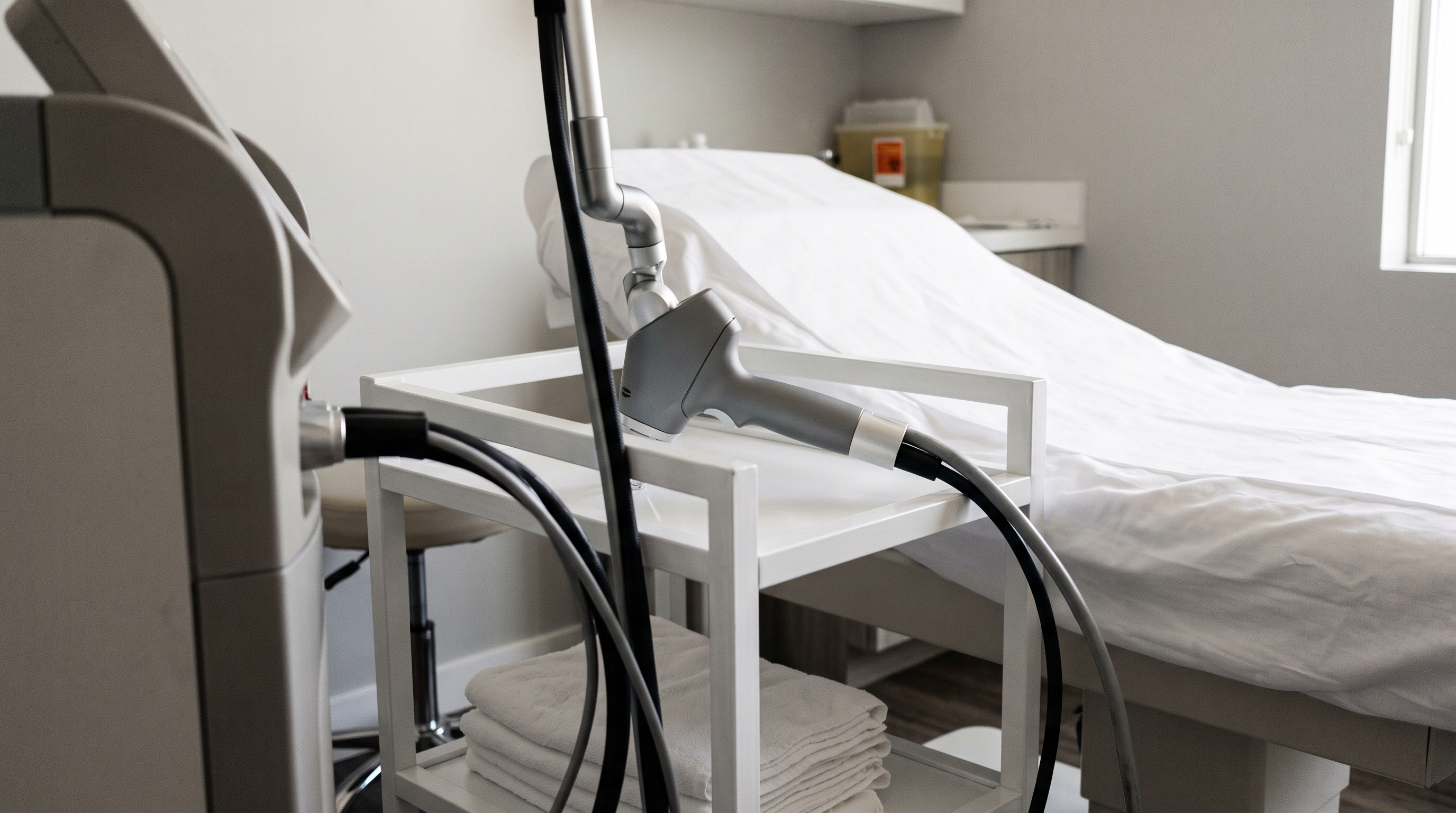
Halo is the brand name for a hybrid fractional laser, and both of those words carry weight.
“Fractional” means the laser does not treat the entire surface at once. Instead it drills thousands of microscopic columns of energy into the skin, leaving healthy untouched tissue between each one. That original insight — that peppering skin with tiny microscopic treatment zones triggers dramatic remodeling while leaving bridges of intact skin to speed healing — is the foundation of all modern resurfacing [2].
The Halo laser was built specifically to reverse that surface damage without the long recovery older lasers demanded.
“Hybrid” is what makes Halo distinct. In a single pass it fires two different wavelengths into each microscopic channel: a non-ablative 1470-nanometer beam that coagulates deep into the dermis, up to roughly 700 micrometers down, to drive collagen renewal, and an ablative 2940-nanometer beam that vaporizes the sun-damaged top layer of the epidermis, up to about 110 micrometers [3]. The deep beam rebuilds; the surface beam resurfaces. The standalone Erbium laser guide explains why that 2940-nanometer component behaves differently from erbium-glass devices that share the same family name.
The point of combining them is to get results close to an aggressive fully-ablative laser while cutting the downtime dramatically, because most of the healthy epidermis is left intact to heal the treated columns quickly.
What the Studies Show
The clinical record for hybrid fractional resurfacing is encouraging, especially for the exact concerns that drive women to look it up. In a multi-center trial of 34 women with a mean age of 52, treated over two sessions spaced four to six weeks apart, 80% showed significant skin improvement on standardized photographic analysis and 100% reported satisfaction with their results [3]. Average pain was rated just 4 out of 10, and the only adverse event was temporary post-inflammatory hyperpigmentation in two patients that resolved fully within 90 days.
The improvement is not a surface trick. Biopsy studies of fractional resurfacing show it works by provoking genuine neocollagenesis — the wound-healing cascade lays down fresh, organized collagen — and that remodeling continues for up to twelve months after the last treatment [4]. In other words, your skin keeps improving for the better part of a year while the deep columns quietly rebuild.
In the landmark controlled trial on the subject, type I collagen formation was 56% lower in photodamaged skin than in sun-protected skin — and topical retinoic acid produced roughly an 80% increase in new collagen formation, compared with a 14% decrease under an inactive vehicle.
Comparative data also help set expectations. Head-to-head, ablative fractional lasers produce the largest wrinkle reduction but demand more recovery, while gentler fractional approaches trade a little efficacy for less downtime and fewer side effects [5]. Halo’s hybrid design is engineered to land in between: meaningful correction of tone, texture, and pigment, with a recovery most people can absorb in a long weekend.
The Honest Limits
Halo excels at surface problems — sun spots, dullness, rough texture, enlarged pores, fine lines. It is a resurfacing tool, not a lift. It will not tighten a sagging jawline or fill a deep fold; for those, energy devices and injectables covered in our guide to non-surgical skin tightening do different work. It pairs naturally with other approaches rather than replacing them, and it sits alongside options like laser skin resurfacing and the gentler Clear + Brilliant laser on a spectrum from subtle to intensive.
Two realities matter most. First, sun protection afterward is non-negotiable; treated skin is briefly more vulnerable, and unprotected UV will simply start the damage over. Second, and less obvious: the laser triggers a one-time surge of collagen, but it does nothing to change the daily enzymatic breakdown that created the photoaging in the first place. That is where an at-home routine earns its keep.
Keeping the Glow Between Treatments
If Halo’s whole mechanism is stimulating collagen, the logical question is what sustains that stimulus on ordinary nights. Decades of dermatology point to one ingredient above all: a topical retinoid. In the landmark controlled trial on the subject, type I collagen formation was 56% lower in photodamaged skin than in sun-protected skin — and topical retinoic acid produced roughly an 80% increase in new collagen formation, compared with a 14% decrease under an inactive vehicle [6]. Retinoids also directly blunt the UV-triggered enzymes that degrade collagen in the first place [1], making them both a repair tool and a shield.
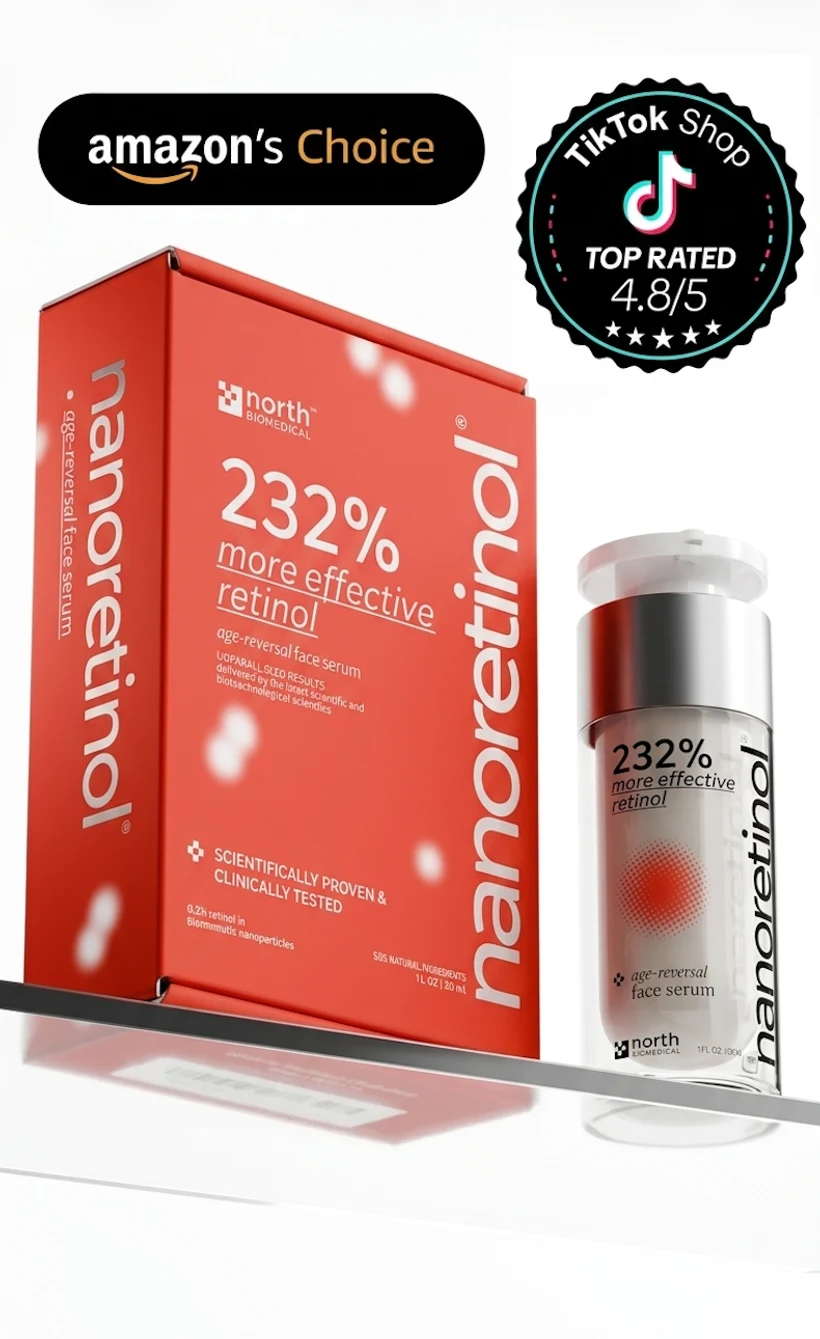
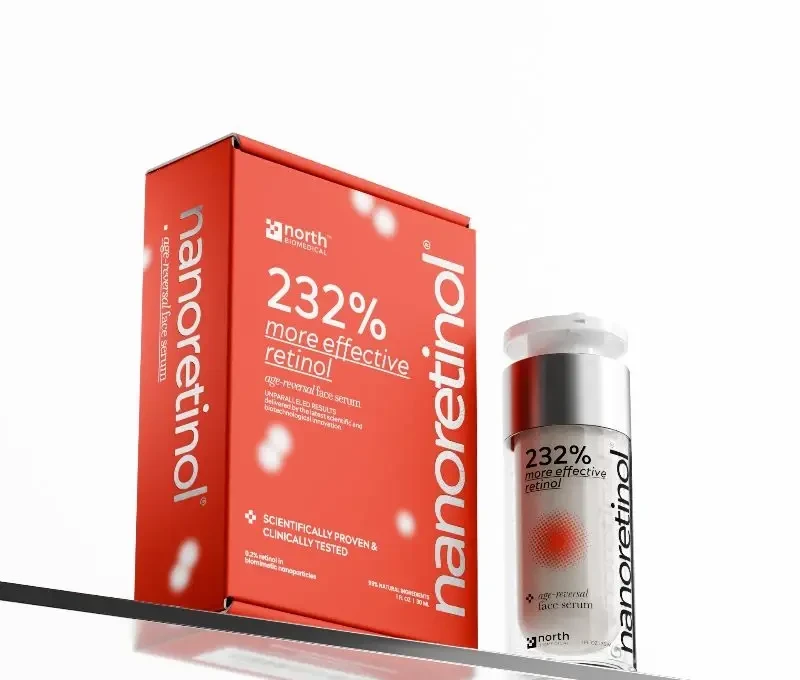
The traditional weakness of retinol is delivery: pushing it through the skin barrier without triggering the redness and peeling that make people quit. Nanoretinol was engineered around that exact bottleneck. It wraps retinol inside biomimetic lipid nanoparticles the skin recognizes as its own and lets pass, ferrying the active into the dermis without stripping the barrier. In North Biomedical’s clinical comparison, that delivery approach proved 232% more effective at collagen recovery and 73% more effective at elastin recovery than conventional retinol, with users seeing a 61% rise in firmness and a 56% rise in elasticity over 56 days [7]. Its gentle, water-based 0.2% formula is exactly the kind of maintenance step that keeps a Halo result looking fresh long after the redness fades.
A Halo treatment can strip years of sun off your face in two afternoons. What you do on the quiet nights in between is what decides how long those years stay gone.
References
- Fisher GJ, Datta SC, Talwar HS, Wang ZQ, Varani J, Kang S, Voorhees JJ. “Molecular basis of sun-induced premature skin ageing and retinoid antagonism.” Nature. 1996;379(6563):335-339. doi:10.1038/379335a0
- Manstein D, Herron GS, Sink RK, Tanner H, Anderson RR. “Fractional photothermolysis: a new concept for cutaneous remodeling using microscopic patterns of thermal injury.” Lasers in Surgery and Medicine. 2004;34(5):426-438. doi:10.1002/lsm.20048
- Waibel J, Pozner J, Robb C, Tanzi E. “Hybrid Fractional Laser: A Multi-Center Trial on the Safety and Efficacy for Photorejuvenation.” Journal of Drugs in Dermatology. 2018;17(11):1164-1168. PMID:30481954
- Borges J, Araújo L, Cuzzi T, Martinez L, Gonzales Y, Manela-Azulay M. “Fractional Laser Resurfacing Treats Photoaging by Promoting Neocollagenesis and Cutaneous Edema.” Journal of Clinical and Aesthetic Dermatology. 2020;13(1):22-27. PMID:32082467
- Robati RM, Asadi E. “Efficacy and safety of fractional CO2 laser versus fractional Er:YAG laser in the treatment of facial skin wrinkles.” Lasers in Medical Science. 2017;32(2):283-289. doi:10.1007/s10103-016-2111-8
- Griffiths CE, Russman AN, Majmudar G, Singer RS, Hamilton TA, Voorhees JJ. “Restoration of collagen formation in photodamaged human skin by tretinoin (retinoic acid).” New England Journal of Medicine. 1993;329(8):530-535. doi:10.1056/NEJM199308193290803
- North Biomedical LLC. “Nanoretinol vs. Conventional Retinol: Efficacy in Collagen and Elastin Recovery.” Clinical Study Summary, 2024. Study summary