Moxi Laser: What It Treats, What to Expect, and the Smarter At-Home Companion
A gentle fractional laser has become the go-to 'glow' treatment — here's what it can and can't do for aging skin.
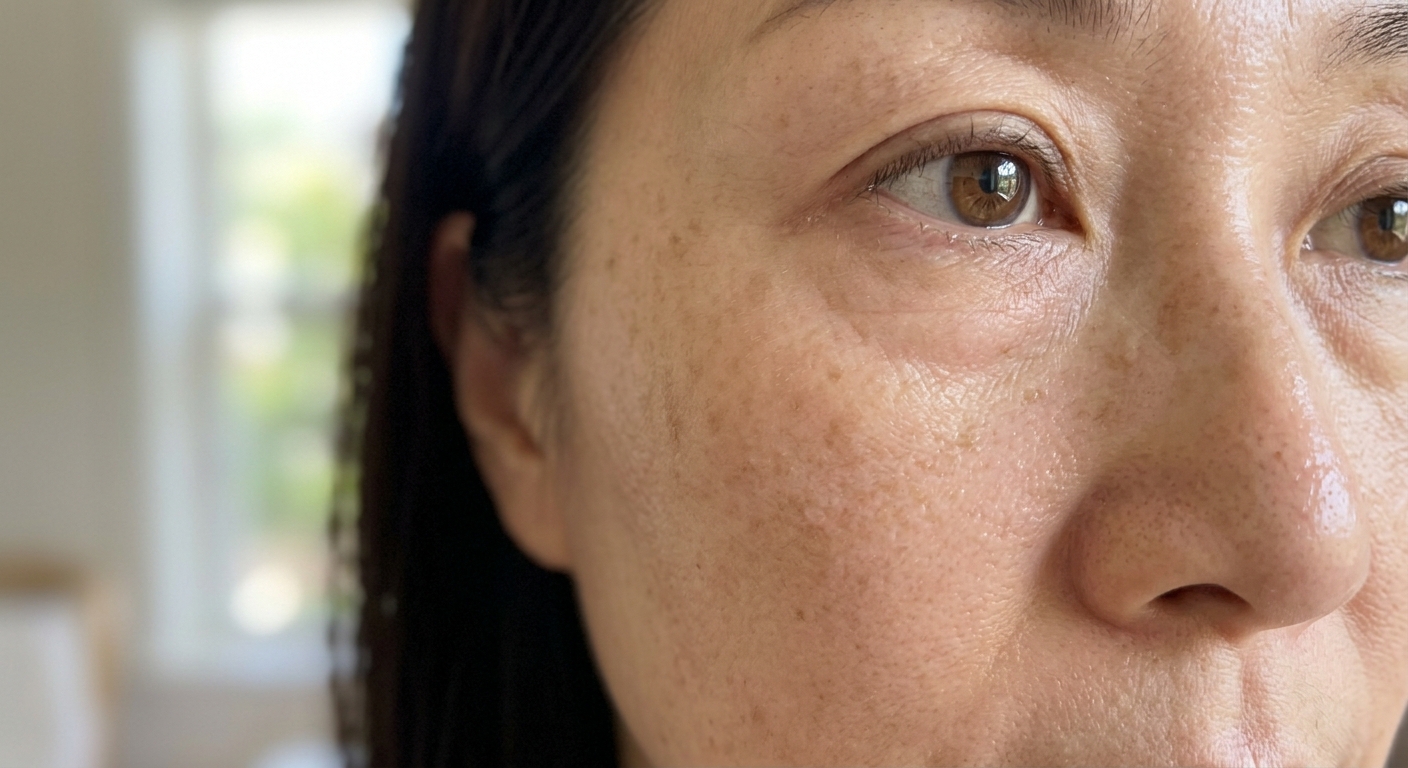
If you have spent any time in a dermatologist’s waiting room lately, you have probably heard the word “Moxi.” It has become the laser people book before a wedding, a reunion, or simply a birthday that ends in a zero. The promise is seductive: a lit-from-within glow, fewer brown spots, smoother texture — and you can be back at your desk the next morning.
Moxi is real, and for the right person it delivers. But the marketing tends to skip the parts that matter most: what it actually does at the cellular level, where its limits are, and why the result you walk out with fades unless you support it at home. Let’s walk through all of it.
What a Moxi Laser Actually Does
Moxi is a non-ablative fractional laser that emits light at a 1927-nanometer wavelength. Two words in that sentence do most of the work.
Fractional means the laser does not treat your whole face as one surface. Instead, it drills thousands of microscopic columns of controlled heat into the skin — think of aerating a lawn rather than rolling over the entire yard. The skin between those columns stays intact, which is exactly why healing is fast. This idea was formally introduced in 2004, when researchers described “fractional photothermolysis” and showed that creating tiny, evenly spaced zones of thermal injury triggers a wound-healing and remodeling response without the prolonged recovery of older, fully ablative lasers [1].
Non-ablative means the laser heats the deeper layers without vaporizing the surface. Your skin is wounded just enough to start a repair cascade, but the top layer is not stripped away. The result is the signature “sandpaper” texture and light flaking for a few days as old, pigmented cells slough off and fresh skin surfaces.
Your skin is wounded just enough to start a repair cascade, but the top layer is not stripped away.
What Moxi Treats Well
The 1927nm wavelength is absorbed strongly by water in the upper-to-mid skin, which makes it especially good at three things: brightening uneven tone, fading sun-related pigmentation, and refining surface texture.
The pigment results are the best documented. In a study of patients treated with a non-ablative 1927nm fractional laser for facial photopigmentation — the diffuse brown patchiness that decades of sun leave behind — clinicians recorded clear improvement in pigmentation and overall appearance, with high satisfaction maintained at follow-up [3]. A separate prospective study of the 1927nm fractional thulium laser in photoaged skin measured not just appearance but instruments: after a course of treatments, researchers documented improvements in spots, texture, and skin parameters, alongside increased dermal density on ultrasound [2]. That last detail matters — it is objective evidence that the laser is doing structural work below the surface, not just buffing the top.
For someone in their 40s or 50s with early sun spots, a dull or rough surface, and fine lines that are not yet deep folds, this is a strong match. If you have access to other articles on the blog, it is worth comparing Moxi against more aggressive options in our overview of laser skin resurfacing and the recovery-heavy CO2 laser, which trade more downtime for more dramatic change.
What to Expect: Downtime, Sessions, and Cost
Moxi’s appeal is its gentleness. Most providers apply numbing cream, and the treatment itself takes about 20 to 30 minutes. Afterward, expect redness like a mild sunburn, then a few days of that gritty texture and bronzed “MENDs” (microscopic epidermal necrotic debris — the tiny dark flecks that carry pigment up and out). Makeup is usually fine within a day or two.
One session produces a subtle refresh. A series of three to four, spaced about a month apart, is where most people see the tone and texture payoff. Pricing varies by region and provider but typically runs a few hundred dollars per session, and it is frequently bundled with a broadband-light treatment to tackle redness and deeper pigment at the same visit.
From the mid-20s onward, you lose roughly 1% of your dermal collagen per year, and sun exposure accelerates that loss.
The Honest Limits of Lasering
Here is the part that rarely makes the brochure. A laser is an event. Your skin is a process.
A Moxi treatment kick-starts collagen remodeling, but new collagen is built slowly over the weeks and months that follow — and it is built by your own fibroblasts, the same cells that are gradually slowing down as you age. From the mid-20s onward, you lose roughly 1% of your dermal collagen per year, and sun exposure accelerates that loss. A laser can prompt a burst of rebuilding, but if nothing changes in your daily routine, the underlying decline continues. The glow fades, the spots drift back, and in a year you are booking again.
This is not an argument against Moxi. It is an argument for not treating it as a standalone fix. The treatments that hold up best are the ones supported by daily skincare that keeps building what the laser started.
The At-Home Multiplier
If there is one ingredient class with the evidence to genuinely extend a laser’s results, it is the retinoids. Their job overlaps almost perfectly with what a fractional laser is trying to achieve: more collagen, faster cell turnover, more even pigment.
The science here is unusually strong. In a landmark trial, prescription tretinoin was shown to restore collagen formation in photodamaged skin, directly reversing one of the core changes that make skin look old [4]. And it is not limited to prescription strength — a vehicle-controlled study of topical retinol (the over-the-counter form of vitamin A) found measurable increases in skin’s glycosaminoglycans and collagen production, with visibly reduced fine wrinkles, even in very elderly skin [5]. Retinoids, in other words, are doing at home — slowly, safely, every night — a version of the collagen work you paid for in the laser room. For more on that mechanism, see our guide to boosting collagen production.
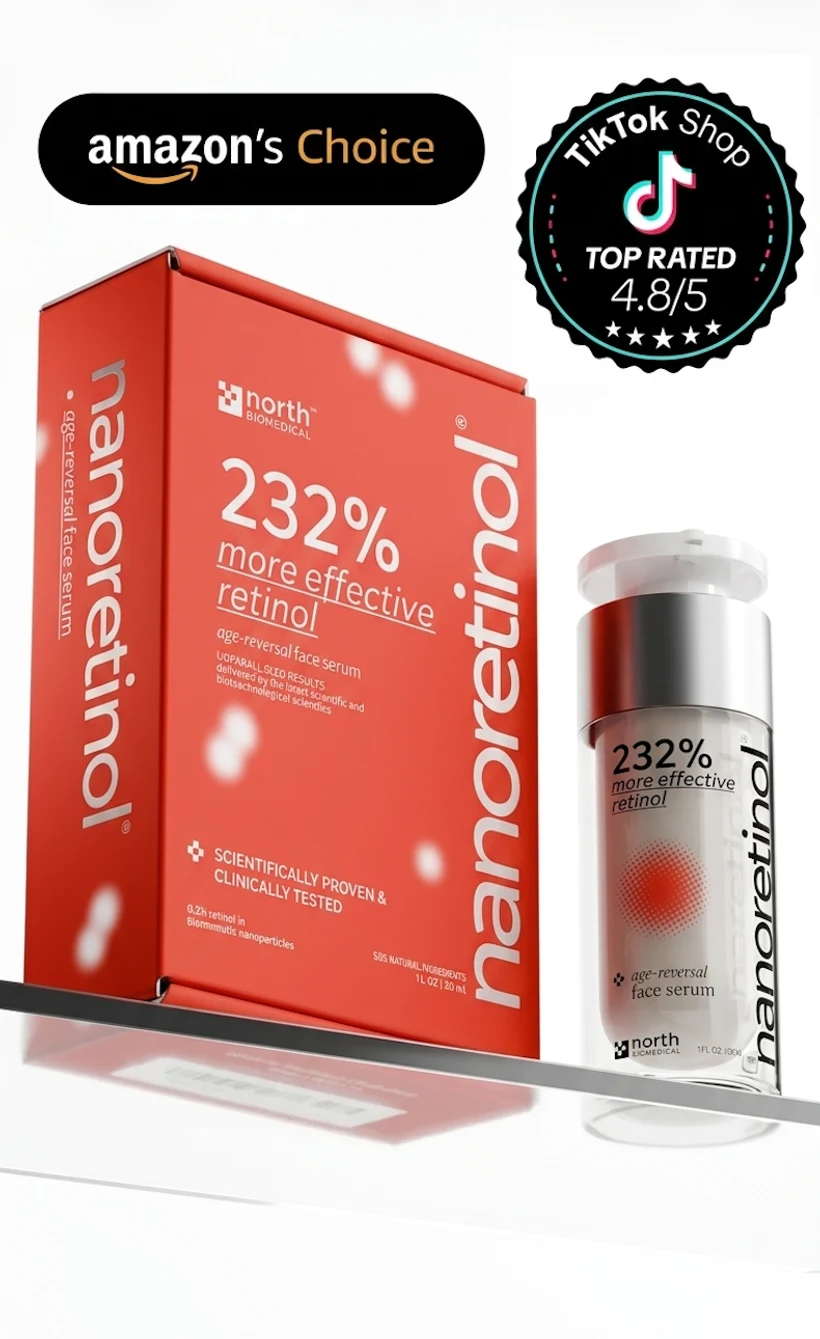
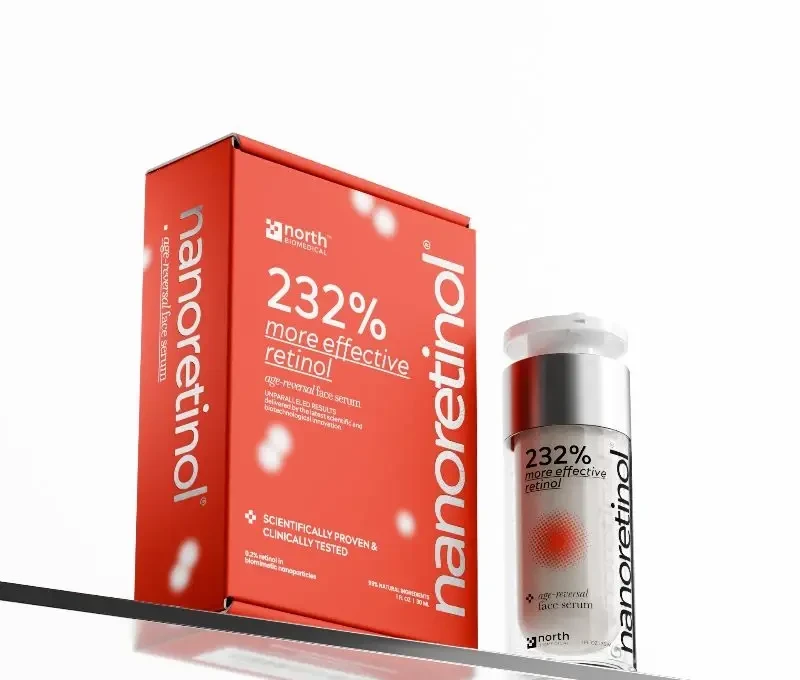
The catch with conventional retinol has always been delivery. Retinol struggles to cross the skin barrier intact, and the harsh formulations that try to force it through often cause the redness and peeling that send people quitting within weeks. This is the problem Nanoretinol was built to solve. By encapsulating a fully stabilized 0.2% retinol inside biomimetic lipid nanoparticles — particles the skin recognizes as “self” and waves through its own barrier — Nanoretinol delivers the active where it needs to go without the collateral irritation. In North Biomedical’s clinical testing, the encapsulated form proved 232% more effective at collagen recovery and 73% more effective at elastin recovery than conventional retinol, while remaining gentle enough for sensitive skin and the eye area. For skin that is healing from a laser and needs support without aggravation, that combination is exactly the point.
Booking It Wisely
Moxi earns its popularity: it is a low-drama way to brighten tone, fade sun damage, and smooth texture with a weekend’s recovery. Just go in with the right expectation. The laser opens the door; your nightly routine is what keeps you walking through it. Pair a sensible series of treatments with diligent sun protection and a well-delivered retinoid, and you get results that compound instead of evaporate — which is a far better return on both your time and your money.
References
- Manstein D, Herron GS, Sink RK, Tanner H, Anderson RR. “Fractional Photothermolysis: A New Concept for Cutaneous Remodeling Using Microscopic Patterns of Thermal Injury.” Lasers in Surgery and Medicine. 2004;34(5):426-438. doi:10.1002/lsm.20048
- Li X, Qin S, Shi S, et al. “Prospective study of efficacy and safety of non-ablative 1927 nm fractional thulium fiber laser in Asian skin photoaging.” Frontiers in Surgery. 2023;10:1076848. doi:10.3389/fsurg.2023.1076848
- Brauer JA, McDaniel DH, Bloom BS, Reddy KK, Bernstein LJ, Geronemus RG. “Nonablative 1927 nm fractional resurfacing for the treatment of facial photopigmentation.” Journal of Drugs in Dermatology. 2014;13(11):1317-1322. PMID:25607696
- Griffiths CE, Russman AN, Majmudar G, Singer RS, Hamilton TA, Voorhees JJ. “Restoration of Collagen Formation in Photodamaged Human Skin by Tretinoin (Retinoic Acid).” New England Journal of Medicine. 1993;329(8):530-535. doi:10.1056/NEJM199308193290803
- Kafi R, Kwak HSR, Schumacher WE, et al. “Improvement of Naturally Aged Skin With Vitamin A (Retinol).” Archives of Dermatology. 2007;143(5):606-612. doi:10.1001/archderm.143.5.606