Niacinamide Cleanser: What a Niacinamide Face Wash Can and Cannot Do
The niacinamide studies tested leave-on creams, not cleansers. Here is what a wash-off formula can realistically deliver, why the surfactants matter more, and where it fits in a retinol routine
Niacinamide has become one of the most trusted ingredients in skincare, so it was only a matter of time before it appeared in face washes. A niacinamide cleanser sounds like an easy upgrade: you wash your face anyway, so why not add a vitamin that calms redness, controls oil and supports the barrier?
The answer depends on what you expect from it. This guide explains what niacinamide does in skin, why a wash-off product delivers far less of it than a cream, why the cleansing base matters more than the label suggests, and how a niacinamide cleanser fits into a routine built around retinol.
What niacinamide does in skin
Niacinamide is a form of vitamin B3. In the lab, it pushes skin cells to make more ceramides and other barrier lipids. In one study, cultured skin cells exposed to niacinamide made four to five times more ceramide, and applying it to dry skin raised ceramide levels in the outer layer and reduced water loss [1].
The clinical trials point in the same direction. A 5% niacinamide product applied twice daily to half the face for 12 weeks reduced fine lines, dark spots, red blotchiness and yellowing, and improved elasticity, compared with the side that received the same base without niacinamide [2]. A 2% niacinamide moisturizer lowered oil production in a 4-week Japanese trial and reduced surface oil in a 6-week American trial [3]. A niacinamide moisturizer also improved barrier function in people with rosacea over 4 weeks [4].
Notice what all of those products have in common: they stayed on the skin for hours.
The contact-time problem
A cleanser sits on your face for perhaps 30 to 60 seconds before you rinse it away. Most of what it contains goes down the drain. That is fine for the job a cleanser is meant to do, which is to lift oil, sunscreen and grime, but it is a weak delivery system for an active ingredient.
Your skin holds a face wash for less than 1 minute, far shorter than the hours of daily contact that leave-on niacinamide had for 12 weeks in the trials.
There are no published trials showing that a niacinamide cleanser alone produces the oil, redness or anti-aging results seen with leave-on niacinamide. Some ingredient may be left behind after rinsing, and a formula with conditioning agents can deposit a little more, but no published study has measured how much. Your skin holds a face wash for less than 1 minute, far shorter than the hours of daily contact that leave-on niacinamide had for 12 weeks in the trials.
That does not make a niacinamide cleanser useless. It means you should choose it as a good cleanser first and treat the niacinamide as a bonus.
Why the cleansing base matters more
Every face wash relies on surfactants, the molecules that grab oil so water can rinse it off. Harsh surfactants do not stop at dirt. They bind to the proteins and lipids of the outer skin and strip some of them away, which leads to the tight, dry, itchy feeling after washing and, over time, a weaker barrier [5].
Two features make a cleanser milder [5, 6]:
- Synthetic detergents rather than soap. Traditional soaps are alkaline. Syndet cleansers cause less protein damage and less dryness.
- A pH close to skin. Research on alkaline solutions found that a high pH can swell the outer skin and disrupt its lipids even without surfactants, which is why a cleanser near the skin’s natural pH of about 5.5 is gentler.
That is why the base formula, not the niacinamide, is the real buying decision. Our guide to the best face wash for sensitive skin covers the two signals that predict whether a cleanser will sting.
Who a niacinamide cleanser suits
A well-made niacinamide cleanser is a sensible choice for three groups:
Your skin may handle the first weeks of a retinoid better if you start gentle barrier care 2 weeks before the first dose, rather than on the same night.
- Oily and combination skin. You get a thorough clean without the squeaky, stripped feel that can trigger rebound shine. If you also want pore-clearing exfoliation, our guide to salicylic acid cleanser covers the face wash that actually works inside pores.
- Reactive or redness-prone skin. A low-irritation wash removes one source of daily stress on the barrier.
- Retinol users. Retinoids make the outer skin more vulnerable during the first weeks, and a gentle cleanser is one of the easiest ways to avoid making that worse [7].
Your skin may handle the first weeks of a retinoid better if you start gentle barrier care 2 weeks before the first dose, rather than on the same night.
If you want niacinamide’s proven benefits, though, add a leave-on step. A niacinamide toner or serum gives the ingredient hours on the skin rather than seconds.
How to use one
Wash with lukewarm water, not hot. Massage a small amount over damp skin for about 30 seconds, rinse thoroughly and pat dry. Use it morning and evening if your skin is oily, or only at night if your skin is dry and a splash of water is enough in the morning.
Follow it with your leave-on products while your skin is still slightly damp. If your face feels tight within a few minutes of washing, the cleanser is too strong for you, whatever the label says.
The retinol connection
Barrier care matters most when you start a retinoid. In a 10-week split-face study, women used a moisturizer containing niacinamide, panthenol and vitamin E on one side and a plain moisturizer on the other, starting 2 weeks before daily 0.025% tretinoin. Preparing the barrier first made the early weeks of tretinoin easier and improved the treatment response [7]. Our guide to retinol and niacinamide explains why the two ingredients work so well together.
A gentle cleanser supports the same strategy. It is the first thing that touches your skin every night, so it can either protect the barrier or chip away at it before your retinol goes on.
A gentler routine from the first step
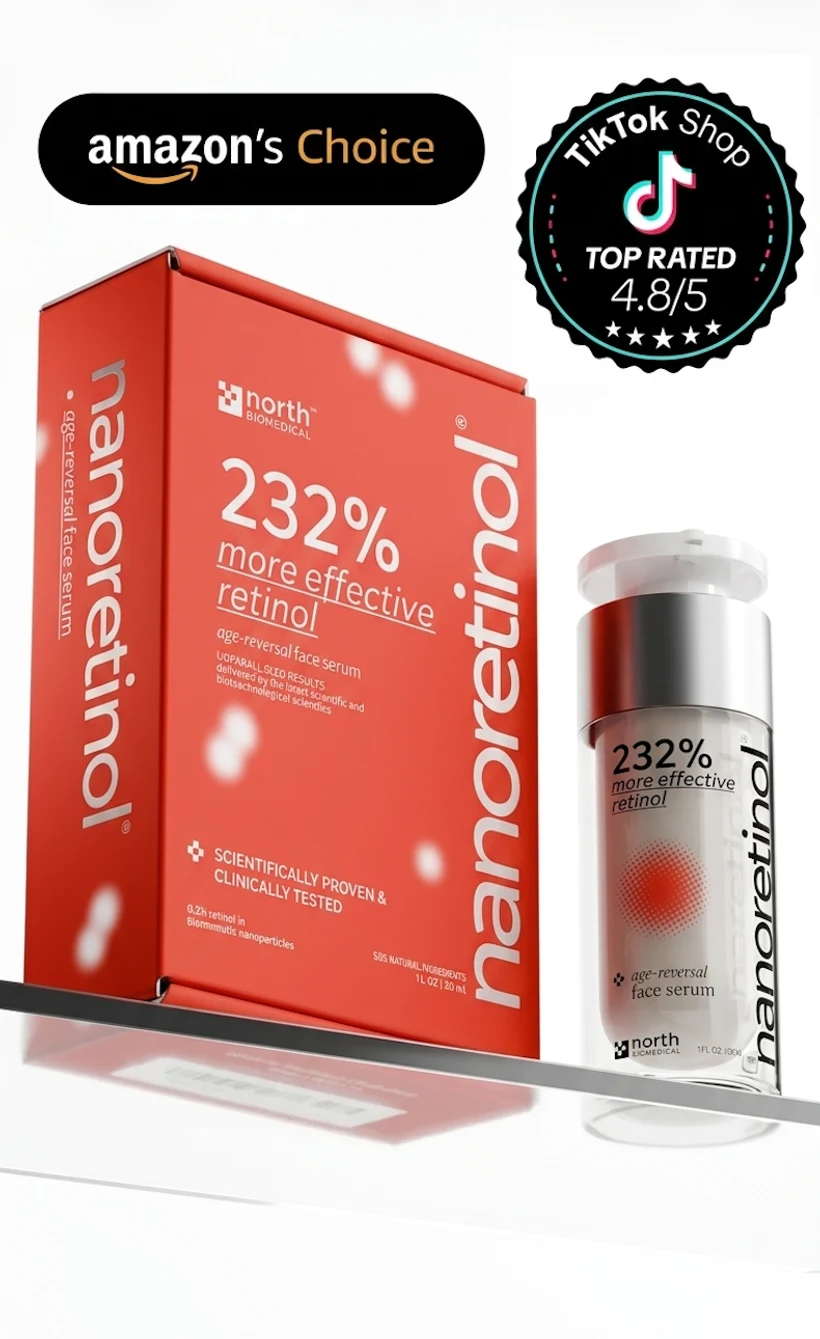
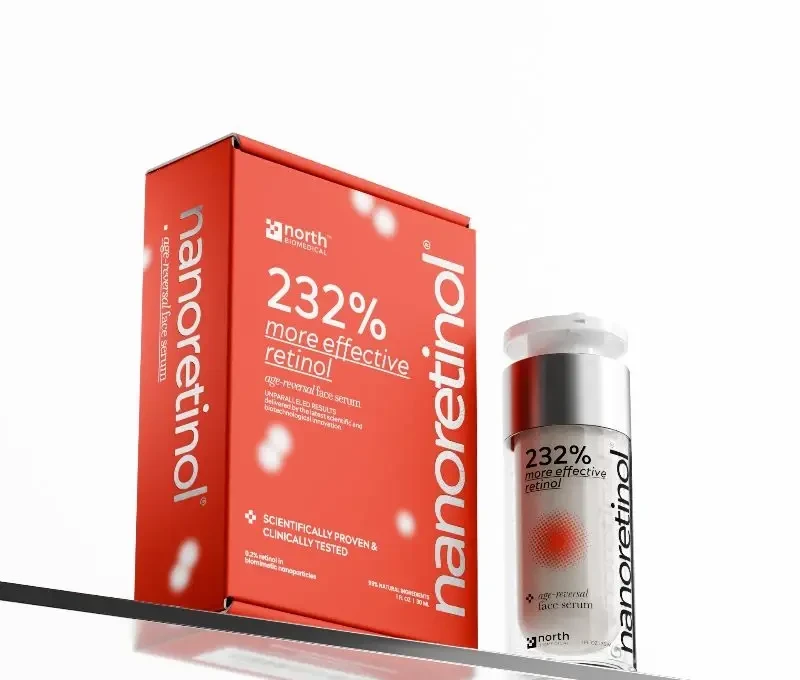
The other half of the strategy is choosing a retinol that does not damage the barrier in the first place. Nanoretinol delivers 0.2% stabilized retinol inside biomimetic lipid nanoparticles that the skin recognizes as its own, so it reaches skin cells without relying on the barrier-disrupting chemistry many conventional formulations use. In North Biomedical’s study summary, Nanoretinol was 232% more effective in collagen recovery and 73% more effective in elastin recovery than conventional retinol, with side effects that were minimal and milder [8].
A simple evening routine: a mild niacinamide cleanser, a leave-on niacinamide step if you want its full benefits, then Nanoretinol and a moisturizer. In the morning, cleanse gently and finish with sunscreen.
References
- Tanno O, Ota Y, Kitamura N, Katsube T, Inoue S. “Nicotinamide increases biosynthesis of ceramides as well as other stratum corneum lipids to improve the epidermal permeability barrier.” British Journal of Dermatology. 2000;143(3):524-531. doi:10.1111/j.1365-2133.2000.03705.x
- Bissett DL, Oblong JE, Berge CA. “Niacinamide: A B vitamin that improves aging facial skin appearance.” Dermatologic Surgery. 2005;31(7 Pt 2):860-865. doi:10.1111/j.1524-4725.2005.31732
- Draelos ZD, Matsubara A, Smiles K. “The effect of 2% niacinamide on facial sebum production.” Journal of Cosmetic and Laser Therapy. 2006;8(2):96-101. doi:10.1080/14764170600717704
- Draelos ZD, Ertel K, Berge C. “Niacinamide-containing facial moisturizer improves skin barrier and benefits subjects with rosacea.” Cutis. 2005;76(2):135-141. PubMed 16209160
- Ananthapadmanabhan KP, Moore DJ, Subramanyan K, Misra M, Meyer F. “Cleansing without compromise: the impact of cleansers on the skin barrier and the technology of mild cleansing.” Dermatologic Therapy. 2004;17(Suppl 1):16-25. doi:10.1111/j.1396-0296.2004.04s1002.x
- Draelos ZD. “The science behind skin care: Cleansers.” Journal of Cosmetic Dermatology. 2018;17(1):8-14. doi:10.1111/jocd.12469
- Draelos ZD, Ertel KD, Berge CA. “Facilitating facial retinization through barrier improvement.” Cutis. 2006;78(4):275-281. PubMed 17121065
- North Biomedical LLC. “Nanoretinol vs. Conventional Retinol: Efficacy in Collagen and Elastin Recovery.” Clinical Study Summary, 2024. Study summary