Centella Cleanser: What a Cica Face Wash Can Really Do for Reactive Skin
A centella cleanser promises a calmer, less irritated face. Here is what survives a 60-second rinse, why the base formula matters more than the extract and how to choose one that supports a retinol routine
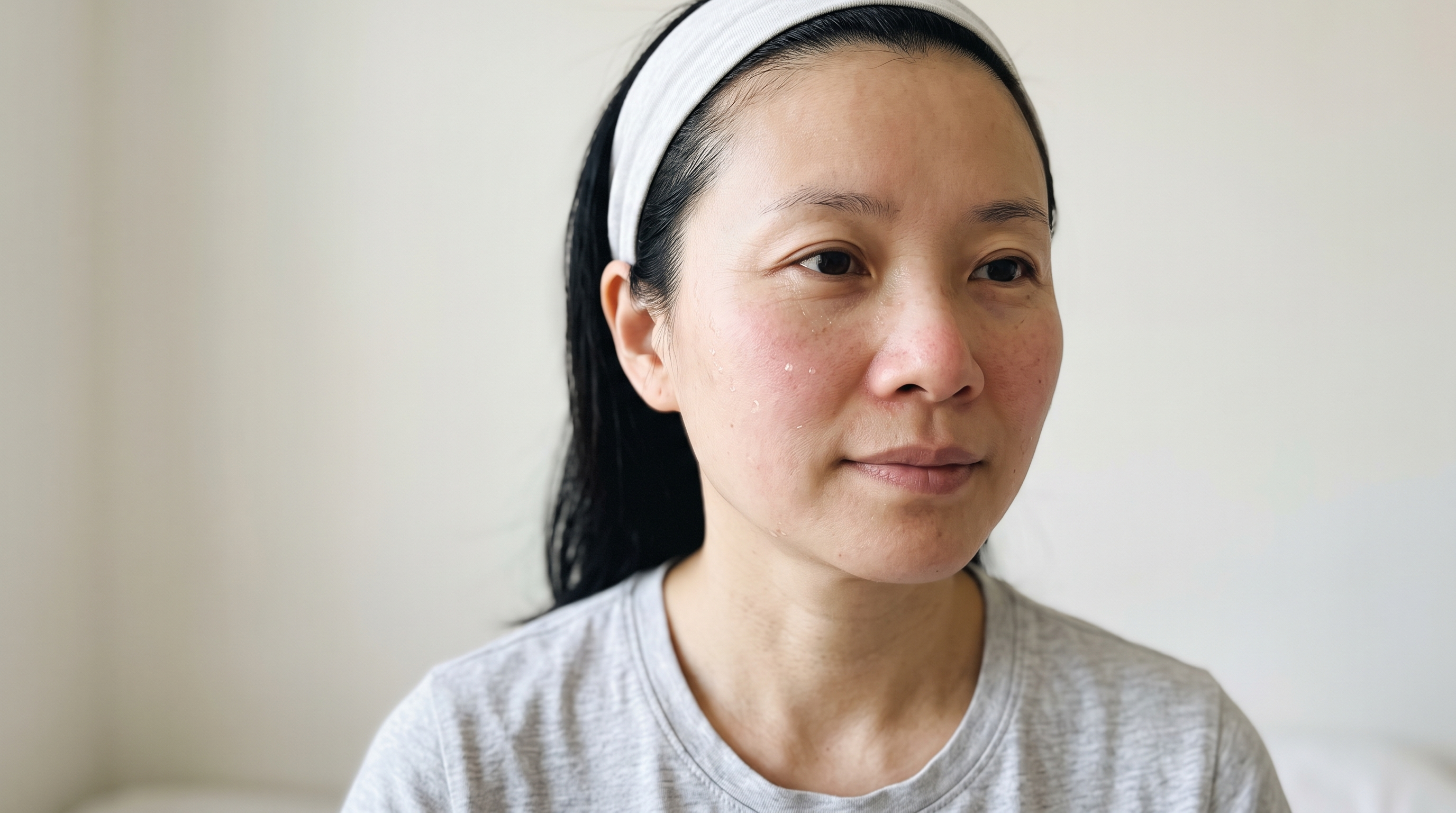
If your face turns pink after washing, feels tight within minutes or stings when you apply anything afterwards, the cleanser is often the first place to look. A centella cleanser, sometimes sold as a cica cleanser, is marketed as the answer: a face wash built around a plant known for calming and repairing skin.
There is real science behind centella. There is also a simple problem with putting it in a product you rinse off within a minute. This guide explains what centella does, how much of that benefit can survive a wash, what matters more than the extract on the label, and how to choose a centella cleanser that keeps reactive skin comfortable, especially if you use retinol.
What centella asiatica brings
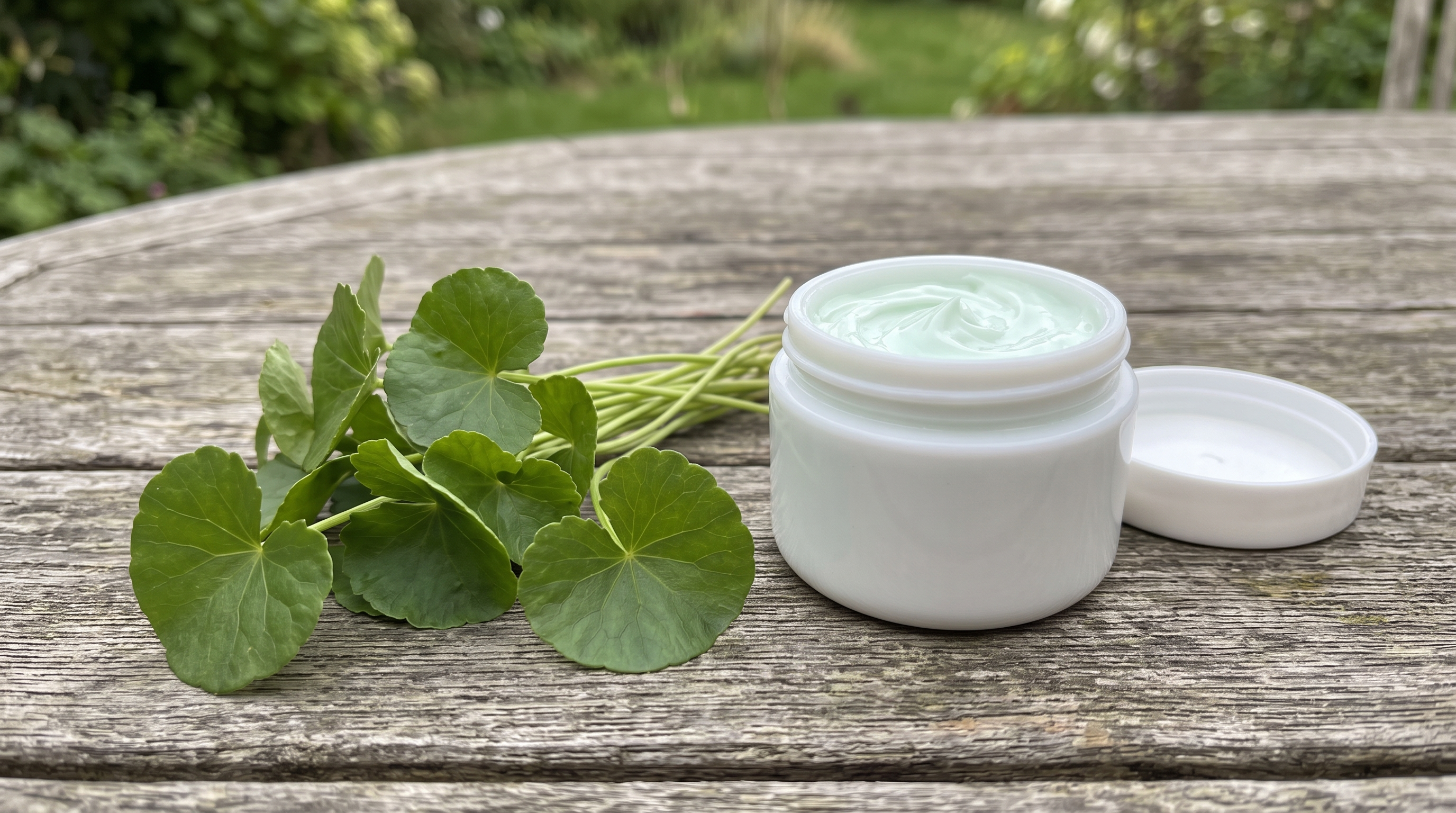
Centella asiatica, also called gotu kola, has been used in traditional medicine for centuries. Its active compounds are a group of triterpenes: asiaticoside, madecassoside, asiatic acid and madecassic acid [1]. In lab and clinical research, these compounds support the cells that make collagen, help wounds and burns heal and calm the inflammatory phase of scarring [1, 2].
Evidence on everyday skincare is more modest but encouraging. In a four-week study of 25 volunteers, creams and gels containing 2.5% and 5% centella extract, applied twice a day to the forearms, raised skin hydration, reduced water loss and calmed a standard test of skin inflammation, with 5% working best [3]. In a six-month randomized trial of 20 women with sun-damaged skin, a cream combining 5% vitamin C with 0.1% madecassoside improved wrinkles, firmness, roughness and hydration [4].
Notice what those studies tested: creams and gels left on the skin for hours, twice a day, for weeks or months. That is the key to understanding what a cleanser can and cannot do. Our guide to centella toner makes the same point about leave-on formats.
The rinse-off problem
A cleanser spends about 30 to 60 seconds on your face before it goes down the drain. Its job is to lift oil, sunscreen and grime into a lather so water can carry them away, and that same process carries most of the centella with it.
Your skin keeps far less of a botanical from a 60-second wash than from a cream left on for 8 hours, so a cleanser should not be your main source of centella.
Your skin keeps far less of a botanical from a 60-second wash than from a cream left on for 8 hours, so a cleanser should not be your main source of centella.
That does not make a centella cleanser pointless. It means you should judge it as a cleanser first. If the base formula is gentle, the centella is a small bonus. If the base formula is harsh, no amount of centella will undo the damage.
What matters more than the extract
The surfactants. Surfactants are the cleansing agents that make a wash foam. Harsh ones bind to the proteins and lipids in the outer skin layer, which leads to tightness, dryness, barrier damage and irritation after washing [5]. Milder synthetic detergents, often called syndets, cause less of that damage than traditional alkaline soaps [6]. Look for gentle surfactants such as those with “glucoside”, “glutamate”, “isethionate” or “betaine” in the name, and be cautious with sodium lauryl sulfate high on the list.
The pH. Healthy skin is acidic. A multicenter study of 330 people estimated the natural skin surface pH at about 4.7, and skin with a pH below 5 had a better barrier, better hydration and less scaling than skin above 5 [7]. High-pH washes swell the outer skin layer and disturb its lipids even without harsh surfactants, which is why a cleanser close to the skin’s own pH is less damaging [5]. A good centella cleanser should state that it is low-pH or pH-balanced.
What it leaves behind. The best mild cleansers also deposit humectants such as glycerin and lipids during the wash, which helps replace what washing removes [5]. A centella cleanser that also lists glycerin, ceramides or panthenol is doing more for your skin than the centella alone.
Your skin can lose more moisture from a harsh 1-minute wash than a soothing extract can put back, which is why the base formula comes first.
Your skin can lose more moisture from a harsh 1-minute wash than a soothing extract can put back, which is why the base formula comes first.
Gel, cream or foam: which to choose
- Gel cleansers suit oily and combination skin. They rinse cleanly and rarely leave residue.
- Cream or milky cleansers suit dry, mature or very reactive skin. They clean with less foam and leave the skin feeling softer.
- Foaming cleansers suit people who wear heavy sunscreen or makeup, but check the surfactants carefully, since foam often comes from stronger detergents.
If you are still deciding between centella and other gentle options, our guide to the best face wash for sensitive skin compares the main types.
How to use a centella cleanser
- Use lukewarm water. Hot water strips more lipids from the skin.
- Massage gently for 30 to 60 seconds with your fingertips, then rinse well.
- Pat dry with a clean towel rather than rubbing.
- Apply your next product within a minute or two, while the skin is still slightly damp.
- Wash once or twice a day, not more. If your skin is dry, a splash of water in the morning and a proper cleanse at night is enough.
Patch test any new cleanser on your jawline for a few days first. Plant extracts can still cause allergic reactions in a small number of people.
Why it matters for retinol users
Retinol is the best-studied ingredient for wrinkles and loss of firmness, but irritant reactions such as burning, scaling and redness limit how many people stick with it [8]. A harsh cleanser makes that worse by weakening the barrier before the retinol even goes on. A gentle, low-pH cleanser is one of the simplest ways to make a retinol routine tolerable. Our guides to retinol for sensitive skin and skin barrier repair explain the rest of that routine.
A gentler retinol for reactive skin
A gentle cleanser can reduce how much irritation you start with, but it cannot change how a retinol formula behaves. Many conventional retinol formulas use chemicals that break down the skin’s protective lipids to push retinol in, which is exactly the barrier damage a centella cleanser is meant to avoid.
Nanoretinol is designed to avoid it too. Its 0.2% stabilized retinol is carried in biomimetic lipid nanoparticles that the skin recognizes as its own, so it passes the barrier without damaging it. It is water-based, suitable for sensitive skin, and in clinical use its side effects were minimal and milder than those of conventional retinol. In North Biomedical’s study summary, Nanoretinol was 232% more effective in collagen recovery and 73% more effective in elastin recovery than conventional retinol, and after 56 days of use, skin firmness increased by 61% and elasticity by 56% [9].
Wash with a gentle centella cleanser at night, apply Nanoretinol to dry skin, follow with a moisturizer if you need one, and use sunscreen every morning.
References
- Bylka W, Znajdek-Awiżeń P, Studzińska-Sroka E, et al. “Centella asiatica in cosmetology.” Postepy Dermatologii i Alergologii. 2013;30(1):46-49. doi:10.5114/pdia.2013.33378
- Bylka W, Znajdek-Awiżeń P, Studzińska-Sroka E, et al. “Centella asiatica in dermatology: an overview.” Phytotherapy Research. 2014;28(8):1117-1124. doi:10.1002/ptr.5110
- Ratz-Łyko A, Arct J, Pytkowska K. “Moisturizing and Antiinflammatory Properties of Cosmetic Formulations Containing Centella asiatica Extract.” Indian Journal of Pharmaceutical Sciences. 2016;78(1):27-33. doi:10.4103/0250-474x.180247
- Haftek M, Mac-Mary S, Le Bitoux MA, et al. “Clinical, biometric and structural evaluation of the long-term effects of a topical treatment with ascorbic acid and madecassoside in photoaged human skin.” Experimental Dermatology. 2008;17(11):946-952. doi:10.1111/j.1600-0625.2008.00732.x
- Ananthapadmanabhan KP, Moore DJ, Subramanyan K, et al. “Cleansing without compromise: the impact of cleansers on the skin barrier and the technology of mild cleansing.” Dermatologic Therapy. 2004;17(Suppl 1):16-25. doi:10.1111/j.1396-0296.2004.04s1002.x
- Draelos ZD. “The science behind skin care: Cleansers.” Journal of Cosmetic Dermatology. 2018;17(1):8-14. doi:10.1111/jocd.12469
- Lambers H, Piessens S, Bloem A, et al. “Natural skin surface pH is on average below 5, which is beneficial for its resident flora.” International Journal of Cosmetic Science. 2006;28(5):359-370. doi:10.1111/j.1467-2494.2006.00344.x
- Mukherjee S, Date A, Patravale V, et al. “Retinoids in the treatment of skin aging: an overview of clinical efficacy and safety.” Clinical Interventions in Aging. 2006;1(4):327-348. doi:10.2147/ciia.2006.1.4.327
- North Biomedical LLC. “Nanoretinol vs. Conventional Retinol: Efficacy in Collagen and Elastin Recovery.” Clinical Study Summary, 2024. Study summary