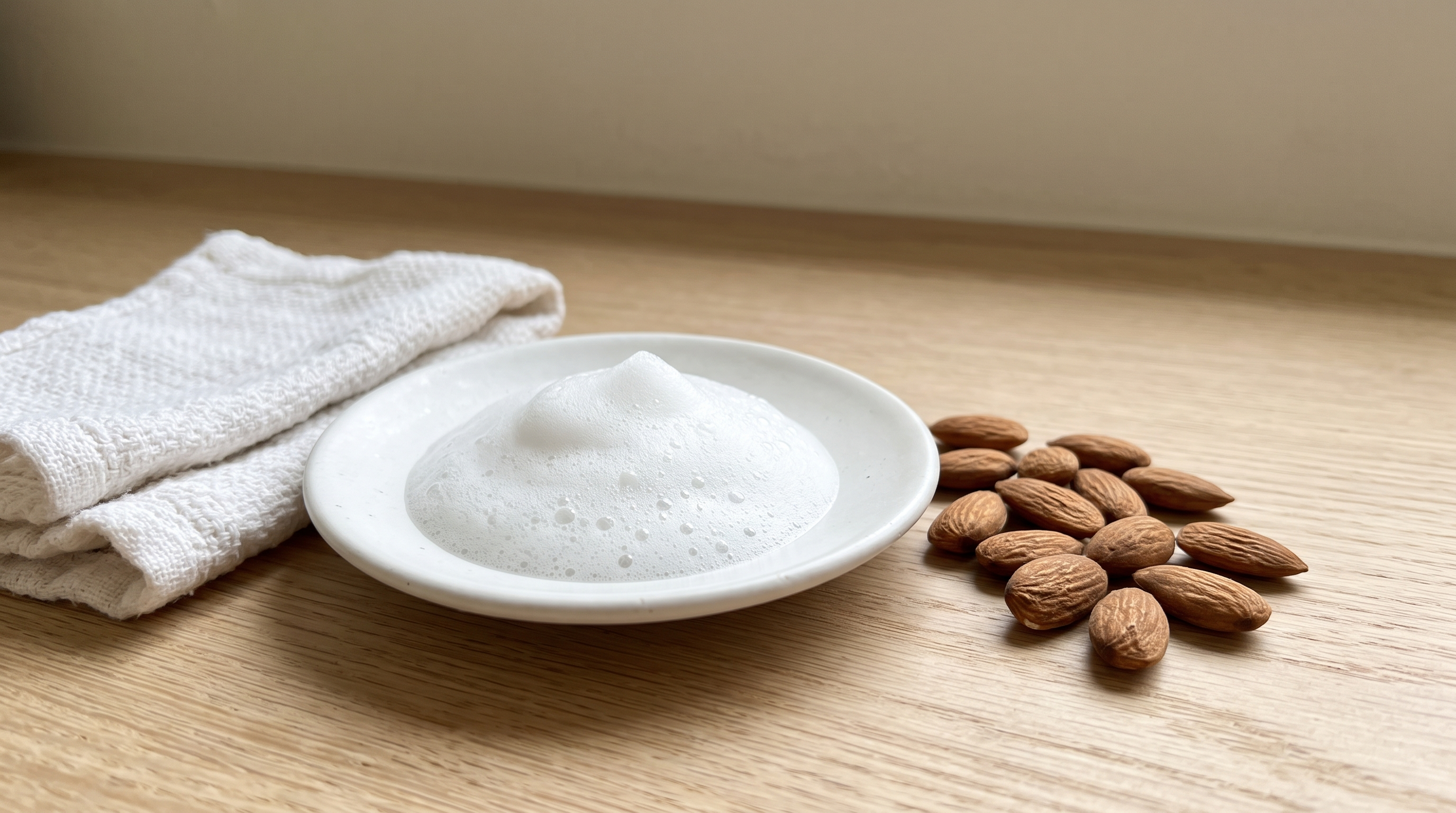
Mandelic Acid Cleanser: What a Gentle Acid Face Wash Can Really Do
Mandelic acid is the slow, gentle member of the alpha hydroxy acid family. Here is what a rinse-off cleanser can deliver, who it suits, and how to use it with retinol
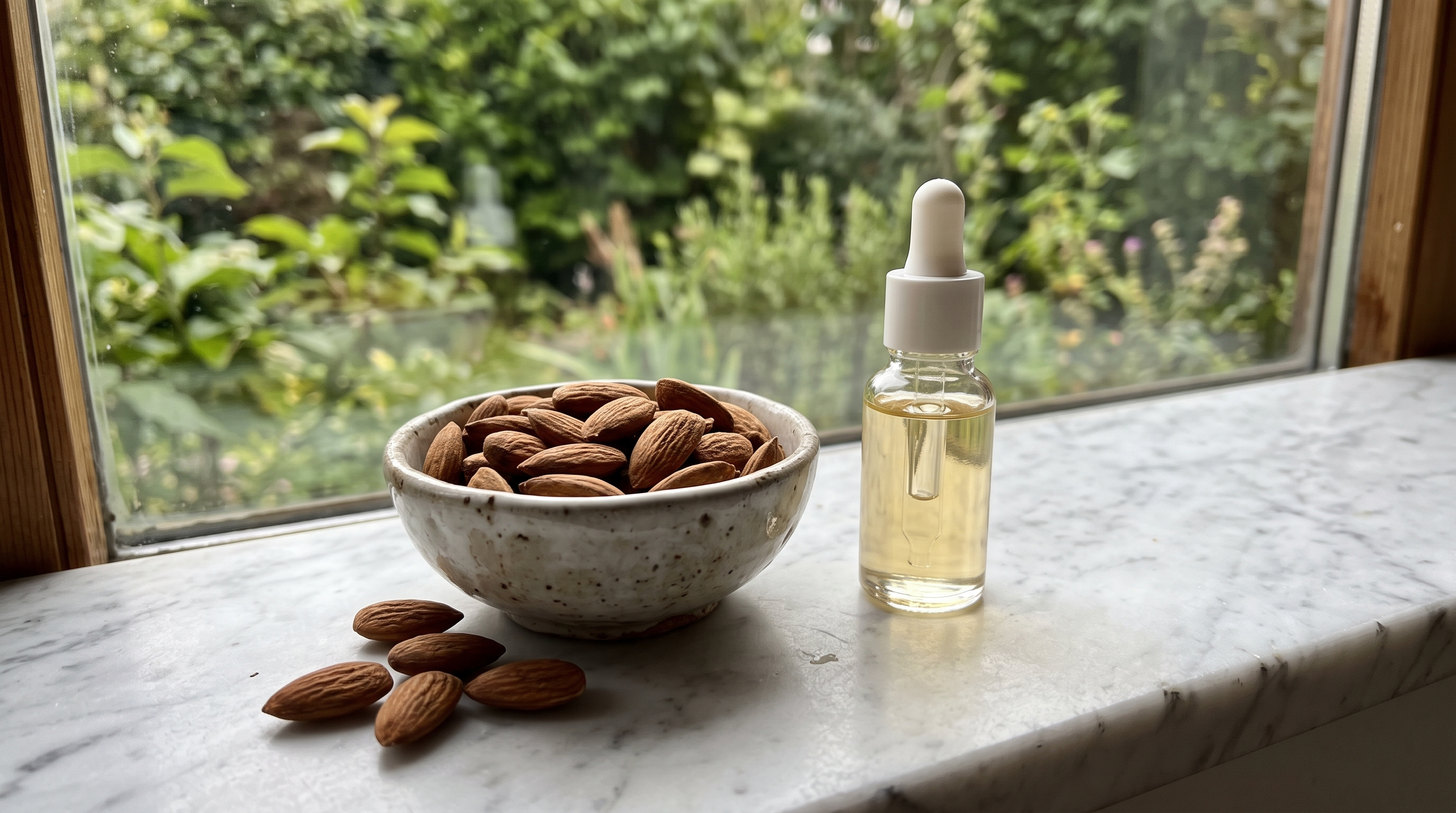
Mandelic acid has built a loyal following among people whose skin cannot handle glycolic acid. It is an alpha hydroxy acid, first isolated from bitter almonds, and it has a reputation for exfoliating more gently than its better-known relatives. A mandelic acid cleanser looks like the easiest way to use it: a face wash that also smooths and brightens.
The reality is more modest. Most of the mandelic acid research comes from in-office peels and leave-on products, not from a wash that stays on your face for a minute. This guide explains why mandelic acid is gentler, what the evidence shows, what a cleanser can realistically do, and how to fit it into a routine with retinol.
Why mandelic acid is gentler
Alpha hydroxy acids loosen the bonds between dead cells on the skin’s surface so they shed more evenly, and at higher strengths they also affect deeper layers [1, 2]. How strongly an acid acts depends on its concentration, the pH of the product and how easily it moves into the skin [1, 2].
Mandelic acid is a much bigger molecule than glycolic acid, with about twice the molecular weight, because it carries a bulky ring structure. Larger molecules move into the skin more slowly and more evenly, which is the usual explanation for why mandelic acid tends to sting less. That gentleness is why it is often suggested for sensitive skin and for deeper skin tones, where irritation can leave dark marks behind.
What the evidence shows
Most of the clinical data comes from peels done by dermatologists, plus one leave-on study:
- Acne and dark marks: in a study of 44 people, a peel combining 20% salicylic acid and 10% mandelic acid, applied every two weeks for six sessions, worked better for active acne and post-acne dark marks than a 35% glycolic acid peel, with fewer side effects [3].
- Melasma: in a randomized study of 90 people, the same salicylic-mandelic peel cut melasma scores by about 61% over 12 weeks, matching a 35% glycolic peel at about 62%, and it was better tolerated [4].
- Aging skin: in 24 adults aged 42 to 68, a leave-on mandelic acid product applied twice daily for four weeks raised the elasticity of lower-eyelid skin by 25.4% and its firmness by 23.8% [5].
Your skin got 4 weeks of twice-daily leave-on mandelic acid in that elasticity study, a far bigger dose than a quick rinse-off wash can deliver.
Your skin got 4 weeks of twice-daily leave-on mandelic acid in that elasticity study, a far bigger dose than a quick rinse-off wash can deliver.
Notice the pattern: strong peels in a clinic, or a product left on the skin for hours. No published trial has tested a mandelic acid cleanser on its own.
What a rinse-off wash can do
A cleanser touches your face for about 30 to 60 seconds before you rinse it away, and much of the acid goes down the drain. An acid also needs an acidic product to work well, and cleansers formulated closer to neutral for comfort leave less of the acid in its active form [1].
That does not make a mandelic acid cleanser useless. Daily use can give a light surface polish, help keep pores clearer on oily skin and leave the face feeling smoother, especially if you let the lather sit for a minute before rinsing. Think of it as a gentle maintenance step. When you want visible change in breakouts, dark marks or texture, a leave-on mandelic acid serum gives far more contact time.
Compared with other acid washes, mandelic is the softest option: a glycolic acid cleanser exfoliates more strongly and suits thicker, less reactive skin, while a salicylic acid cleanser is oil-soluble and better at clearing clogged pores on very oily or breakout-prone skin.
How to choose one
Because the acid plays a supporting role, judge the product as a cleanser first. Harsh surfactants damage skin proteins and lipids, leaving tightness, dryness and irritation, and very alkaline washes swell the outer skin layer even without surfactants [6]. Mild synthetic surfactants are gentler on the skin than traditional soap [6, 7].
Your skin needed 12 weeks of repeated salicylic-mandelic peels to cut melasma scores by about 61%, far more acid exposure than a quick daily face wash can offer.
Look for these features:
- A stated percentage: some brands say how much mandelic acid the cleanser contains; without that, its place on the ingredient list is your only clue.
- Mild surfactants: glucosides or sodium cocoyl isethionate rather than a sulfate as the main cleansing agent.
- No fragrance: it adds irritation risk for no benefit.
- No scrubbing beads: pairing an acid with physical scrubbing undoes the gentleness you chose mandelic acid for.
- Supporting ingredients: glycerin, panthenol or ceramides help offset dryness.
If even a mild acid wash is too much, our guide to the best gentle exfoliator for sensitive skin compares other low-irritation ways to smooth rough texture without stripping the barrier.
How to use it
Start with once a day, in the morning or evening. Massage a small amount onto damp skin, leave the lather on for about a minute, then rinse with lukewarm water. If your face feels tight or stings, drop to every other day. Acid products can make skin more sensitive to the sun [1], so wear sunscreen every morning.
Avoid stacking the cleanser with acid toners, peels or scrubs in the same routine. One gentle exfoliating step is easier on the barrier than three layered on top of each other.
Your skin needed 12 weeks of repeated salicylic-mandelic peels to cut melasma scores by about 61%, far more acid exposure than a quick daily face wash can offer.
Mandelic acid and retinol
Mandelic acid smooths the surface, but a cleanser cannot remodel collagen in the deeper skin, which is what fine lines and lost firmness depend on. Retinoids have the deepest evidence for that job, with decades of clinical work showing improvements in wrinkles and texture [8]. In one double-blind study, 26 weeks of nightly 0.075% retinol cream improved fine wrinkling in 50% of women, compared with 24% on the plain cream [9].
The two can share a routine if you keep them apart. Use the mandelic acid cleanser in the morning and a plain gentle cleanser on retinol nights, at least while your skin adjusts. Retinol’s early side effects, such as dryness and peeling [8], are easier to manage when you are not also exfoliating with acid at the same time.
A gentler retinol to pair with it
Many conventional retinols push the active through the barrier by loosening its protective lipids, which is where much of the redness and peeling comes from. Combined with an acid, that can tip sensitive skin over the edge.
Nanoretinol delivers 0.2% stabilized retinol inside biomimetic lipid nanoparticles that the skin recognizes as its own, so it reaches skin cells without breaking down the barrier first. North Biomedical’s study summary found it 232% more effective in collagen recovery and 73% more effective in elastin recovery than conventional retinol, with minimal side effects that were milder than those of conventional retinol. Over 56 days of use, skin firmness rose 61% and elasticity rose 56% [10].
A simple routine: a mandelic acid cleanser, moisturizer and sunscreen in the morning; a mild cleanser, Nanoretinol and a moisturizer at night.
References
- Kornhauser A, Coelho SG, Hearing VJ. “Applications of hydroxy acids: classification, mechanisms, and photoactivity.” Clinical, Cosmetic and Investigational Dermatology. 2010;3:135-142. doi:10.2147/CCID.S9042
- Tang SC, Yang JH. “Dual Effects of Alpha-Hydroxy Acids on the Skin.” Molecules. 2018;23(4):863. doi:10.3390/molecules23040863
- Garg VK, Sinha S, Sarkar R. “Glycolic acid peels versus salicylic-mandelic acid peels in active acne vulgaris and post-acne scarring and hyperpigmentation: a comparative study.” Dermatologic Surgery. 2009;35(1):59-65. doi:10.1111/j.1524-4725.2008.34383.x
- Sarkar R, Garg V, Bansal S, Sethi S, Gupta C. “Comparative Evaluation of Efficacy and Tolerability of Glycolic Acid, Salicylic Mandelic Acid, and Phytic Acid Combination Peels in Melasma.” Dermatologic Surgery. 2016;42(3):384-391. doi:10.1097/DSS.0000000000000642
- Jacobs SW, Culbertson EJ. “Effects of Topical Mandelic Acid Treatment on Facial Skin Viscoelasticity.” Facial Plastic Surgery. 2018;34(6):651-656. doi:10.1055/s-0038-1676048
- Ananthapadmanabhan KP, Moore DJ, Subramanyan K, Misra M, Meyer F. “Cleansing without compromise: the impact of cleansers on the skin barrier and the technology of mild cleansing.” Dermatologic Therapy. 2004;17(Suppl 1):16-25. doi:10.1111/j.1396-0296.2004.04s1002.x
- Draelos ZD. “The science behind skin care: Cleansers.” Journal of Cosmetic Dermatology. 2018;17(1):8-14. doi:10.1111/jocd.12469
- Mukherjee S, Date A, Patravale V, Korting HC, Roeder A, Weindl G. “Retinoids in the treatment of skin aging: an overview of clinical efficacy and safety.” Clinical Interventions in Aging. 2006;1(4):327-348. doi:10.2147/ciia.2006.1.4.327
- Kikuchi K, Suetake T, Kumasaka N, Tagami H. “Improvement of photoaged facial skin in middle-aged Japanese females by topical retinol (vitamin A alcohol): a vehicle-controlled, double-blind study.” Journal of Dermatological Treatment. 2009;20(5):276-281. doi:10.1080/09546630902973987
- North Biomedical LLC. “Nanoretinol vs. Conventional Retinol: Efficacy in Collagen and Elastin Recovery.” Clinical Study Summary, 2024. Study summary