Resveratrol for Skin: The Polyphenol That Fights Aging on Multiple Fronts
This grape-derived antioxidant has clinical evidence behind it — and it pairs remarkably well with retinol
What Resveratrol Actually Is
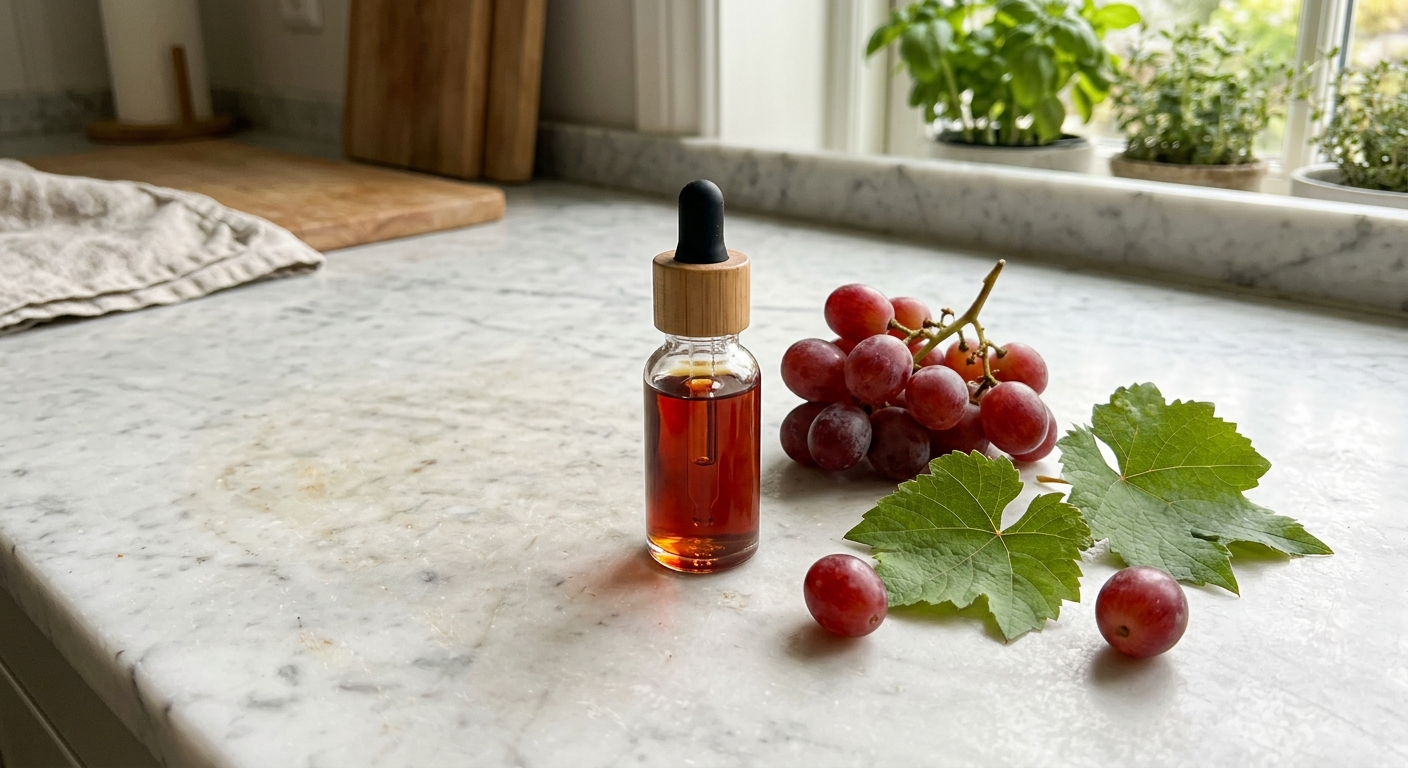
You have probably heard that red wine is good for your skin. The truth is more nuanced — and more interesting. The compound behind the claim is resveratrol (3,4’,5-trihydroxystilbene), a polyphenol produced by grapes, berries, and peanuts as a natural defense against fungal infection and UV stress [1]. When researchers isolated this molecule and tested it directly on skin, the results went well beyond anything a glass of Pinot Noir could deliver.
Resveratrol belongs to the stilbene family of polyphenols, which are among the most potent antioxidant compounds found in nature. But what makes resveratrol particularly interesting for skin aging is that it does not just neutralize free radicals — it simultaneously activates the skin’s own antioxidant defense systems, reduces inflammation, and stimulates collagen synthesis through multiple independent pathways [1]. That triple mechanism is rare among topical ingredients, and it explains why dermatologists increasingly recommend it as a complement to retinol rather than a competitor.
The Clinical Evidence: Beyond the Hype
Wrinkles and Elasticity
A clinical observation study evaluating a 2% trans-resveratrol emulsion found significant improvements in skin hydration, firmness, and overall radiance after consistent use. The researchers noted measurable reduction in fine lines and wrinkle depth, attributing the effects to resveratrol’s ability to scavenge free radicals while simultaneously supporting collagen integrity [2].
A separate 12-week clinical trial with 55 women aged 40 to 60 demonstrated that a topical formulation containing 1% resveratrol significantly improved skin firmness, elasticity, and fine wrinkle appearance. Biopsy analysis revealed an increase in collagen type III production and induction of the Nrf2 pathway, which is the master regulator of the cell’s antioxidant defense system [3]. The Nrf2 activation is noteworthy because it means resveratrol does not just provide antioxidant protection itself — it turns up the volume on the skin’s own protective mechanisms.
A 2025 double-blind, randomized, placebo-controlled study published in Frontiers in Aging evaluated trans-resveratrol as the sole active ingredient (both oral and topical) for improving skin parameters. This is significant because previous trials had always combined resveratrol with other active ingredients, making it difficult to isolate its effects. The study confirmed that trans-resveratrol alone produced measurable improvements in visible signs of skin aging [4].
UV Protection and Inflammation
Resveratrol’s photoprotective effects are well-documented. Preclinical research has shown that it activates superoxide dismutase and glutathione peroxidase — two critical enzymes in the skin’s UV defense system — which reduced the harmful effects of ultraviolet radiation [1]. It also decreases the activity of cyclooxygenase (COX-2), an inflammatory enzyme that drives UV-induced skin damage and premature aging.
You have probably heard that red wine is good for your skin.
A small clinical study found that topical resveratrol reduced facial redness in most participants after just six weeks of daily use, consistent with its documented anti-inflammatory action [3]. For women dealing with both aging concerns and redness or sensitivity, this dual benefit makes resveratrol a particularly useful addition.
Hyperpigmentation
Resveratrol has demonstrated tyrosinase inhibitory activity — meaning it can help suppress excess melanin production at the enzymatic level. While it is not as potent as dedicated brightening agents like tranexamic acid or kojic acid, it contributes a modest brightening effect that complements its anti-aging benefits. Think of it as a supporting player in a dark spot treatment strategy, not the lead.
How Resveratrol Pairs With Retinol
This is where the science gets genuinely exciting for anyone already using a retinol product. Resveratrol and retinol work through completely different mechanisms, which means they complement rather than compete with each other:
Retinol directly upregulates collagen gene expression and suppresses MMPs (the enzymes that break down collagen). It is the most potent topical ingredient for collagen rebuilding. But this process generates oxidative stress as a byproduct — which is partly why retinol can cause irritation.
Resveratrol neutralizes the oxidative stress that retinol generates, while simultaneously activating the Nrf2 antioxidant pathway and providing its own modest collagen-stimulating effects through increased VEGF expression and collagen III production [3].
In practical terms: applying resveratrol in the morning and retinol in the evening gives your skin 24-hour coverage — antioxidant protection during the day when UV and pollution generate free radicals, and collagen rebuilding at night when cell turnover peaks. Resveratrol is also light-sensitive, so nighttime use is not ideal [5]. The morning application makes scientific and practical sense.
The 2% concentration used in clinical studies appears to be the effective threshold for measurable anti-aging effects.
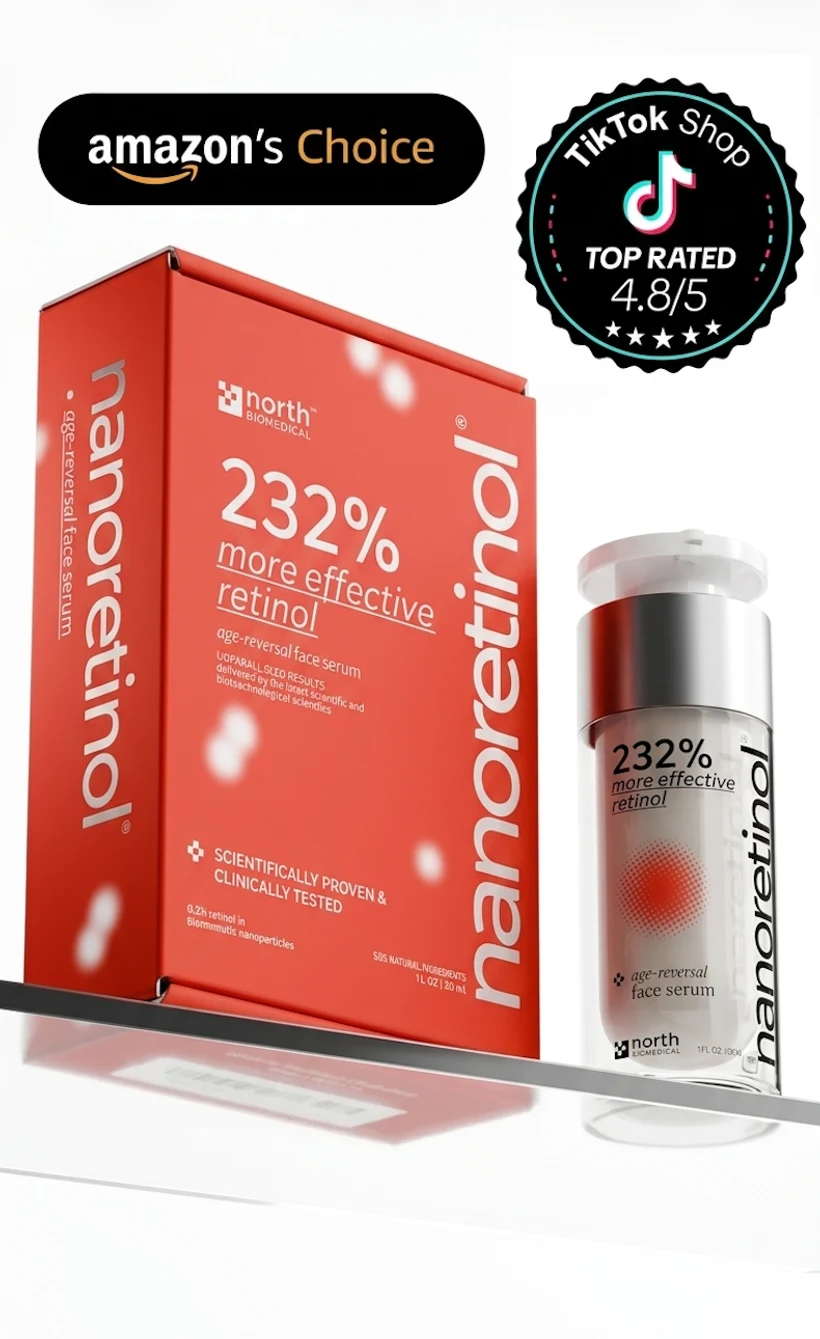
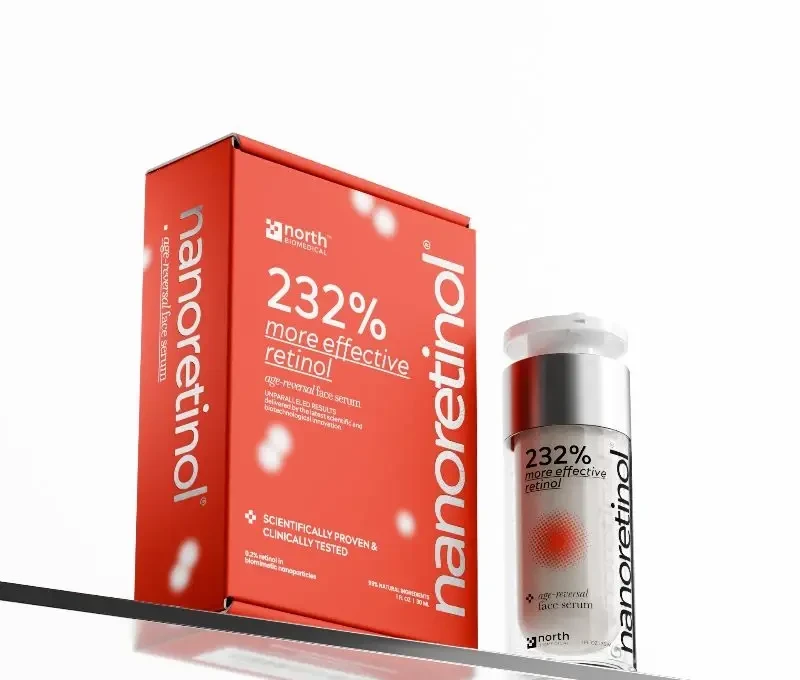
For women over 40 who are already using a retinol product like Nanoretinol® by North Biomedical® — which delivers +232% more effective collagen recovery through biomimetic lipid nanoparticle technology [6] — adding a resveratrol serum in the morning creates a comprehensive strategy that addresses collagen loss from both the rebuilding and protection sides simultaneously.
Oral vs. Topical: What the Science Says
Resveratrol is available both as an oral supplement and in topical formulations. The evidence supports both routes, but for different reasons:
Topical delivers the compound directly to the skin, avoiding the bioavailability challenges of oral supplementation. The 2% concentration used in clinical studies appears to be the effective threshold for measurable anti-aging effects [2]. The main limitation of topical resveratrol is its light sensitivity and relatively poor stability — look for products that use airless packaging and opaque containers.
Oral supplementation may provide systemic antioxidant benefits and has shown effects on skin hydration and smoothness in small studies [5]. However, oral bioavailability of resveratrol is low — most of the ingested compound is metabolized before it reaches the skin. At this stage, topical application appears to deliver more reliable results for skin-specific concerns.
How to Add Resveratrol to Your Routine
Morning routine:
- Cleanse
- Apply resveratrol serum (look for 1-2% concentration)
- Follow with vitamin C serum — the two antioxidants work synergistically
- Moisturize
- Broad-spectrum SPF 30+
Evening routine:
- Cleanse
- Apply retinol (here is a guide to getting started)
- Follow with moisturizer containing ceramides or hyaluronic acid
Resveratrol is generally well-tolerated even by sensitive skin types, which is one of its advantages over more aggressive actives. It does not cause the purging, peeling, or dryness associated with retinoids or AHAs. If you are someone who has struggled with retinol sensitivity in the past, pairing a gentler retinol formulation with daytime resveratrol may provide anti-aging benefits while staying within your skin’s tolerance window.
What Resveratrol Cannot Do
No ingredient is a miracle, and setting realistic expectations matters. Resveratrol is a powerful antioxidant and a legitimate anti-aging ingredient with clinical evidence — but it is not a replacement for retinol when it comes to direct collagen gene upregulation and MMP suppression. Retinol remains the gold standard for reversing existing wrinkles. Resveratrol’s strength is in protection, preservation, and complementary support.
Think of it this way: retinol is the renovation crew. Resveratrol is the insurance policy that protects the renovation from damage. You want both.
References
- Baur JA, Sinclair DA. “Resveratrol as a factor preventing skin aging and affecting its regeneration.” Postepy Dermatologii i Alergologii. 2022;39(3):439-447. doi:10.5114/ada.2021.108925
- Buonocore D, et al. “Skin Anti-Aging Benefits of a 2% Resveratrol Emulsion.” Journal of Cosmetics, Dermatological Sciences and Applications. 2021;11(2):155-168. doi:10.4236/jcdsa.2021.112015
- Farris P, et al. “Evaluation of Efficacy and Tolerance of a Nighttime Topical Antioxidant Containing Resveratrol, Baicalin, and Vitamin E for Prevention of Ultraviolet-Induced Skin Damage.” Journal of Drugs in Dermatology. 2014;13(12):1467-1472. PMID: 25607790
- Allenby T, et al. “Trans-resveratrol reduces visible signs of skin ageing in healthy adults: a double-blind, randomised, placebo-controlled study.” Frontiers in Aging. 2025;6:1727244. doi:10.3389/fragi.2025.1727244
- Ratz-Lyko A, Arct J. “The impact of resveratrol on skin wound healing, scarring, and aging.” International Wound Journal. 2022;19(6):1560-1575. doi:10.1111/iwj.13795
- North Biomedical LLC. “Nanoretinol® vs. Conventional Retinol: Efficacy in Collagen and Elastin Recovery.” Clinical Study Summary, 2024. https://northbiomedical.com/documents/Nanoretinol-Study_Summary.pdf