
Sagging Face Skin: What's Really Happening Below the Surface and How to Tighten It
Collagen loss, elastin degradation, and gravity — the triple threat behind facial sagging, and the evidence-based treatments that actually restore firmness
The Anatomy of a Sagging Face
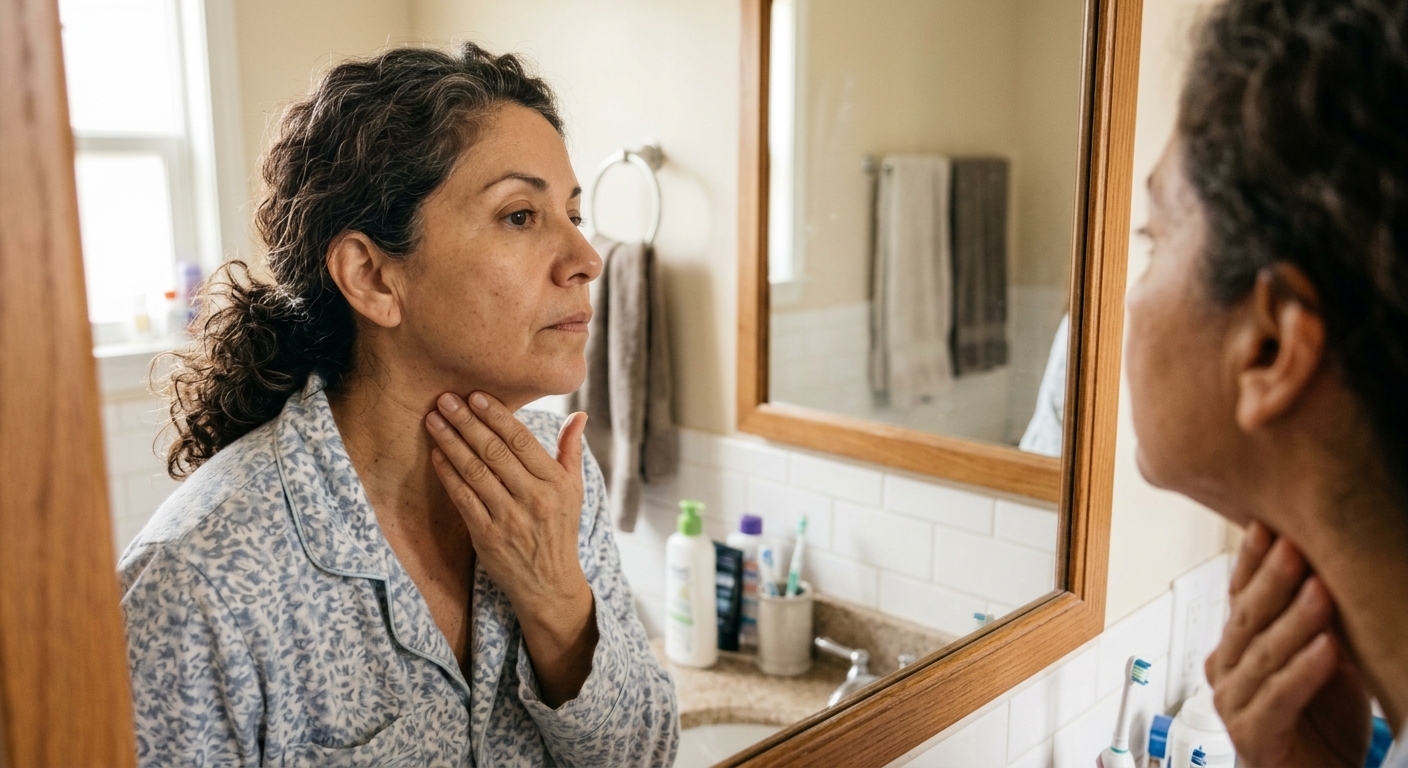
Look in the mirror and pinch the skin along your jawline. If it moves more than it used to — if the boundary between jaw and neck has started to blur — what you’re seeing isn’t just “getting older.” It’s the visible result of structural collapse happening in layers you can’t see.
Facial sagging is a three-dimensional problem. It involves the skin, the fat pads beneath it, the connective tissue that anchors those fat pads, and even the bone underneath. Understanding what’s actually going wrong, layer by layer, is the difference between wasting money on products that don’t work and investing in approaches backed by clinical evidence.
Collagen: The Scaffolding That’s Disappearing
Collagen makes up roughly 75% of the skin’s dry weight. It provides the structural framework — the scaffolding that keeps everything taut and lifted. Starting in your mid-twenties, collagen production declines by approximately 1% per year [1]. By age 50, you’ve lost roughly a quarter of your skin’s collagen.
But the problem isn’t just that you’re making less. You’re also breaking it down faster. Matrix metalloproteinases (MMPs) — enzymes that degrade collagen — become more active with age, UV exposure, and inflammation. So the net loss accelerates: less production, more destruction.
A landmark study published in Archives of Dermatology confirmed this mechanism, showing that aged skin exhibits significantly reduced type I procollagen synthesis while MMP activity increases — a one-two punch that progressively weakens the dermal architecture [2].
Elastin: The Bounce That Doesn’t Come Back
If collagen is the scaffolding, elastin is the spring mechanism. Elastic fibers allow your skin to stretch and snap back. Unlike collagen, which your body continues to produce (just less efficiently), elastin production essentially stops after puberty. The elastic fibers you have in your thirties are largely the same ones you were born with — and they degrade over time [3].
UV damage is the primary accelerant. Photoaged skin shows severely fragmented and tangled elastic fibers — a condition called solar elastosis. Once damaged, elastic fibers don’t regenerate meaningfully. This is why sun damage correlates so strongly with premature sagging and loss of facial contour.
Starting in your mid-twenties, collagen production declines by approximately 1% per year.
The Fat Pad Shift
Beneath the skin and muscle of the face, discrete compartments of fat provide volume and shape. In youth, these fat pads are evenly distributed and held in place by connective tissue. With age, the fat pads in the midface shrink and descend, while fat in the lower face and jowl area often increases [4].
This descent, combined with weakening of the retaining ligaments that hold facial structures in place, produces the characteristic signs of facial aging: deepening nasolabial folds, hollowed cheeks, jowling along the jawline, and a blurred chin-to-neck transition.
The Estrogen Factor
For women, menopause dramatically accelerates facial sagging. Estrogen is a key regulator of collagen synthesis, and studies show that women lose approximately 30% of their skin collagen in the first five years after menopause [5]. This isn’t a gradual decline — it’s a cliff.
Postmenopausal skin also shows decreased skin elasticity, reduced thickness, and increased dryness. Hormone replacement therapy has been shown to partially mitigate these changes, but it comes with its own risk-benefit considerations that are beyond the scope of skincare.
What Actually Works: Evidence-Based Approaches
Retinoids for Collagen Stimulation
Retinol remains the most evidence-backed topical ingredient for stimulating new collagen synthesis in aging skin. Clinical trials have repeatedly demonstrated that retinol increases type I procollagen production, reduces MMP activity, and improves skin elasticity and firmness [2][6].
A randomized controlled trial involving subjects over 80 years old found that just seven days of topical retinol application significantly reduced collagenase expression and increased both fibroblast growth and collagen synthesis [2]. The skin’s collagen-building machinery doesn’t shut down with age — it just needs the right signals.
The skin’s collagen-building machinery doesn’t shut down with age — it just needs the right signals.
The challenge with conventional retinol is tolerability. Retinoid dermatitis — the peeling, redness, and irritation that accompany most retinol products — often drives people to quit before seeing structural benefits, which typically require 12+ weeks of consistent use.
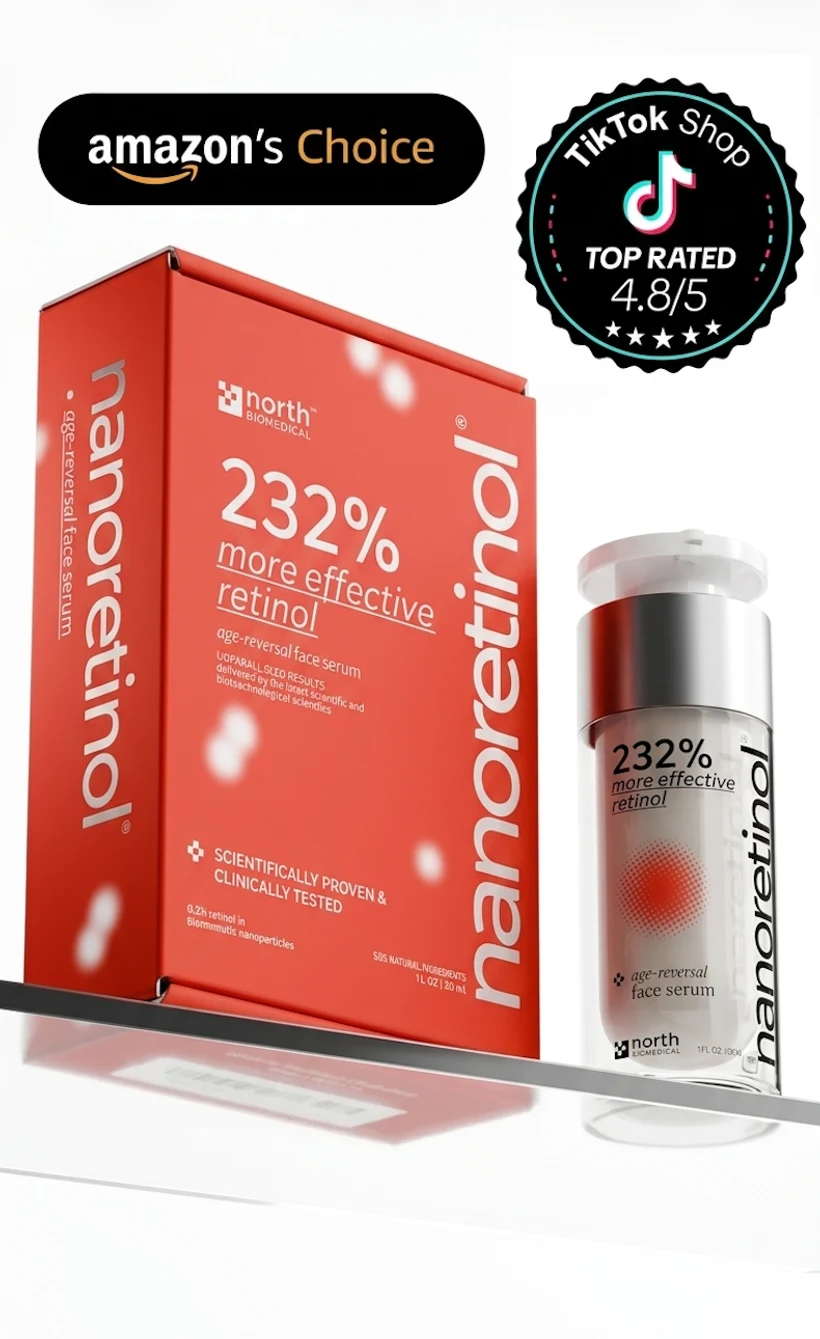
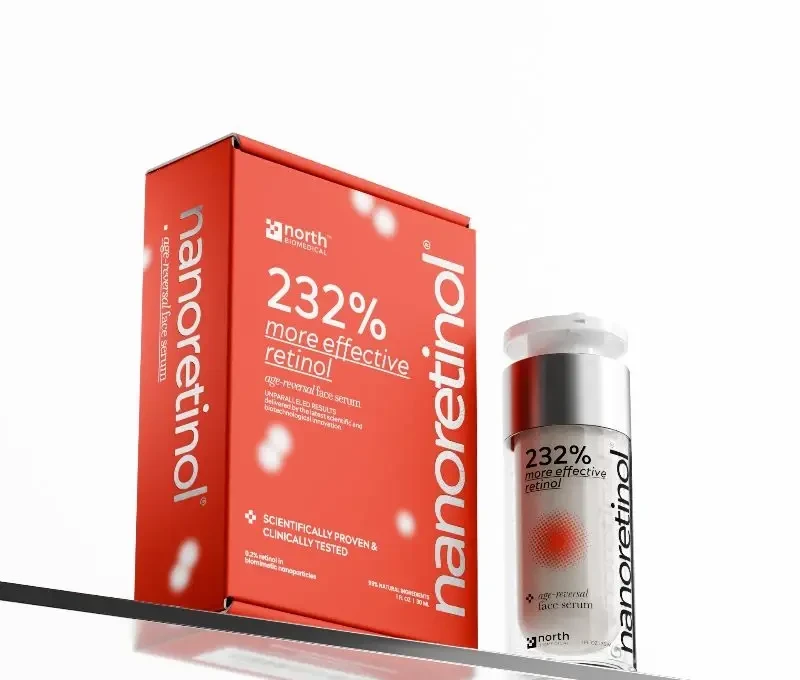
This is where delivery technology makes a clinically meaningful difference. Nanoretinol® uses biomimetic lipid nanoparticle encapsulation to deliver retinol through the skin barrier without disrupting it. Clinical testing showed it achieved +232% more effective collagen recovery and +73% more effective elastin recovery compared to conventional retinol — with significantly reduced cytotoxicity. For sagging skin that’s already thin and sensitive, a delivery system that doesn’t damage the barrier to get the active ingredient in is a genuine advantage.
Vitamin C: The Collagen Co-Factor
Vitamin C (L-ascorbic acid) is essential for collagen synthesis — it serves as a co-factor for the enzymes prolyl and lysyl hydroxylase, which stabilize the collagen molecule. Without adequate vitamin C, collagen production stalls regardless of what other actives you’re using [7].
Topical vitamin C serums at 10–20% concentration have been shown to increase collagen production, provide antioxidant protection against UV-induced MMP activation, and improve skin firmness in clinical trials.
Peptides: Signaling for Repair
Signal peptides like palmitoyl pentapeptide-4 (Matrixyl) send biological messages to fibroblasts, stimulating them to produce more collagen and elastin. While the evidence base isn’t as robust as retinoids, several clinical trials have shown measurable improvements in skin firmness and wrinkle depth with consistent peptide use [8].
Copper peptides deserve particular mention. GHK-Cu has demonstrated the ability to promote collagen and elastin synthesis, improve skin thickness, and accelerate wound healing in multiple studies.
Radiofrequency and Ultrasound: Non-Invasive Tightening
For those seeking more dramatic results, energy-based devices offer clinical evidence of skin tightening. Monopolar radiofrequency (RF) treatments have been shown to remodel collagen and reorganize elastic fibers in the dermis. A histometric analysis published in the Journal of Cosmetic Dermatology demonstrated that monopolar RF improved skin laxity through increased collagen and elastic fiber density in the papillary dermis [9].
Microfocused ultrasound (Ultherapy) targets deeper tissue layers, creating thermal injury zones that trigger neocollagenesis. Clinical trials show improvement in jawline contour and skin laxity at 90 days, with 63.6% of patients showing measurable tightening.
What Doesn’t Work
- Facial exercises and “face yoga”: While popular on social media, controlled studies show limited evidence that repetitive facial movements meaningfully counteract structural collagen loss or fat pad descent.
- Collagen creams: Collagen molecules in topical formulations are too large to penetrate the skin barrier. They can moisturize the surface, but they cannot rebuild the dermal collagen network.
- Single-ingredient fixes: Facial sagging involves multiple tissue layers. No single cream, serum, or device addresses all of them. The most effective approach combines collagen-stimulating actives (retinol, vitamin C, peptides) with sun protection and, when appropriate, professional treatments.
Building an Anti-Sagging Routine
Based on the clinical evidence, here’s what a science-backed approach to facial sagging looks like:
- Sunscreen daily. UV radiation is the single largest external driver of collagen destruction and elastin degradation. Full stop.
- Retinol at night. Choose a formulation with proven dermal delivery — the ingredient needs to reach the fibroblasts in the dermis to stimulate collagen production.
- Vitamin C in the morning. Provides antioxidant protection against daytime UV-induced MMP activation while supporting collagen synthesis.
- Peptides as a complement. Layer peptide-containing products alongside retinol for compounded collagen signaling.
- Professional evaluation. If laxity is moderate to severe, consult a board-certified dermatologist about energy-based devices, which can achieve results topicals alone cannot.
References
- Varani J, Dame MK, Rittie L, et al. “Decreased collagen production in chronologically aged skin: roles of age-dependent alteration in fibroblast function and defective mechanical stimulation.” American Journal of Pathology. 2006;168(6):1861-1868. doi:10.2353/ajpath.2006.051302
- Kafi R, Kwak HSR, Schumacher WE, et al. “Improvement of Naturally Aged Skin With Vitamin A (Retinol).” Archives of Dermatology. 2007;143(5):606-612. doi:10.1001/archderm.143.5.606
- Sherratt MJ. “Tissue elasticity and the ageing elastic fibre.” Age. 2009;31(4):305-325. doi:10.1007/s11357-009-9103-6
- Rohrich RJ, Pessa JE. “The fat compartments of the face: anatomy and clinical implications for cosmetic surgery.” Plastic and Reconstructive Surgery. 2007;119(7):2219-2227. doi:10.1097/01.prs.0000265403.66886.54
- Brincat M, Versi E, Moniz CF, et al. “Skin collagen changes in postmenopausal women receiving different regimens of estrogen therapy.” Obstetrics and Gynecology. 1987;70(1):123-127. PMID: 3601260
- Mukherjee S, Date A, Patravale V, et al. “Retinoids in the treatment of skin aging: an overview of clinical efficacy and safety.” Clinical Interventions in Aging. 2006;1(4):327-348. doi:10.2147/ciia.2006.1.4.327
- Pullar JM, Carr AC, Vissers MCM. “The roles of vitamin C in skin health.” Nutrients. 2017;9(8):866. doi:10.3390/nu9080866
- Gorouhi F, Maibach HI. “Role of topical peptides in preventing or treating aged skin.” International Journal of Cosmetic Science. 2009;31(5):327-345. doi:10.1111/j.1468-2494.2009.00499.x
- Suh DH, et al. “Monopolar radiofrequency treatment for facial laxity: Histometric analysis.” Journal of Cosmetic Dermatology. 2020;19(9):2317-2324. doi:10.1111/jocd.13449