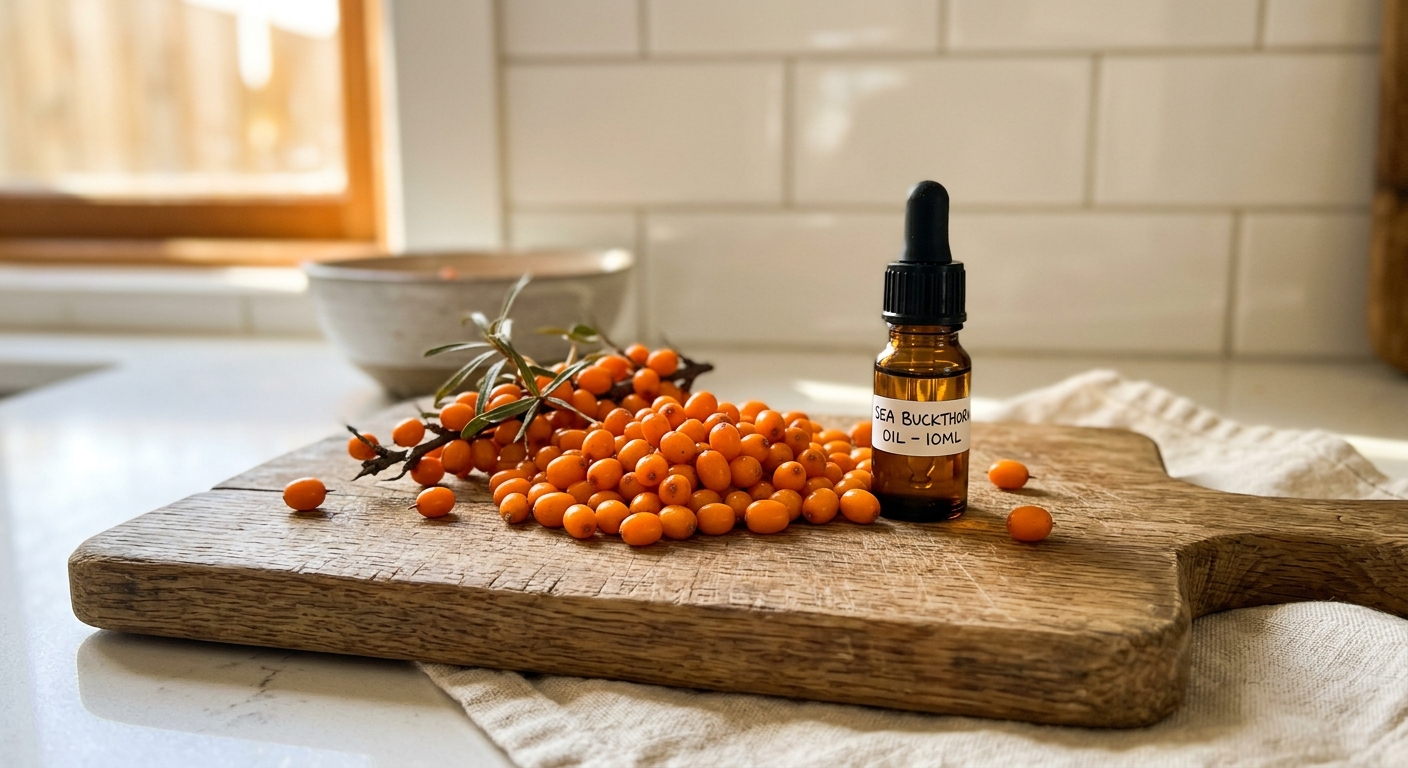
Sea Buckthorn Oil for Skin: The Omega-7 Powerhouse Hiding in Plain Sight
Why this ancient berry oil is earning modern clinical attention for skin repair, barrier recovery, and anti-aging
A Berry You Probably Can’t Name — But Your Skin Already Wants
Sea buckthorn (Hippophae rhamnoides) is a thorny shrub that thrives in the most inhospitable environments on earth: Himalayan slopes, Mongolian steppes, Scandinavian coastlines. The bright orange berries it produces have been used in traditional medicine across Asia and Northern Europe for centuries. But the reason dermatology researchers are paying serious attention to sea buckthorn oil in the 2020s has less to do with tradition and more to do with its uniquely complex fatty acid profile — specifically, its extraordinarily high concentration of palmitoleic acid, an omega-7 fatty acid that’s rare in the plant kingdom [1].
Most skincare oils deliver omega-3, omega-6, or omega-9 fatty acids. Sea buckthorn pulp oil delivers all of these plus omega-7, making it one of the most biochemically diverse botanical oils available for topical application.
What Makes the Fatty Acid Profile Special
Sea buckthorn produces two distinct oils: seed oil (extracted from the seeds) and pulp oil (extracted from the fruit flesh). Their compositions are dramatically different, and this distinction matters for skin applications.
Pulp oil is dominated by palmitoleic acid (omega-7, up to 40%) and palmitic acid (omega-9, around 30%). It’s also loaded with carotenoids — the pigments that give the berries their intense orange color — including beta-carotene, lycopene, and zeaxanthin. These carotenoids function as fat-soluble antioxidants that protect both the oil and the skin from oxidative damage [1].
Seed oil is richer in linoleic acid (omega-6) and alpha-linolenic acid (omega-3), making it lighter, less pigmented, and better suited for oily or acne-prone skin. It also contains significant amounts of tocopherols (vitamin E forms) and plant sterols [2].
For anti-aging and barrier repair, pulp oil is the more clinically relevant of the two. For inflammatory skin conditions and general hydration, seed oil offers a complementary profile.
Omega-7 and Your Skin Barrier
Palmitoleic acid isn’t just another fatty acid — it’s a structural component of human skin. Your sebum naturally contains palmitoleic acid, but its concentration declines with age. By your 40s, the sebum composition shifts toward less protective ratios, contributing to increased transepidermal water loss (TEWL) and barrier vulnerability [3].
Topically applying an oil rich in palmitoleic acid essentially replenishes what the skin is losing. A comprehensive literature review of 40 peer-reviewed studies found that sea buckthorn oil demonstrated significant anti-inflammatory, antioxidant, and immunomodulatory properties, with particular effectiveness in supporting skin barrier repair in conditions like atopic dermatitis, psoriasis, and wound healing [4].
Pulp oil is dominated by palmitoleic acid (omega-7, up to 40%) and palmitic acid (omega-9, around 30%).
The Anti-Inflammatory Evidence
Chronic low-grade inflammation is a driver of premature skin aging — a concept dermatologists now call “inflammaging.” Sea buckthorn oil addresses this through multiple mechanisms:
Carotenoid antioxidant activity: The beta-carotene and lycopene in sea buckthorn oil neutralize reactive oxygen species (ROS) generated by UV exposure and pollution. An animal study demonstrated that oral sea buckthorn supplementation prevented UV-induced skin aging by suppressing matrix metalloproteinases (MMPs) — the enzymes that break down collagen — while increasing superoxide dismutase (SOD) activity [5].
Fatty acid-mediated inflammation control: Omega-7 palmitoleic acid has been shown to reduce inflammatory signaling in cell studies. The omega-3 alpha-linolenic acid in the seed oil provides additional anti-inflammatory support through a separate pathway — competitive inhibition of pro-inflammatory omega-6 metabolism [2].
Wound healing acceleration: Clinical observations with burn patients treated with sea buckthorn oil-infused dressings showed improved wound appearance, texture, and healing time. The proposed mechanism involves palmitoleic acid’s role in stimulating keratinocyte proliferation and collagen deposition [4].
Anti-Aging Applications: Where It Fits in Your Routine
Sea buckthorn oil is not a replacement for retinol or other active anti-aging ingredients — it’s a potent supporting player that addresses the barrier and inflammatory aspects of skin aging.
Think of it this way: retinol stimulates collagen production by directly activating fibroblasts. Sea buckthorn oil creates the optimal environment for those fibroblasts to work by reducing oxidative stress, calming inflammation, and maintaining barrier integrity. The combination is more effective than either alone.
Where it excels:
- Repairing a compromised skin barrier — particularly useful during retinol initiation when the barrier is under stress
- Providing fat-soluble antioxidant protection in the lipid layer of the stratum corneum
- Moisturizing without the heavy occlusive feel of mineral oil-based products
- Soothing reactive or rosacea-prone skin that can’t tolerate aggressive active ingredients
Where it falls short:
- It won’t directly stimulate collagen synthesis the way retinol or copper peptides do
- The deep orange pigment of pulp oil can temporarily stain light skin (seed oil doesn’t have this issue)
- It doesn’t address deep wrinkles or significant volume loss
In face oils, it’s typically included at 5–15% in a carrier blend.
Choosing the Right Form
Not all sea buckthorn oil products are equivalent. Key quality indicators:
CO2 or cold-pressed extraction: Preserves the full spectrum of fatty acids, carotenoids, and tocopherols. Solvent-extracted oils lose significant bioactive content.
Pulp oil vs. seed oil: For barrier repair and anti-aging, pulp oil (also called fruit oil or berry oil) is preferred. For sensitive, oily, or acne-prone skin, seed oil is the better choice. Some products blend both.
Concentration matters: Sea buckthorn oil is potent. In face oils, it’s typically included at 5–15% in a carrier blend. Using pure, undiluted pulp oil can be too intense for facial skin — the carotenoid concentration may cause temporary orange staining and can be comedogenic for some skin types.
Storage: The high polyunsaturated fat content makes sea buckthorn oil susceptible to oxidation. Buy products in dark glass bottles, store away from heat and light, and use within six months of opening.
Combining Sea Buckthorn Oil With Active Skincare
For maximum benefit, layer sea buckthorn oil strategically:
Evening routine: After applying your retinol (wait 15–20 minutes for absorption), follow with a sea buckthorn-containing facial oil. The fatty acids will help buffer the potential irritation from retinol while reinforcing the barrier during overnight repair.
Morning routine: Use the seed oil version as a lightweight moisturizing layer before sunscreen. The antioxidants provide an additional line of defense against daytime UV and pollution exposure.
Targeted application: For specific concerns like dry skin patches, eczema flares, or post-procedure recovery, apply a small amount of pulp oil directly to the affected area.
The Bigger Picture: Botanicals as Barrier Builders
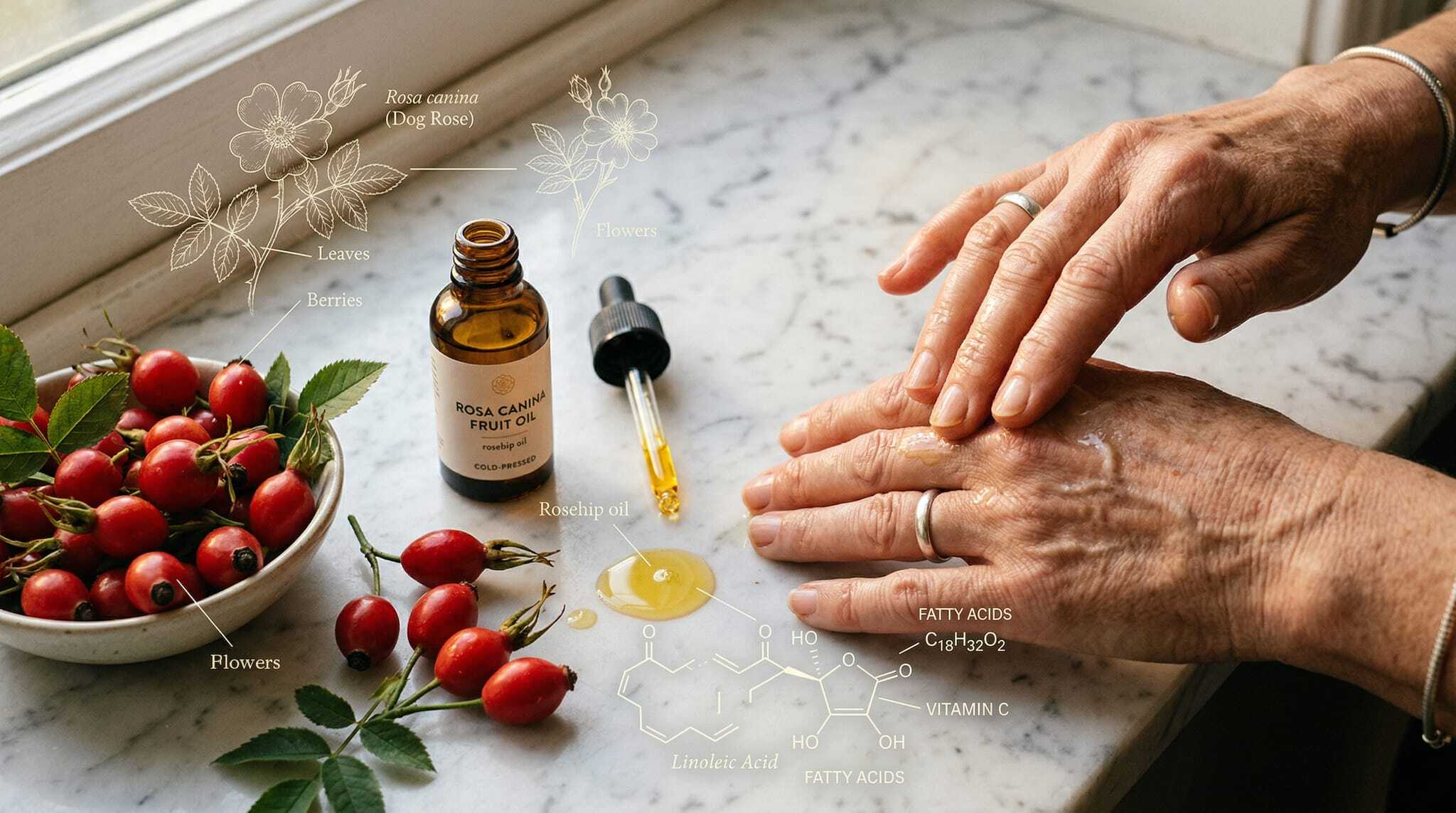
Sea buckthorn fits into a growing category of botanical oils that dermatological research is validating for specific skin functions. Like rosehip oil (rich in trans-retinoic acid and linoleic acid), argan oil (vitamin E and ferulic acid), and jojoba oil (wax esters that mimic sebum), sea buckthorn brings a unique biochemical fingerprint that fills a gap no synthetic ingredient quite matches.
The clinical evidence is strongest for barrier repair and anti-inflammatory support. When your primary anti-aging strategy is built around a high-performance retinol like Nanoretinol® — which delivers +232% greater collagen recovery through lipid nanoparticle technology [6] — adding a barrier-supporting oil like sea buckthorn ensures the skin can tolerate and respond optimally to that active treatment.
What to Expect
Introduce sea buckthorn oil gradually. Start with a blended product (5–10% concentration) rather than pure pulp oil. Within two to four weeks, you should notice improved skin hydration, reduced reactive redness, and a stronger barrier feel — that subjective sense that your skin handles environmental stress better than before.
The anti-aging benefits build over months as reduced chronic inflammation allows collagen remodeling to proceed unimpeded. Think of it as removing the brakes rather than pressing the accelerator — the retinol in your routine handles the acceleration.
References
- Olas B. “Sea Buckthorn Oil — A Valuable Source for Cosmeceuticals.” Cosmetics. 2017;4(4):40. doi:10.3390/cosmetics4040040
- Yang B, Kallio HP. “Fatty Acid Composition of Lipids in Sea Buckthorn (Hippophaë rhamnoides L.) Berries of Different Origins.” Journal of Agricultural and Food Chemistry. 2001;49(4):1939-1947. doi:10.1021/jf001059s
- Pappas A. “Epidermal Surface Lipids.” Dermato-Endocrinology. 2009;1(2):72-76. doi:10.4161/derm.1.2.7811
- Zielińska A, Nowak I. “Abundance of Active Ingredients in Sea-Buckthorn Oil.” Lipids in Health and Disease. 2017;16:95. doi:10.1186/s12944-017-0469-7
- Hwang IS, Kim JE, Choi SI, et al. “UV Radiation-Induced Skin Aging in Hairless Mice Is Effectively Prevented by Oral Intake of Sea Buckthorn (Hippophae rhamnoides L.) Fruit Blend for 6 Weeks Through MMP Suppression and Increase of SOD Activity.” International Journal of Molecular Medicine. 2012;30(2):392-400. doi:10.3892/ijmm.2012.1011
- North Biomedical LLC. “Nanoretinol® vs. Conventional Retinol: Efficacy in Collagen and Elastin Recovery.” Clinical Study Summary, 2024.