Jojoba Oil for Skin: The Desert Oil That Mimics Your Skin's Own Moisture
Why dermatologists recommend jojoba oil for mature skin — and what the science says about its anti-aging potential
What Makes Jojoba Oil Different From Every Other Skincare Oil
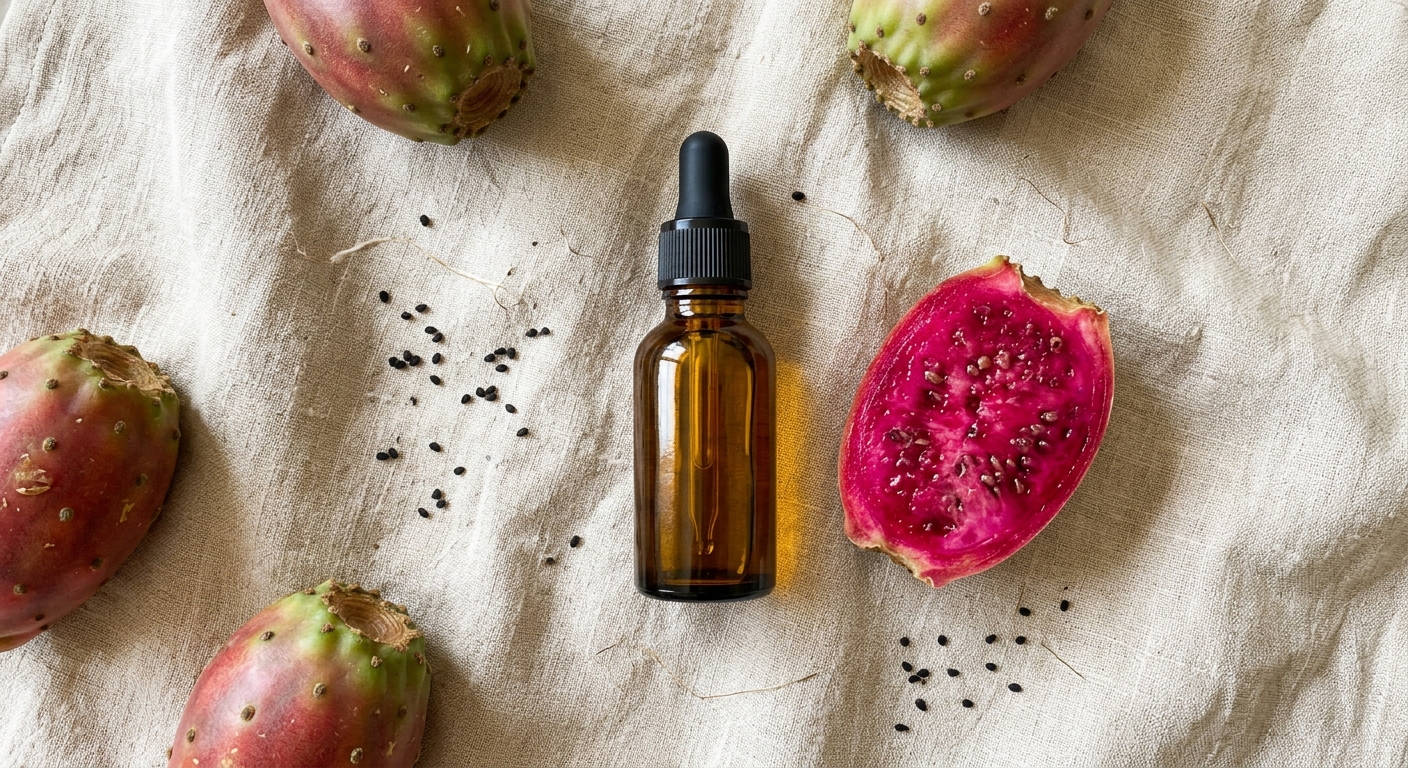
Jojoba oil is not actually an oil. It is a liquid wax ester — a distinction that matters far more than semantics suggest. Extracted from the seeds of the Simmondsia chinensis plant, which thrives in the Sonoran Desert of Arizona and northern Mexico, jojoba produces a substance that is structurally almost identical to human sebum, the waxy coating your skin produces to protect and hydrate itself [1].
This molecular resemblance is what makes jojoba unique among the hundreds of plant oils used in skincare. Where coconut oil, argan oil, and olive oil are true triglyceride-based oils, jojoba is composed primarily of long-chain wax esters — the same class of molecules that make up roughly 25% of your skin’s surface lipids [2]. Your skin essentially recognizes jojoba as its own material, which is why it absorbs cleanly without the greasy residue that heavier oils leave behind.
For women over 40, this matters because sebum production declines with age. By your 50s, your skin produces roughly 50% less sebum than it did in your 20s [1]. That decline is a major contributor to the dryness, tightness, and loss of suppleness that characterize aging skin. Jojoba does not just sit on top and mask dryness — it integrates into your existing lipid barrier and reinforces it from within.
The Science of Sebum Regulation
One of jojoba oil’s most counterintuitive properties is its ability to regulate sebum production in both directions — reducing excess oil in oily skin while providing needed lipids to dry skin.
A clinical study conducted by Jojoba Desert found that regular application of jojoba oil reduced sebum secretion by 23% after 28 days in subjects with oily skin [3]. The proposed mechanism is elegant: because jojoba wax esters are so similar to the skin’s own sebum, they send a signal to sebaceous glands that sufficient surface lipids are present, downregulating production. In dry skin, the same wax esters supplement the depleted lipid barrier without triggering the overproduction that heavy occlusive agents can cause.
This bidirectional regulation makes jojoba one of the few skincare ingredients that genuinely works across all skin types — a claim that most oils cannot support with evidence.
Anti-Aging Evidence: What the Research Shows
Wound Healing and Collagen Support
Ranzato and colleagues demonstrated that jojoba oil stimulates wound healing by accelerating fibroblast migration — the cellular movement that drives tissue repair. The study found that jojoba promoted the closure of experimental wounds in a dose-dependent manner, with the effect linked to increased collagen synthesis in the wound area [4]. Fibroblasts are the same cells responsible for producing collagen and elastin in the dermis, making this finding directly relevant to anti-aging.
Antioxidant and Anti-Inflammatory Activity
Jojoba oil contains natural vitamin E (tocopherols), B-complex vitamins, and trace minerals including zinc, copper, and selenium [2]. These compounds contribute to measurable antioxidant activity — the capacity to neutralize free radicals generated by UV exposure and pollution. In a comparative analysis of plant-based cosmetic oils, jojoba demonstrated significant antioxidant potential, though lower than that of dedicated antioxidant ingredients like ferulic acid or astaxanthin [5].
By your 50s, your skin produces roughly 50% less sebum than it did in your 20s.
Its anti-inflammatory properties have been documented in multiple studies. Habashy et al. found that jojoba oil exhibited anti-inflammatory effects comparable to the reference drug mefenamic acid in experimental inflammation models, reducing erythema and edema markers significantly [6]. For aging skin, chronic low-grade inflammation (sometimes called “inflammaging”) is a recognized driver of collagen degradation, making anti-inflammatory ingredients a relevant part of any comprehensive anti-aging strategy.
Barrier Repair and Moisture Retention
A study published in Pharmacognosy Magazine evaluated the skin barrier properties of jojoba-based formulations and found significant improvements in transepidermal water loss (TEWL) — the rate at which moisture escapes through the skin — after consistent application [7]. Reduced TEWL indicates a stronger, more intact barrier, which is critical for mature skin that is increasingly prone to moisture loss.
How Jojoba Compares to Other Skincare Oils
Not all plant oils are created equal for facial use. Here is where jojoba stands relative to common alternatives:
Versus coconut oil: Coconut oil is a triglyceride with a comedogenicity rating of 4 out of 5 — meaning it frequently clogs pores. Jojoba’s comedogenicity rating is 2, and its wax ester structure makes it far less likely to cause breakouts [5].
Versus rosehip oil: Rosehip delivers retinoid precursors (tretinoin) and higher concentrations of vitamin A. Jojoba delivers superior barrier support and sebum regulation. They are complementary rather than competitive.
Versus squalane: Both mimic natural skin lipids — squalane mirrors skin squalene while jojoba mirrors sebum wax esters. Squalane is lighter; jojoba provides more comprehensive barrier reinforcement.
Versus argan oil: Argan is richer in vitamin E and has stronger clinical evidence for improving skin elasticity in postmenopausal women. Jojoba has better sebum-regulation data and lower comedogenic potential.
Versus rosemary oil: Rosemary is an essential oil rather than a carrier oil, used at a fraction of a percent for its antioxidant diterpenes and carrying a real sensitisation risk — the evidence is reviewed in rosemary oil for skin.
The result is 232% greater collagen recovery and 73% greater elastin recovery compared to conventional retinol, delivered without barrier damage.
Where Jojoba Fits in an Anti-Aging Routine
Jojoba oil excels at hydration, barrier support, and sebum regulation. What it does not do is drive the structural dermal changes — increased collagen synthesis, accelerated cellular turnover, reduced wrinkle depth — that define meaningful anti-aging results. Those outcomes require active ingredients that can signal directly to dermal fibroblasts.
This is where retinoids remain irreplaceable. Conventional retinol formulations, however, often compromise the very barrier that jojoba works to protect — using harsh penetration enhancers that cause dryness, peeling, and irritation. Nanoretinol® takes a fundamentally different approach: encapsulating retinol in biomimetic lipid nanoparticles that the skin recognizes as its own tissue. The result is 232% greater collagen recovery and 73% greater elastin recovery compared to conventional retinol, delivered without barrier damage.
Layering jojoba oil over Nanoretinol® creates an optimal pairing: the retinoid drives deep structural repair while the jojoba reinforces the lipid barrier, locks in moisture, and reduces any potential for irritation.
How to Use Jojoba Oil Effectively
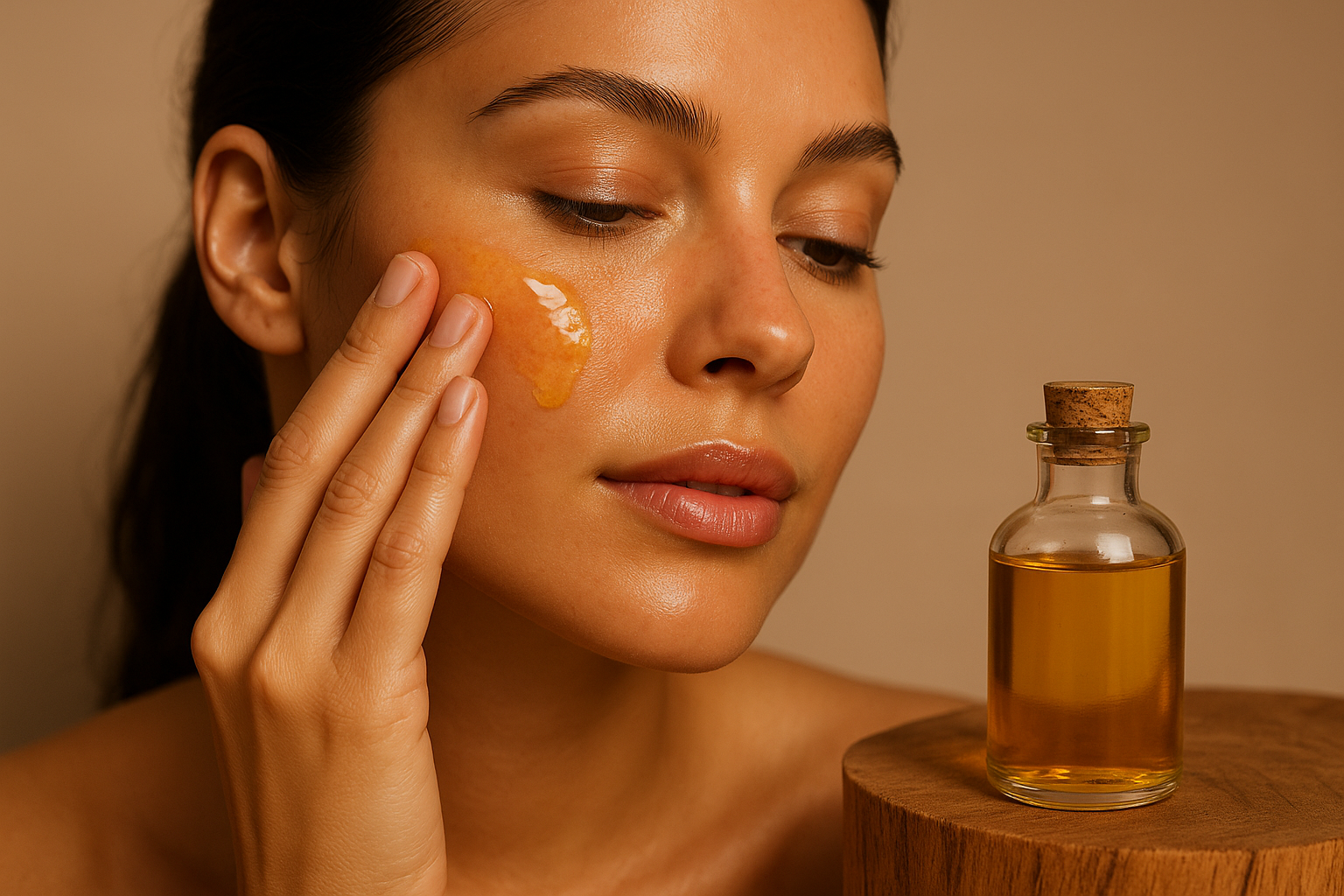
After actives, before or mixed with moisturizer. Apply 3–5 drops of jojoba oil after treatment serums (vitamin C, niacinamide, retinol) and before or mixed into your moisturizer. The wax esters will seal in the active ingredients and reinforce your moisture barrier.
As a cleansing oil. Jojoba’s similarity to sebum makes it effective for the oil cleansing method — it dissolves makeup and sebum without stripping the skin. Massage onto dry skin, then emulsify with water and rinse. Another lightweight, high-linoleic oil that suits oily skin is grapeseed oil. Hemp seed oil belongs in the same group, with an even higher linoleic fraction. At the other end of the spectrum sit almond oil and avocado oil, oleic-dominant options better suited to dry body skin than to congestion-prone faces.
Look for cold-pressed, unrefined. Cold-pressed golden jojoba retains more of its natural vitamin E and antioxidant content than refined (clear) versions.
Patch test if you have nut allergies. While jojoba is technically a seed, not a nut, those with tree nut allergies should test a small area first.
References
-
Gad HA, Roberts A, Hamzi SH, et al. “Jojoba Oil: An Updated Comprehensive Review on Chemistry, Pharmaceutical Uses, and Toxicity.” Polymers. 2021;13(11):1711. doi:10.3390/polym13111711
-
Pazyar N, Yaghoobi R, Ghassemi MR, Kazerouni A, Rafeie E, Jamshydian N. “Jojoba in Dermatology: A Succinct Review.” Giornale Italiano di Dermatologia e Venereologia. 2013;148(6):687-691. PMID: 24442052
-
“Jojoba Desert Releases Results of Jojoba Oil on Sebum Reduction.” Cosmetics & Toiletries. 2019. cosmeticsandtoiletries.com
-
Ranzato E, Martinotti S, Burlando B. “Wound Healing Properties of Jojoba Liquid Wax: An In Vitro Study.” Journal of Ethnopharmacology. 2011;134(2):443-449. doi:10.1016/j.jep.2010.12.042
-
Memon AA, Urrehman Z, Baloch SA, et al. “A Comprehensive Review of Plant-Based Cosmetic Oils (Virgin Oils): Composition, Applications, and Health Benefits.” ACS Omega. 2024;9(35):37153-37178. doi:10.1021/acsomega.4c04277
-
Habashy RR, Abdel-Naim AB, Khalil AE, El-Denshary ES, Algamal HM. “Anti-Inflammatory Effects of Jojoba Liquid Wax in Experimental Models.” Pharmacological Research. 2005;51(2):95-105. doi:10.1016/j.phrs.2004.04.009
-
Meier L, Stange R, Michalsen A, Uehleke B. “Clay Jojoba Oil Facial Mask for Lesioned Skin and Mild Acne — Results of a Prospective, Observational Pilot Study.” Forschende Komplementärmedizin. 2012;19(2):75-79. doi:10.1159/000338076