Skin Tightening Cream: What Actually Works for Loose, Sagging Skin
The science of firming creams — which ingredients have real evidence, and which are pretty packaging
Walk down any skincare aisle and you will find a wall of jars promising to “tighten,” “firm,” and “lift.” Some cost twelve dollars, some cost three hundred, and the marketing language is nearly identical. So the honest question — the one most articles dodge — is this: can a cream you rub on actually tighten loose skin, or are you paying for hope in a pretty jar?
The truthful answer is “partly, and only with the right ingredients.” A topical product cannot replicate a surgical lift or an energy-based device. But the right actives can measurably improve firmness, elasticity, and texture over months of consistent use. Understanding why requires a quick look at what makes skin sag in the first place.
Why Skin Loses Its Firmness
Two proteins do most of the heavy lifting in youthful skin. Collagen provides structural scaffolding — it is the rebar in the concrete. Elastin gives skin its snap-back, letting it return to shape after you smile or pinch it. Both are produced by fibroblasts living in the deeper dermal layer.
As we age, those fibroblasts slow down. Research on chronologically aged skin shows that older fibroblasts produce significantly less type I procollagen and that the existing collagen network becomes fragmented, leaving the cells without the mechanical tension they need to function well [1]. The result compounds over decades: less new collagen made, more of the old network breaking down.
The often-quoted figure is a net collagen loss of roughly 1% per year from our mid-twenties onward, accelerating sharply after menopause as estrogen — a key driver of collagen synthesis — declines. Layer ultraviolet damage on top, which degrades both collagen and elastin, and you get the loose jawline, crepey cheeks, and slackening neck that send people looking for a firming cream in the first place.
The often-quoted figure is a net collagen loss of roughly 1% per year from our mid-twenties onward, accelerating sharply after menopause as estrogen — a key driver of collagen synthesis — declines.
A cream cannot put surgical tension on your face. What it can do is nudge those sluggish fibroblasts back toward producing collagen — if the active ingredient reaches them and actually works.
The Two Ingredients With the Strongest Evidence
Most “tightening” claims rest on flattering before-and-after photos and proprietary blends. Only a short list of ingredients has cleared the bar of randomized, controlled clinical trials.
Retinoids lead the field. A landmark double-blind, vehicle-controlled trial published in JAMA showed that topical tretinoin meaningfully improved photoaged skin, including firmness and texture, compared to placebo [2]. More importantly for the “tightening” question, a separate study demonstrated the mechanism directly: tretinoin restored collagen formation in photodamaged skin, stimulating new type I collagen synthesis where the network had been depleted [3]. Retinol — the gentler, over-the-counter cousin of prescription tretinoin — converts to the same active form in the skin and works along the same pathway, which is why it remains the most evidence-backed firming ingredient you can buy without a prescription.
Peptides are the credible runner-up. These short chains of amino acids act as signaling molecules, essentially telling fibroblasts to ramp up collagen production. A classic double-blind, placebo-controlled split-face study of palmitoyl pentapeptide (the ingredient marketed as Matrixyl) found significant improvement in fine lines and skin appearance versus placebo [4], and more recent randomized trials of peptide creams have shown measurable wrinkle improvement around the eyes [5].
Ingredients like vitamin C, niacinamide, and hyaluronic acid play valuable supporting roles — antioxidant protection, barrier support, and surface plumping — but they are not the engine of genuine, lasting firming. If a “skin tightening cream” leads with botanical extracts and buries the retinol or peptides at the bottom of the ingredient list, you are mostly buying fragrance and texture.
A well-formulated 0.2% product in a vehicle that actually penetrates can outperform a 1% product that mostly sits on the surface and evaporates.
The Problem Nobody Mentions: Getting the Active In
Here is the catch that makes or breaks any firming cream. An active ingredient only works if it penetrates the stratum corneum — the skin’s tough outer barrier — and reaches the fibroblasts in the dermis. Dermatologists describe a rough “500 Dalton rule”: molecules larger than about 500 Daltons struggle to cross intact skin [6]. Many peptides are bulky enough that surprisingly little of what is on the label ever reaches the cells that matter.
This is the quiet reason two creams with the same active ingredient can produce wildly different results. Concentration on the label is not the same as delivery to the target. A well-formulated 0.2% product in a vehicle that actually penetrates can outperform a 1% product that mostly sits on the surface and evaporates.
Setting Realistic Expectations
If you buy a firming cream, calibrate your hopes. Collagen remodeling is slow biology — expect to use a proven active nightly for 8 to 12 weeks before you notice improved smoothness and a subtle increase in firmness, and longer for visible changes to deeper laxity. Pair it with daily SPF, because unprotected sun exposure dismantles collagen faster than any cream can rebuild it. For significant sagging — jowls, heavy neck laxity, post-weight-loss loose skin — a cream is a maintenance tool, not a cure; that territory belongs to non-surgical skin tightening procedures or surgery.
For mild to moderate crepiness and early laxity, though, a consistent active-driven routine genuinely helps. If you want a deeper dive on firming the skin you can pinch, our guides to tightening loose skin and choosing a skin firming serum build on the same science.
Where Nanoretinol Fits
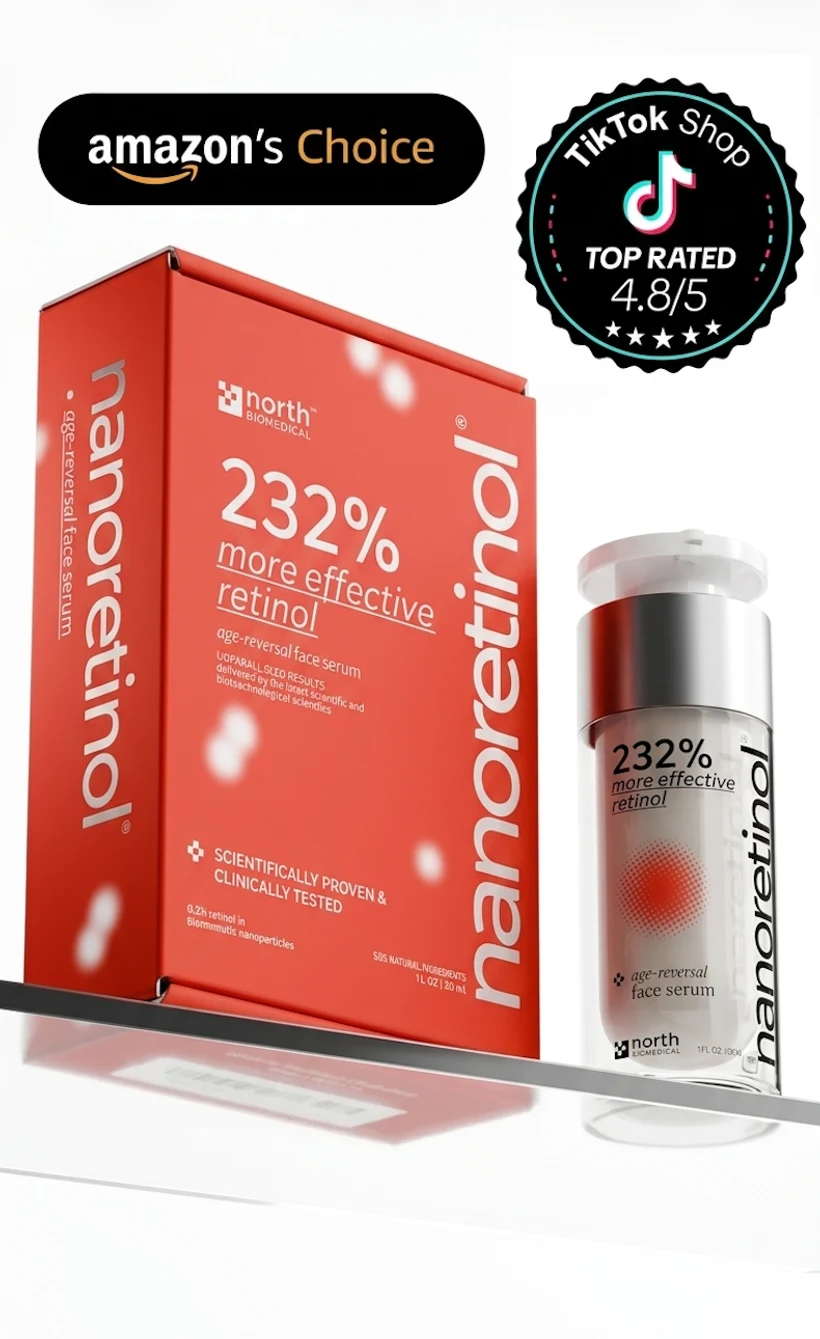
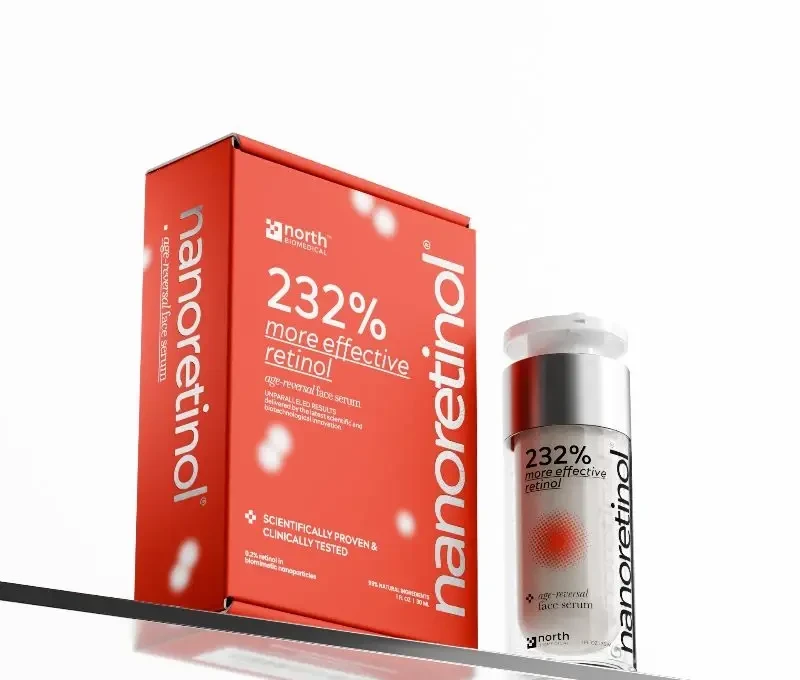
This is exactly the gap Nanoretinol was built to close. Instead of fighting the skin barrier with harsh chemicals and petroleum-derived penetration enhancers, Nanoretinol encapsulates stabilized retinol inside biomimetic lipid nanoparticles. These particles are recognized by the skin as “self” and carry their retinol payload through the barrier intact — solving the delivery problem that limits ordinary creams.
The data reflect that advantage. In comparative testing, Nanoretinol was +232% more effective in collagen recovery and +73% more effective in elastin recovery than conventional retinol — and elastin is the protein most firming products ignore entirely. In a 56-day clinical evaluation, users saw a +61% increase in skin firmness and a +56% increase in skin elasticity. Because the retinol is delivered rather than forced through a damaged barrier, the formula is also far gentler than traditional retinol, making nightly use sustainable — and consistency is what actually builds collagen.
A firming cream is not magic, and any brand that promises an overnight lift is selling you the jar, not the science. But the right active, delivered efficiently and used faithfully, is one of the few things that genuinely moves the needle on aging skin. Choose for the ingredient and the delivery system — not the promise on the front of the package.
References
- Varani J, Dame MK, Rittié L, Fligiel SEG, Kang S, Fisher GJ, Voorhees JJ. “Decreased collagen production in chronologically aged skin: roles of age-dependent alteration in fibroblast function and defective mechanical stimulation.” American Journal of Pathology. 2006;168(6):1861-1868. doi:10.2353/ajpath.2006.051302
- Weiss JS, Ellis CN, Headington JT, Tincoff T, Hamilton TA, Voorhees JJ. “Topical tretinoin improves photoaged skin: a double-blind vehicle-controlled study.” JAMA. 1988;259(4):527-532. doi:10.1001/jama.1988.03720040019020
- Griffiths CE, Russman AN, Majmudar G, Singer RS, Hamilton TA, Voorhees JJ. “Restoration of collagen formation in photodamaged human skin by tretinoin (retinoic acid).” New England Journal of Medicine. 1993;329(8):530-535. doi:10.1056/NEJM199308193290803
- Robinson LR, Fitzgerald NC, Doughty DG, Dawes NC, Berge CA, Bissett DL. “Topical palmitoyl pentapeptide provides improvement in photoaged human facial skin.” International Journal of Cosmetic Science. 2005;27(3):155-160. doi:10.1111/j.1467-2494.2005.00261.x
- Aruan RR, Hutabarat H, Widodo AA, et al. “Double-blind, Randomized Trial on the Effectiveness of Acetylhexapeptide-3 Cream and Palmitoyl Pentapeptide-4 Cream for Crow’s Feet.” The Journal of Clinical and Aesthetic Dermatology. 2023;16(2):37-43. PMID: 36909866
- Bos JD, Meinardi MM. “The 500 Dalton rule for the skin penetration of chemical compounds and drugs.” Experimental Dermatology. 2000;9(3):165-169. doi:10.1034/j.1600-0625.2000.009003165.x