Best Skin Firming Serum: What Actually Tightens Aging Skin (Backed by Science)
Inside the serum aisle: which ingredients have real evidence for firming, and which are pure marketing.
Walk down the firming aisle and you’ll see the same four words on almost every bottle: tightens, lifts, firms, plumps. The promise is consistent. The science behind it is not. A skin firming serum can be the most useful piece of an anti-aging routine — or an expensive moisturizer with a slogan.
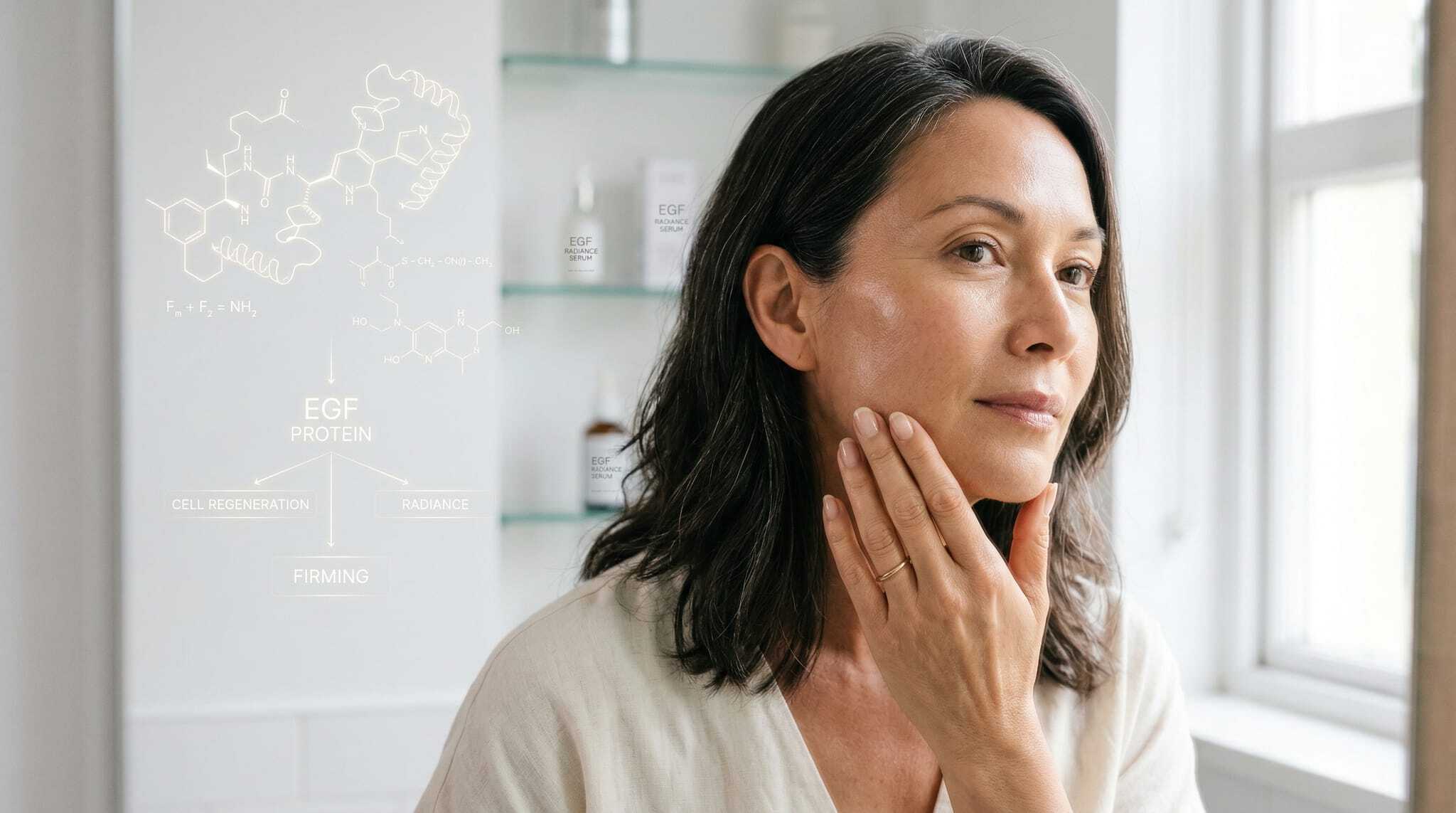
The difference comes down to two things: whether the active ingredient has clinical evidence for rebuilding the structures that make skin feel firm, and whether that ingredient can actually reach the cells that build them. Both matter. A potent active stuck on the surface does nothing.
This page is intentionally limited to firmness and laxity. If you need one serum selected across wrinkles, pigment, dryness, and sensitivity—not just firming—use the broader anti-aging serum guide for mature skin.
What “firmness” actually is, biologically
Skin firmness is a mechanical property created by two proteins woven through the dermis — collagen and elastin. Collagen provides tensile strength; elastin provides the snap-back when skin is pulled or compressed. After roughly age 25, the body produces less of both, and the existing networks fragment under accumulated UV exposure and oxidative stress [1].
The result is measurable. Mid-life skin shows shorter, disorganized collagen fibrils, weakened elastin scaffolding, and stiffer mechanical recovery — what dermatology research calls “altered dermal extracellular matrix.” A firming serum’s only honest job is to slow that fragmentation, support new collagen synthesis, or both.
The ingredients with real clinical data
Four serum actives have peer-reviewed trials showing measurable firming in human skin. Everything else in the category is either an analog of one of these or unproven.
Retinol (the gold standard for collagen)
Retinol’s claim isn’t hype — it’s the most heavily studied topical anti-aging molecule in dermatology. A landmark trial in Archives of Dermatology applied 0.4% retinol three times a week to the arms of elderly subjects for 24 weeks. Compared to the vehicle-controlled arm, retinol-treated skin showed significant reductions in fine wrinkles and increased procollagen synthesis [2]. A separate mechanism study confirmed that retinol upregulates the same collagen-promoting pathways in naturally aged skin that prescription tretinoin does — at lower irritation cost [3].
For a firming serum, retinol is the closest thing the category has to a non-negotiable.
If you need one serum selected across wrinkles, pigment, dryness, and sensitivity—not just firming—use the broader anti-aging serum guide for mature skin.
Matrixyl (palmitoyl pentapeptide-4)
Matrixyl is a signal peptide designed to mimic a fragment of collagen, tricking fibroblasts into producing more of it. The original double-blind trial published in the International Journal of Cosmetic Science applied a 3 ppm Matrixyl formulation to one side of the face and placebo to the other for four months. Treated sides showed measurable reductions in wrinkle depth and density [4].
It’s the best-evidenced of the “biomimetic peptide” family. Read more on its mechanism in our matrixyl 3000 guide.
Copper peptides (GHK-Cu)
GHK-Cu — a tripeptide bound to copper — modulates dozens of skin-regeneration pathways, including collagen synthesis, antioxidant defense, and wound healing [5]. It’s the active behind most “copper peptide” serums. The evidence base is broader than Matrixyl but more diffuse: it does many things moderately well rather than one thing exceptionally. We dig into the trials in our copper peptides guide.
Vitamin C (L-ascorbic acid)
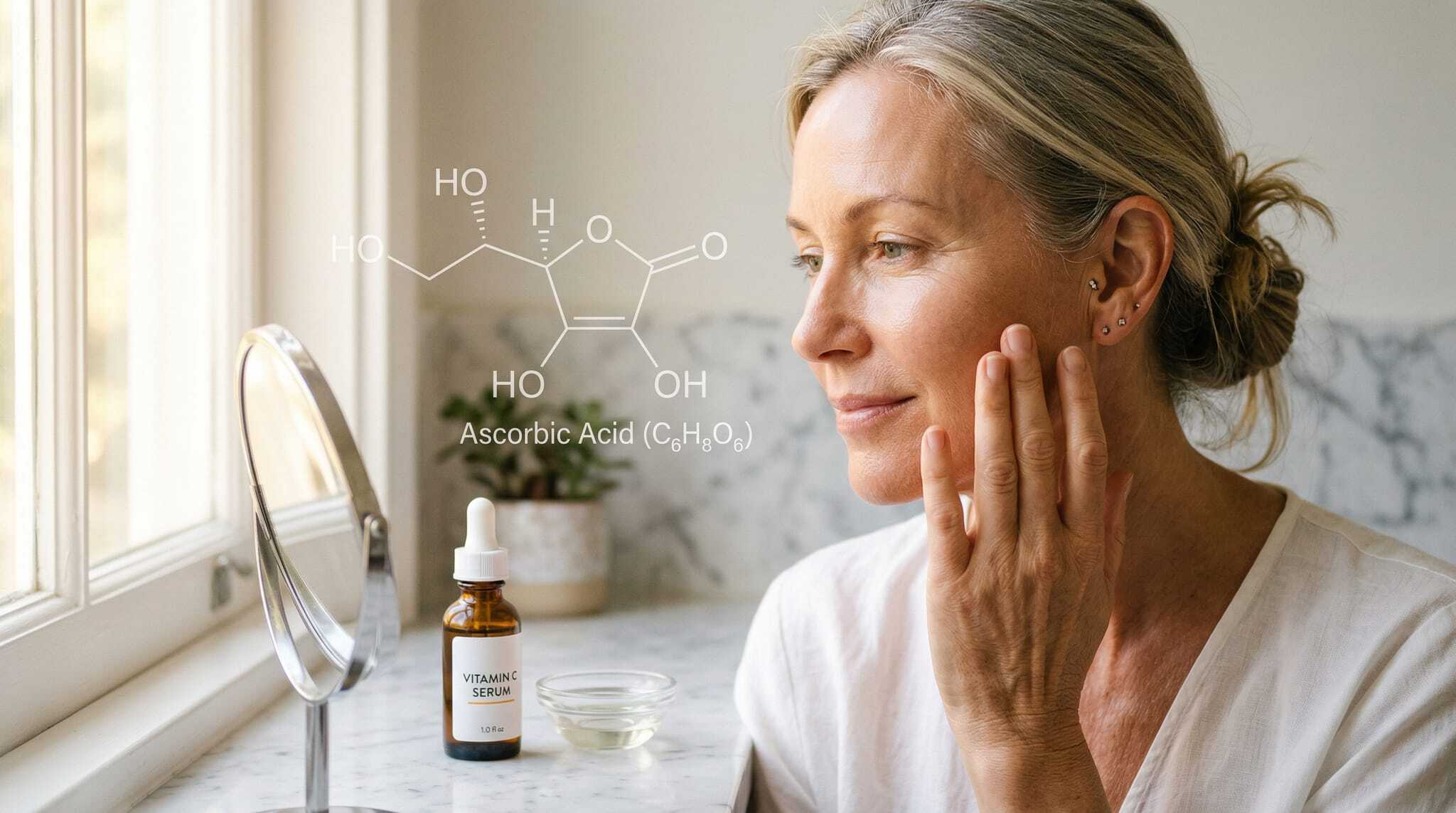
Vitamin C is a cofactor in collagen synthesis — the enzyme that crosslinks collagen literally cannot work without it. Topical vitamin C in the form of L-ascorbic acid has clinical data showing improved skin density, fewer fine lines, and reduced photodamage [6]. It’s also the most chemically unstable active on this list, which is why formulation quality matters enormously.
The marketing words that mean nothing
A few terms appear on almost every firming serum bottle and have no regulatory meaning:
- “Plumping” — usually refers to short-term hydration from hyaluronic acid. Real, but temporary; gone after washing.
- “Lifting” — implies muscle action. No topical can move muscle. The visual effect comes from light reflection or film-forming polymers.
- “Instant firming” — almost always silicone or sodium silicate, which creates a tightening sensation without structural change.
These ingredients aren’t bad. They’re just not firming agents in the biological sense — which is what you’re paying serum prices for.
The delivery problem nobody talks about
Here’s where most firming serums fail before you’ve even opened the cap. The dermis — where collagen lives — sits beneath the stratum corneum, a layer of dead, lipid-sealed cells engineered to keep foreign molecules out. Conventional retinol formulations either don’t penetrate it well, or use harsh penetration enhancers that damage the barrier on the way through.
The encapsulated version produced +232% more collagen recovery and +73% more elastin recovery than conventional retinol.
The result is paradoxical: serums use ever-higher percentages of actives to compensate for poor delivery, then trigger the irritation, redness, and peeling that make people quit. A 1% retinol in a poor vehicle may deliver less active ingredient to collagen-producing cells than a 0.2% retinol in a better system.
This is why pharmaceutical research has spent a decade on lipid nanoparticle delivery. The principle is simple: build a carrier the size and lipid signature of the skin’s own cell membranes, and the barrier reads it as “self” and lets it through intact [7]. The same nanotechnology underpins modern cancer drug delivery.
Where Nanoretinol fits
Most retinol serums are betting on percentage. Nanoretinol bets on delivery.
The formulation encapsulates retinol inside biomimetic lipid nanoparticles — particles externally identical to the membranes of your own skin cells. The epithelial barrier recognizes them as native and permits passage without damage. Once inside, the retinol is released gradually as the surrounding cells absorb the nanoparticle’s phospholipids, providing nourishment in addition to the active.
The internal clinical study compared encapsulated retinol against a conventional retinol benchmark. The encapsulated version produced +232% more collagen recovery and +73% more elastin recovery than conventional retinol. After 56 days of use, participants showed a +61% increase in skin firmness and +56% increase in elasticity — both measured instrumentally, not by self-report.
The retinol concentration is 0.2%. That’s intentionally low, because the delivery system is doing the work that brute-force percentage normally has to do. The base is water-gel, 99% natural ingredients, with no petroleum derivatives or harsh penetration enhancers.
What to look for on the back of a firming serum
A short checklist that filters out most of the marketing noise:
- A clinically backed active in the top half of the ingredient list — retinol, encapsulated retinol, Matrixyl, GHK-Cu, or stabilized vitamin C.
- A delivery system disclosed on the label — liposomes, lipid nanoparticles, or microemulsion. “Advanced delivery” with no specifics usually means none.
- A reasonable concentration paired with a real vehicle — 0.2-0.5% retinol in a stabilized base outperforms 1% retinol in a degrading one.
- No silicone in the top five ingredients unless you’re buying a primer, not a firming serum.
If a serum scores on all four, it’s a candidate. If you also need a daytime cream to pair with it, see our breakdown of the best face cream for sagging skin.
A practical routine
Apply a firming serum at night to clean, dry skin. Layer a ceramide or peptide moisturizer on top to reduce any retinol-driven dryness. In the morning, use a broad-spectrum SPF — every retinoid is photosensitizing, and no firming serum can outpace daily UV damage.
If retinol is new to you, start two to three nights per week and build from there. Encapsulated forms typically tolerate nightly use sooner because they don’t depend on barrier disruption to penetrate.
What firming serums won’t do
No topical serum will reverse severe skin laxity. Once collagen scaffolding has fragmented past a certain point — usually visible as deep folds or hanging tissue — only energy-based treatments or surgery restore the original structure. Serums are for the decade before that, and for slowing the rate at which the next decade gets there.
For a fuller picture of where firmness lives and what causes it to fade, see our deep dive on skin firmness loss.
The takeaway
A firming serum’s value depends on two facts: what’s inside, and whether what’s inside can get to where it needs to go. The first is easy to check on a back-of-bottle label. The second is harder, and is where most products quietly fail. Pick an active with peer-reviewed evidence, then pick a formulation that respects the skin barrier instead of fighting through it.
References
- Quan T, Fisher GJ. “Role of Age-Associated Alterations of the Dermal Extracellular Matrix Microenvironment in Human Skin Aging: A Mini-Review.” Gerontology. 2015;61(5):427-434. doi:10.1159/000371708
- Kafi R, Kwak HSR, Schumacher WE, et al. “Improvement of naturally aged skin with vitamin A (retinol).” Archives of Dermatology. 2007;143(5):606-612. doi:10.1001/archderm.143.5.606
- Shao Y, He T, Fisher GJ, Voorhees JJ, Quan T. “Molecular basis of retinol anti-ageing properties in naturally aged human skin in vivo.” International Journal of Cosmetic Science. 2017;39(1):56-65. doi:10.1111/ics.12348
- Robinson LR, Fitzgerald NC, Doughty DG, Dawes NC, Berge CA, Bissett DL. “Topical palmitoyl pentapeptide provides improvement in photoaged human facial skin.” International Journal of Cosmetic Science. 2005;27(3):155-160. doi:10.1111/j.1467-2494.2005.00261.x
- Pickart L, Vasquez-Soltero JM, Margolina A. “GHK Peptide as a Natural Modulator of Multiple Cellular Pathways in Skin Regeneration.” BioMed Research International. 2015;2015:648108. doi:10.1155/2015/648108
- Al-Niaimi F, Chiang NYZ. “Topical Vitamin C and the Skin: Mechanisms of Action and Clinical Applications.” Journal of Clinical and Aesthetic Dermatology. 2017;10(7):14-17. PubMed: 29104718
- Puglia C, Bonina F. “Lipid nanoparticles as novel delivery systems for cosmetics and dermal pharmaceuticals.” Expert Opinion on Drug Delivery. 2012;9(4):429-441. doi:10.1517/17425247.2012.666967