Sodium Lauryl Sulfate: Why This Foaming Agent Leaves Skin Tight
What SLS is, why dermatologists use it to damage skin on purpose, how it differs from SLES, and how to tell whether your cleanser is too harsh
If a face wash leaves your skin squeaky, tight and slightly shiny-dry ten minutes later, there is a fair chance sodium lauryl sulfate is near the top of its ingredient list. It is one of the cheapest and most effective foaming agents ever made, and it turns up in shampoos, body washes, hand soaps and most toothpastes.
It is also one of the most argued-about ingredients online. Some of the worry is justified and some of it is not. This guide explains what sodium lauryl sulfate does to skin, why dermatologists use it in research as a deliberate irritant, how it differs from its milder cousin, and how to tell from a label whether a cleanser is likely to be harsh.
What Sodium Lauryl Sulfate Is
Sodium lauryl sulfate, often shortened to SLS and also called sodium dodecyl sulfate, is a surfactant. Its molecule has a 12-carbon oily tail and a charged sulfate head. The tail grabs oil and dirt, the head grabs water, and when you rinse, both wash away together. It also makes dense, satisfying foam, which shoppers tend to read as a sign of cleaning power.
The trouble is that your skin is also made of oils and proteins. The outer layer, the stratum corneum, is built like a brick wall: flattened cells for bricks and a mortar of fats that hold water in. A strong surfactant cannot tell the difference between the grease on your face and the fats in that mortar.
The Ingredient Dermatologists Use to Damage Skin on Purpose
Sodium lauryl sulfate is so reliable at disrupting the skin barrier that dermatology adopted it as the standard model irritant decades ago. Researchers who want to study irritated skin, or test whether a barrier cream works, apply a measured dose of it and record the redness and water loss that follow [1]. The European Society of Contact Dermatitis even published guidelines on how to run these tests so that results from different labs can be compared [2]. German patch-test clinics have included a 0.25% solution as an irritant control in their routine test series for two decades [3].
What happens after exposure is revealing. In a study of healthy volunteers, a 24-hour patch of 1% sodium lauryl sulfate threw the skin’s barrier-building genes out of balance, and some of them were still running more than 50% above normal four to seven days later as the skin repaired itself [4].
Your skin was still rebuilding its barrier 7 days after a single 24-hour patch of sodium lauryl sulfate, much longer than the squeaky feeling after washing lasts.
Your skin was still rebuilding its barrier 7 days after a single 24-hour patch of sodium lauryl sulfate, much longer than the squeaky feeling after washing lasts. A patch test is far harsher than a quick wash, of course, but the direction is the same: each exposure gives the barrier work to do.
Why It Is Harsh: Proteins, Fats and pH
A review by cleanser scientists set out why some surfactants are harsher than others. All of them interact with skin fats to some degree, but the harsh ones also bind strongly to skin proteins, and that protein damage tracks closely with after-wash tightness, dryness, irritation and itch [5]. Sodium lauryl sulfate is one of the strongest protein binders in common use.
The same review found that a high-pH wash swells the outer skin layer and disturbs its fats even without any surfactant, which is why old-fashioned alkaline bar soaps feel so stripping [5]. Cleansers close to the skin’s natural pH of about 5.5, and those that blend harsh surfactants with milder ones and moisturizing agents, do less damage.
Does a Quick Rinse Make It Safe?
Partly, because a face wash touches skin for under a minute rather than a whole day. Still, a study that varied both strength and exposure time found that concentration influenced the skin’s reaction more than time did [6]. In practice, that means a cleanser built mainly on sodium lauryl sulfate can still leave dry or sensitive skin irritated even when you rinse quickly, especially if you wash twice a day.
People with dry skin, eczema, rosacea-prone skin or an already damaged barrier feel this most. If your face feels tight, itchy or stings when you apply your next product, the cleanser is the first thing to change. Our guide to repairing the skin barrier explains how to recover.
If your face feels tight, itchy or stings when you apply your next product, the cleanser is the first thing to change.
Sodium Lauryl Sulfate vs. Sodium Laureth Sulfate
The names differ by two letters, and the two are often confused. Sodium laureth sulfate, or SLES, is made by adding a short chain to the molecule before the sulfate group, which makes it bulkier and generally gentler on skin. Many “mild” shampoos and body washes use it, often paired with an even milder co-surfactant such as cocamidopropyl betaine.
Sulfate-free cleansers go a step further and rely on surfactants such as glucosides, amino-acid surfactants or isethionates. They usually foam less, which is a feature, not a flaw. Our guide to the foaming cleanser explains how to pick one that foams without stripping.
The Cancer Claim and the Toothpaste Question
The claim that sodium lauryl sulfate causes cancer does not stand up. A review of its human and environmental toxicity traced its bad reputation to misread studies and to confusion with chemicals that have similar names, and concluded it is safe in household cleaning products [7]. Irritation is a real concern; cancer is not.
Toothpaste is a more interesting story. Most toothpastes use sodium lauryl sulfate to foam, and the lining of the mouth is thinner and more delicate than facial skin. A systematic review pooled trials in people who get recurring canker sores. Switching to a toothpaste without it reduced the number of sores, how long they lasted, how often they came back and how much they hurt [8].
Your mouth may react to sodium lauryl sulfate too, since 4 small trials found fewer and shorter canker sores in people who switched to a toothpaste without it. If you get canker sores often, an SLS-free toothpaste is a cheap experiment.
How to Read a Cleanser Label
- Check the first five ingredients. If sodium lauryl sulfate appears right after water, it is the main cleansing agent.
- Look for softeners. Glycerin, cocamidopropyl betaine and added oils or ceramides reduce the stripping effect.
- Watch for the after-feel. Skin that feels comfortable a few minutes after washing is a better guide than any label claim.
- Match the cleanser to your skin. Very oily skin tolerates more; dry, mature or sensitive skin tolerates far less. Our roundup of the best face wash for sensitive skin lists gentler options.
A Healthy Barrier Comes First
The barrier that a harsh cleanser strips is the same barrier your anti-aging products have to work through. Retinol shows why that matters. Many conventional retinol formulas use chemicals and petroleum derivatives that loosen the skin barrier on purpose so retinol can get through, and that damage is what causes the redness and peeling people blame on retinol. Our guide to retinol and the skin barrier explains the trade-off.
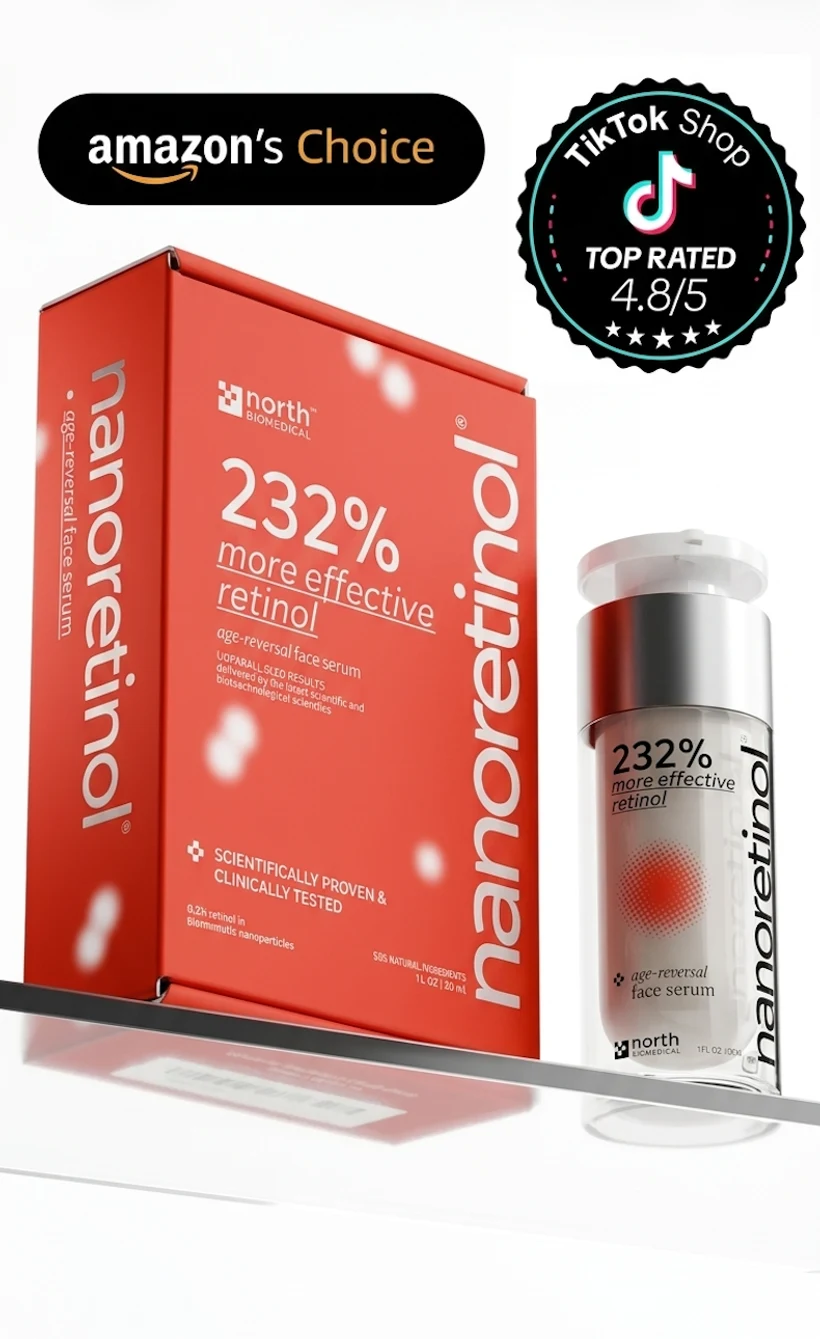
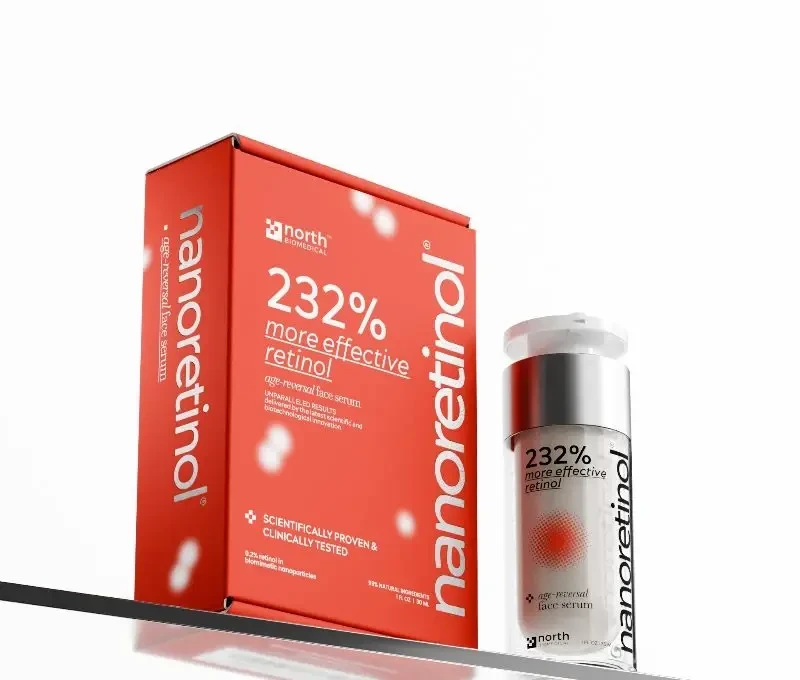
Nanoretinol takes a different route. Its 0.2% retinol sits inside biomimetic lipid nanoparticles that look like the skin’s own cell membranes, so they pass through the barrier without damaging it. It is a water-based gel made with 99% natural ingredients and suits sensitive skin. In North Biomedical’s study, Nanoretinol was 232% more effective in collagen recovery than conventional retinol, and users saw a 61% increase in firmness and a 56% increase in elasticity after 56 days of use [9]. Pair it with a gentle cleanser and you stop undoing at the sink what you build overnight.
Clean Without the Squeak
Sodium lauryl sulfate is not toxic and does not cause cancer, but it is a strong detergent that dermatologists use precisely because it irritates skin. For oily skin and the occasional shampoo, it is fine. For dry, mature or sensitive skin, a milder cleanser is one of the simplest upgrades you can make.
References
- Lee CH, Maibach HI. “The sodium lauryl sulfate model: an overview.” Contact Dermatitis. 1995;33(1):1-7. doi:10.1111/j.1600-0536.1995.tb00438.x
- Tupker RA, Willis C, Berardesca E, et al. “Guidelines on sodium lauryl sulfate (SLS) exposure tests. A report from the Standardization Group of the European Society of Contact Dermatitis.” Contact Dermatitis. 1997;37(2):53-69. doi:10.1111/j.1600-0536.1997.tb00041.x
- Forkel S, Matzke SS, Hollstein MM, et al. “Strengths and Limitations of Sodium Lauryl Sulfate as an Irritant Control in Patch Testing.” Contact Dermatitis. 2026;94(4):338-346. doi:10.1111/cod.70075
- Törmä H, Lindberg M, Berne B. “Skin barrier disruption by sodium lauryl sulfate-exposure alters the expressions of involucrin, transglutaminase 1, profilaggrin, and kallikreins during the repair phase in human skin in vivo.” Journal of Investigative Dermatology. 2008;128(5):1212-1219. doi:10.1038/sj.jid.5701170
- Ananthapadmanabhan KP, Moore DJ, Subramanyan K, Misra M, Meyer F. “Cleansing without compromise: the impact of cleansers on the skin barrier and the technology of mild cleansing.” Dermatologic Therapy. 2004;17(Suppl 1):16-25. doi:10.1111/j.1396-0296.2004.04s1002.x
- Aramaki J, Löffler C, Kawana S, Effendy I, Happle R, Löffler H. “Irritant patch testing with sodium lauryl sulphate: interrelation between concentration and exposure time.” British Journal of Dermatology. 2001;145(5):704-708. doi:10.1046/j.1365-2133.2001.04442.x
- Bondi CA, Marks JL, Wroblewski LB, Raatikainen HS, Lenox SR, Gebhardt KE. “Human and Environmental Toxicity of Sodium Lauryl Sulfate (SLS): Evidence for Safe Use in Household Cleaning Products.” Environmental Health Insights. 2015;9:27-32. doi:10.4137/EHI.S31765
- Alli BY, Erinoso OA, Olawuyi AB. “Effect of sodium lauryl sulfate on recurrent aphthous stomatitis: A systematic review.” Journal of Oral Pathology & Medicine. 2019;48(5):358-364. doi:10.1111/jop.12845
- North Biomedical LLC. “Nanoretinol vs. Conventional Retinol: Efficacy in Collagen and Elastin Recovery.” Clinical Study Summary, 2024. Study summary