Tinted Sunscreen: What the Iron Oxides Actually Do for Your Skin
Why a tint is a filter rather than a cosmetic, and who genuinely needs one
Most people assume the tint in a tinted sunscreen exists to solve a cosmetic problem. Mineral filters leave a white cast, so manufacturers add colour to cancel it out, and the result is a sunscreen that doubles as light coverage.
That is true, and it is also the least interesting thing the tint does. The pigments used to create it block a band of light that no conventional sunscreen filter touches, and for anyone dealing with stubborn facial pigmentation, that turns out to matter more than the SPF number on the front of the bottle.
Sunscreen has a blind spot
Broad-spectrum sunscreen is tested and labelled against ultraviolet radiation, meaning UVB and UVA. Visible light, the 400 to 700 nanometre range you can actually see, sits outside that scope entirely. A clear sunscreen can be excellent at its job and still let essentially all visible light through.
For a long time this was assumed to be harmless. Then a study at Henry Ford Hospital irradiated melanocompetent skin with either long-wavelength UVA1 or visible light and compared the response. Visible light produced pigmentation in skin types IV to VI that was both darker and considerably more sustained than the pigmentation UVA1 produced [1].
Visible light also carries an oxidative cost. Work using live skin showed that blue light specifically, and not green, red or infrared, induced mitochondrial oxidative stress through flavin photosensitisation [2]. The damage pathway people associate with UV has a visible-light counterpart that clear filters do not intercept.
What the tint is made of
The colour in a tinted sunscreen comes principally from iron oxides, usually alongside pigmentary titanium dioxide. These are opaque mineral pigments rather than the transparent nano-scale particles used purely for UV filtering, and opacity is precisely the point. They physically block visible wavelengths.
A review in the Journal of the American Academy of Dermatology set out the position plainly: standard broad-spectrum UV filters do not adequately block visible light, and iron oxides combined with pigmentary titanium dioxide are the mechanism by which tinted formulas add that protection, with the clearest benefit for people managing melasma and post-inflammatory hyperpigmentation [3].
The tinted formula outperformed the clear one by 15% on MASI score, 28% on colorimetry and 4% on melanin index.
This is why the shade matching is not a vanity feature. The pigment load that delivers the protection is the same pigment load that creates the colour. A tint too pale to look right on you is also a tint you will apply thinly or skip, and a tint you skip protects nothing.
The trial that separated tinted from clear
The strongest practical evidence comes from a double-blind randomised trial in 68 melasma patients. Over eight weeks, one group used an SPF 50 or higher sunscreen covering UV and visible light with iron oxides, and the other used an SPF 50 or higher sunscreen covering UV only. The tinted formula outperformed the clear one by 15% on MASI score, 28% on colorimetry and 4% on melanin index [4].
Both groups were using high-SPF broad-spectrum protection. The only meaningful variable was whether visible light was blocked, and it changed the outcome measurably.
A separate study looked at the mechanism directly, exposing skin of colour to visible light and comparing iron-oxide-containing formulations against untreated skin and against a mineral SPF 50+ sunscreen without iron oxide. The iron oxide formulations significantly reduced visible-light-induced pigmentation; the mineral sunscreen without them did not [5].
If you are choosing between filter chemistries more broadly, our comparison of mineral and chemical sunscreens covers that decision, and the specific question of protecting existing dark patches is handled in sunscreen for hyperpigmentation.
Who this actually changes things for
Visible light pigmentation is strongly skin-type dependent. The response is pronounced in Fitzpatrick types IV through VI and considerably weaker in very fair skin. If you are pale and your concern is burning and photoageing, a well-applied clear broad-spectrum sunscreen remains a perfectly reasonable choice.
If you are pale and your concern is burning and photoageing, a well-applied clear broad-spectrum sunscreen remains a perfectly reasonable choice.
If you have medium to deep skin, or you are dealing with melasma, or you have dark marks that fade and then return every summer without an obvious trigger, the tint is doing real work. The same applies to anyone whose pigmentation sits on the upper cheeks and forehead and never quite clears despite disciplined sun avoidance. Options for the underlying pigmentation are covered in our guide to melasma treatment.
The number on the bottle is not the number on your face
There is a quieter problem that affects every sunscreen, tinted or not. SPF is certified at an application density of 2 milligrams per square centimetre. Measured real-world application sits closer to 0.39 to 1.0 milligrams per square centimetre, which is roughly a fifth to a half of the tested dose [6].
Protection does not degrade politely in proportion to that shortfall. Applying half the tested amount does not give you half the labelled SPF, it gives you considerably less. This is the single biggest reason a person using SPF 50 daily still accumulates damage, and it matters more than the gap between two SPF numbers, a point we work through in SPF 30 vs 50.
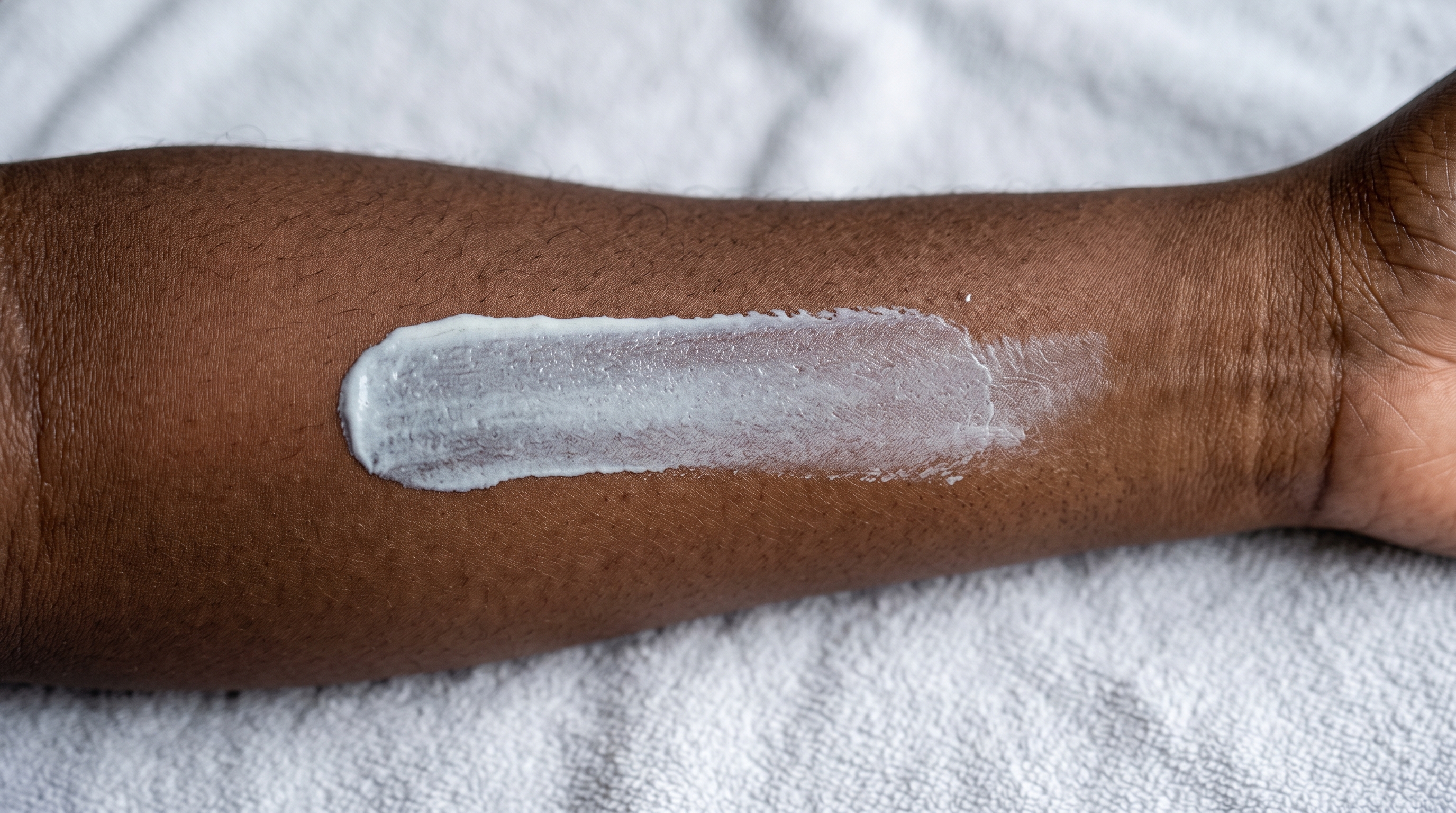
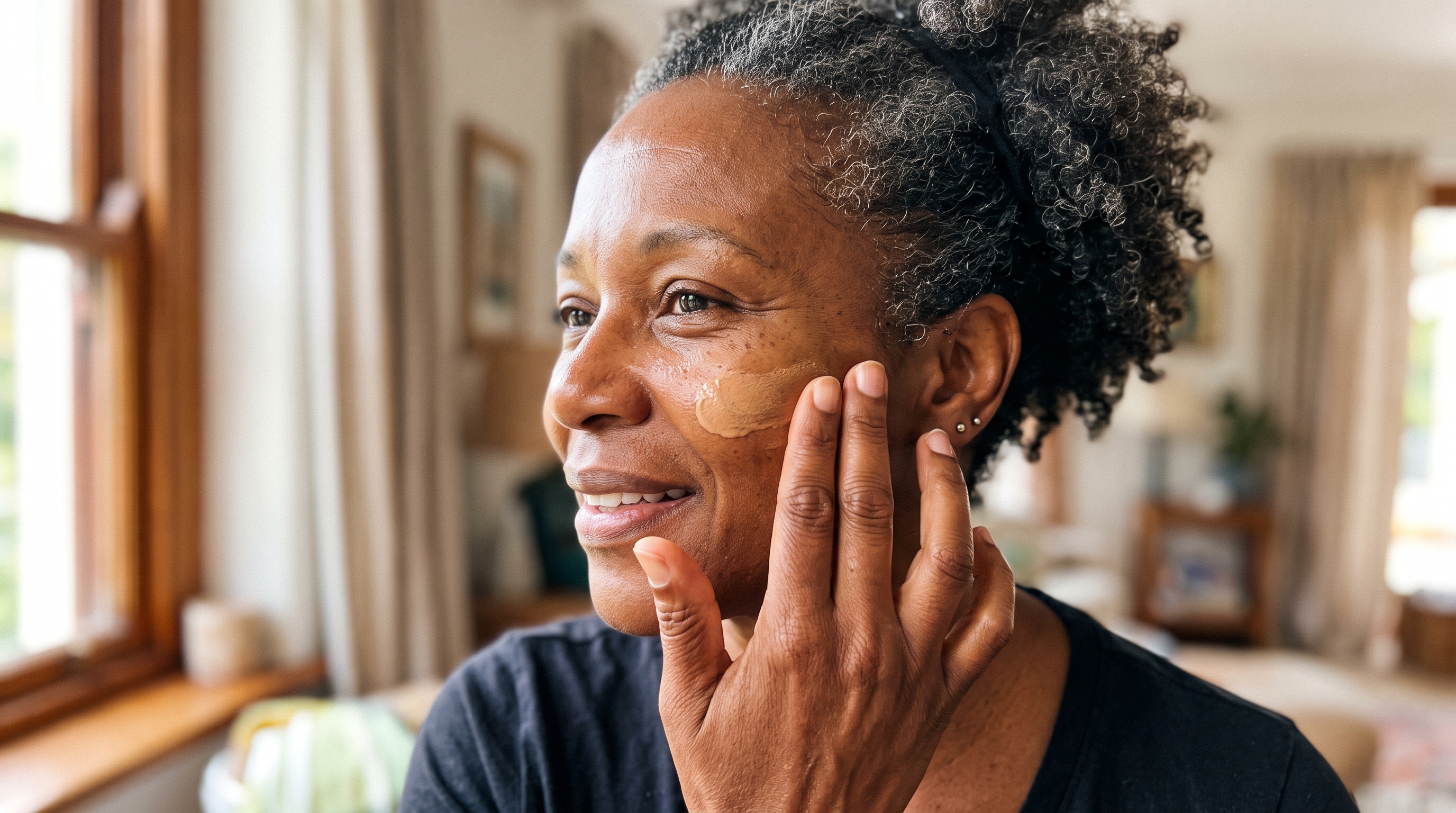
For a tinted product the practical fix is straightforward, because the tint gives you honest feedback. Apply until the colour reads evenly across your face rather than sheerly. If it looks like almost nothing is there, almost nothing is there.
What sunscreen can and cannot do
Daily sunscreen use genuinely prevents ageing, and that claim rests on a randomised trial rather than an inference. Over four and a half years, 903 adults were randomised to daily broad-spectrum sunscreen or discretionary use, and the daily group showed 24% less progression of skin ageing [7].
Prevention is the whole of the effect, though. A tinted sunscreen stops new pigment being provoked and stops new collagen damage accumulating. It does not clear the pigment already sitting in your skin, and it does not rebuild collagen you lost over the previous two decades. Those are repair jobs, and topical retinoids remain the most evidence-backed way to do them.
That pairing is the sensible reading of the evidence. Block visible light and UV in the morning, drive repair at night.
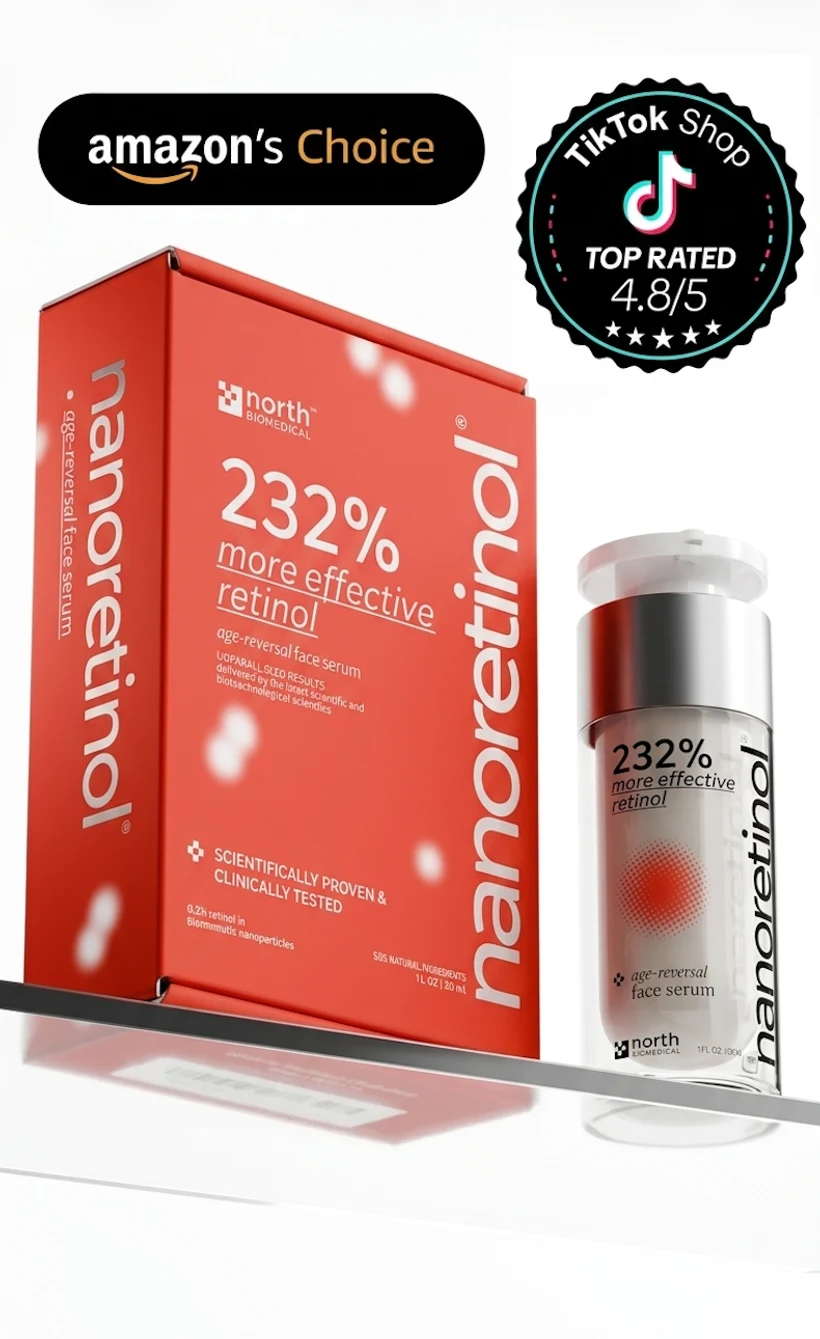
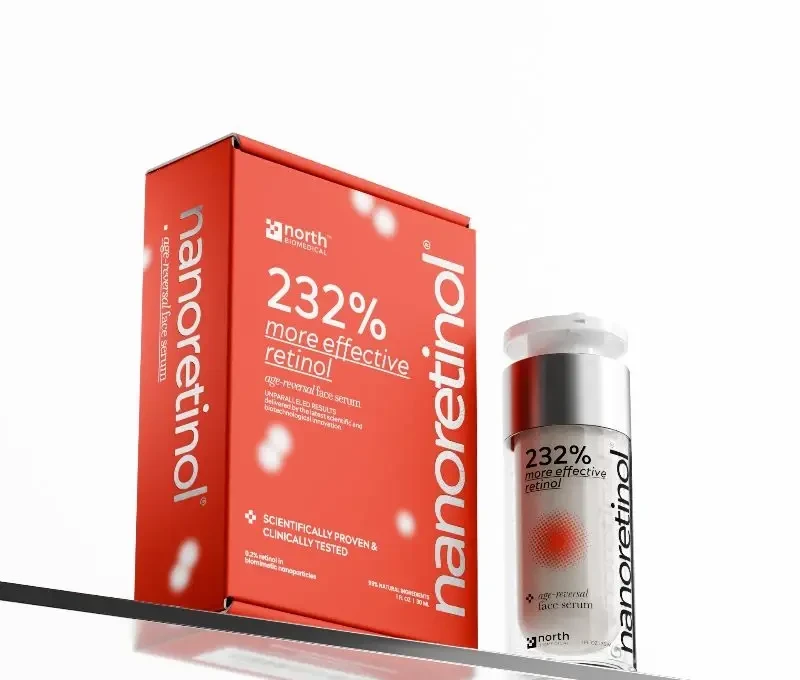
The difficulty has always been that conventional retinol reaches the dermis by chemically loosening the skin barrier, which produces the burning and peeling that ends most people’s attempts within a month. Nanoretinol changes the delivery rather than the dose. Its 0.2% retinol travels inside biomimetic lipid nanoparticles the skin recognises as self and admits intact, in a water-based, 99% natural formulation suitable for sensitive skin. Against conventional retinol it achieved 232% greater collagen recovery and 73% greater elastin recovery with drastically reduced cytotoxicity, and across 56 days delivered 61% greater firmness and 56% greater elasticity.
Retinoids raise photosensitivity, which makes the morning sunscreen step non-negotiable rather than optional. The two halves depend on each other.
Making the switch worthwhile
If pigmentation is your main concern and you have medium or deeper skin, moving from a clear sunscreen to a tinted one is one of the few product swaps with a randomised trial behind it. Choose a shade that genuinely matches, apply enough that the colour reads evenly, and treat it as protection that happens to even your skin tone rather than makeup that happens to contain SPF.
References
- Mahmoud BH, Ruvolo E, Hexsel CL, Liu Y, Owen MR, Kollias N, Lim HW, Hamzavi IH. “Impact of Long-Wavelength UVA and Visible Light on Melanocompetent Skin.” Journal of Investigative Dermatology. 2010;130(8):2092-2097. doi:10.1038/jid.2010.95
- Nakashima Y, Ohta S, Wolf AM. “Blue Light-Induced Oxidative Stress in Live Skin.” Free Radical Biology and Medicine. 2017;108:300-310. doi:10.1016/j.freeradbiomed.2017.03.010
- Lyons AB, Trullas C, Kohli I, Hamzavi IH, Lim HW. “Photoprotection Beyond Ultraviolet Radiation: A Review of Tinted Sunscreens.” Journal of the American Academy of Dermatology. 2021;84(5):1393-1397. doi:10.1016/j.jaad.2020.04.079
- Castanedo-Cazares JP, Hernandez-Blanco D, Carlos-Ortega B, Fuentes-Ahumada C, Torres-Alvarez B. “Near-Visible Light and UV Photoprotection in the Treatment of Melasma: A Double-Blind Randomized Trial.” Photodermatology, Photoimmunology & Photomedicine. 2014;30(1):35-42. doi:10.1111/phpp.12086
- Dumbuya H, Grimes PE, Lynch S, Ji K, Brahmachary M, Zheng Q, Bouez C, Wangari-Talbot J. “Impact of Iron-Oxide Containing Formulations Against Visible Light-Induced Skin Pigmentation in Skin of Color Individuals.” Journal of Drugs in Dermatology. 2020;19(7):712-717. doi:10.36849/JDD.2020.5032
- Petersen B, Wulf HC. “Application of Sunscreen: Theory and Reality.” Photodermatology, Photoimmunology & Photomedicine. 2014;30(2-3):96-101. doi:10.1111/phpp.12099
- Hughes MCB, Williams GM, Baker P, Green AC. “Sunscreen and Prevention of Skin Aging: A Randomized Trial.” Annals of Internal Medicine. 2013;158(11):781-790. doi:10.7326/0003-4819-158-11-201306040-00002