Best Sunscreen for Mature Skin: How to Choose SPF You'll Actually Use Every Day
The filters matter less than you think. The texture, the tint, and the amount you apply matter far more.
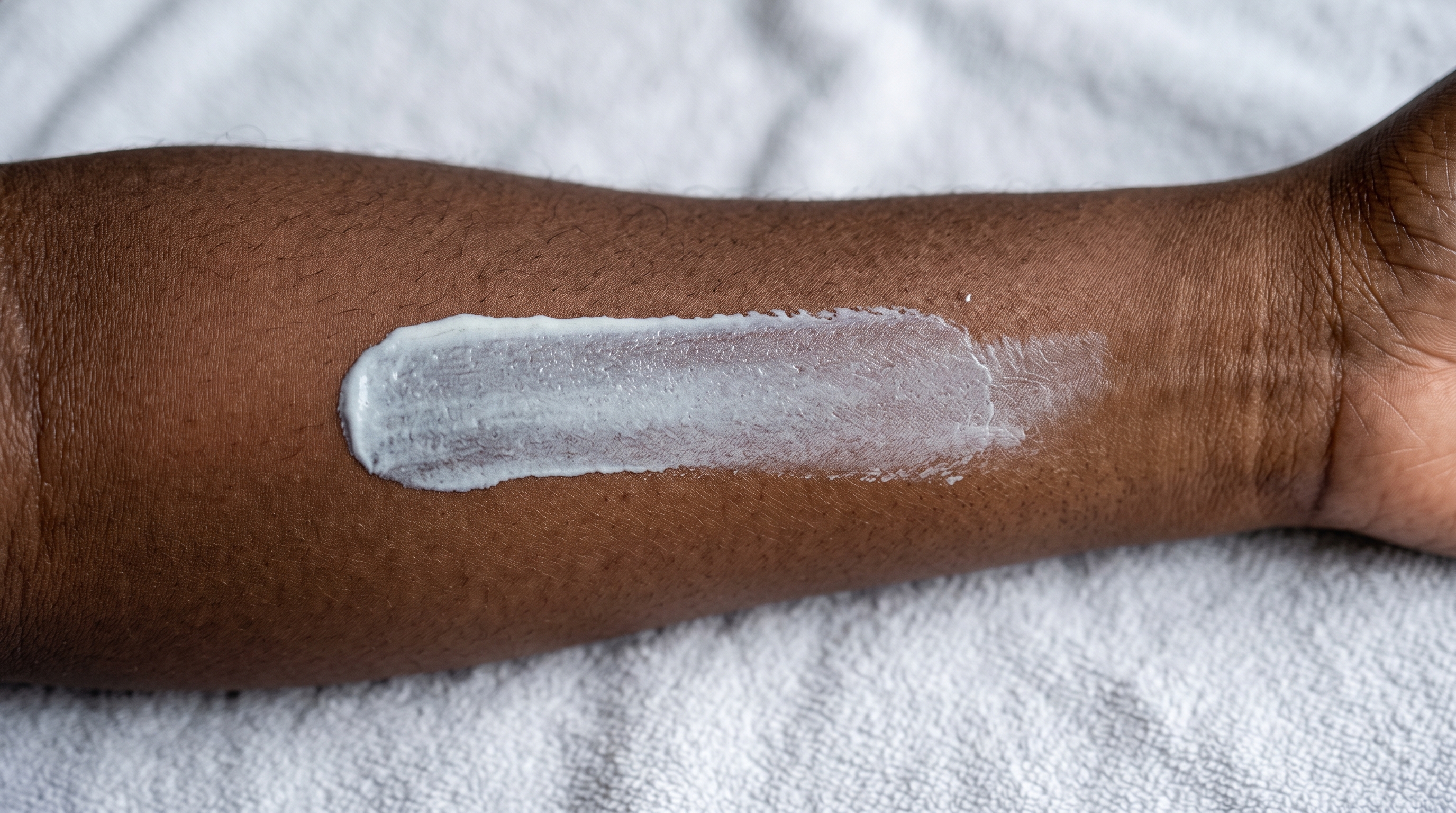
Stand in front of the sunscreen shelf at fifty-five and the problem is obvious. Half the bottles are built for teenagers with oily skin — mattifying, alcohol-heavy, drying. The other half are thick mineral pastes that sit on dry skin like chalk and turn a face grey. Neither gets used consistently, and a sunscreen that lives in the drawer protects nothing.
That is the real selection criterion, and it is worth saying before any discussion of filters: the best sunscreen for mature skin is the one whose texture you tolerate well enough to apply properly, every single morning, in the quantity the label assumes. Everything else is a refinement on top of that.
Why Mature Skin Changes the Equation
The skin you are putting sunscreen on at sixty is not the skin the formula was probably designed around. Sebum output falls substantially with age, and the epidermal barrier itself becomes measurably less competent — aged skin shows reduced stratum corneum lipids, slower barrier recovery after disruption, and a higher baseline transepidermal water loss [1]. Structurally, the dermis thins, collagen density drops, and the skin’s mechanical resilience declines decade by decade [2].
The practical consequence is that mature skin has almost no tolerance for a drying vehicle. A formula built around volatile alcohols and silica for oil control will feel tight within an hour, settle into expression lines, and cling to any dry flaking. That is not a cosmetic annoyance — it is the mechanism by which people quietly stop wearing sunscreen.
The Evidence That Sunscreen Is an Anti-Aging Product
The case for daily use is not theoretical. In a randomized community trial of 903 adults in Nambour, Australia, participants assigned to daily broad-spectrum sunscreen showed no detectable increase in skin aging over four and a half years, while the group applying it at their own discretion accumulated significantly more photoaging [3]. That is prevention.
More interesting for anyone already showing sun damage is what happens next. In a one-year study of daily facial broad-spectrum sunscreen, subjects with mild to moderate photodamage showed significant improvement in clinical photoaging measures — texture, clarity, and mottled pigmentation all improved from baseline, with sunscreen as the intervention [4]. Removing the ongoing UV insult lets the skin’s own repair processes make headway. Sunscreen is not merely holding the line; over a long enough horizon it lets the line move back.
The skin you are putting sunscreen on at sixty is not the skin the formula was probably designed around.
That reframes the purchase. You are not buying burn insurance for the beach. You are buying the single most evidence-backed anti-aging product on the shelf, which is why it deserves more thought than it usually gets.
The Number on the Bottle Is Not the Number on Your Face
Here is the detail that changes how you should shop. SPF is measured in the lab at an application density of 2 mg/cm² — a genuinely thick layer, roughly a quarter to a third of a teaspoon for the face and neck alone. Real-world application is nowhere near it. Observational work consistently finds people applying somewhere between a quarter and half of the reference quantity [5].
This matters because protection does not decline gently with under-application. When the same sunscreen was tested at different concentrations, measured SPF tracked the applied amount closely, so halving the dose costs far more than half the protection [6].
Two conclusions follow. First, buy a higher SPF than you think you need — not because SPF 50 is meaningfully better than SPF 30 under laboratory conditions, but because it gives you headroom for the under-application that will certainly happen. Second, prioritize a texture generous enough that you will actually use two fingers’ worth. A comfortable SPF 30 applied properly beats a stiff SPF 50 applied thinly. That trade-off is sharpest in a moisturizer with SPF, which gets applied by feel rather than by measure.
What to Actually Look For
Broad spectrum, with real UVA coverage. UVA penetrates to the dermis, drives collagen breakdown, and passes through window glass. “Broad spectrum” on a US label is a minimum bar, not a strong claim — look for modern UVA filters or a high UVA-protection rating where your market provides one. Our comparison of mineral and chemical sunscreens covers how the filter classes differ in feel and coverage.
Second, prioritize a texture generous enough that you will actually use two fingers’ worth.
A hydrating base, not a mattifying one. Read the first five ingredients. Glycerin, squalane, and emollient esters near the top signal a formula that will sit well on dry, mature skin. Denatured alcohol high on the list signals the opposite.
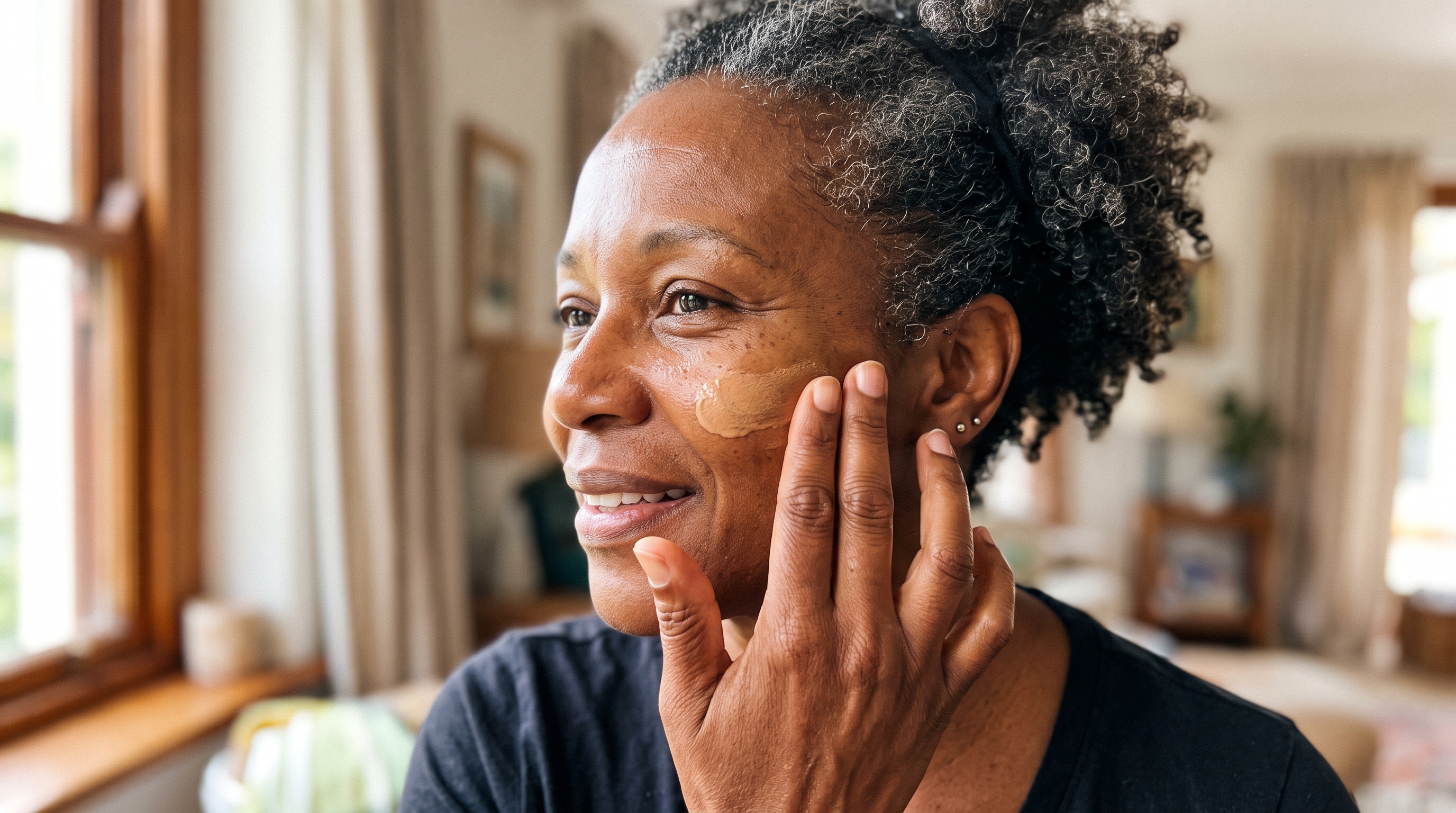
Tint, if you have pigmentation. This is the most underrated upgrade for mature skin. Conventional UV filters do essentially nothing against visible light, which independently drives pigmentation. Formulations containing iron oxides significantly reduce visible-light-induced pigmentation compared to sunscreen without them [7]. If you are working on age spots or melasma, a tinted product is not a cosmetic preference — it is a functional difference, and it pairs directly with the strategies in our guide to repairing sun-damaged skin.
A reapplication format you’ll tolerate over makeup. A stick or a cushion compact solves the midday problem that lotions create. The best midday sunscreen is, again, the one that does not require dismantling your face.
Coverage past the jawline. The neck, chest, and backs of the hands age faster than the face largely because they are protected less consistently. Whatever you buy, buy enough of it to go downward.
The Half of the Job Sunscreen Cannot Do
Sunscreen is a defensive tool. It protects the collagen you still have; it does not rebuild the collagen you lost across three decades of unprotected summers. Those are two different jobs, and expecting one product to do both is the most common reason people conclude their routine “isn’t working” — a point we take apart in more detail in our broader look at sunscreen and aging skin.
The repair half belongs to a retinoid at night, which is where the trade-off usually shows up: conventional retinol formulations rely on penetration enhancers that disrupt the skin barrier to work, and on already-thinned mature skin that produces peeling and redness at exactly the moment you are trying to be diligent with SPF.
This is the problem Nanoretinol was built to solve. Its 0.2% retinol is encapsulated in biomimetic lipid nanoparticles that the skin recognizes as “self” and allows through the epithelial barrier without having to damage it — the same class of nanotechnology used in modern drug delivery. In North Biomedical’s testing it proved 232% more effective than conventional retinol for collagen recovery and 73% more effective for elastin, with drastically reduced cytotoxicity. The water-based, 99% natural formula suits dry and sensitive mature skin, and it is gentle enough for the eye contour. As with any retinoid, apply it at night and wear sunscreen the following day.
Putting It Together
Choose a broad-spectrum SPF 50 with a cosmetically elegant, hydrating base, tinted with iron oxides if pigmentation is a concern, in a format you can reapply without redoing your makeup. Then use noticeably more of it than feels natural, and take it down your neck and onto your hands. Pair that with a nightly retinoid that repairs rather than merely defends, and you have covered both halves of photoaging with two products.
References
- Ghadially R, Brown BE, Sequeira-Martin SM, Feingold KR, Elias PM. “The aged epidermal permeability barrier. Structural, functional, and lipid biochemical abnormalities in humans and a senescent murine model.” Journal of Clinical Investigation. 1995;95(5):2281-2290. doi:10.1172/JCI117919
- Farage MA, Miller KW, Elsner P, Maibach HI. “Characteristics of the Aging Skin.” Advances in Wound Care. 2013;2(1):5-10. doi:10.1089/wound.2011.0356
- Hughes MCB, Williams GM, Baker P, Green AC. “Sunscreen and Prevention of Skin Aging: A Randomized Trial.” Annals of Internal Medicine. 2013;158(11):781-790. doi:10.7326/0003-4819-158-11-201306040-00002
- Randhawa M, Wang S, Leyden JJ, Cula GO, Pagnoni A, Southall MD. “Daily Use of a Facial Broad Spectrum Sunscreen Over One-Year Significantly Improves Clinical Evaluation of Photoaging.” Dermatologic Surgery. 2016;42(12):1354-1361. doi:10.1097/DSS.0000000000000879
- Petersen B, Wulf HC. “Application of sunscreen — theory and reality.” Photodermatology, Photoimmunology & Photomedicine. 2014;30(2-3):96-101. doi:10.1111/phpp.12099
- Schalka S, dos Reis VMS, Cucé LC. “The influence of the amount of sunscreen applied and its sun protection factor (SPF): evaluation of two sunscreens including the same ingredients at different concentrations.” Photodermatology, Photoimmunology & Photomedicine. 2009;25(4):175-180. doi:10.1111/j.1600-0781.2009.00408.x
- Dumbuya H, Grimes PE, Lynch S, Ji K, Brahmachary M, Zheng Q, Bouez C, Wangari-Talbot J. “Impact of Iron-Oxide Containing Formulations Against Visible Light-Induced Skin Pigmentation in Skin of Color Individuals.” Journal of Drugs in Dermatology. 2020;19(7):712-717. doi:10.36849/JDD.2020.5032