Adapalene vs Retinol — What's the Difference and Which Should You Use?
A dermatology-backed comparison of two powerful retinoids that work very differently under the skin
If you’ve spent any time researching skincare, you’ve probably encountered both adapalene and retinol — and wondered whether they’re basically the same thing.
They’re not. While both belong to the retinoid family (vitamin A derivatives), they differ in molecular structure, mechanism of action, regulatory status, and ideal use case. Choosing the wrong one won’t necessarily harm you, but it could mean months of using a product that’s suboptimal for your actual skin concerns.
Here’s how they compare, based on the pharmacology.
The Retinoid Family: Where Each One Fits
Think of “retinoid” as the family name — like “citrus fruit.” Retinol and adapalene are both citrus, but one’s an orange and the other’s a grapefruit. Same lineage, different characteristics.
Retinol is a naturally occurring form of vitamin A. When applied topically, it undergoes a two-step enzymatic conversion: retinol → retinaldehyde → retinoic acid. Only after this conversion does it become biologically active [1]. This gradual metabolism is why retinol is gentler than prescription retinoids — but also why it requires higher concentrations and longer timelines to produce visible results.
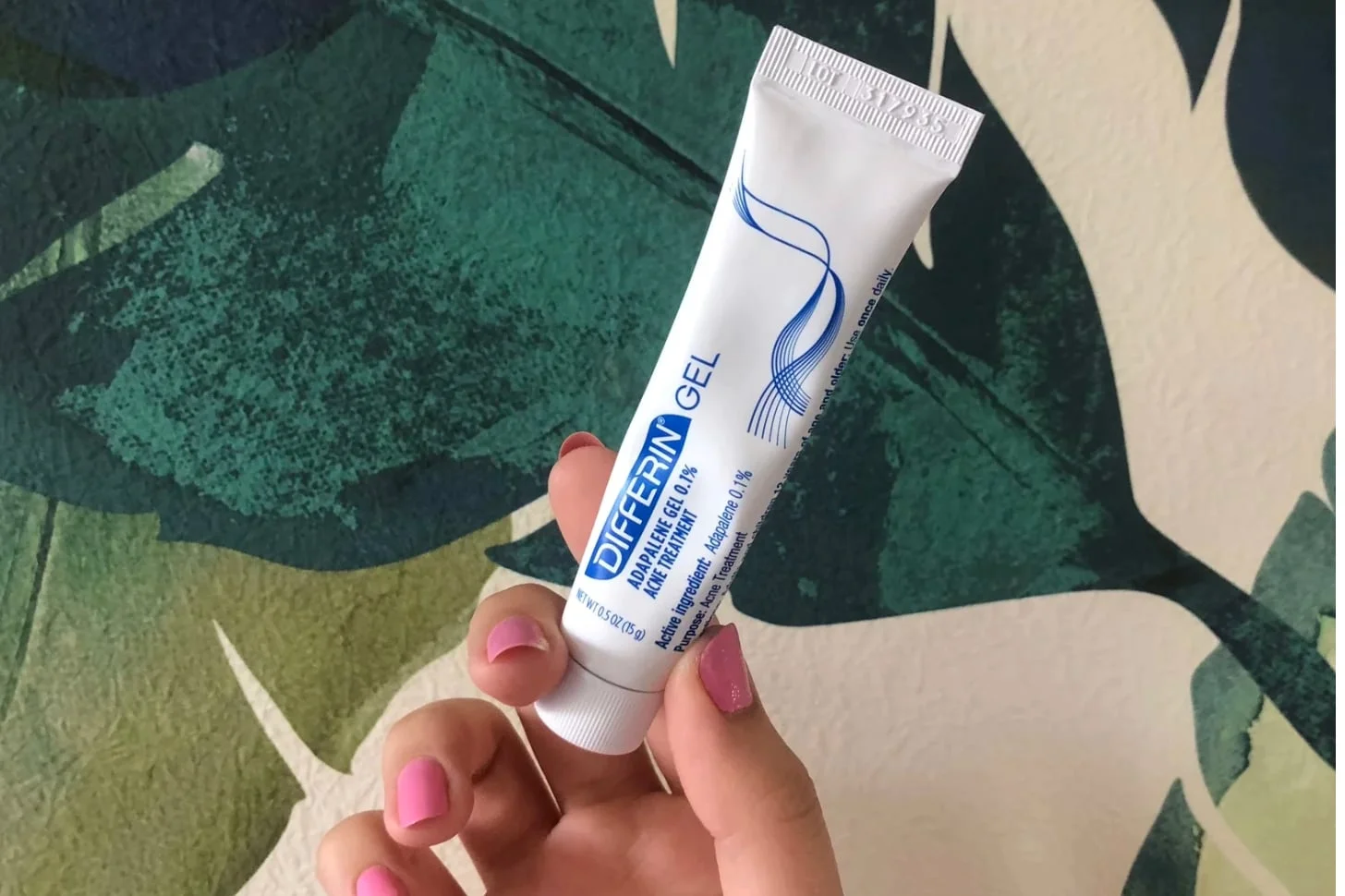
Adapalene is a third-generation synthetic retinoid, engineered in the 1990s specifically for acne treatment. Unlike retinol, adapalene doesn’t require conversion — it binds directly to retinoic acid receptors (specifically RARβ and RARγ) and gets to work immediately [2]. It was prescription-only until 2016, when the FDA approved 0.1% adapalene for over-the-counter sale (sold as Differin).
This distinction — natural precursor vs. synthetic receptor agonist — drives nearly every practical difference between them.
How They Work: The Mechanism Matters
Retinol: The Broad-Spectrum Approach
Once retinol converts to retinoic acid in your skin, it binds non-selectively to all retinoic acid receptor subtypes (RARα, RARβ, and RARγ). This triggers a wide cascade of cellular changes [1]:
- Accelerated epidermal cell turnover
- Increased collagen and elastin synthesis
- Inhibition of matrix metalloproteinases (the enzymes that degrade collagen)
- Reduced melanin production
- Normalized keratinization in follicles
The broad receptor activation is what makes retinol so versatile — it addresses wrinkles, texture, pigmentation, and mild acne simultaneously. It’s the multi-tool of skincare.
Adapalene: The Targeted Specialist
Adapalene skips the conversion step entirely and selectively binds to RARβ and RARγ while largely sparing RARα [2]. This matters because RARβ and RARγ are concentrated in the epidermis and sebaceous follicles — precisely where acne originates.
This targeted approach produces:
- Powerful comedolytic effects (clearing and preventing clogged pores)
- Strong anti-inflammatory action
- Rapid normalization of follicular keratinization
- Accelerated cell turnover
What it does less effectively (compared to broad-spectrum retinoids) is stimulate deep dermal collagen synthesis — the process most relevant to wrinkle reduction and skin firming [3].
Think of it this way: retinol is a general practitioner that treats the whole patient; adapalene is a specialist that excels in one domain.
Choosing the wrong one won’t necessarily harm you, but it could mean months of using a product that’s suboptimal for your actual skin concerns.
For Acne: Adapalene Wins Decisively
If acne is your primary concern, the evidence clearly favors adapalene.
A 2024 analysis in the Journal of Drugs in Dermatology evaluating topical acne treatments found adapalene-based formulations among the most effective options, with consistent reduction in both inflammatory and non-inflammatory lesions [4]. Adapalene’s direct receptor binding means it starts working faster, and its anti-inflammatory properties address acne through multiple pathways simultaneously.
Retinol can improve mild acne over time — it normalizes keratinization and prevents pore clogging — but the results are slower and less dramatic. A double-blind randomized controlled trial comparing a cosmeceutical retinol formulation (0.03%) against 0.1% adapalene for mild-to-moderate acne found adapalene produced faster and more significant improvement, though both treatments showed benefit by week 12 [5].
Verdict: For active acne, especially moderate cases with both comedones and inflammatory lesions, adapalene is the superior choice.
For Anti-Aging: Retinol Has the Edge
When the goal is reducing wrinkles, improving firmness, and reversing photoaging, retinol (and prescription tretinoin) have decades of supporting evidence.
The landmark Kafi et al. study published in Archives of Dermatology demonstrated that topical retinol significantly improved fine wrinkles and increased dermal collagen production in naturally aged skin after 24 weeks [6]. The Varani et al. research went further, showing retinol increased collagen accumulation by approximately 80% after long-term use while simultaneously reducing the collagen-degrading enzymes that accelerate skin aging [7].
Adapalene’s anti-aging potential is less well-studied, though emerging evidence suggests it does offer some benefits. A 2022 comprehensive review in Advances in Therapy noted that while adapalene has clinically evaluated antiaging effects, the evidence base is smaller and the results less dramatic than those for retinol or tretinoin specifically for wrinkle reduction [3].
The reason traces back to receptor selectivity: retinol’s activation of RARα (which adapalene largely skips) plays an important role in stimulating fibroblasts in the deeper dermis to produce collagen — the structural protein most responsible for firm, youthful skin [1].
Verdict: For anti-aging, retinol delivers broader and better-documented benefits. If wrinkles, firmness, and photoaging reversal are your priorities, retinol is the right choice.
Tolerability: A Surprising Winner
Conventional wisdom suggests prescription-strength ingredients like adapalene should be harsher than gentle over-the-counter retinol. The research tells a different story.
A multi-ethnic clinical trial comparing adapalene 0.1% gel to tretinoin 0.025% gel found adapalene was significantly better tolerated, with lower rates of erythema, dryness, and peeling [8]. This advantage extends to comparisons with retinol as well — adapalene’s targeted receptor binding means less “collateral” irritation from off-target activity.
The explanation is molecular. Retinol’s conversion to retinoic acid is uneven across the skin — some areas may accumulate higher local concentrations, creating patchy irritation. Adapalene’s direct mechanism produces more consistent, predictable effects with fewer inflammatory side effects [2].
That said, retinol tolerability varies enormously depending on formulation quality. A poorly stabilized retinol in a harsh vehicle will irritate far more than a well-formulated one. This is where delivery technology becomes critical — advanced encapsulation systems can dramatically improve retinol’s tolerability by controlling release rate and protecting the molecule from degradation.
Stability: Adapalene’s Hidden Advantage
One practical difference that rarely gets discussed: adapalene is photostable, retinol is not.
Retinol degrades rapidly when exposed to UV light — studies show up to 85% potency loss within hours of light exposure.
Retinol degrades rapidly when exposed to UV light — studies show up to 85% potency loss within hours of light exposure. This is why retinol products come in opaque containers with airless pumps, and why dermatologists universally recommend nighttime-only application [9].
Adapalene’s synthetic molecular structure resists photodegradation, maintaining its potency even with incidental light exposure. While nighttime application is still recommended (to avoid photosensitivity), the molecule itself doesn’t break down like retinol does.
This stability difference has real-world implications for shelf life and consistency of results. A retinol product that’s been improperly stored or frequently exposed to light may be significantly less potent than its label suggests.
Availability and Cost
Adapalene: 0.1% available OTC (Differin); 0.3% requires a prescription. Typically $12-25 for a tube. Standardized pharmaceutical formulation — you know exactly what you’re getting.
Retinol: Available in concentrations from 0.01% to 1% across thousands of products ranging from $10 to $150+. Quality, stability, and actual delivered potency vary dramatically between brands and formulations.
The standardization of adapalene is both a strength and a limitation. You get pharmaceutical-grade consistency, but you can’t customize concentration or combine it with complementary anti-aging actives in a single elegant formulation the way you can with retinol serums and creams.
Can You Combine Them?
No. Using adapalene and retinol simultaneously provides no additional benefit — they act on overlapping pathways, and combining them dramatically increases irritation without improving outcomes. Choose one based on your primary skin concern.
You can, however, use them sequentially: some people start with adapalene to address active acne, then transition to a retinol-based anti-aging regimen once breakouts are controlled.
When Delivery Technology Changes the Equation
One area where the adapalene-vs-retinol comparison is evolving rapidly is delivery technology.
Traditional retinol’s limitations — instability, uneven penetration, variable conversion to active form — are well documented. But advanced formulations are closing these gaps. Nanoretinol® from North Biomedical encapsulates retinol in biomimetic lipid nanoparticles that protect the molecule from degradation and facilitate deeper, more consistent delivery. The result: +232% more effective collagen recovery and +73% more effective elastin recovery compared to conventional retinol.
This approach addresses retinol’s Achilles heel — getting enough active ingredient to target cells — while preserving its broad-spectrum anti-aging advantages. The nanoparticle delivery also produces a more controlled release, reducing the irritation spikes that give retinol its reputation for harshness.
Decision Framework: Which Should You Choose?
Choose adapalene if:
- Active acne is your primary concern (especially comedonal or inflammatory)
- You want a standardized, pharmaceutical-grade product
- You’ve found retinol too irritating
- Budget is a consideration
- You want a single product for acne + basic skin maintenance
Choose retinol if:
- Anti-aging is your primary focus (wrinkles, firmness, photoaging)
- You want to address multiple concerns simultaneously (texture, tone, pigmentation, mild acne)
- You prefer customizable concentration and elegant cosmetic formulations
- You’re building a comprehensive anti-aging routine with multiple actives
- You’re using retinol preventatively in your late 20s or 30s
See a dermatologist if:
- You have severe or cystic acne (may need prescription-strength adapalene 0.3% or tretinoin)
- You aren’t seeing results after 12-16 weeks of consistent use
- You have inflammatory conditions like rosacea or eczema
- You’re pregnant, breastfeeding, or planning pregnancy (avoid all retinoids)
A Smarter Way to Think About It
The adapalene-vs-retinol question isn’t really about which is “better” — it’s about which is better for you, right now.
Adapalene is a precision tool engineered for acne. It does that job exceptionally well, with good tolerability and consistent pharmaceutical quality. Retinol is a broader intervention that addresses the full spectrum of skin aging, with the flexibility to be formulated at varying concentrations alongside complementary actives.
Your skin’s needs will likely change over time. The person who starts with adapalene at 22 for acne may transition to an advanced retinol formulation at 32 for prevention. The key is matching the tool to the task — and giving whichever you choose at least 12 weeks of consistent, patient use before judging results.
References
-
Mukherjee S, Date A, Patravale V, et al. “Retinoids in the treatment of skin aging: an overview of clinical efficacy and safety.” Clinical Interventions in Aging. 2006;1(4):327-348. doi:10.2147/ciia.2006.1.4.327
-
Berbis P. “Retinoids: mechanisms of action.” Annales de Dermatologie et de Vénéréologie. 2010;137(Suppl 3):S97-S103. doi:10.1016/S0151-9638(10)70036-3
-
Milosheska D, Roškar R. “Use of Retinoids in Topical Antiaging Treatments: A Focused Review of Clinical Evidence for Conventional and Nanoformulations.” Advances in Therapy. 2022;39(12):5351-5375. doi:10.1007/s12325-022-02319-7
-
Feldman SR, et al. “Benefit of Topical Combination Therapy for Acne: Analyzing Effect Size Using Number Needed to Treat.” Journal of Drugs in Dermatology. 2024;23(2):42-49. doi:10.36849/JDD.7927
-
Lee HE, Ko JY, Kim YH, et al. “A double-blind randomized controlled comparison of APDDR-0901, a novel cosmeceutical formulation, and 0.1% adapalene gel in the treatment of mild-to-moderate acne vulgaris.” European Journal of Dermatology. 2011;21(6):959-965. doi:10.1684/ejd.2011.1546
-
Kafi R, Kwak HS, Schumacher WE, et al. “Improvement of naturally aged skin with vitamin A (retinol).” Archives of Dermatology. 2007;143(5):606-612. doi:10.1001/archderm.143.5.606
-
Varani J, Warner RL, Gharaee-Kermani M, et al. “Vitamin A antagonizes decreased cell growth and elevated collagen-degrading matrix metalloproteinases and stimulates collagen accumulation in naturally aged human skin.” Journal of Investigative Dermatology. 2000;114(3):480-486. doi:10.1046/j.1523-1747.2000.00902.x
-
Goh CL, Tang MB, Briantais P, et al. “Adapalene gel 0.1% is better tolerated than tretinoin gel 0.025% among healthy volunteers of various ethnic origins.” Journal of Dermatological Treatment. 2009;20(5):282-288. doi:10.1080/09546630902763164
-
Zasada M, Budzisz E. “Retinoids: active molecules influencing skin structure formation in cosmetic and dermatological treatments.” Postępy Dermatologii i Alergologii. 2019;36(4):392-397. doi:10.5114/ada.2019.87443