Aloe Vera Face Mask: What Aloe Gel Can Do for Your Skin, and Where It Falls Short
Aloe is the classic calm-down mask. Here is what the gel contains, what the human studies measured, which kind of aloe to use, and how to fit a mask into a retinol routine
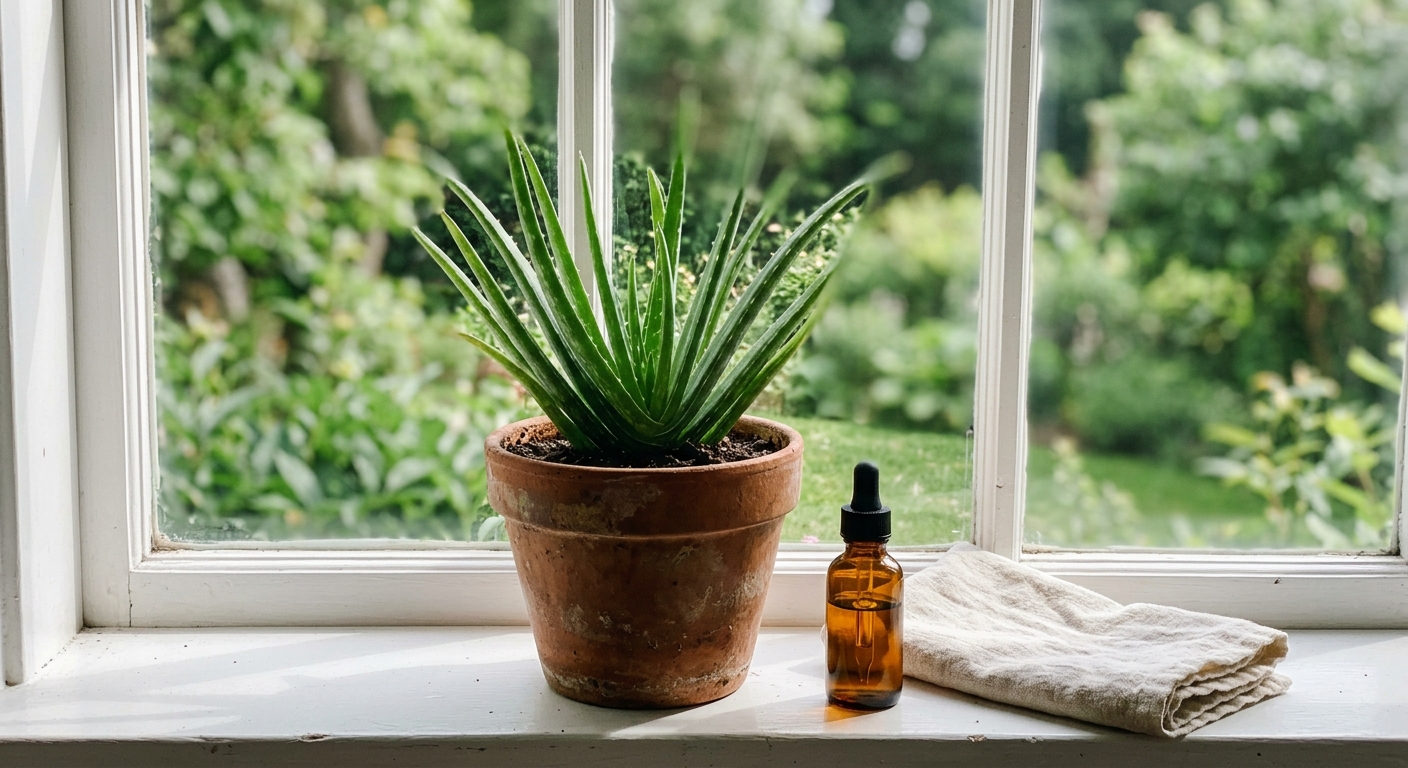
Aloe vera is the plant most people reach for after too much sun. Spread a cool layer of the clear gel over a face that feels hot or tight, and the relief is immediate. That makes aloe one of the most popular home face masks, and one of the most common ingredients in shop-bought gel and sheet masks.
Online recipes promise far more than relief, from fading scars to erasing wrinkles. The research is more modest, and it holds one surprise that changes how you should use aloe. This guide explains what is in the gel, what human studies measured, which kind of aloe to use, and how to make a mask that does its job.
What is in aloe gel
The aloe leaf has two parts that matter for skin. The clear inner gel is about 99% water [1]. The remaining solids are mostly polysaccharides, long sugar chains such as acemannan, plus small amounts of vitamins, enzymes, amino acids and salicylic acid [1]. Those sugars hold water and leave a light film on the surface, which is why aloe feels soothing and slightly tacky as it dries.
Just under the green rind sits a very different material: a bitter yellow latex. It contains anthraquinones such as aloin, compounds that irritate and can make skin react to sunlight [2]. Cosmetic suppliers limit anthraquinones in aloe ingredients for this reason [2]. When you cut a fresh leaf at home, that yellow sap is what you need to drain away before the gel goes anywhere near your face.
What the human studies found
Hydration. In a study of 20 women, creams containing freeze-dried aloe extract were applied to the forearm. After one application, the two stronger versions raised the water content of the skin surface, and after two weeks of daily use all three did, compared with the same cream without aloe [3]. Water loss through the skin did not change [3]. In plain terms, aloe added water to the surface but did not strengthen the barrier that keeps water in.
The surprise. A second forearm study tested solutions of the sugar-rich part of aloe gel on its own. One application hydrated the skin, but after repeated applications the aloe solutions had a drying effect compared with placebo [4]. The same solutions reduced redness on irritated skin about as well as a hydrocortisone gel after six days [4].
Your skin can look less red within 6 days of aloe gel, yet repeated coats of the gel alone left skin drier than a placebo in one trial.
Your skin can look less red within 6 days of aloe gel, yet repeated coats of the gel alone left skin drier than a placebo in one trial.
Redness after sun. In a placebo-controlled trial in 40 volunteers, a 97.5% aloe gel applied under a dressing reduced sunburn-type redness after 48 hours better than a 1% hydrocortisone gel, though less well than a 1% hydrocortisone cream [5].
Dry, irritated hands. Factory workers wore a glove lined with dried aloe gel on one hand for eight hours a day over 30 days. Their dry, irritated skin improved noticeably on the gloved hand, on average within about three and a half days, while the bare hand did not change [6]. The study was open rather than blinded, but the direction is consistent with the others.
Taken together, aloe is a reasonable short-term soother for skin that is red, warm or tight. It is a weak moisturizer on its own, and there is no good evidence that a rinse-off aloe mask reduces wrinkles.
Fresh leaf, bottled gel or a bought mask
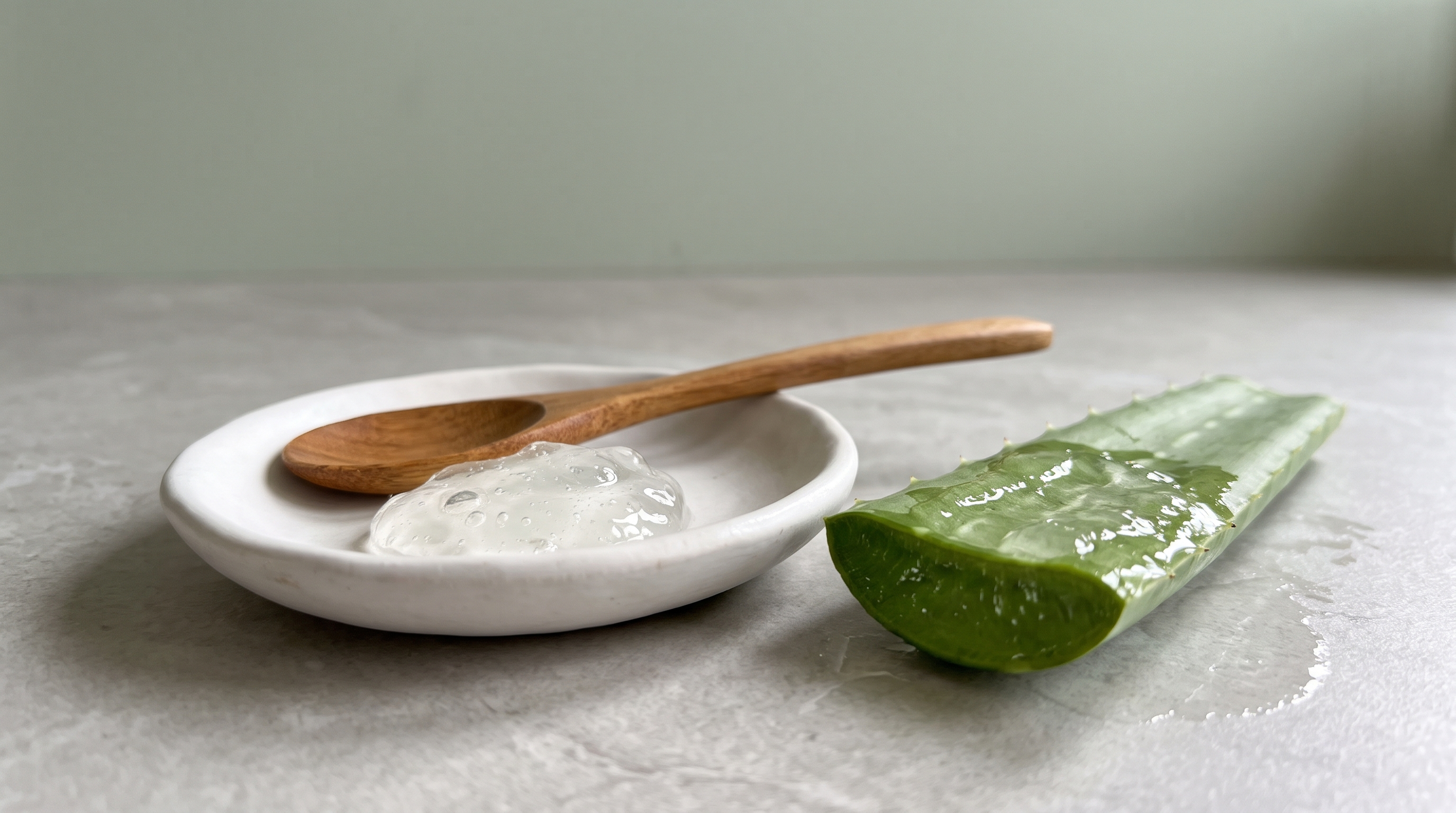
A fresh leaf gives the purest gel, but only if you handle it properly. Cut a section, stand it upright for ten minutes so the yellow latex drains out, then rinse it, peel off the rind and scoop out only the clear center. Any yellow streaks mean latex is still present.
Bottled aloe gel is easier and more consistent. Read the label: many “aloe” gels are mostly water, thickener, alcohol and fragrance, with aloe far down the list. Look for aloe leaf juice near the top and no added fragrance or denatured alcohol, which can sting irritated skin.
Your skin gets a 15-minute dose from a mask, far less than the 8 hours a day for 30 days that aloe gloves delivered to dry hands.
Bought aloe masks usually come as sheet masks or gel masks. Their advantage is that they pair aloe with humectants such as glycerin and sometimes with lipids, which covers the moisturizing gap that aloe leaves on its own. Our guide to overnight face masks explains how leave-on formulas work while you sleep.
How to make and use an aloe vera face mask
- Start with two tablespoons of clear gel, from a drained leaf or a simple bottled gel.
- Add a teaspoon of honey if your skin feels tight. Honey is a gentle humectant, and our guide to the honey face mask explains how it pulls water into the surface.
- Leave out lemon, baking soda and essential oils. Each one can irritate, and citrus on skin can react with sunlight.
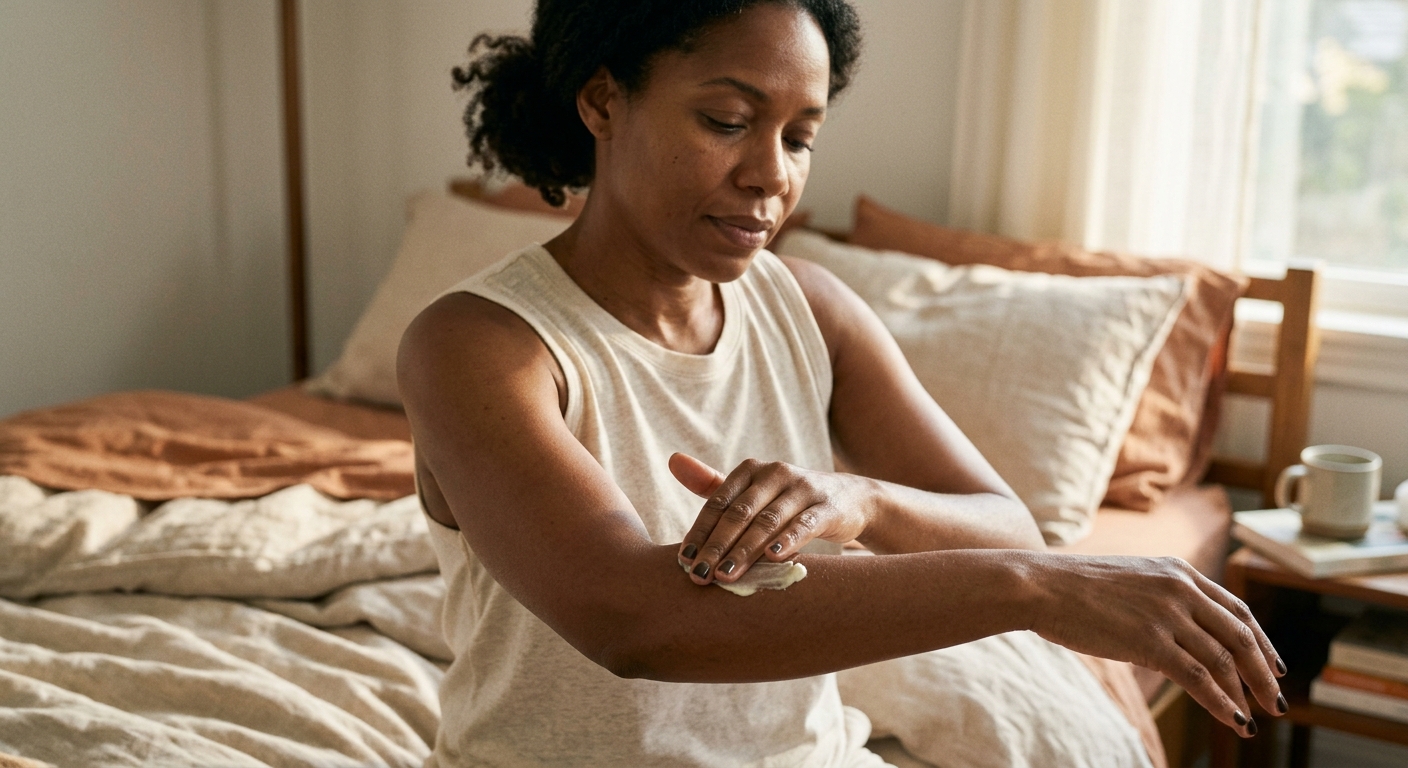
- Patch test first. Put a little on the inside of your arm and wait 24 hours, since some people do react to aloe.
- Apply to clean skin for 10 to 15 minutes, avoiding the eyes.
- Rinse with cool water and moisturize straight away. This is the step that matters most: the forearm results suggest aloe alone can leave skin drier over time, so seal the water in with a cream.
- Use it once or twice a week, or on evenings when your skin feels hot or reactive.
Your skin gets a 15-minute dose from a mask, far less than the 8 hours a day for 30 days that aloe gloves delivered to dry hands.
Aloe on retinol nights
Aloe is a popular companion to retinol because both are associated with evening routines and because retinol can leave skin pink and tight in the first weeks. Used sensibly, an aloe mask fits that routine well. Apply it on a night off from retinol, or use it before a rich moisturizer when your skin feels warm after a retinol night. Avoid layering aloe products that contain alcohol or fragrance, since a stinging barrier is the last thing you want while adjusting to a retinoid. Our guide to retinol for sensitive skin covers the full approach to building tolerance.
To learn more about the plant itself, including aloe in moisturizers and after-sun care, read our guide to aloe vera for skin.
Where aloe stops and retinol starts
An aloe mask calms the surface for an evening. What it cannot do is reach the collagen and elastin deeper in the skin, where fine lines and loss of firmness begin.
That is the job of a retinoid. In a controlled trial in older adults, a 0.4% retinol lotion applied up to three times a week for 24 weeks reduced fine wrinkling and increased collagen production compared with the same lotion without retinol [7].
Many people with reactive skin stop retinol because conventional formulas leave it red and peeling. Nanoretinol was designed to avoid that. It is a light, water-based gel that carries 0.2% retinol inside biomimetic lipid nanoparticles, which the skin recognizes as its own, so the retinol passes through the barrier without damaging it. Aloe leaf juice is one of its base ingredients. In North Biomedical’s study, it was 232% more effective in collagen recovery and 73% more effective in elastin recovery than conventional retinol, and users saw a 61% increase in skin firmness and a 56% increase in skin elasticity after 56 days [8].
The two fit together easily. Keep the aloe mask for evenings when your skin feels hot or tight, apply Nanoretinol on the other nights, and wear broad-spectrum sunscreen each morning.
References
- Surjushe A, Vasani R, Saple DG. “Aloe vera: a short review.” Indian Journal of Dermatology. 2008;53(4):163-166. doi:10.4103/0019-5154.44785
- Cosmetic Ingredient Review Expert Panel. “Final report on the safety assessment of Aloe Andongensis Extract, Aloe Andongensis Leaf Juice, Aloe Arborescens Leaf Extract, Aloe Arborescens Leaf Juice, Aloe Arborescens Leaf Protoplasts, Aloe Barbadensis Flower Extract, Aloe Barbadensis Leaf, Aloe Barbadensis Leaf Extract, Aloe Barbadensis Leaf Juice, Aloe Barbadensis Leaf Polysaccharides, Aloe Barbadensis Leaf Water, Aloe Ferox Leaf Extract, Aloe Ferox Leaf Juice, and Aloe Ferox Leaf Juice Extract.” International Journal of Toxicology. 2007;26 Suppl 2:1-50. doi:10.1080/10915810701351186
- Dal’Belo SE, Gaspar LR, Maia Campos PM. “Moisturizing effect of cosmetic formulations containing Aloe vera extract in different concentrations assessed by skin bioengineering techniques.” Skin Research and Technology. 2006;12(4):241-246. doi:10.1111/j.0909-752X.2006.00155.x
- Fox LT, du Plessis J, Gerber M, van Zyl S, Boneschans B, Hamman JH. “In vivo skin hydration and anti-erythema effects of Aloe vera, Aloe ferox and Aloe marlothii gel materials after single and multiple applications.” Pharmacognosy Magazine. 2014;10(Suppl 2):S392-S403. PubMed:24991119
- Reuter J, Jocher A, Stump J, Grossjohann B, Franke G, Schempp CM. “Investigation of the anti-inflammatory potential of Aloe vera gel (97.5%) in the ultraviolet erythema test.” Skin Pharmacology and Physiology. 2008;21(2):106-110. doi:10.1159/000114871
- West DP, Zhu YF. “Evaluation of aloe vera gel gloves in the treatment of dry skin associated with occupational exposure.” American Journal of Infection Control. 2003;31(1):40-42. doi:10.1067/mic.2003.12
- Kafi R, Kwak HS, Schumacher WE, Cho S, Hanft VN, Hamilton TA, et al. “Improvement of naturally aged skin with vitamin A (retinol).” Archives of Dermatology. 2007;143(5):606-612. doi:10.1001/archderm.143.5.606
- North Biomedical LLC. “Nanoretinol vs. Conventional Retinol: Efficacy in Collagen and Elastin Recovery.” Clinical Study Summary, 2024. Study summary