Honey Face Mask: What Honey Really Does for Your Skin, and What to Leave Out
Honey is a gentle humectant with a long history in skin care. Here is what the trials show, which honey to use, and why the popular add-ins are the real risk
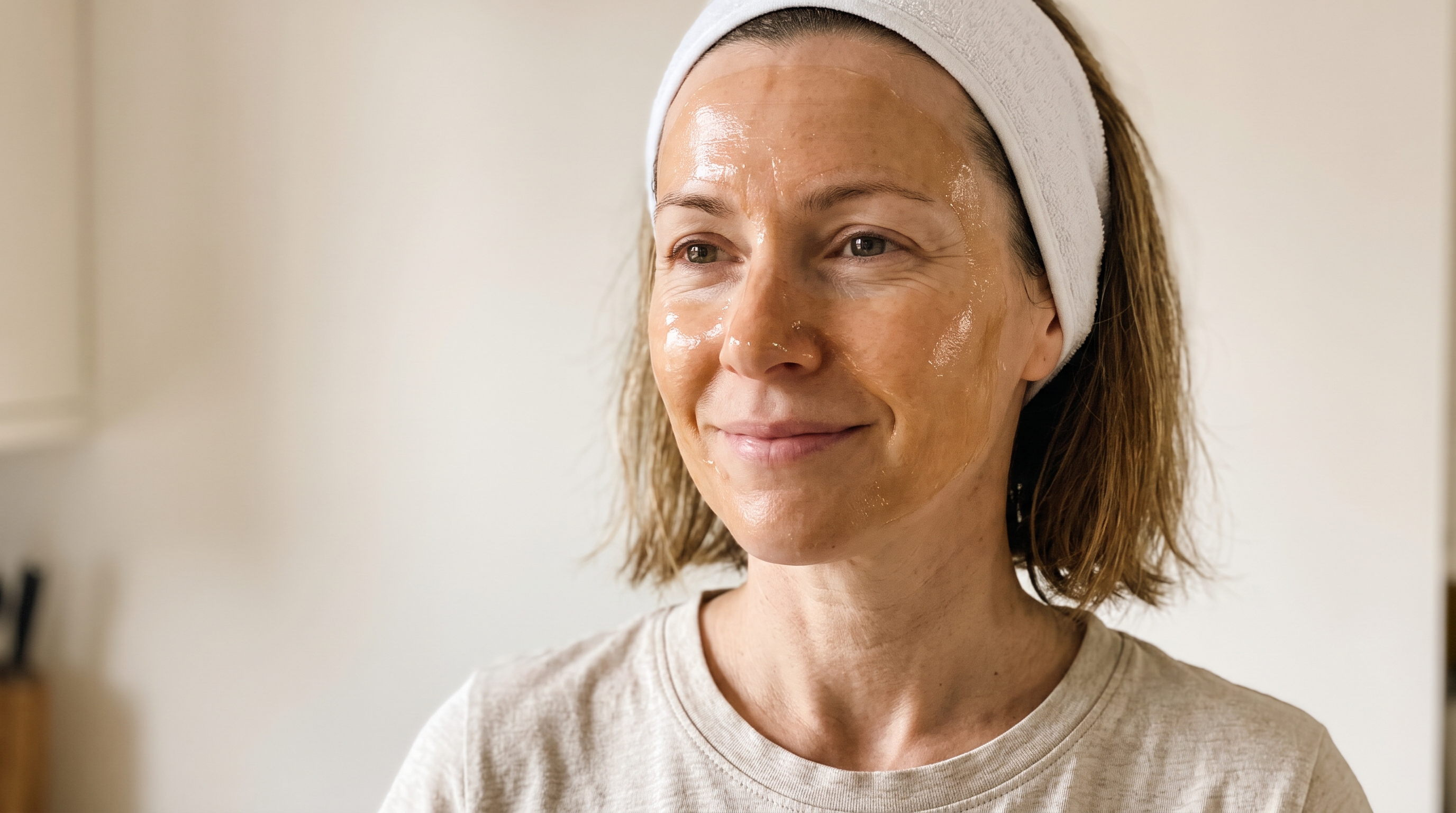
Honey has been spread on skin for thousands of years, and a honey face mask is still one of the most popular things people make in their own kitchens. It is cheap, it smells good and it leaves the face feeling soft. The useful question is what it actually does, and whether the online recipes that add lemon, cinnamon or baking soda help or hurt.
This guide covers what is in honey, what the clinical trials show, which honey to use, how to apply a mask well, and where a honey mask fits in a routine aimed at fine lines and firmness.
What is in honey
Honey is a supersaturated solution made mostly of fructose and glucose, with small amounts of protein, amino acids, vitamins, enzymes and minerals [1]. Those sugars explain most of how it feels on skin. They are humectants, which means they attract and hold water, so a honey mask leaves the surface plump and smooth for a few hours after you rinse. In cosmetic products, honey works as an emollient, humectant and soothing agent [1].
Honey also resists microbes. Most honeys release small amounts of hydrogen peroxide through a natural enzyme, and their low pH and very high sugar content make it hard for bacteria to grow [2]. Manuka honey keeps its antibacterial activity even when the peroxide is blocked, thanks to a compound called methylglyoxal [1, 2]. Our guide to manuka honey for skin covers that variety in more depth.
What the evidence shows
Most of honey’s medical reputation comes from wound care. A Cochrane review of 26 trials with more than 3,000 people found high-quality evidence that honey dressings heal partial-thickness burns roughly 4 to 5 days faster than conventional dressings [3]. For most other wound types, the reviewers judged the evidence to be low or very low quality [3].
Those results come from broken skin kept under a dressing, often for days. A face mask sits on intact skin for about 15 minutes, so wound data does not transfer directly to your face.
Two randomized trials have tested honey on facial skin, and they point in different directions. In 138 adults with rosacea, a cream of 90% medical-grade kanuka honey and 10% glycerin, applied twice daily for 8 weeks, gave a clear improvement to 34% of users compared with 17% on a plain control cream [4]. In 136 people with acne, the same honey product used after an antibacterial soap for 12 weeks did no better than the soap alone [5].
Your skin may feel softer after a single honey mask, yet 12 weeks of medical-grade honey twice a day did no better than antibacterial soap alone in an acne trial.
Your skin may feel softer after a single honey mask, yet 12 weeks of medical-grade honey twice a day did no better than antibacterial soap alone in an acne trial.
The honest summary is that honey is a pleasant, low-risk hydrator with some soothing evidence behind it. It is not an acne treatment, and no trial has shown that it reduces wrinkles.
Which honey to use
Raw or minimally processed honey is the usual choice for a home mask. It keeps more of its natural enzymes than heavily processed honey, although antibacterial strength varies a great deal from one batch and flower source to the next [2].
Manuka honey costs much more. Its methylglyoxal content makes it the stronger antibacterial option, but a short mask on healthy skin does not need that strength.
Medical-grade honey is sterilized and standardized for wound care. It is the form used in the clinical trials above [4, 5], and it is the safest choice if your skin is easily irritated.
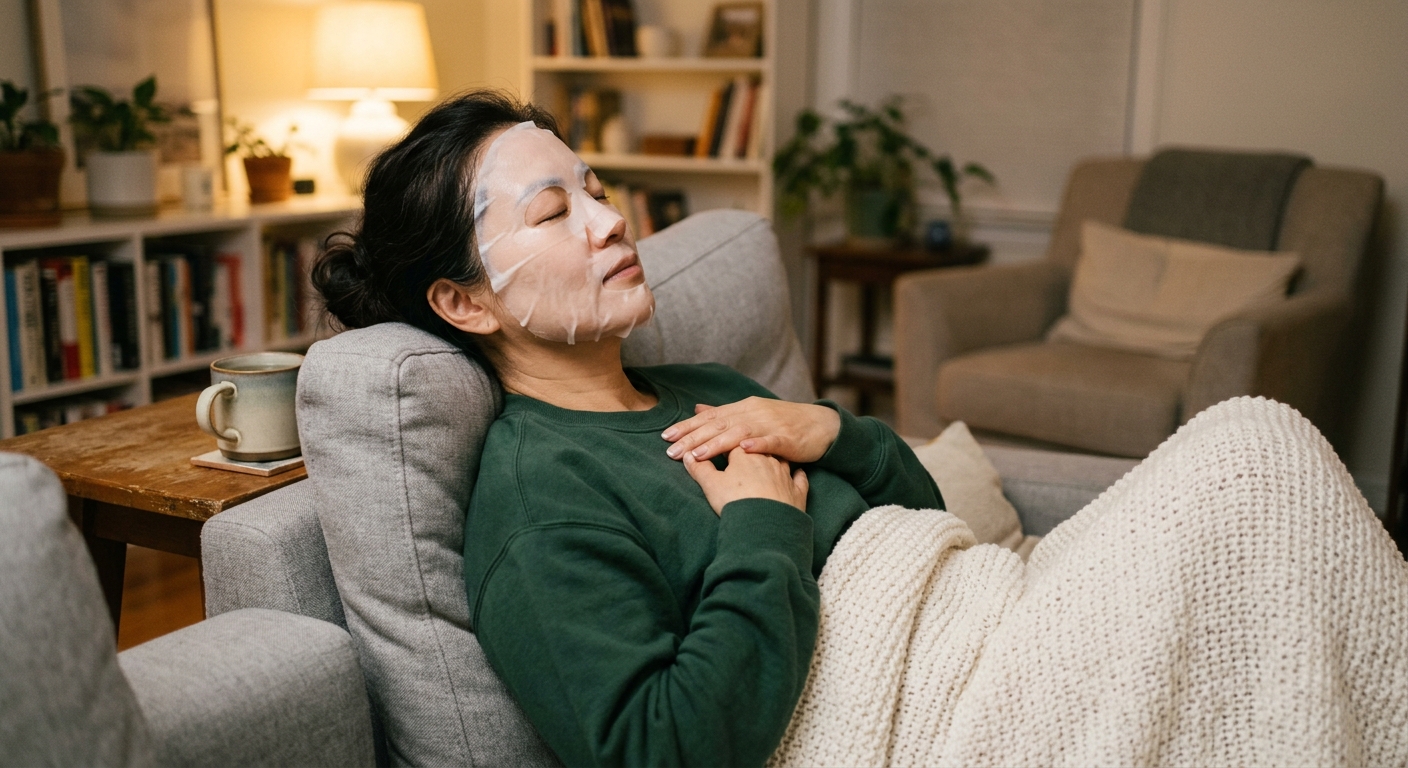
Bought honey masks usually blend a modest amount of honey with oils, gels or emulsifiers so the product spreads easily and does not drip [1]. They are less sticky, and many add glycerin or other humectants that do the same job. Leave-on versions overlap with sleeping masks, which our guide to overnight face masks compares.
Your skin gets far more honey from a spoonful straight from the jar than from most bought masks, which use honey at only 1 to 10% of the formula.
The add-ins to leave out
Most problems with honey masks come from what people mix into them.
- Lemon or lime juice. Citrus juice contains furocoumarins, plant chemicals that react with sunlight and can leave burns and dark patches on the skin. Doctors have described this reaction, called phytophotodermatitis, after lime juice met sunlight on holiday [6]. Never put citrus on your face before going outdoors.
- Cinnamon and other spices. Cinnamon can sting and redden the face, its flavour compounds are known contact allergens, and it adds nothing a plain mask lacks.
- Baking soda. It is strongly alkaline, while healthy skin is slightly acidic. Rubbing an alkaline paste into the face works against the skin barrier.
- Sugar as a scrub. Coarse crystals can be rough on facial skin. A gentle wipe with a warm cloth removes a mask well enough.
Raw egg white is another popular add-in. Our guide to the egg white face mask explains why it tightens only briefly and carries a small food-safety risk.
How to make and use a honey mask
- Start with clean, damp skin. Water on the surface helps the honey spread thinly.
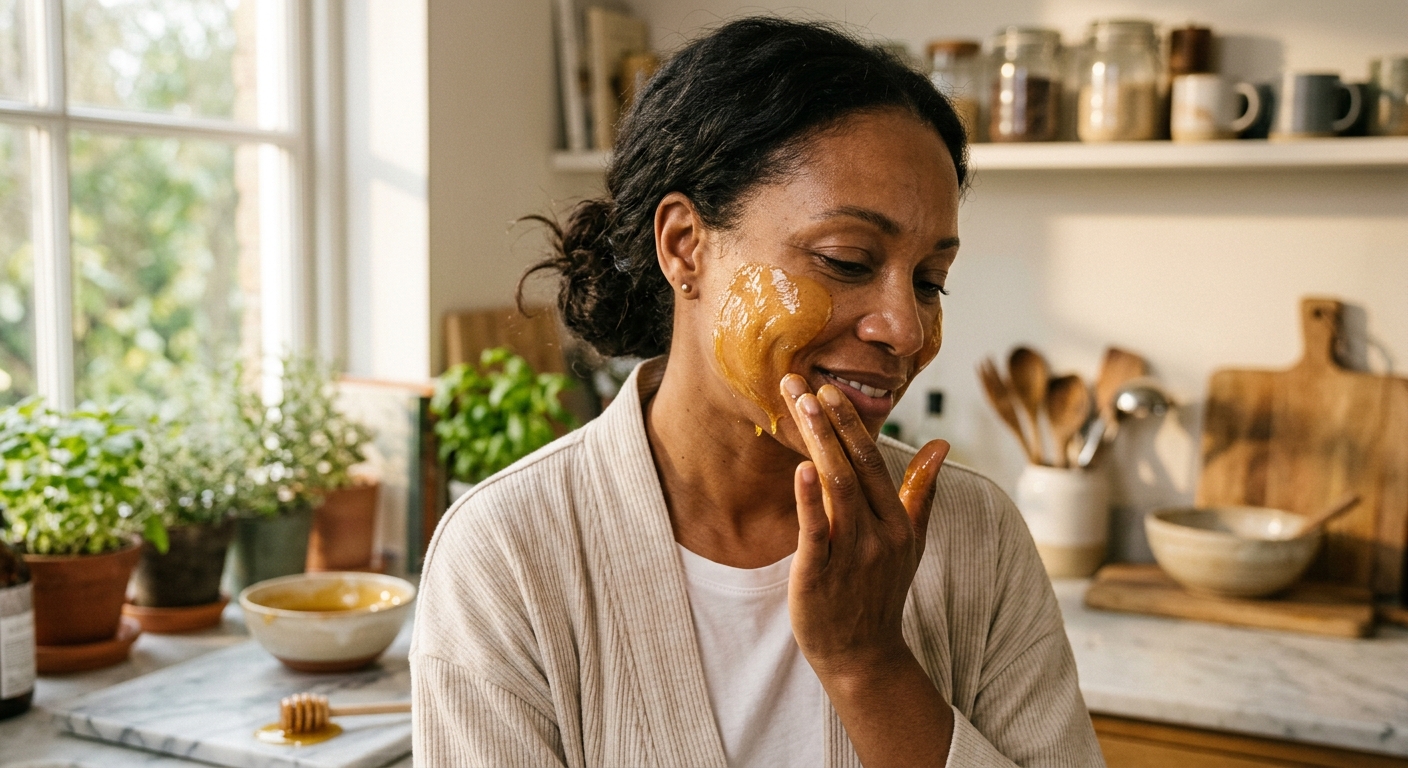
- Use about a teaspoon of honey. Warm it between your fingertips and smooth a thin layer over the face, avoiding the eyes.
- Leave it on for 10 to 15 minutes. Longer contact mostly adds stickiness.
- Rinse with lukewarm water and a soft cloth, then apply a moisturizer to hold the water the honey has drawn into the surface.
- Repeat once or twice a week. A honey mask is gentle enough for more, but there is little extra to gain.
If your skin often feels tight and papery even though it is not oily, the issue may be low water content rather than low oil. Our guide to dehydrated skin explains how to tell the difference and what to change.
Your skin gets far more honey from a spoonful straight from the jar than from most bought masks, which use honey at only 1 to 10% of the formula.
Who should skip a honey mask
Honey is low risk, but it is not risk free. Skip it or patch-test first if you have a known allergy to bee products, pollen or propolis, because honey can carry traces of each. Do not put kitchen honey on broken skin or an open wound; wound care uses sterilized medical-grade honey under medical guidance. If you have rosacea, the trial above is encouraging, but it used a medical product with glycerin, not supermarket honey [4].
Where honey stops and retinol starts
A honey mask treats the surface. It draws water into the outer layer, calms it and leaves it smooth. What it cannot do is change the collagen and elastin in the deeper skin, which is where fine lines and loss of firmness begin.
That is the job of a retinoid. In a controlled trial in older adults, a 0.4% retinol lotion applied up to three times a week for 24 weeks significantly reduced fine wrinkling and increased collagen production compared with the plain lotion it was tested against [7].
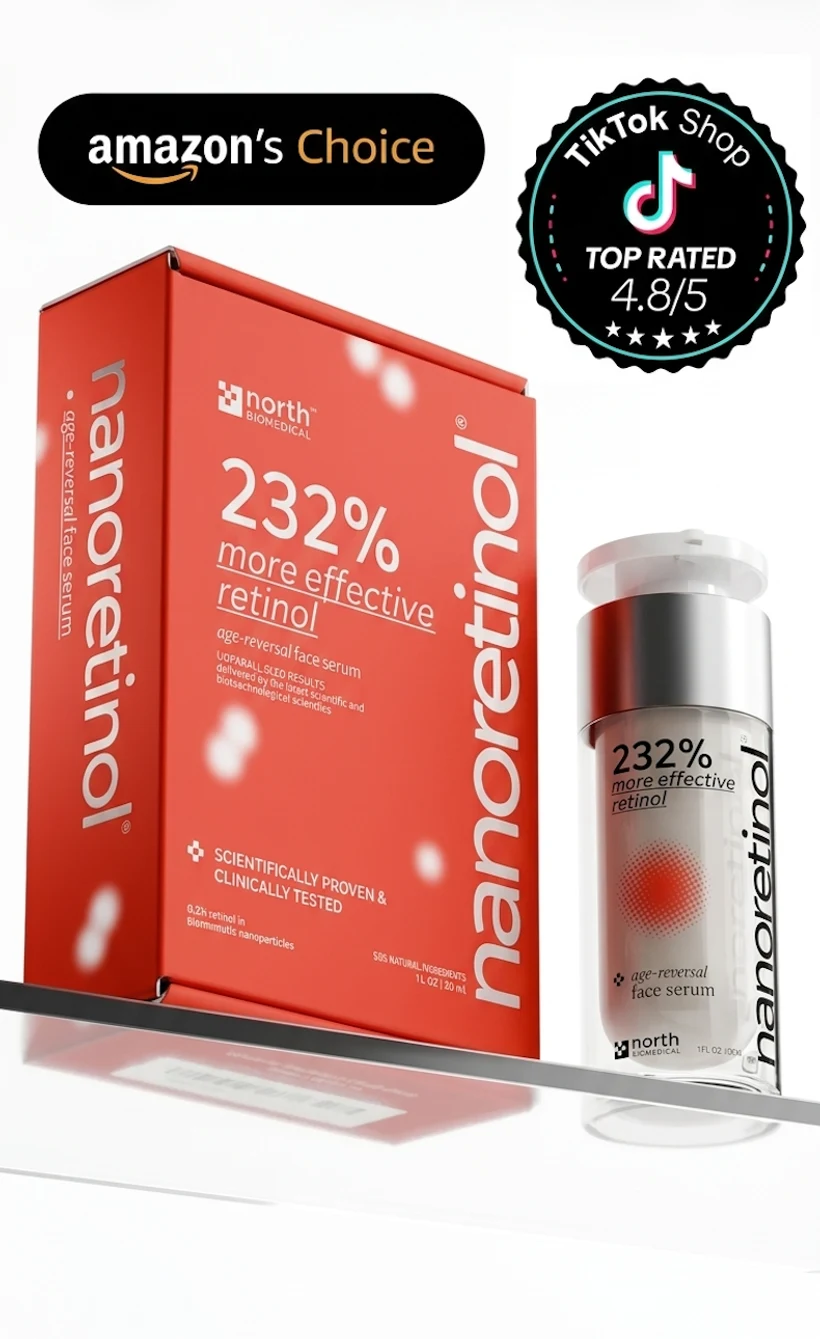
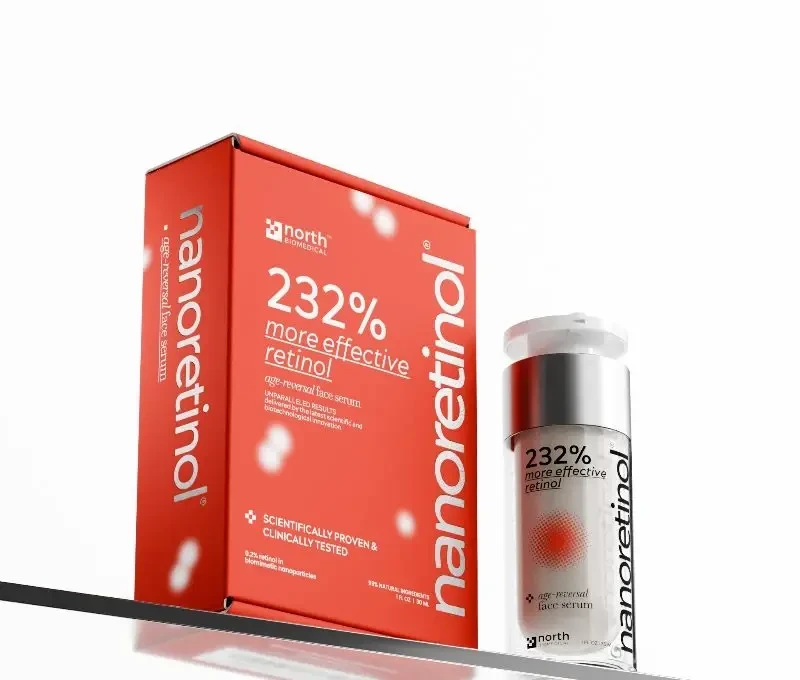
Many people avoid retinol because conventional formulas dry and irritate the skin, which is the opposite of what a honey mask is for. Nanoretinol was designed to avoid that problem. It carries 0.2% retinol inside biomimetic lipid nanoparticles that the skin recognizes as its own, so the retinol passes through the barrier without damaging it. In North Biomedical’s study, it was 232% more effective in collagen recovery and 73% more effective in elastin recovery than conventional retinol, and users saw a 61% increase in skin firmness after 56 days [8].
The two fit together easily. Use a honey mask on one or two evenings a week, and apply Nanoretinol on the other nights, followed by broad-spectrum sunscreen the next morning.
References
- Burlando B, Cornara L. “Honey in dermatology and skin care: a review.” Journal of Cosmetic Dermatology. 2013;12(4):306-313. doi:10.1111/jocd.12058
- Mandal MD, Mandal S. “Honey: its medicinal property and antibacterial activity.” Asian Pacific Journal of Tropical Biomedicine. 2011;1(2):154-160. PubMed:23569748
- Jull AB, Cullum N, Dumville JC, Westby MJ, Deshpande S, Walker N. “Honey as a topical treatment for wounds.” Cochrane Database of Systematic Reviews. 2015;(3):CD005083. doi:10.1002/14651858.CD005083.pub4
- Braithwaite I, Hunt A, Riley J, Fingleton J, Kocks J, Corin A, et al. “Randomised controlled trial of topical kanuka honey for the treatment of rosacea.” BMJ Open. 2015;5(6):e007651. doi:10.1136/bmjopen-2015-007651
- Semprini A, Braithwaite I, Corin A, Sheahan D, Tofield C, Helm C, et al. “Randomised controlled trial of topical kanuka honey for the treatment of acne.” BMJ Open. 2016;6(2):e009448. doi:10.1136/bmjopen-2015-009448
- Cochran BL, Jallo J, Coican A, Hurst K, Sagasser J, Greenfield MF. “Phytophotodermatitis From Lime Margaritas on a Mexico Vacation.” Cureus. 2024;16(5):e59674. doi:10.7759/cureus.59674
- Kafi R, Kwak HS, Schumacher WE, Cho S, Hanft VN, Hamilton TA, et al. “Improvement of naturally aged skin with vitamin A (retinol).” Archives of Dermatology. 2007;143(5):606-612. doi:10.1001/archderm.143.5.606
- North Biomedical LLC. “Nanoretinol vs. Conventional Retinol: Efficacy in Collagen and Elastin Recovery.” Clinical Study Summary, 2024. Study summary