Tamanu Oil for Skin: What the Science Actually Shows — and Where It Falls Short
Tamanu oil has real wound-healing and anti-inflammatory evidence, but the anti-aging claims need a closer look. Here's the honest accounting.
If you’ve spent any time in clean-beauty or “natural skincare” spaces, you’ve seen tamanu oil. It’s marketed as a do-it-all green elixir — anti-aging, scar-fading, acne-clearing, skin-restoring. The before-and-after photos look compelling. The ingredient name sounds vaguely Polynesian and mysterious. And it’s cheap enough that most women try it at some point.
So what does the research actually say? It turns out tamanu oil has real clinical evidence in specific areas — and the gap between what it does well and what it’s marketed for is wider than the bottle implies. This is the honest read.
What Tamanu Oil Actually Is
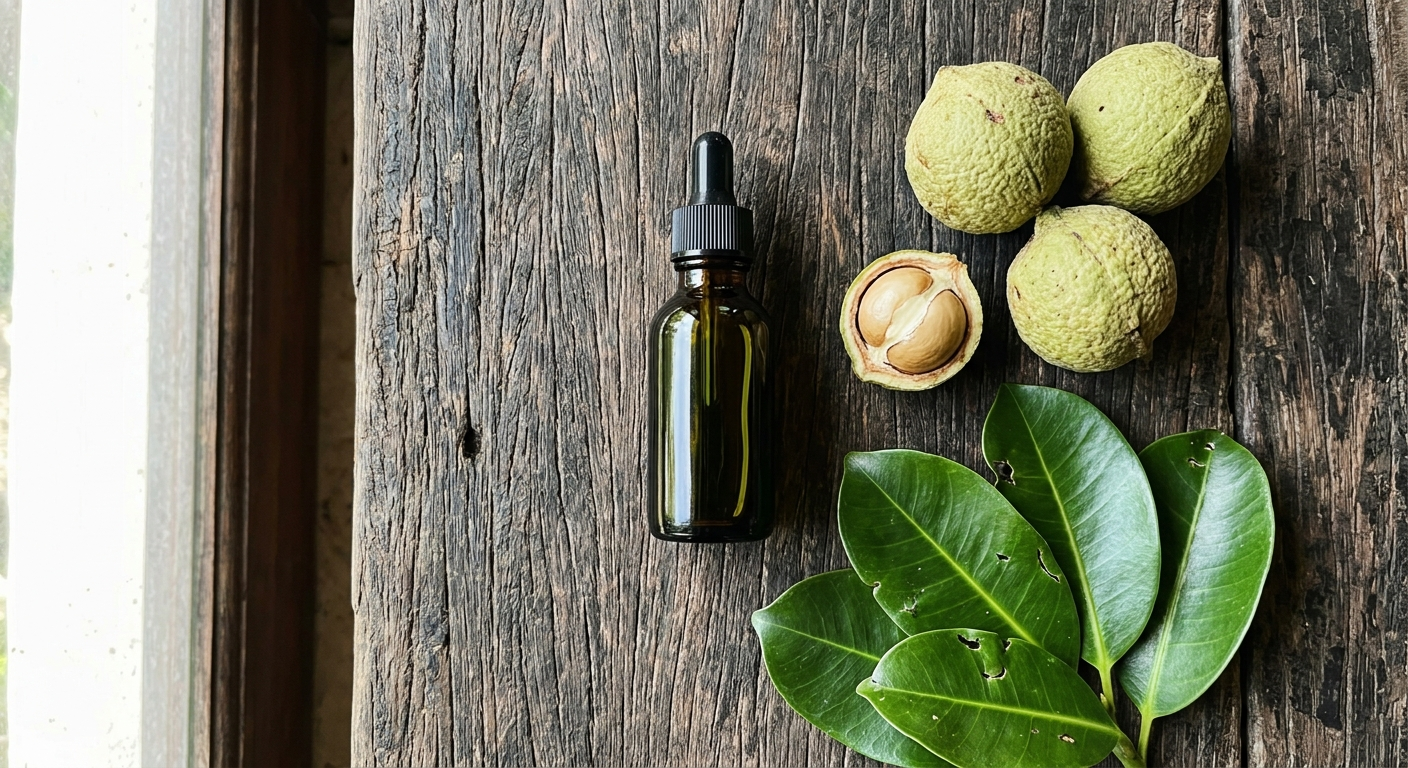
Tamanu oil comes from the nut of Calophyllum inophyllum, an evergreen tree native to coastal southeast Asia, the Pacific Islands, and parts of east Africa. Polynesian and Melanesian cultures have used it for centuries as a topical treatment for cuts, burns, insect bites, and inflamed skin.
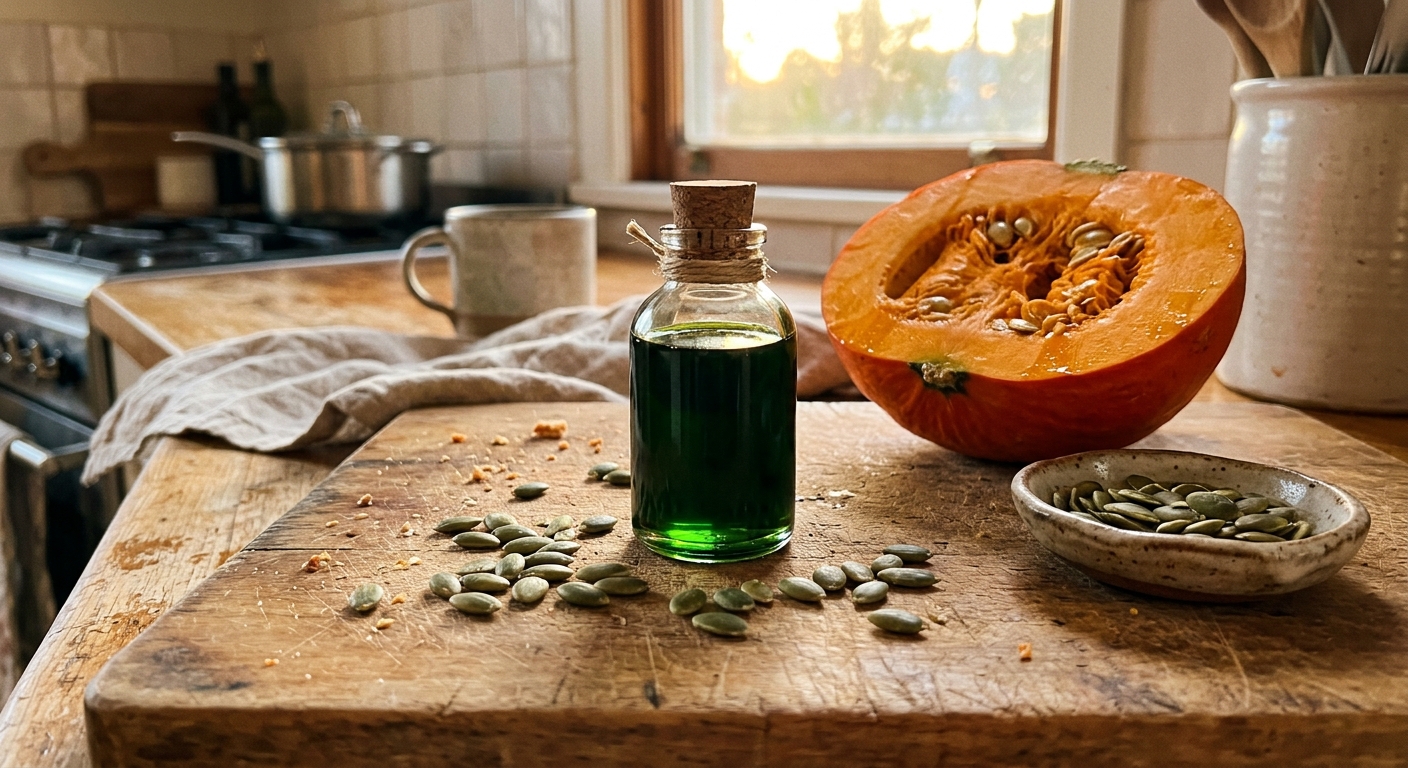
The oil is unusual chemically. Beyond standard fatty acids (oleic, linoleic, palmitic), it contains a class of compounds called neoflavonoids — including calophyllolide, inophyllum, and several calanolides — that aren’t found in most cosmetic plant oils. These compounds are responsible for tamanu’s distinctive deep green color, its slight medicinal smell, and most of its pharmacological activity.
Where the Evidence Is Strongest: Wound Healing
This is what tamanu oil is genuinely good at — and the clinical evidence is robust.
A 2016 study examining tamanu oil emulsion on human skin cells (keratinocytes and dermal fibroblasts) found measurable increases in cell proliferation, glycosaminoglycan production, and collagen synthesis, alongside wound-healing activity in scratch assays [1]. Transcriptomic analysis showed gene expression changes in O-glycan biosynthesis, cell adhesion, and proliferation pathways — biologically meaningful effects, not just surface conditioning.
In animal studies, the effect translates. A 2021 rat wound-healing trial compared topical tamanu oil to saline control and to centella asiatica (another well-known wound-healing botanical). The tamanu group showed accelerated formation of macrophage-granulation tissue and less wound contraction than controls [2]. Histology supported genuine tissue remodeling, not just moisturizing.
The active compound primarily responsible for these effects is calophyllolide. In a controlled PLoS One study, isolated calophyllolide showed clear anti-inflammatory activity, downregulating IL-1β, IL-6, and TNF-α while upregulating the anti-inflammatory cytokine IL-10 [3]. It also accelerated wound closure in vivo. This is real pharmacology — closer to a botanical drug than a cosmetic ingredient.
Where the Evidence Is Moderate: Inflammation and Atopic Dermatitis
Tamanu oil is widely used as a topical for irritated, inflamed, and reactive skin, and there’s a reasonable case for that.
A 2021 review specifically examined tamanu oil’s potential for atopic dermatitis treatment, summarizing its anti-inflammatory, antioxidant, antimicrobial, and barrier-supporting effects, with calophyllolide as the lead bioactive [4]. The mechanism — calming inflammatory cytokine cascades and supporting wound repair — is exactly the mechanism atopic dermatitis pathophysiology calls for. The authors stop short of recommending tamanu oil as a first-line treatment, but they make the case for further clinical trials in patients.
Tamanu oil is widely sold as an anti-aging miracle: “natural retinol alternative,” “wrinkle eraser,” “skin tightener.” The science doesn’t support those claims.
For acne, the rationale is similar. Tamanu oil has antibacterial and anti-inflammatory effects that could theoretically reduce inflammatory acne lesions, though human RCTs specifically on acne are limited. Most of what’s claimed for “tamanu oil for acne scars” rests on extrapolation from wound-healing data — plausible, but not directly proven in scar trials.
Where the Evidence Gets Thin: General Anti-Aging
Here’s where the marketing diverges from the data. Tamanu oil is widely sold as an anti-aging miracle: “natural retinol alternative,” “wrinkle eraser,” “skin tightener.” The science doesn’t support those claims.
What we can say: tamanu oil has antioxidant activity, supports fibroblast function in cell culture, and contains UV-absorbing compounds in its raw seed extracts. What we can’t say: that any of this translates to clinically meaningful wrinkle reduction, collagen restoration, or photoaging reversal in human trials. There are no controlled studies showing tamanu oil reduces facial wrinkles or restores dermal collagen in vivo at relevant doses.
The fibroblast-stimulating data from cell culture is interesting, but cell culture and real human skin are very different environments. Many ingredients perform well in vitro and produce no clinical effect topically — either because they can’t penetrate the stratum corneum, because they’re degraded by skin enzymes, or because the active concentration in a finished product is too low.
For comparison, topical retinol — the most clinically validated anti-aging ingredient — has dozens of well-controlled human RCTs showing visible wrinkle reduction, collagen synthesis, and improvement in skin texture across multiple age groups. Tamanu oil has, at best, suggestive in vitro and animal data. The two are not in the same evidentiary category.
A Reality Check on “Natural Retinol Alternatives”
The phrase “natural retinol alternative” should set off alarm bells whenever you see it. Retinol isn’t a problem to be solved — it’s a well-understood molecule with decades of clinical evidence. The “alternative” framing is almost always marketing for ingredients that don’t have retinol’s evidence base but want retinol’s reputation.
Bakuchiol (which we cover in detail in bakuchiol vs retinol) is the most common “alternative” claim. The studies on bakuchiol are real, but the effect size is smaller than retinol, and the published trial that drove the marketing wave compared 0.5% bakuchiol to only 0.5% retinol — a relatively conservative head-to-head, not a knockout.
Tamanu oil has even less ground to make this claim. It’s a useful adjunct for inflamed, healing, or compromised skin. It is not a retinol substitute.
How to Use Tamanu Oil Sensibly
If you want to incorporate tamanu oil into your routine, here’s what the evidence supports:
The studies on bakuchiol are real, but the effect size is smaller than retinol, and the published trial that drove the marketing wave compared 0.5% bakuchiol to only 0.5% retinol — a relatively conservative head-to-head, not a knockout.
For post-procedure or compromised skin: A small amount applied to clean skin can support healing after sun exposure, mild irritation, or barrier disruption. The wound-healing data is the strongest part of tamanu’s resume.
For chronically inflamed or reactive skin: As a spot treatment or layered under a moisturizer, tamanu’s anti-inflammatory profile may help calm reactive zones. Patch test first — the neoflavonoids that drive its activity can also be sensitizing in some users.
For acne-prone skin: Apply only as a spot treatment, not all over. While theoretically antibacterial, the comedogenic profile of tamanu oil is debated, and applying it broadly to acne-prone skin can backfire.
Not as your primary anti-aging product. For wrinkle reduction, photoaging reversal, and collagen rebuilding, you need ingredients with demonstrated human clinical data — primarily retinoids, topical vitamin C, and proven peptides.
For more on building an evidence-based routine, see our guides on antioxidant skin care and argan oil for skin — another popular oil where the science and the marketing don’t fully align.
The Specific Problem Tamanu Doesn’t Solve
The skincare problem most women over 40 are actually trying to solve isn’t barrier inflammation or minor wound healing — it’s collagen loss, dermal thinning, and visible photoaging. Those are downstream of decades of UV exposure, hormonal shifts, and the natural decline in fibroblast activity. They need an active ingredient that drives real cellular change in the dermis.
Tamanu oil does not do that. No plant oil does, at meaningful clinical doses. The pathway for dermal remodeling runs through retinoid signaling — the binding of retinoic acid (or its precursors, like retinol) to nuclear receptors that activate collagen-producing genes. This is the mechanism that has been validated in hundreds of controlled trials. There is no botanical shortcut around it.
Where Nanoretinol Fits
The two real obstacles with retinol have always been delivery and tolerance. Conventional retinol either doesn’t penetrate well enough to drive dermal remodeling, or it does so through formulations that damage the skin barrier on the way in — which is exactly why so many women turn to “gentle” oils like tamanu in the first place.
Nanoretinol resolves both. The retinol is encapsulated in biomimetic lipid nanoparticles — a delivery technology adapted from pharmaceutical drug delivery — that the skin recognizes as “self.” The nanoparticles pass through the epithelial barrier intact, releasing retinol directly to fibroblasts without the petroleum-based vehicles and barrier-disrupting surfactants of conventional formulations. In our clinical study, this delivery produced 232% greater collagen recovery and 73% greater elastin recovery than conventional retinol, while being significantly gentler on cellular health.
For women who’ve tried tamanu oil because they wanted “something natural that works on aging,” Nanoretinol offers the actual mechanism — without the barrier damage that drove them away from traditional retinol in the first place.
The Verdict on Tamanu Oil
Tamanu oil is a legitimate botanical with genuine evidence for wound healing, anti-inflammatory action, and support of compromised skin. Polynesian cultures used it for the right reasons. The cell-level data is real. The acne and atopic dermatitis applications have plausible support.
But it is not an anti-aging miracle, it is not a retinol alternative, and it is not the answer to dermal thinning or photoaging. Use it where it works. Don’t ask it to do what it can’t.
References
-
Ansel JL, Lupo E, Mijouin L, et al. “Biological Activity of Polynesian Calophyllum inophyllum Oil Extract on Human Skin Cells.” Planta Medica. 2016;82(11-12):961-966. doi:10.1055/s-0042-108205
-
Erdogan SS, Gur TF, Terzi NK, Dogan B. “Evaluation of the cutaneous wound healing potential of tamanu oil in wounds induced in rats.” Journal of Wound Care. 2021;30(Sup9a):V-IX. doi:10.12968/jowc.2021.30.Sup9a.V
-
Nguyen VL, Truong CT, Nguyen BCQ, et al. “Anti-inflammatory and wound healing activities of calophyllolide isolated from Calophyllum inophyllum Linn.” PLoS One. 2017;12(10):e0185674. doi:10.1371/journal.pone.0185674
-
Pribowo A, Girish J, Gustiananda M, Nandhira RG, Hartrianti P. “Potential of Tamanu (Calophyllum inophyllum) Oil for Atopic Dermatitis Treatment.” Evidence-Based Complementary and Alternative Medicine. 2021;2021:6332867. doi:10.1155/2021/6332867
-
Kafi R, Kwak HSR, Schumacher WE, et al. “Improvement of naturally aged skin with vitamin A (retinol).” Archives of Dermatology. 2007;143(5):606-612. doi:10.1001/archderm.143.5.606
-
North Biomedical LLC. “Nanoretinol vs. Conventional Retinol: Efficacy in Collagen and Elastin Recovery.” Clinical Study Summary, 2024. northbiomedical.com/documents/Nanoretinol-Study_Summary.pdf