Azelaic Acid Cream: Prescription vs Over-the-Counter, and What Each Can Fade
Azelaic acid comes as 20% prescription creams, 15% gels and 10% cosmetic creams. Here is what the trials show for dark patches and post-blemish marks, and how to fit it into an anti-aging routine
Azelaic acid has an unusual reputation. Dermatologists have prescribed it for decades, yet it rarely gets the attention that vitamin C or retinol do. People usually discover it after something else has failed: a brightening serum that stung, a dark-spot corrector that did little, or a brown patch that keeps returning every summer.
If you are searching for an azelaic acid cream, you are probably weighing a few practical questions. Which strength do you need? Is the prescription version worth a doctor’s visit? And how long before the marks actually fade? The research gives clearer answers than most product pages do.
Three strengths, two categories
Azelaic acid products fall into two broad groups, and topical products on the market range from 5% to 20% [1].
- 20% cream (prescription). The original formulation, studied most heavily for acne and for patchy facial pigmentation such as melasma. Most of the strong head-to-head data come from this strength.
- 15% gel or foam (prescription). Lighter textures, approved mainly for redness-prone, rosacea-type skin and also studied for acne and post-blemish marks.
- 10% or lower (cosmetic). Sold without a prescription, usually as a cream, suspension or serum. These have far less clinical data, and should be viewed as a gentler, slower option.
Our guide to azelaic acid serums covers the lightweight formats in detail. This article focuses on the cream base, which is where most of the evidence lives.
Why a cream base matters
Azelaic acid is a fairly large molecule that does not dissolve easily, so the vehicle decides how much of it reaches the skin and how comfortable it feels. A cream carries it in an emollient base that cushions the tingling many people feel during the first weeks. For dry, mature or easily irritated skin, that cushion often makes the difference between sticking with it and giving up.
Gels and serums dry down faster and suit oily skin better, but they can feel sharper on a compromised barrier. If your skin tends to tighten after cleansing, a cream is usually the better first choice.
Your dark patches may take 8 weeks to fade with azelaic acid, yet in one small trial it outperformed a 4% hydroquinone cream by that same point.
How azelaic acid fades dark marks
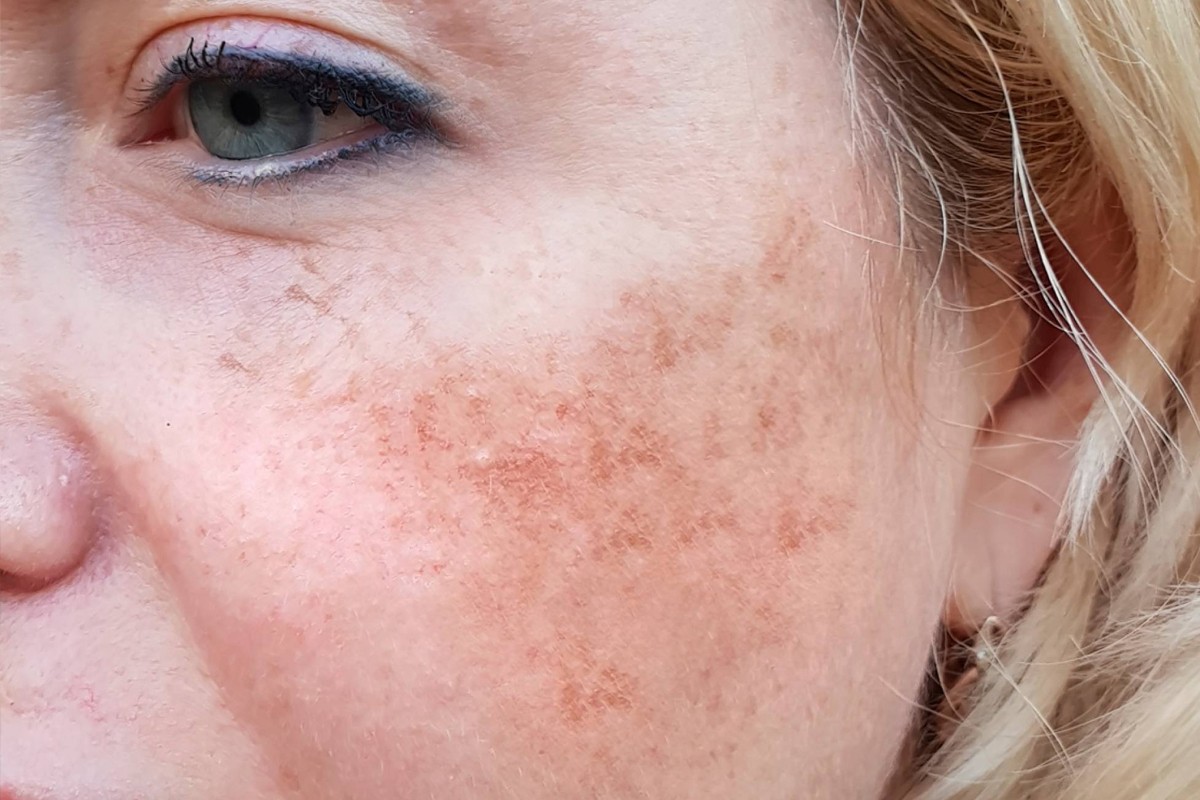
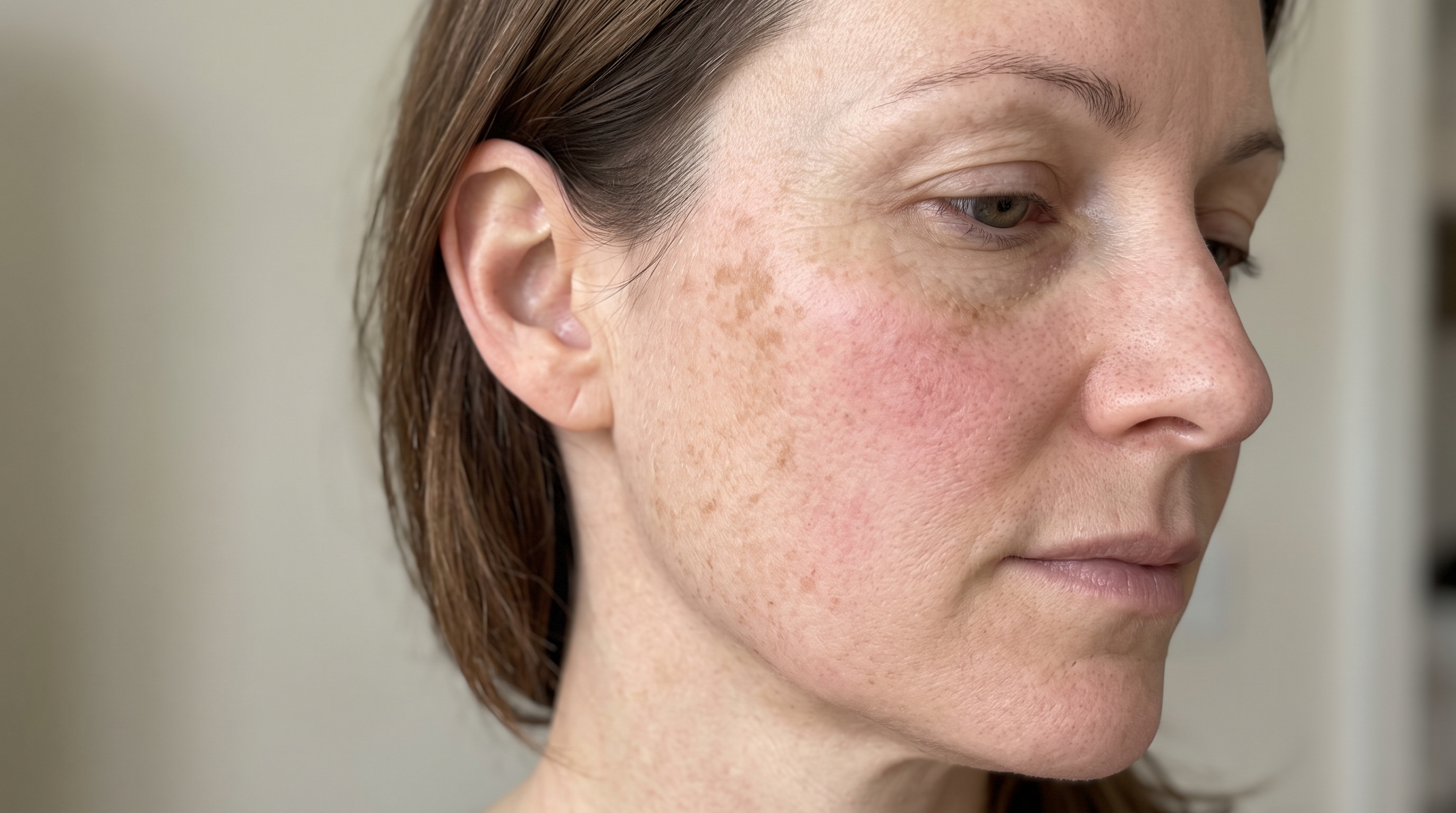
Azelaic acid slows tyrosinase, the enzyme that drives melanin production, and it calms the inflammation that triggers excess pigment after a breakout [1, 6]. Its effect is strongest on overactive pigment cells, while normal skin color is largely left alone. That selectivity is part of why it suits patchy, hormone-related pigment and the brown marks left behind by blemishes.
What the trials found against hydroquinone
The best evidence for azelaic acid cream comes from studies that pitted it against hydroquinone, long considered the standard skin-lightening treatment.
In a 24-week double-blind trial of 155 patients with melasma, 73% of those using 20% azelaic acid cream had good to excellent results, compared with 19% of those using 2% hydroquinone [3]. Both groups used a broad-spectrum sunscreen alongside.
A larger 24-week double-blind trial in 329 women then compared 20% azelaic acid with the stronger 4% hydroquinone [4]. Azelaic acid produced good or excellent results in 65% of patients, and there was no significant difference between the two creams in lesion size or pigment intensity. Allergic reactions and the bluish-black discoloration that long-term hydroquinone can cause were not seen with azelaic acid.
Your dark patches may take 8 weeks to fade with azelaic acid, yet in one small trial it outperformed a 4% hydroquinone cream by that same point.
That third study, in 29 women, found that after two months the azelaic acid group’s severity scores had dropped further than the hydroquinone group’s [5]. It was open-label and small, so it suggests rather than proves superiority, but the overall pattern across trials is consistent: azelaic acid performs at least as well as hydroquinone for this kind of patchy pigment [6].
Your skin can take 8 weeks or more to show a clear change, so judge an azelaic acid cream by monthly photos rather than the mirror after a few days.
Post-blemish marks and uneven tone
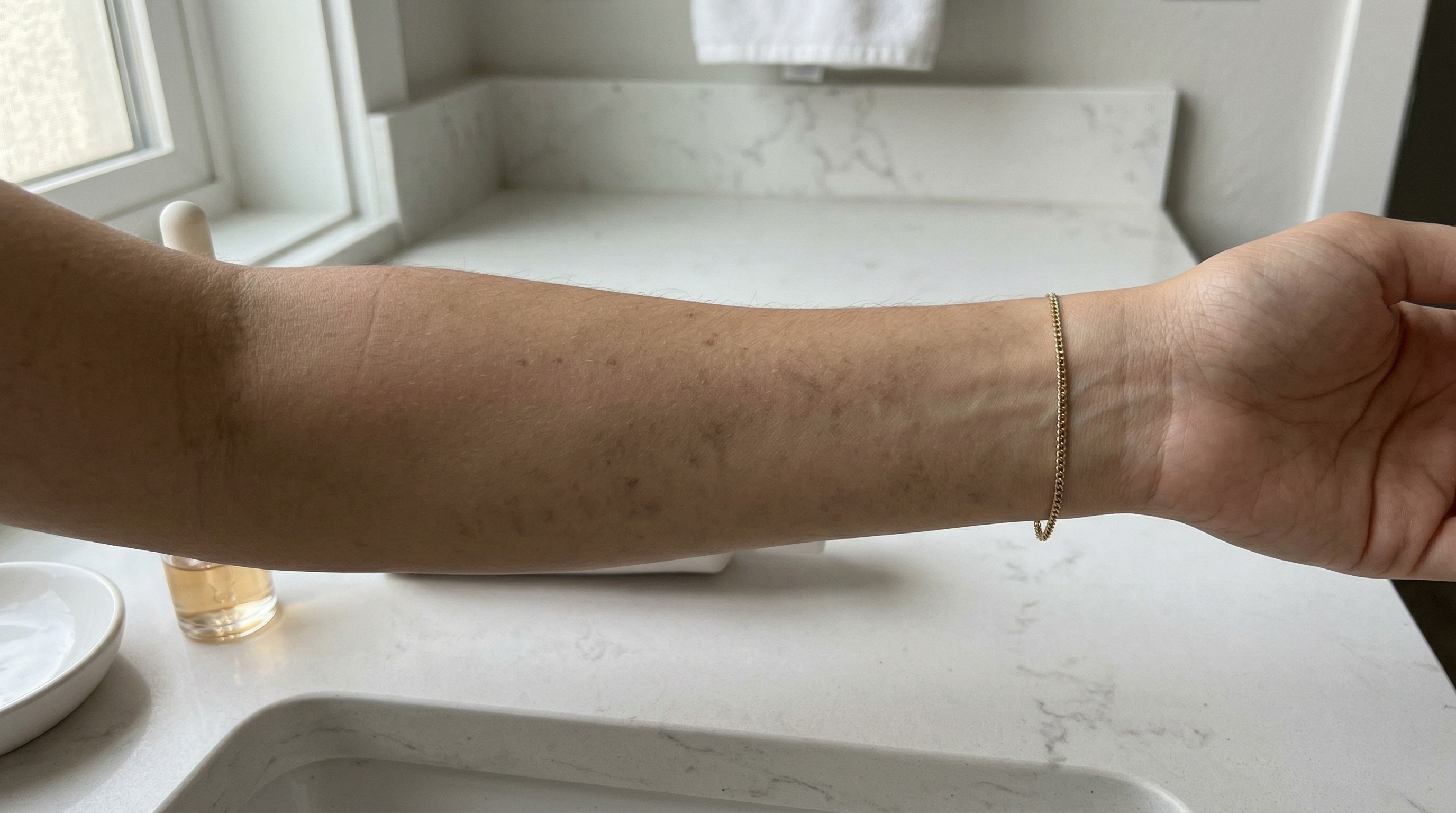
The flat brown marks that linger after a breakout are especially stubborn in darker skin tones [2]. In a 16-week study, 15% azelaic acid gel applied twice daily reduced both breakouts and these lingering marks [7]. A broad review of the evidence ranks azelaic acid’s support strongest for redness-prone skin, followed by patchy pigment and then acne [8].
If your marks are more red or purple than brown, they are often a vascular leftover rather than pigment, and they respond more slowly. Red marks tend to fade on their own over months, while brown ones respond to pigment-targeting creams.
How to use an azelaic acid cream
- Start once a day. Apply a pea-sized amount to clean, dry skin in the evening for the first two weeks, then move to twice daily if your skin is comfortable.
- Expect tingling. Mild, short-lived stinging or itching is common at first and usually settles within a few weeks [1, 6]. Persistent burning or swelling is a sign to stop.
- Wear sunscreen every day. Every major trial paired azelaic acid with sunscreen, because daylight undoes pigment progress faster than any cream can build it. Our guide to sunscreen for hyperpigmentation covers which filters help most.
- Give it time. Plan on two to three months before judging results, and six months for patchy pigment.
- Avoid stacking acids. Using strong exfoliating acids on the same night increases irritation without speeding results.
Your skin can take 8 weeks or more to show a clear change, so judge an azelaic acid cream by monthly photos rather than the mirror after a few days.
If you are weighing azelaic acid against other brighteners for redness, post-blemish marks or patchy pigment, our comparison of azelaic acid vs niacinamide shows where each ingredient fits and how the two can share a routine.
Why spots look worse on aging skin
Pigment is only half the story after 40. As collagen thins and cell turnover slows, dark spots sit in duller, less reflective skin and look more pronounced than they did a decade earlier. Azelaic acid addresses the pigment, but it does not rebuild the dermis or speed up renewal.
That is where retinol earns its place. Retinol increases cell turnover and stimulates new collagen, and in long-term trials it has improved both fine lines and mottled pigmentation together [9]. Our guide to retinol for dark spots explains how the two mechanisms differ.
Building a routine with a gentle retinol
The simplest approach is to alternate: azelaic acid cream on one night, retinol on the next, with sunscreen every morning. Once your skin tolerates both, some people use azelaic acid in the morning under sunscreen and retinol at night.
The risk of combining them is irritation, especially with conventional retinol. Nanoretinol was developed to reduce that problem. It encapsulates 0.2% retinol in biomimetic lipid nanoparticles within a water-based gel, and it is significantly gentler on skin cells than conventional retinol. In laboratory testing it was 232% more effective in collagen recovery and 73% more effective in elastin recovery than conventional retinol, with skin firmness rising 61% and elasticity 56% over 56 days of clinical use [10]. That makes it easier to rotate with an active such as azelaic acid without overwhelming the skin barrier.
Choosing the right strength for you
If your concern is a few post-blemish marks or mild unevenness, a 10% azelaic acid cream is a sensible starting point. If you are dealing with patchy, recurring pigment, the 20% prescription cream has the strongest evidence and is worth discussing with a dermatologist. Either way, pair it with daily sunscreen, give it at least two months, and let a gentle retinol take care of the collagen and texture that make spots stand out.
References
- Sauer N, Oślizło M, Brzostek M, et al. “The multiple uses of azelaic acid in dermatology: mechanism of action, preparations, and potential therapeutic applications.” Postepy Dermatologii i Alergologii. 2023;40(6):716-724. doi:10.5114/ada.2023.133955
- Callender VD, St Surin-Lord S, Davis EC, et al. “Postinflammatory hyperpigmentation: etiologic and therapeutic considerations.” American Journal of Clinical Dermatology. 2011;12(2):87-99. doi:10.2165/11536930-000000000-00000
- Verallo-Rowell VM, Verallo V, Graupe K, et al. “Double-blind comparison of azelaic acid and hydroquinone in the treatment of melasma.” Acta Dermato-Venereologica Supplementum. 1989;143:58-61. PubMed:2528260
- Baliña LM, Graupe K. “The treatment of melasma. 20% azelaic acid versus 4% hydroquinone cream.” International Journal of Dermatology. 1991;30(12):893-895. doi:10.1111/j.1365-4362.1991.tb04362.x
- Farshi S. “Comparative study of therapeutic effects of 20% azelaic acid and hydroquinone 4% cream in the treatment of melasma.” Journal of Cosmetic Dermatology. 2011;10(4):282-287. doi:10.1111/j.1473-2165.2011.00580.x
- Fitton A, Goa KL. “Azelaic acid. A review of its pharmacological properties and therapeutic efficacy in acne and hyperpigmentary skin disorders.” Drugs. 1991;41(5):780-798. doi:10.2165/00003495-199141050-00007
- Kircik LH. “Efficacy and safety of azelaic acid (AzA) gel 15% in the treatment of post-inflammatory hyperpigmentation and acne: a 16-week, baseline-controlled study.” Journal of Drugs in Dermatology. 2011;10(6):586-590. PubMed:21637899
- Searle T, Ali FR, Al-Niaimi F. “The versatility of azelaic acid in dermatology.” Journal of Dermatological Treatment. 2022;33(2):722-732. doi:10.1080/09546634.2020.1800579
- Randhawa M, Rossetti D, Leyden JJ, et al. “One-year topical stabilized retinol treatment improves photodamaged skin in a double-blind, vehicle-controlled trial.” Journal of Drugs in Dermatology. 2015;14(3):271-280. PubMed:25738849
- North Biomedical LLC. “Nanoretinol vs. Conventional Retinol: Efficacy in Collagen and Elastin Recovery.” Clinical Study Summary, 2024. Study summary