Azelaic Acid Gel: What the 15% Gel Does, How It Compares With Cream and How to Use It
The clear 15% gel is the form of azelaic acid most often prescribed for redness, bumps and dark marks. Here is what the trials found, how it differs from creams and serums, and how to pair it with retinol
Azelaic acid is one of the few skincare ingredients that sits on both sides of the pharmacy counter. It occurs naturally in grains such as wheat, rye and barley, and the yeast that lives on human skin makes small amounts of it too [1]. On the shelf it turns up as a thick 20% cream, as 10% serums and toners, and, most often on prescription pads, as a clear 15% gel sold in the United States as Finacea and in generic versions.
The gel deserves its own guide, because the base changes how the acid feels, how it layers and which skin it suits. This guide covers what azelaic acid does, why the gel format matters, what the trials of the 15% gel actually measured, how it compares with creams and over-the-counter products, and how to build a routine that pairs it with retinol.
Three jobs in one ingredient
Azelaic acid is unusual because it works on several common complaints at the same time [1, 2]:
- Redness and small red bumps. It calms the inflammatory signals that drive flushing and bumps across the cheeks and nose.
- Breakouts. It slows the growth of acne bacteria and helps keep pores from clogging with dead cells.
- Dark marks. It interferes with tyrosinase, the enzyme that makes pigment, and acts mainly on overactive pigment cells rather than normal ones, which is why it does not bleach healthy skin.
That combination explains why azelaic acid appears in advice for redness, adult breakouts and uneven tone alike, and our comparison of azelaic acid and niacinamide explains where it overlaps with the other popular calming ingredient and where the two part ways.
It also explains why patience matters. Redness tends to respond first, while pigment fades only as old, darkened cells are shed and replaced.
Your skin usually needs 12 to 16 weeks of steady use before dark marks fade, which is far longer than most people wait before giving up.
Your skin usually needs 12 to 16 weeks of steady use before dark marks fade, which is far longer than most people wait before giving up.
Why the gel base matters
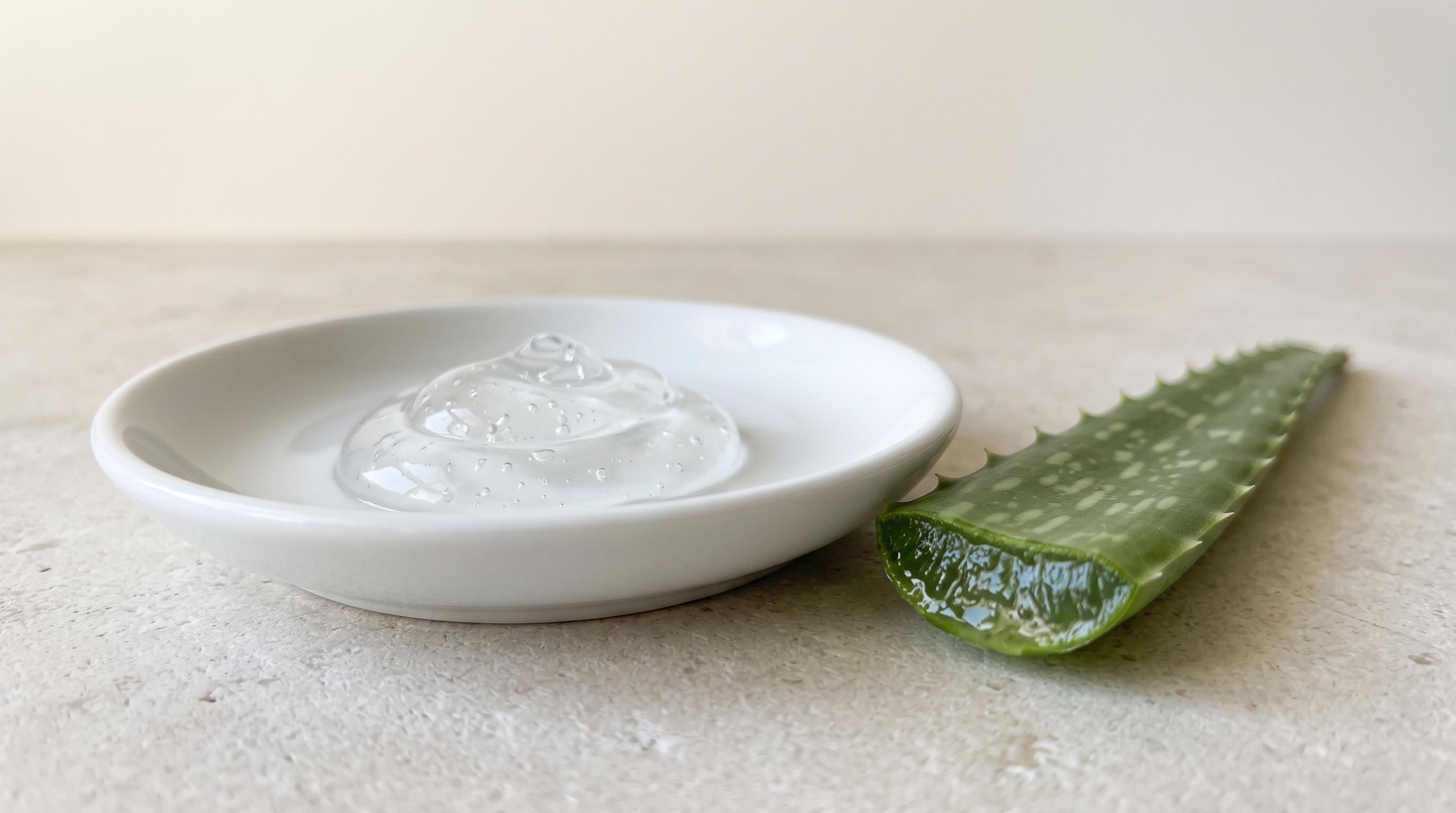
Azelaic acid dissolves poorly in water, so fitting a high dose into a light, comfortable base is a real formulation problem. The 15% product was developed as a non-alcoholic hydrogel, an alternative to the older 20% cream [3]. That base changes three things.
Texture. The gel spreads thinly and dries down without a greasy film, which makes it easier to wear under sunscreen and makeup if your skin is oily or combination.
Delivery. A well-designed gel keeps more of the acid available to the skin, which is how a 15% gel can perform on par with a 20% cream in trials.
Feel. Like the cream, the gel can tingle, itch or sting for the first two to four weeks. In most people that fades as the skin adjusts, and it is a sign to slow down rather than a sign of damage.
If your skin is dry or mature, a richer base may still feel kinder, and our guide to azelaic acid cream covers the 20% cream and when it is the better choice.
What the 15% gel trials found
Most of the evidence for the gel comes from large trials in people with redness-prone skin and in people with breakouts.
- Redness and red bumps. In two phase III trials with 664 adults, the 15% gel used twice daily reduced red bumps by 58% and 51%, compared with 40% and 39% with the plain gel base, and significantly more people saw their background redness improve [4].
- Head to head with another prescription gel. In a 15-week trial of 251 adults, azelaic acid gel reduced red bumps by about 73% versus 56% for a 0.75% metronidazole gel, and its results kept improving through week 15 while the comparison gel levelled off after week 8 [5].
- Breakouts. In two four-month trials with 580 people, the 15% gel cut inflamed spots by a median of about 70%, matching 5% benzoyl peroxide and 1% clindamycin, with less burning and irritation than benzoyl peroxide [3].
- Marks left by breakouts. A 16-week pilot study in people with darker skin tones found that the gel improved both acne and the brown marks it left behind [6].
Your skin can keep improving for 15 weeks on azelaic acid gel, which is longer than a common redness gel kept working in a head-to-head trial.
Two limits are worth knowing. Neither of the large redness trials showed a meaningful effect on visible broken capillaries, which need light-based treatment. And the best evidence for broad patches of pigment comes from the 20% cream, which matched 4% hydroquinone over 24 weeks in a trial of 329 women when both were used with daily sunscreen [7].
Gel, cream, serum or toner?
Choosing a format comes down to strength, skin type and where the product sits in your routine.
- 15% gel (prescription in the US): the best-studied option for redness, bumps and breakouts, and the lightest feel for oily or combination skin.
- 20% cream: the classic option for dark patches and for dry or mature skin that likes a richer base.
- 10% over-the-counter gels and creams: easier to buy and usually gentler, but no large trials have tested them head to head against the prescription strengths, so expect slower, milder results.
- Serums and toners: convenient for layering, though many use a derivative rather than azelaic acid itself; our guide to azelaic acid serum explains how to read those labels.
Your skin can keep improving for 15 weeks on azelaic acid gel, which is longer than a common redness gel kept working in a head-to-head trial.
How to use azelaic acid gel
- Start once a day. Apply a thin layer to clean, dry skin in the evening for the first two weeks, then move to twice a day if your skin is comfortable.
- Use a pea-sized amount. That is enough for the whole face; more product mostly adds stinging.
- Moisturize after it dries. A plain, fragrance-free moisturizer on top reduces dryness without blocking the acid.
- Wear sunscreen every morning. Sun exposure drives both redness and dark marks, so daily SPF 30 or higher protects your progress.
- Give it time. Judge redness at about four to eight weeks and dark marks at three to four months.
Azelaic acid is generally considered one of the safer options for people who are pregnant, but anyone who is pregnant should check with their doctor first.
Pairing azelaic acid gel with retinol
Azelaic acid is excellent at calming redness and fading marks, but it does little for the deeper signs of aging. Firmness, fine lines and crepey texture depend on collagen, and that is where retinoids lead. In a 24-week trial in older adults, a 0.4% retinol lotion significantly improved fine wrinkles and increased procollagen in the skin compared with its base [8]. Retinoids also speed cell turnover, which can help dark marks fade alongside azelaic acid, as our guide to retinol for dark spots explains.
The two ingredients work well together, because azelaic acid is not a retinoid. The practical problem is irritation: both can sting early on, and redness-prone skin has little tolerance to spare. Conventional retinol formulas often rely on chemicals that loosen the skin’s lipid barrier to push retinol in, which is the opposite of what reactive skin needs.
Where Nanoretinol fits
Nanoretinol takes a different route. Its 0.2% stabilized retinol is carried in biomimetic lipid nanoparticles that the skin recognizes as its own, so it crosses the barrier without breaking it down, in a light water-based gel suited to oily, combination and sensitive skin. In North Biomedical’s study summary, Nanoretinol was 232% more effective in collagen recovery and 73% more effective in elastin recovery than conventional retinol, and after 56 days of use, skin firmness rose by 61% and elasticity by 56% [9].
A simple routine looks like this:
- Morning: gentle cleanser, azelaic acid gel, moisturizer, then sunscreen.
- Evening: gentle cleanser, then Nanoretinol, starting every other night while your skin adjusts.
Once both feel comfortable, you can add azelaic acid back in the evening as well, applied before Nanoretinol and allowed to dry first. Do not combine Nanoretinol with another retinoid product, and if redness, bumps or flushing are severe or getting worse, see a dermatologist before building your own routine.
References
- Searle T, Ali FR, Al-Niaimi F. “The versatility of azelaic acid in dermatology.” Journal of Dermatological Treatment. 2022;33(2):722-732. doi:10.1080/09546634.2020.1800579
- Fitton A, Goa KL. “Azelaic acid. A review of its pharmacological properties and therapeutic efficacy in acne and hyperpigmentary skin disorders.” Drugs. 1991;41(5):780-798. doi:10.2165/00003495-199141050-00007
- Gollnick HP, Graupe K, Zaumseil RP. “Azelaic acid 15% gel in the treatment of acne vulgaris. Combined results of two double-blind clinical comparative studies.” Journal der Deutschen Dermatologischen Gesellschaft. 2004;2(10):841-847. doi:10.1046/j.1439-0353.2004.04731.x
- Thiboutot D, Thieroff-Ekerdt R, Graupe K. “Efficacy and safety of azelaic acid (15%) gel as a new treatment for papulopustular rosacea: results from two vehicle-controlled, randomized phase III studies.” Journal of the American Academy of Dermatology. 2003;48(6):836-845. doi:10.1067/mjd.2003.308
- Elewski BE, Fleischer AB Jr, Pariser DM. “A comparison of 15% azelaic acid gel and 0.75% metronidazole gel in the topical treatment of papulopustular rosacea: results of a randomized trial.” Archives of Dermatology. 2003;139(11):1444-1450. doi:10.1001/archderm.139.11.1444
- Kircik LH. “Efficacy and safety of azelaic acid (AzA) gel 15% in the treatment of post-inflammatory hyperpigmentation and acne: a 16-week, baseline-controlled study.” Journal of Drugs in Dermatology. 2011;10(6):586-590. PubMed:21637899
- Baliña LM, Graupe K. “The treatment of melasma. 20% azelaic acid versus 4% hydroquinone cream.” International Journal of Dermatology. 1991;30(12):893-895. doi:10.1111/j.1365-4362.1991.tb04362.x
- Kafi R, Kwak HS, Schumacher WE, et al. “Improvement of naturally aged skin with vitamin A (retinol).” Archives of Dermatology. 2007;143(5):606-612. doi:10.1001/archderm.143.5.606
- North Biomedical LLC. “Nanoretinol vs. Conventional Retinol: Efficacy in Collagen and Elastin Recovery.” Clinical Study Summary, 2024. Study summary