Retinol Gel: Who It Suits, What the Base Changes, and How to Use It
A retinol gel trades rich oils for a light water or alcohol base. Here is what that changes for irritation, stability and results, who should choose one, and how to use it
Most people picture retinol as a rich night cream. A growing share of retinol products are gels instead: clear or translucent, light enough to vanish into the skin in seconds, and easy to wear under a moisturizer or makeup. For oily and combination skin especially, that texture can be the difference between a product you use every night and one that sits in a drawer.
But “gel” describes a texture, not a result. Two retinol gels can behave very differently on your face depending on what holds the retinol, how it is protected, and what else is in the base. This guide explains what a retinol gel actually is, who it suits, which labels deserve caution, and how to use one without the dryness that gives retinol its reputation.
What makes a retinol product a gel
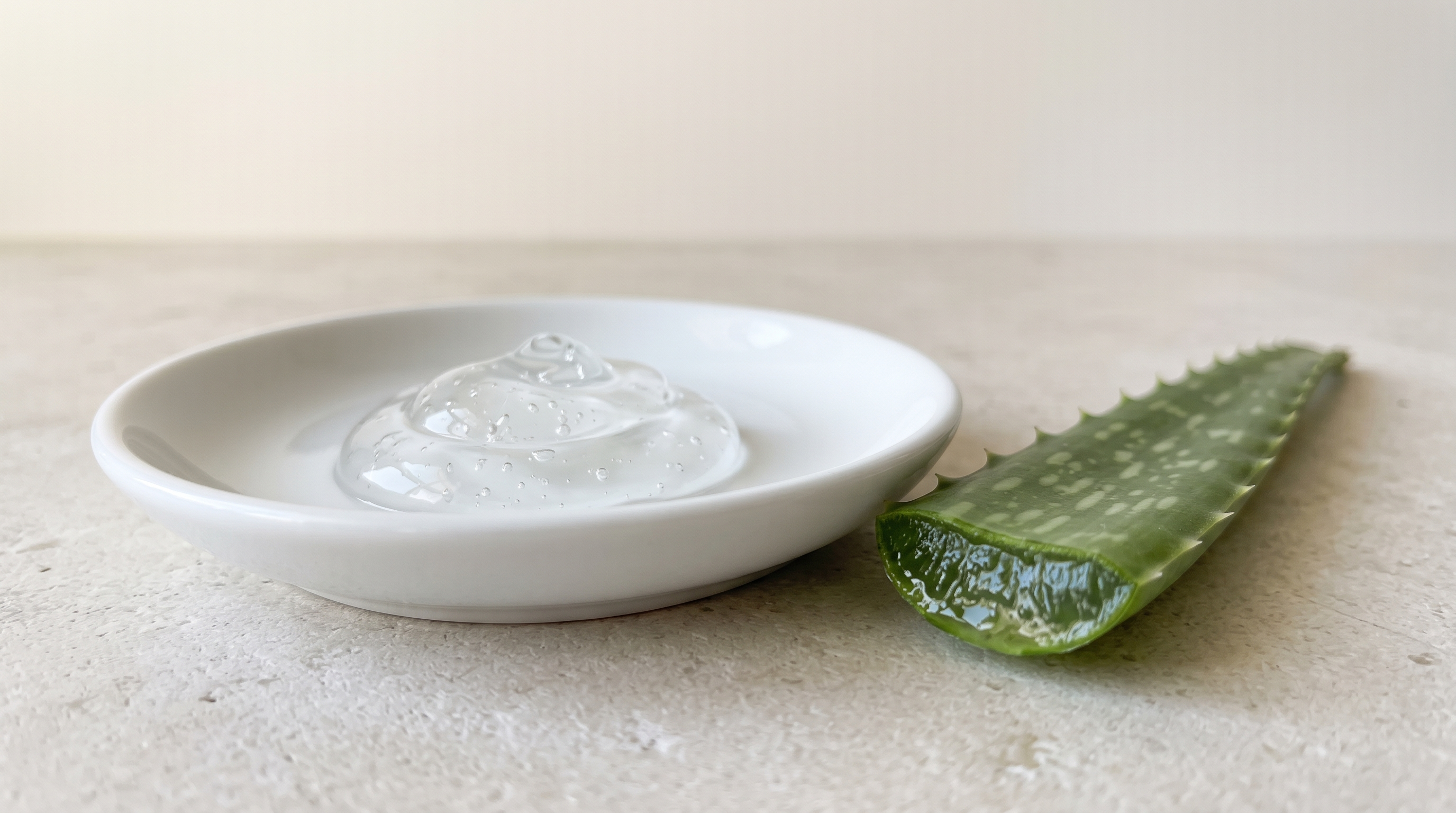
A cream is an emulsion: oil and water blended together, usually with plenty of fatty ingredients. A gel has little or no oil. It is mostly water, sometimes with alcohol or another solvent, thickened by polymers such as carbomer, xanthan gum or sodium polyacrylate into a soft, jelly-like body.
That creates a puzzle, because retinol dissolves in oil, not water. A gel maker has three main ways to solve it:
- Solvents: alcohol, glycols or other solvents dissolve the retinol. This is simple, but a high alcohol content can dry and sting.
- Surfactants: small amounts of solubilizers disperse the retinol through the water. This works, but the retinol is exposed to light and air inside the gel.
- Encapsulation: the retinol is packed inside tiny carriers, such as lipid nanoparticles, which then float through the water base.
The method matters more than the word on the box, because it decides how gentle the gel is and how much retinol survives until you use it.
Does retinol work as well in a gel?
The active ingredient does the work, and the base decides how well it is delivered. Retinol is converted in the skin to retinoic acid, the same molecule found in prescription tretinoin, and reviews of the evidence describe it as a well-studied and better-tolerated alternative for aging skin [1].
Your skin can take 12 weeks of regular retinol to show smoother lines, so a gel you enjoy using is worth more than a stronger formula you abandon after a fortnight.
The clinical results are real. In a controlled study, four weeks of retinol increased the activity of the genes that build type I and type III collagen, and facial imaging showed significantly fewer wrinkles after 12 weeks of use [2]. In another trial in older adults, 0.4% retinol applied for 24 weeks reduced fine wrinkling and increased collagen production compared with the plain base [3].
Your skin can take 12 weeks of regular retinol to show smoother lines, so a gel you enjoy using is worth more than a stronger formula you abandon after a fortnight.
None of those benefits depend on the product being a cream. What they depend on is consistent use and enough intact retinol reaching the skin, and that is where the base comes in.
Why some gels sting and others do not
Many people assume gels are harsher than creams because the prescription gels they remember, often acne treatments in alcohol bases, felt tight and dry. The texture is not the cause. The active molecule, its strength and the solvents around it are.
A three-week patch study in 37 people makes the point: an adapalene gel caused significantly less cumulative irritation than both a tretinoin cream and a tretinoin microsphere gel [4]. A gel was the gentlest and a gel was among the harshest, which shows that the label alone tells you very little.
For cosmetic retinol gels, the practical warning signs are simple. Alcohol denat. near the top of the ingredient list, added fragrance and essential oils all raise the odds of stinging, especially on dry or sensitive skin. A water-based gel with soothing, hydrating ingredients is a different product, even if both are sold as “retinol gel.”
Stability: the bottle matters more than the percentage
Retinol breaks down when it meets light, heat and air, and a gel’s water base gives it little natural protection. When researchers tracked retinoids in 12 commercial cosmetics, they found declines in almost every product, with light causing more damage than heat [5].
Your skin only benefits from the retinol that survives the bottle, and some products lose up to 80% of it within about 26 weeks at room temperature.
Your skin only benefits from the retinol that survives the bottle, and some products lose up to 80% of it within about 26 weeks at room temperature.
Those losses depended on the formulation, and some products contained less retinoid than their labels declared [5]. For a gel, that means three checks before you buy: opaque packaging, an airless pump or a narrow tube rather than an open jar, and a formula that protects the retinol, ideally by encapsulation.
Encapsulation has a second advantage. In early research, retinol loaded into lipid nanoparticles concentrated in the upper layers of the skin, where it is needed, rather than spreading deeper [6]. Our guide to encapsulated retinol explains how different carrier systems compare and why the protective shell can make a low percentage perform like a much higher one.
Who should choose a retinol gel
A gel is usually the better match if you have:
- Oily or combination skin: no heavy oils, a matte finish and less risk of a greasy feel by morning.
- Clogged pores or occasional breakouts: fewer rich emollients that can sit in congested pores.
- A humid climate or a hot summer: comfortable under a light moisturizer.
- A layered routine: a gel spreads thinly and does not fight the products you apply after it.
A cream may suit you better if your skin is very dry, if you have reached the stage of life where your skin produces much less oil, or if you want one step that both treats and moisturizes. Our guide to choosing a retinol moisturizer covers when an all-in-one cream beats layering a separate retinol and moisturizer, which is the main trade-off a dry-skinned reader is weighing when a gel feels too light.
How to use a retinol gel
- Start slowly: apply a pea-sized amount two or three nights a week, and increase to nightly over several weeks as your skin adjusts.
- Apply to dry skin: wait a few minutes after cleansing, then spread the gel thinly over the face, avoiding the corners of the nose and mouth.
- Moisturize after: a gel gives little cushion on its own, so follow with a moisturizer. A light gel moisturizer keeps the routine weightless on oily skin, while a richer cream suits dry patches.
- Wear sunscreen every morning: retinol makes the outer layer of the skin more sensitive to UV damage.
- Do not stack retinoids: use one retinoid product at a time.
If you are comparing a gel against a serum, the same rules for judging the retinol inside apply to both, and our guide to the best retinol serum walks through how to judge concentration, carrier technology and packaging so you are not paying for a percentage that has already broken down.
Where Nanoretinol fits
Nanoretinol is a water-based retinol gel, and it was designed around the problems described above. Conventional retinol formulas often rely on chemicals and petroleum derivatives that loosen the skin’s protective lipids to push the retinol through, and that disruption is what leads to redness, peeling and the burning feeling many people expect from retinol.
Nanoretinol takes a different route. Its 0.2% retinol is fully stabilized inside biomimetic lipid nanoparticles that the skin recognizes as its own, so the retinol passes the skin’s barrier without damaging it. The gel-like base is light and non-greasy, absorbs completely to a smooth matte finish, and is made with 99% natural ingredients, which makes it suitable for oily, combination and sensitive skin.
In North Biomedical’s study summary, Nanoretinol was 232% more effective in collagen recovery and 73% more effective in elastin recovery than conventional retinol. Over 56 days of clinical use, skin firmness increased by 61% and elasticity by 56% [7].
Apply it at night, follow with a moisturizer if your skin feels dry, and wear sunscreen the next day. You get the texture of a gel with retinol that is protected from the bottle to the skin.
References
- Mukherjee S, Date A, Patravale V, et al. “Retinoids in the treatment of skin aging: an overview of clinical efficacy and safety.” Clinical Interventions in Aging. 2006;1(4):327-348. doi:10.2147/ciia.2006.1.4.327
- Kong R, Cui Y, Fisher GJ, et al. “A comparative study of the effects of retinol and retinoic acid on histological, molecular, and clinical properties of human skin.” Journal of Cosmetic Dermatology. 2016;15(1):49-57. doi:10.1111/jocd.12193
- Kafi R, Kwak HS, Schumacher WE, et al. “Improvement of naturally aged skin with vitamin A (retinol).” Archives of Dermatology. 2007;143(5):606-612. doi:10.1001/archderm.143.5.606
- Brand B, Gilbert R, Baker MD, et al. “Cumulative irritancy comparison of adapalene gel 0.1% versus other retinoid products when applied in combination with topical antimicrobial agents.” Journal of the American Academy of Dermatology. 2003;49(3 Suppl):S227-S232. PubMed: 12963899
- Temova Rakuša Ž, Škufca P, Kristl A, Roškar R. “Retinoid stability and degradation kinetics in commercial cosmetic products.” Journal of Cosmetic Dermatology. 2021;20(7):2350-2358. doi:10.1111/jocd.13852
- Jenning V, Gysler A, Schäfer-Korting M, Gohla SH. “Vitamin A loaded solid lipid nanoparticles for topical use: occlusive properties and drug targeting to the upper skin.” European Journal of Pharmaceutics and Biopharmaceutics. 2000;49(3):211-218. PubMed: 10799811
- North Biomedical LLC. “Nanoretinol vs. Conventional Retinol: Efficacy in Collagen and Elastin Recovery.” Clinical Study Summary, 2024. Study summary