Best Copper Peptide Serum: How to Judge One Before You Buy
What GHK-Cu has actually been shown to do, and the four label details that separate a real formula from a blue-tinted one
Copper peptide serums occupy an unusual position on the shelf. The laboratory evidence behind the molecule is genuinely impressive, the price is usually premium, and the human clinical record is thinner than almost anyone selling one will tell you. All three of those things are true at once, and a buyer who knows that is in a much better position than one who does not.
This is an ingredient-selection guide rather than a ranking of branded serums. Formulas change constantly; the criteria for reading a label do not.
What You Are Actually Buying
| If your priority is… | Look for… | Evidence caveat |
|---|---|---|
| Collagen and repair signalling | A disclosed GHK-Cu percentage, not “copper peptide complex” | Strong cell-culture evidence; human topical trials are scarce [1][6]. |
| Tolerability alongside actives | A simple, low-irritant formula | Copper peptides are generally well tolerated, but so is doing nothing. |
| Stability over a whole bottle | Opaque, airless packaging | Copper chemistry is oxidation-sensitive; clear droppers are a warning sign. |
| Visible firmness on a timeline | Realistic expectations, months not weeks | The one randomized topical trial was negative on objective endpoints [6]. |
The Molecule and the Evidence
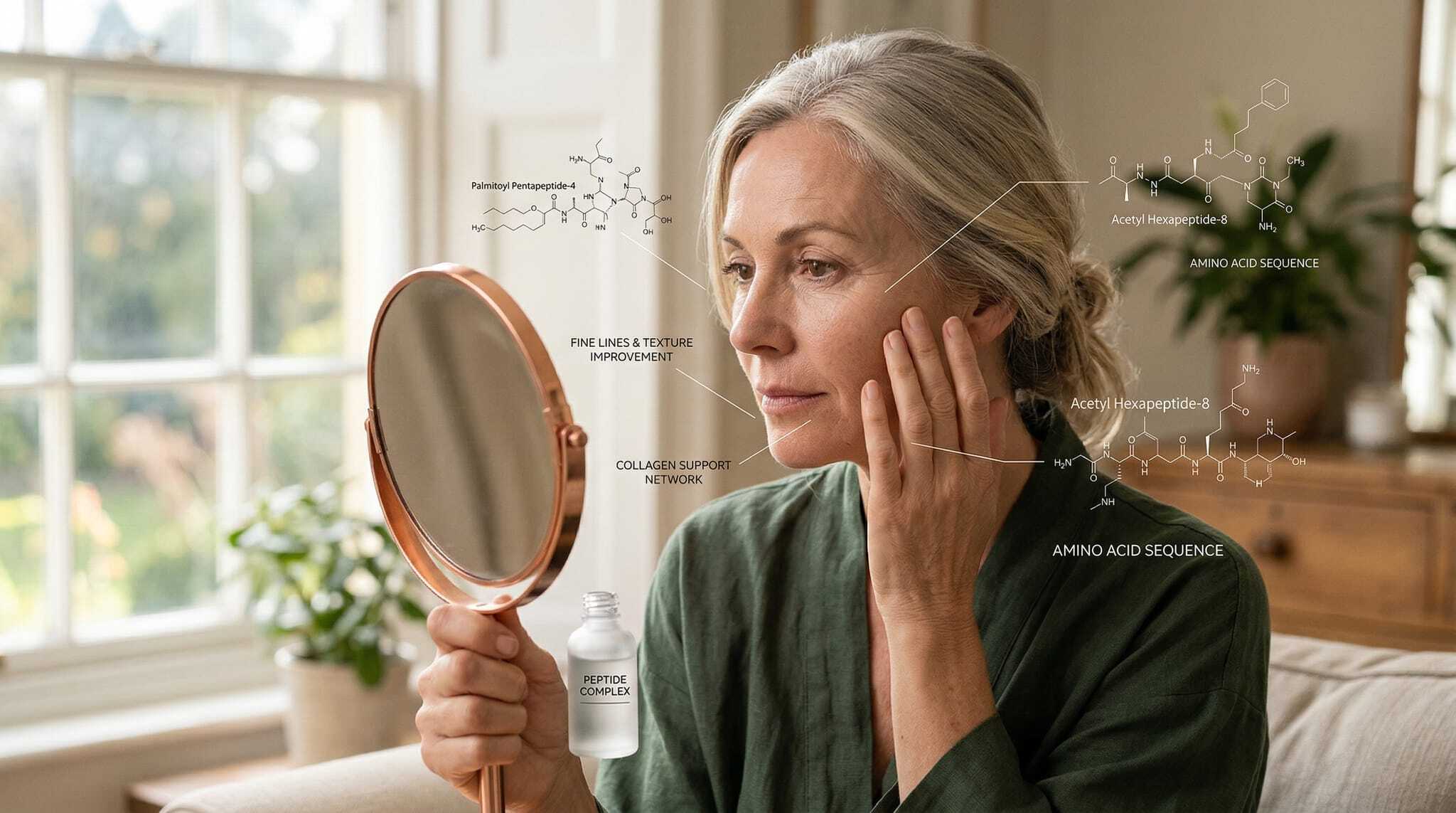
GHK-Cu is a tripeptide — glycyl-L-histidyl-L-lysine — bound to a copper ion. It occurs naturally in human plasma, and levels fall substantially with age, which is where the “restoring what you lose” framing comes from.
The foundational finding is real and often understated. In fibroblast culture, GHK-Cu stimulated collagen synthesis at concentrations starting around 10⁻¹² M and peaking near 10⁻⁹ M, and the effect was independent of cell proliferation [1]. It also modulates the surrounding matrix rather than just adding to it: in wound tissue it raised type I collagen alongside chondroitin and dermatan sulfate and altered decorin expression [2], and in fibroblast culture it increased matrix metalloproteinase-2 together with its inhibitors TIMP-1 and TIMP-2 [3]. That last result is worth sitting with, because it means copper peptides push matrix turnover in both directions — remodelling, not simple accumulation. Above the dermis, GHK-Cu increases integrin expression and p63 positivity in keratinocytes, markers associated with basal renewal [4]. A gene-level review collects the broader regenerative and antioxidant picture [5].
Almost everything impressive about copper peptides was measured in cell culture or animal wounds, not on a human face.
That is the sentence the category is built on, and it is also the category’s weak point. Searching the randomized human literature for topical GHK-Cu returns very little. The one verifiable randomized trial applied a copper tripeptide complex to CO₂ laser-resurfaced skin in 13 patients, and blinded and computer-assisted assessment found no significant benefit for erythema resolution, wrinkles, or skin quality — only patient-reported overall skin quality reached significance [6].
A negative thirteen-person trial on laser-resurfaced skin does not disprove copper peptides on ordinary aging skin. It does mean anyone promising you clinical-grade firming from a copper peptide serum is extrapolating from petri dishes, and you should price the product accordingly.
The One Thing That Is Well Established for Buyers
Delivery, at least, is not the problem. In vitro work on human skin measured a 0.68% aqueous copper tripeptide solution producing a permeability coefficient of 2.43 ± 0.51 × 10⁻⁴ cm/h, with 136.2 µg/cm² of copper permeating dermatomed skin over 48 hours and a further 97 µg/cm² retained in the skin as a depot [7].
So a well-made copper peptide serum does get past the stratum corneum and does build a reservoir. Whatever the ceiling on its benefit turns out to be, it is not a molecule that simply sits on the surface. That is more than can be said for several fashionable actives.
Four Label Details That Actually Matter
A disclosed concentration. “Copper peptide complex” with no number is the most common way to sell almost nothing. Formulas that are serious about GHK-Cu state the percentage, and the useful range in the literature is low — this is a signalling molecule, not an acid, and more is not proportionally better.
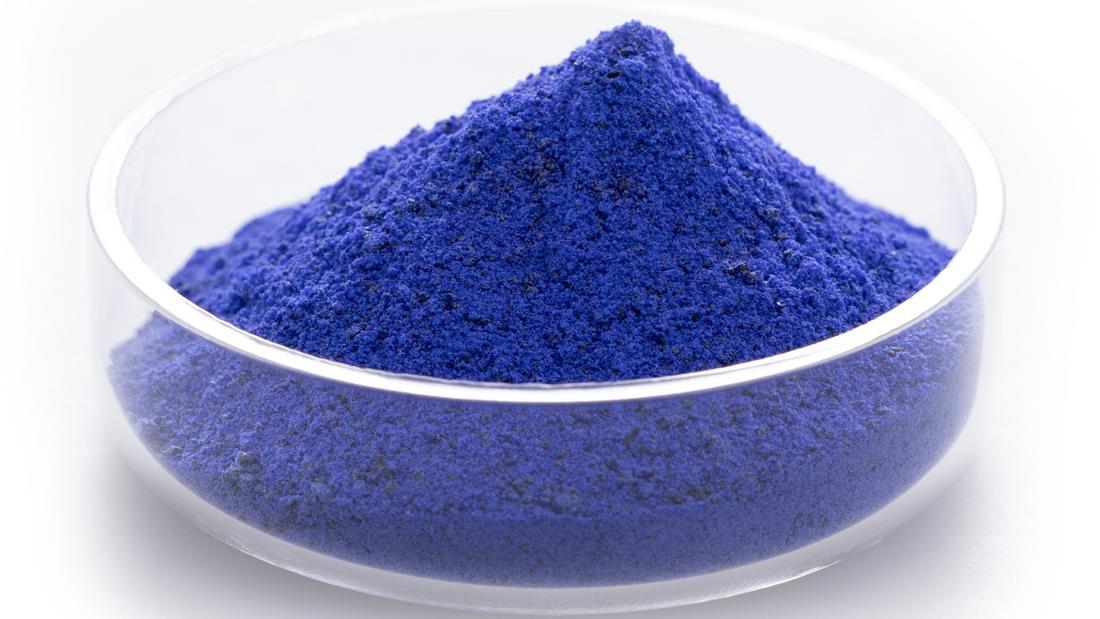
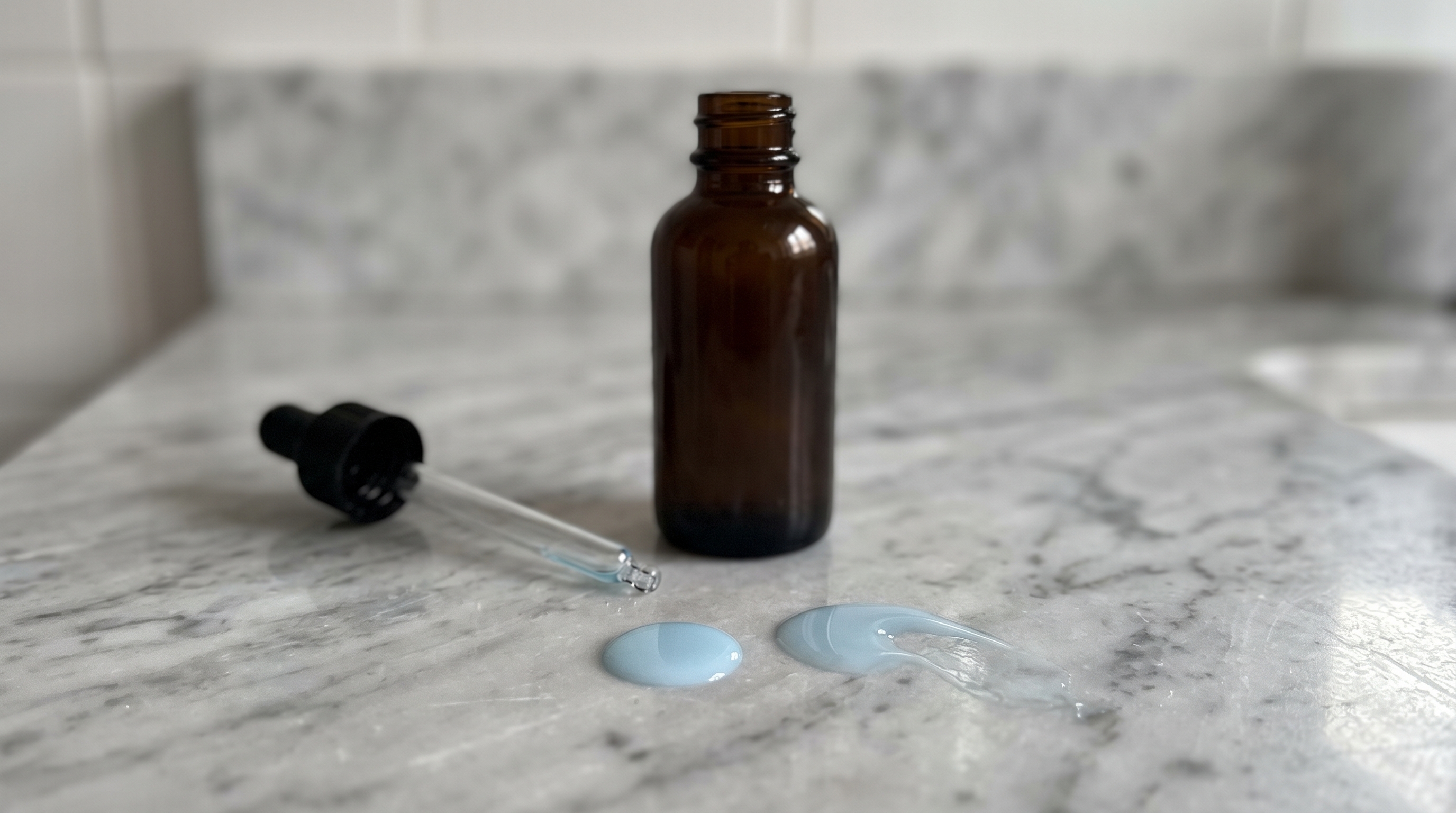
The blue tint, read correctly. GHK-Cu is genuinely blue, so a meaningful concentration tints the product. That makes colour a rough sanity check against a formula claiming copper peptides while looking like water. It is not proof of anything, though, because a blue dye costs a fraction of a cent.
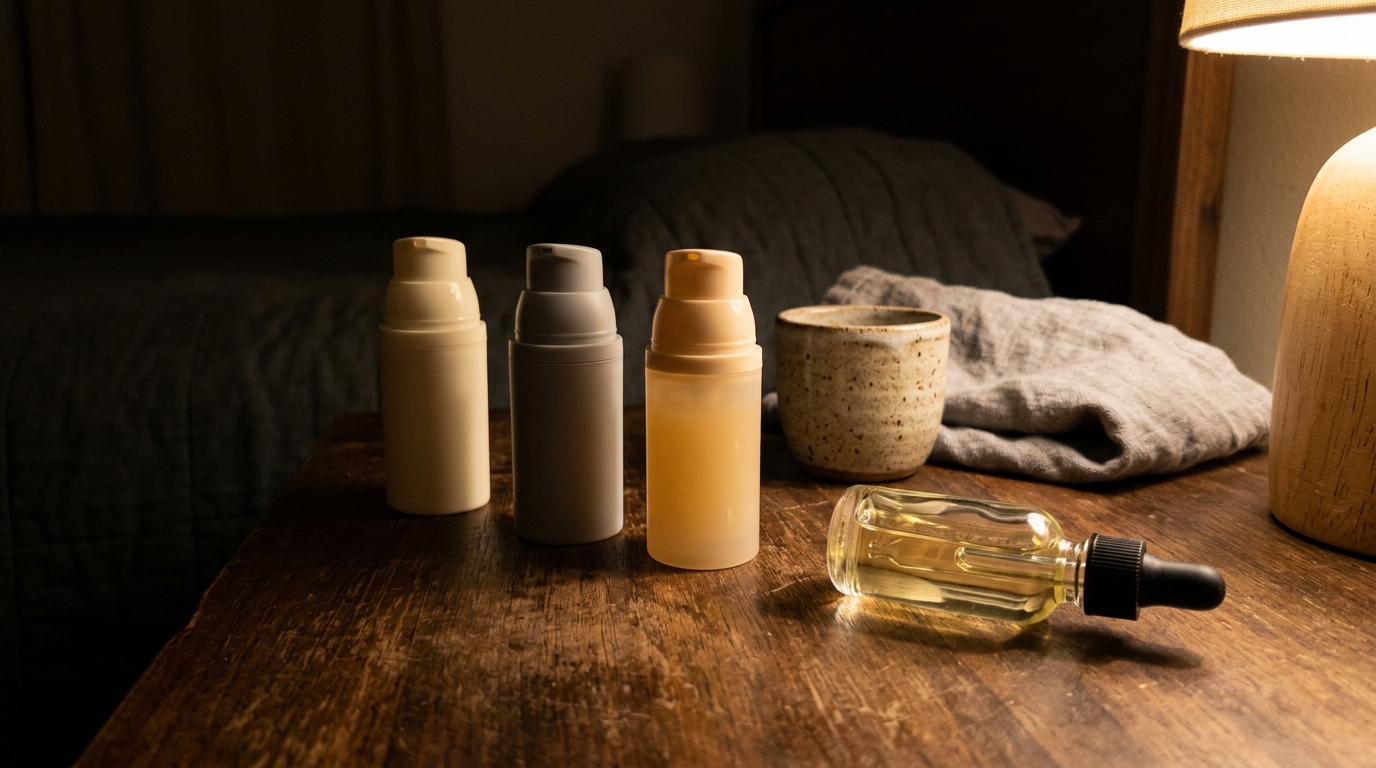
Opaque, airless packaging. Copper is a redox-active metal and the complex degrades with oxygen and light exposure. A clear glass dropper that admits air on every use is a poor container for this specific chemistry, whatever it does for the photograph on the product page.
What you do not layer it with. Copper ions catalyse the oxidation of ascorbic acid, so applying a copper peptide serum and a potent vitamin C serum in the same step is chemically self-defeating even though neither will harm you. Direct acids and very low pH environments are similarly unhelpful. Use them at opposite ends of the day. This is straightforward redox chemistry rather than a finding from a skincare trial, and anyone claiming a controlled study settled it is overstating the record.
A clear glass dropper is a beautiful container and a bad one for a molecule that degrades on contact with air and light.
Our broader guide to copper peptides for skin covers the mechanism in more depth, and the wider category sits in our guide to the best peptide serums.
What to Expect, Realistically
Copper peptides are a reasonable purchase for someone who tolerates actives poorly, wants something supportive alongside a barrier-focused routine, and understands they are buying strong mechanistic plausibility rather than proven facial outcomes. They are a poor purchase for someone who wants measurable firming on a deadline, because no verifiable trial supports that promise.
Give any copper peptide serum at least twelve weeks before judging it, use it on clean skin before heavier layers, and do not run it alongside a second unproven active — you will learn nothing about either.
Where the Stronger Evidence Sits
It is worth being blunt about the comparison, because the two categories are usually sold to the same person for the same reason. If your goal is collagen, the retinoid literature is not in the same weight class as the copper peptide literature.
Type I collagen formation is 56% lower in photodamaged skin than in protected skin, and topical tretinoin produced an 80% increase in collagen I formation against a 14% decrease on vehicle in biopsied human skin [8]. Non-prescription retinol was tested on naturally aged skin in a randomized, double-blind, vehicle-controlled trial and significantly improved fine wrinkling while raising procollagen I and glycosaminoglycan expression [9]. Those are human endpoints, measured in tissue, against a control. The deeper comparison is in our guide to peptides vs retinol, and the mechanisms behind collagen production are covered in how to boost collagen production.
The catch is the one everybody already knows. Conventional retinol has to disrupt the skin barrier to get the molecule through, and the resulting burning and peeling is why so many people trade down to gentler actives like copper peptides in the first place. The choice usually gets framed as gentle-but-unproven against proven-but-brutal.
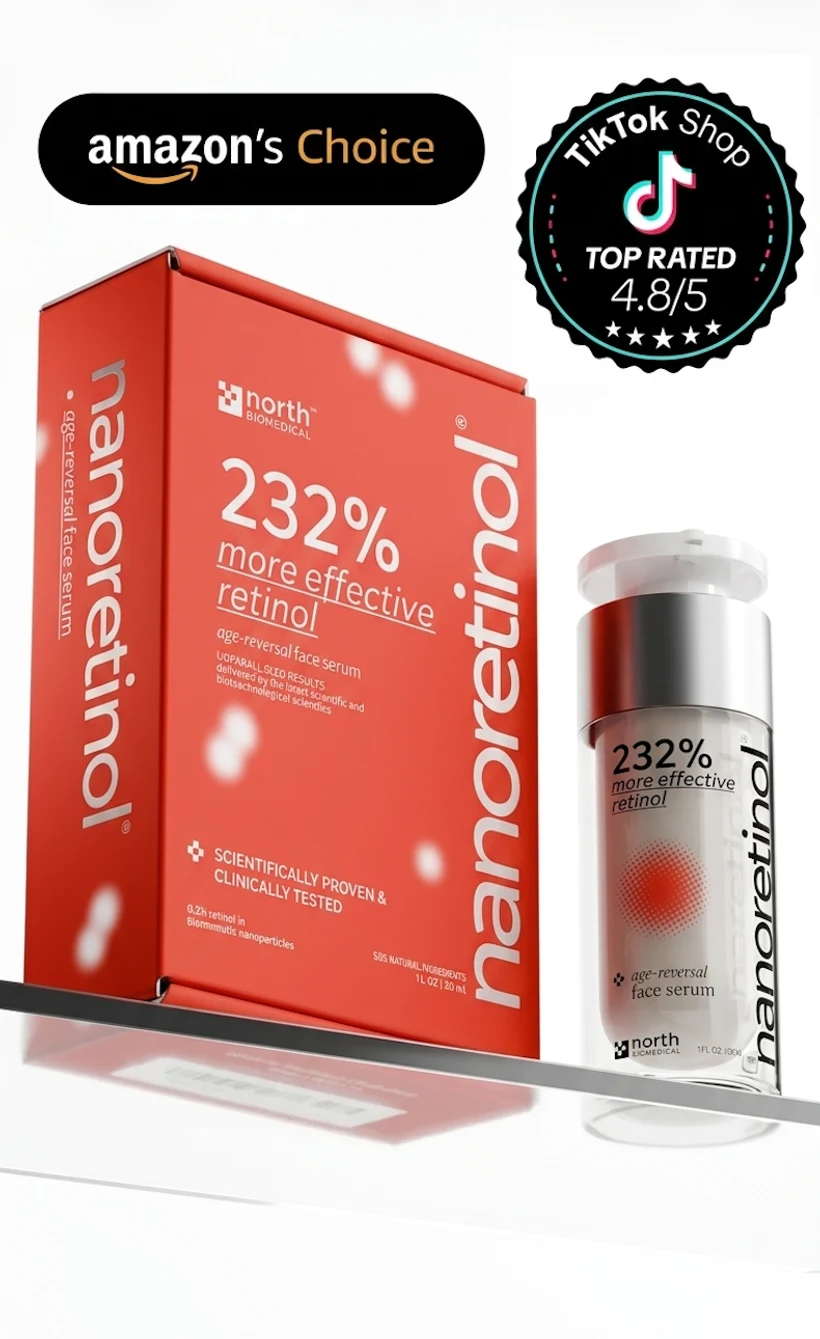
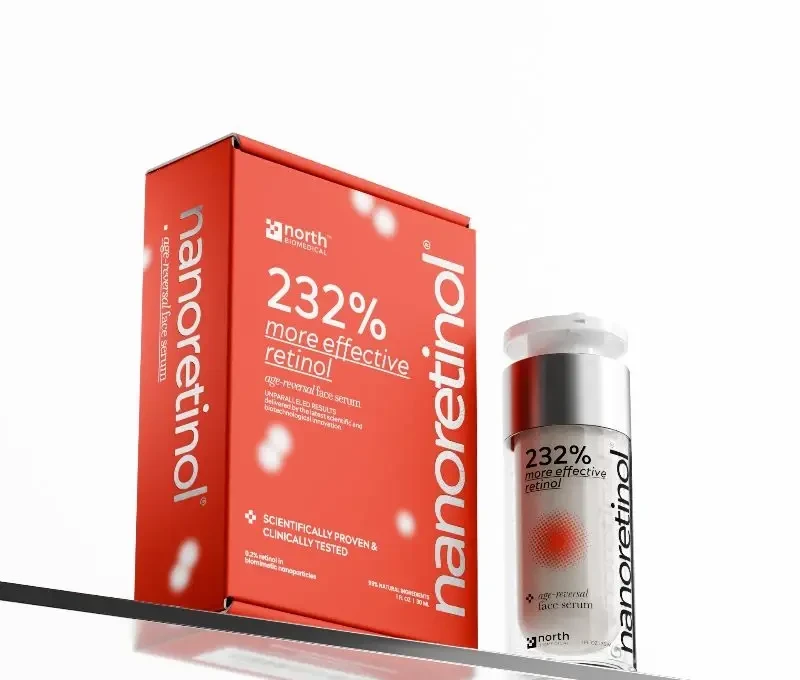
Nanoretinol was developed to dissolve that trade-off. The 0.2% retinol is encapsulated in biomimetic lipid nanoparticles that are externally similar to skin cells, so the body recognizes them as “self” and permits passage through the epithelial barrier without damaging it. North Biomedical’s clinical study found it 232% more effective than conventional retinol in collagen recovery and 73% more effective in elastin recovery, with a 61% increase in firmness and a 56% increase in elasticity over 56 days of use. It is water-based, 99% natural ingredients, and suitable for sensitive skin — which makes it a realistic option for exactly the person who chose copper peptides to avoid irritation.
Buying One Without Being Sold One
A good copper peptide serum discloses its concentration, ships in opaque airless packaging, does not sit in the same step as your vitamin C, and is sold with claims that stop where the evidence does. If a product clears those four bars, it is a defensible purchase. Just buy it for what it is — a well-delivered, well-tolerated signalling peptide with excellent laboratory credentials and a thin human file — and keep the heavy structural lifting somewhere the trial data is stronger.
References
- Maquart FX, Pickart L, Laurent M, Gillery P, Monboisse JC, Borel JP. “Stimulation of collagen synthesis in fibroblast cultures by the tripeptide-copper complex glycyl-L-histidyl-L-lysine-Cu2+.” FEBS Letters. 1988;238(2):343-346. doi:10.1016/0014-5793(88)80509-x
- Siméon A, Wegrowski Y, Bontemps Y, Maquart FX. “Expression of glycosaminoglycans and small proteoglycans in wounds: modulation by the tripeptide-copper complex glycyl-L-histidyl-L-lysine-Cu(2+).” Journal of Investigative Dermatology. 2000;115(6):962-968. doi:10.1046/j.1523-1747.2000.00166.x
- Siméon A, Emonard H, Hornebeck W, Maquart FX. “The tripeptide-copper complex glycyl-L-histidyl-L-lysine-Cu2+ stimulates matrix metalloproteinase-2 expression by fibroblast cultures.” Life Sciences. 2000;67(18):2257-2265. doi:10.1016/s0024-3205(00)00803-1
- Kang YA, Choi HR, Na JI, Huh CH, Kim MJ, Youn SW, Kim KH, Park KC. “Copper-GHK increases integrin expression and p63 positivity by keratinocytes.” Archives of Dermatological Research. 2009;301(4):301-306. doi:10.1007/s00403-009-0942-x
- Pickart L, Margolina A. “Regenerative and protective actions of the GHK-Cu peptide in the light of the new gene data.” International Journal of Molecular Sciences. 2018;19(7):1987. doi:10.3390/ijms19071987
- Miller TR, Wagner JD, Baack BR, Eisbach KJ. “Effects of topical copper tripeptide complex on CO2 laser-resurfaced skin.” Archives of Facial Plastic Surgery. 2006;8(4):252-259. doi:10.1001/archfaci.8.4.252
- Hostynek JJ, Dreher F, Maibach HI. “Human skin penetration of a copper tripeptide in vitro as a function of skin layer.” Inflammation Research. 2011;60(1):79-86. doi:10.1007/s00011-010-0238-9
- Griffiths CE, Russman AN, Majmudar G, Singer RS, Hamilton TA, Voorhees JJ. “Restoration of collagen formation in photodamaged human skin by tretinoin (retinoic acid).” New England Journal of Medicine. 1993;329(8):530-535. doi:10.1056/NEJM199308193290803
- Kafi R, Kwak HS, Schumacher WE, Cho S, Hanft VN, Hamilton TA, King AL, Neal JD, Varani J, Fisher GJ, Voorhees JJ, Kang S. “Improvement of naturally aged skin with vitamin A (retinol).” Archives of Dermatology. 2007;143(5):606-612. doi:10.1001/archderm.143.5.606