Copper Peptide Cream: What GHK-Cu Does in a Moisturizer and How to Use It
Copper peptides are one of the oldest collagen signals in skincare. Here is what a cream base changes, what the evidence actually covers, how to read the label, and how to pair it with retinol
Copper peptides have been in skincare longer than almost any other peptide. The best-known one, GHK-Cu, is a tiny three-amino-acid chain bound to a copper ion, and it is now sold in serums, eye creams and an expanding range of moisturizers. A cream is an appealing format: one step that hydrates and, in theory, nudges your skin to repair itself.
Whether it does depends on more than the word “copper” on the box. This guide explains what GHK-Cu does, what a cream base changes compared with a serum, how strong the evidence really is, and how to fit a copper peptide cream into a routine that already includes, or should include, retinol.
What GHK-Cu is and why skin responds to it
GHK was first isolated from human blood plasma. It binds copper tightly, and the copper complex appears to act as a repair signal. In a classic laboratory study, GHK-Cu stimulated collagen production by skin cells at extremely low concentrations, without simply increasing the number of cells [1]. The same three-amino-acid sequence is found inside type I collagen itself, which suggests the body may release it when tissue is damaged.
Blood levels of GHK fall from about 200 ng/mL at age 20 to about 80 ng/mL by age 60, which is one reason the copper complex is pitched as a way to restore a fading repair signal [2].
Your blood carries less than half as much of the repair peptide GHK at 60 as it did at 20.
Reviews by the researcher who discovered GHK describe a wide range of effects: increased collagen, elastin and glycosaminoglycan production, support for skin cell function and influence over thousands of genes [2][3]. Those reviews are useful maps of the biology, but they summarize mostly laboratory and animal work, and their authors have a long commercial involvement with the ingredient. Treat them as a reason the ingredient is plausible rather than proof that a particular cream works.
Your blood carries less than half as much of the repair peptide GHK at 60 as it did at 20.
Does copper get into the skin?
GHK-Cu is small for a peptide, and that matters. In a laboratory test on human skin, copper applied as a 0.68% water-based GHK-Cu solution passed through the outer layer, and over 48 hours a meaningful amount moved through the skin sample while more stayed behind in the tissue as a reservoir [4]. That is encouraging for delivery, although it was measured in a lab chamber with a simple solution, not a finished face cream.
What a cream base changes
Most copper peptide research and most high-strength products use water-based serums. A cream adds oils, emollients and emulsifiers, and that changes three things.
- Dose: a cream usually carries less GHK-Cu than a dedicated serum, because the formula needs room for its moisturizing base.
- Contact time: a cream stays on the skin for hours, which suits a slow-acting signal ingredient.
- Stability: copper complexes are sensitive to pH and to other ingredients in the same jar, so a well-built cream needs a mild, near-neutral formula.
The practical upshot: a copper peptide cream is a good maintenance product and a comfortable all-in-one step. If you want the highest dose, a serum under a plain moisturizer is the stronger option, and our guide to the best copper peptide serum explains how to judge concentration, packaging and price before you buy one.
How strong is the evidence?
A large review of topical anti-aging peptides grouped them into four families, signal peptides, enzyme-inhibiting peptides, neurotransmitter-inhibiting peptides and carrier peptides, and placed GHK-Cu in the carrier group because its job is to deliver copper [5]. That review looked only at controlled studies, and it shows how much of the peptide field still rests on laboratory work and short cosmetic trials.
Your skin may need 12 weeks or more of a copper peptide cream before fine lines change, and the trials behind that timeline are smaller than the decades of research behind retinol.
Your skin may need 12 weeks or more of a copper peptide cream before fine lines change, and the trials behind that timeline are smaller than the decades of research behind retinol.
That is the honest summary for copper peptide creams. The biology is solid and the products are generally well tolerated, but the face-cream trials are few and modest in size. Retinol, by comparison, has controlled trials showing both visible wrinkle reduction and increased collagen in biopsies. In one 24-week study in elderly volunteers, 0.4% retinol reduced fine wrinkling and raised collagen production compared with the plain base [6].
How to read a copper peptide cream label
- “Copper tripeptide-1”: the INCI name for GHK-Cu. If you do not see it, the cream may contain only a copper salt, which is not the same thing.
- Position in the list: copper tripeptide-1 works at low concentrations, so it often appears mid-list. Near the very end, below preservatives, the amount is likely token.
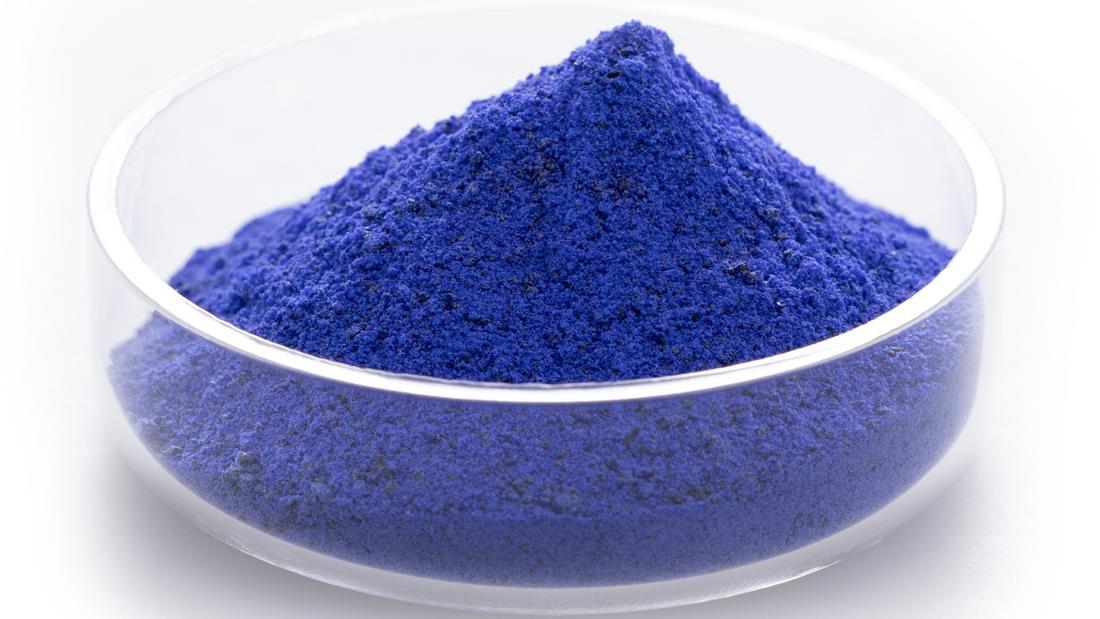
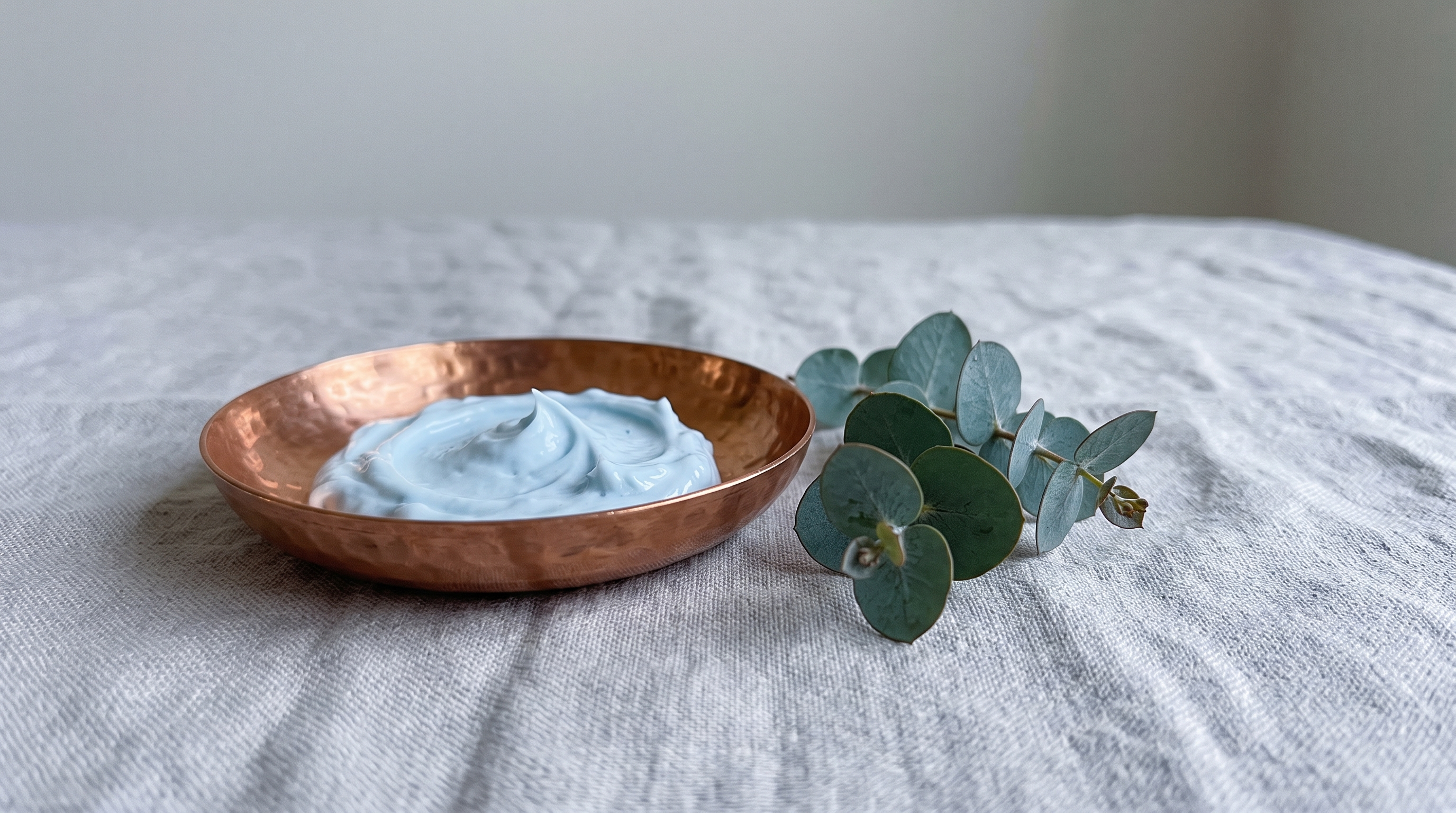
- Color: genuine GHK-Cu gives a formula a blue or blue-violet tint. A pure white cream claiming a high dose deserves skepticism, although some brands mask the color.
- Packaging: an airless pump or tube protects peptides better than an open jar.
- Fragrance: unnecessary, and a common cause of irritation.
What not to mix it with
Many formulators keep copper peptides apart from pure vitamin C (ascorbic acid) and strong acid exfoliants. Copper and ascorbic acid can react with each other, and a very acidic environment can loosen copper from the peptide. Direct clinical data on these clashes is limited, so the sensible approach is separation: vitamin C in the morning, copper peptide cream at night, and acid exfoliants on a different evening.
Other peptide creams are a different story. Signal peptides such as palmitoyl pentapeptide-4 work by another route, and our guide to peptide moisturizer formulas explains how those ingredients compare and why a single cream sometimes contains several of them.
Using copper peptides with retinol
Copper peptides and retinol are often described as rivals, but they work well together when they are scheduled sensibly. Both support collagen, by different mechanisms, and alternating them spreads the effort across the week without stacking irritation.
A simple approach is to use retinol three or four nights a week and the copper peptide cream on the nights in between, with sunscreen every morning. Our guide to combining retinol and peptides covers more layering options, and the wider picture of what raises collagen, from sunscreen to diet, is in our guide on how to boost collagen production, which compares the main topical, in-office and lifestyle approaches in one place.
Where Nanoretinol fits
If a copper peptide cream is your gentle repair step, the retinol on the other nights does the heavier lifting. That is where tolerance becomes the deciding factor. Conventional retinol often irritates because its formula loosens the skin’s protective lipids to push retinol through, and irritated skin is exactly what a copper peptide routine is trying to calm.
Nanoretinol is built to avoid that conflict. It delivers 0.2% stabilized retinol inside biomimetic lipid nanoparticles that the skin recognizes as its own, so retinol reaches skin cells without breaking down the barrier first. In North Biomedical’s study summary, Nanoretinol was 232% more effective in collagen recovery and 73% more effective in elastin recovery than conventional retinol, and over 56 days of clinical use skin firmness rose by 61% and elasticity by 56% [7].
Use Nanoretinol on your retinol nights, keep the copper peptide cream for the nights in between, and wear sunscreen every day. Each product then does what it is best at: the copper peptide supports repair, and the retinol rebuilds.
References
- Maquart FX, Pickart L, Laurent M, et al. “Stimulation of collagen synthesis in fibroblast cultures by the tripeptide-copper complex glycyl-L-histidyl-L-lysine-Cu2+.” FEBS Letters. 1988;238(2):343-346. PubMed: 3169264
- Pickart L, Vasquez-Soltero JM, Margolina A. “GHK Peptide as a Natural Modulator of Multiple Cellular Pathways in Skin Regeneration.” BioMed Research International. 2015;2015:648108. doi:10.1155/2015/648108
- Pickart L, Margolina A. “Regenerative and Protective Actions of the GHK-Cu Peptide in the Light of the New Gene Data.” International Journal of Molecular Sciences. 2018;19(7):1987. doi:10.3390/ijms19071987
- Hostynek JJ, Dreher F, Maibach HI. “Human skin penetration of a copper tripeptide in vitro as a function of skin layer.” Inflammation Research. 2011;60(1):79-86. doi:10.1007/s00011-010-0238-9
- Gorouhi F, Maibach HI. “Role of topical peptides in preventing or treating aged skin.” International Journal of Cosmetic Science. 2009;31(5):327-345. doi:10.1111/j.1468-2494.2009.00490.x
- Kafi R, Kwak HS, Schumacher WE, et al. “Improvement of naturally aged skin with vitamin A (retinol).” Archives of Dermatology. 2007;143(5):606-612. doi:10.1001/archderm.143.5.606
- North Biomedical LLC. “Nanoretinol vs. Conventional Retinol: Efficacy in Collagen and Elastin Recovery.” Clinical Study Summary, 2024. Study summary