Sun Damaged Skin: What It Really Is and How to Reverse It
The biology behind photoaging — and the evidence-based routine that turns it around
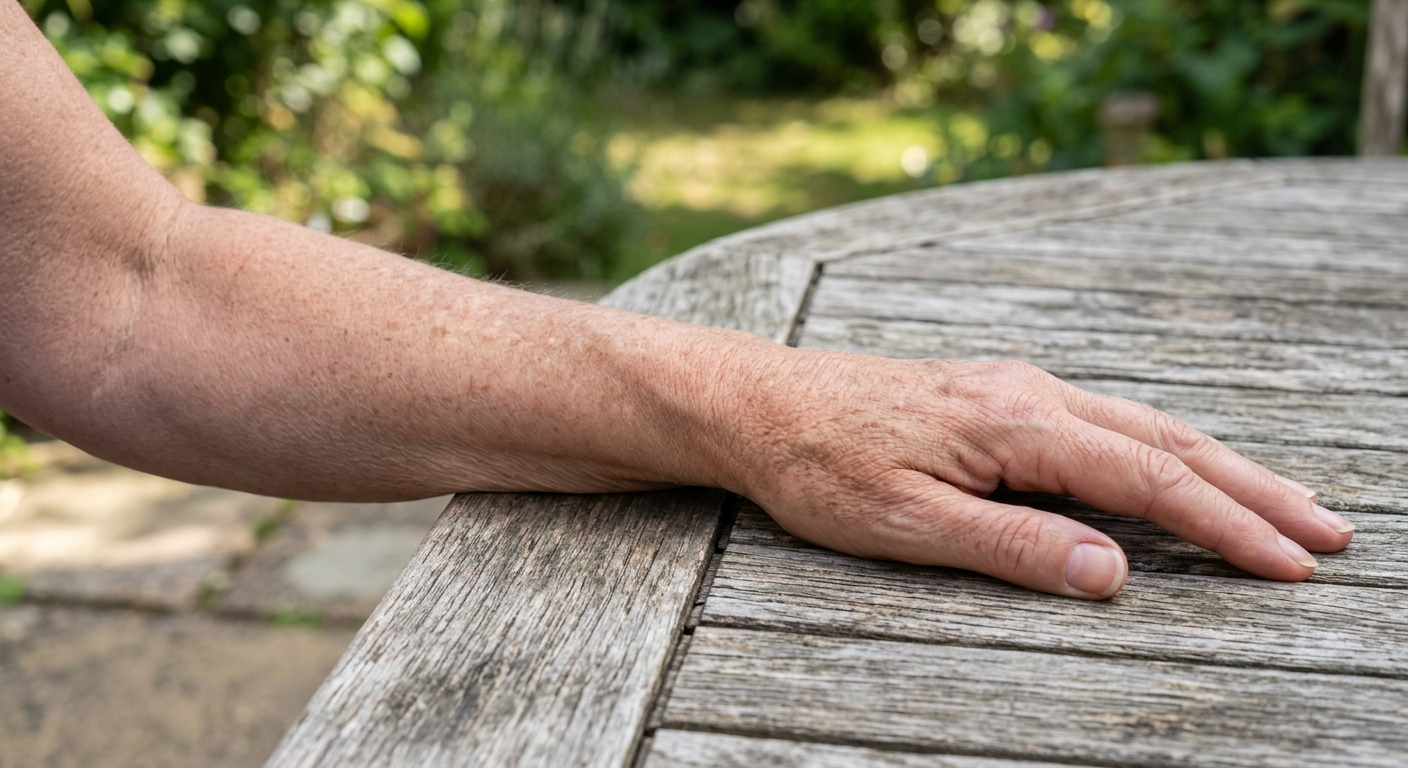
If you have ever pressed the back of your hand next to your inner arm — the skin that almost never sees daylight — you have run your own controlled experiment. The protected skin is smoother, more even, more elastic. The exposed skin tells a different story: freckling, roughness, fine lines, a papery quality. That difference is not the calendar. It is the sun.
Dermatologists estimate that up to 80–90% of visible facial aging is caused by ultraviolet exposure rather than the passage of time. The good news buried in that statistic is this: because sun damage is acquired, much of it can be unwound. Sun damaged skin is one of the few aging concerns with a genuine, research-backed reversal pathway.
What “Sun Damage” Actually Means
We tend to picture sun damage as surface discoloration — sunspots, freckles, a blotchy tone. Those are real, but they are the paint, not the frame. The structural damage happens deeper, in the dermis, where your collagen and elastin live.
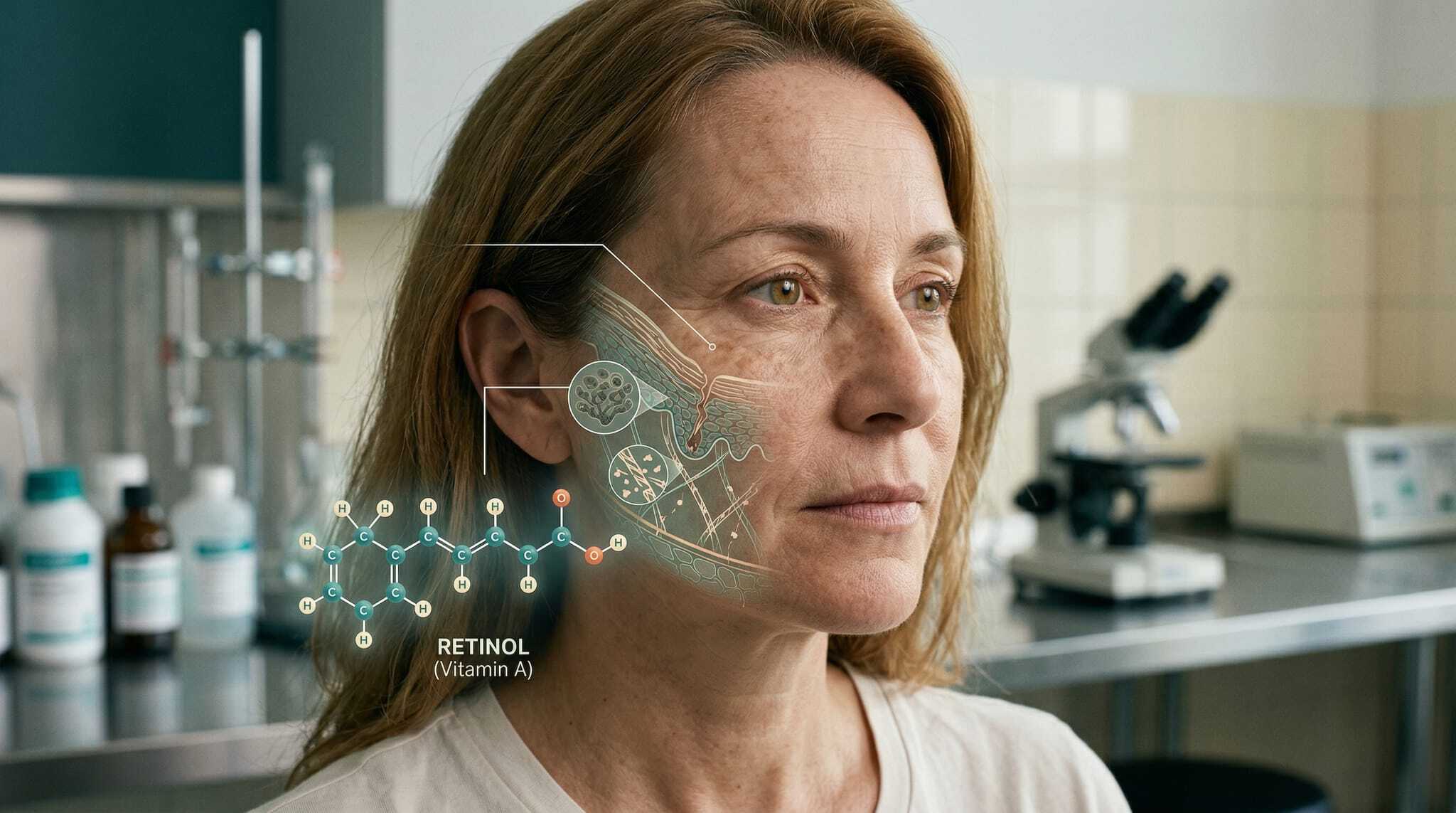
Ultraviolet light injures skin through two simultaneous mechanisms. First, UV penetrates the skin and triggers a burst of reactive oxygen species — unstable molecules that switch on enzymes called matrix metalloproteinases (MMPs). These enzymes are molecular scissors: their job is to cut up collagen and elastin so damaged tissue can be recycled. Under chronic sun exposure, they run overtime, shredding healthy structural protein faster than the skin can rebuild it [1]. Second, the same UV signaling suppresses your fibroblasts’ ability to manufacture new collagen. A single dose of UV can nearly shut down procollagen production for a full day [2].
The result is a slow-motion demolition: collagen you already had gets broken down, and the replacement supply gets throttled. Over years, that shows up as wrinkles, crepey texture, sagging, and the mottled pigment we call photoaging. Understanding this two-front attack is the key to reversing it, because an effective routine has to do two jobs at once — stop the breakdown and restart the building. A single bad burn runs that same demolition in fast-forward, which is what our guide to healing a sunburn fast is really about.
The Signs, Decoded
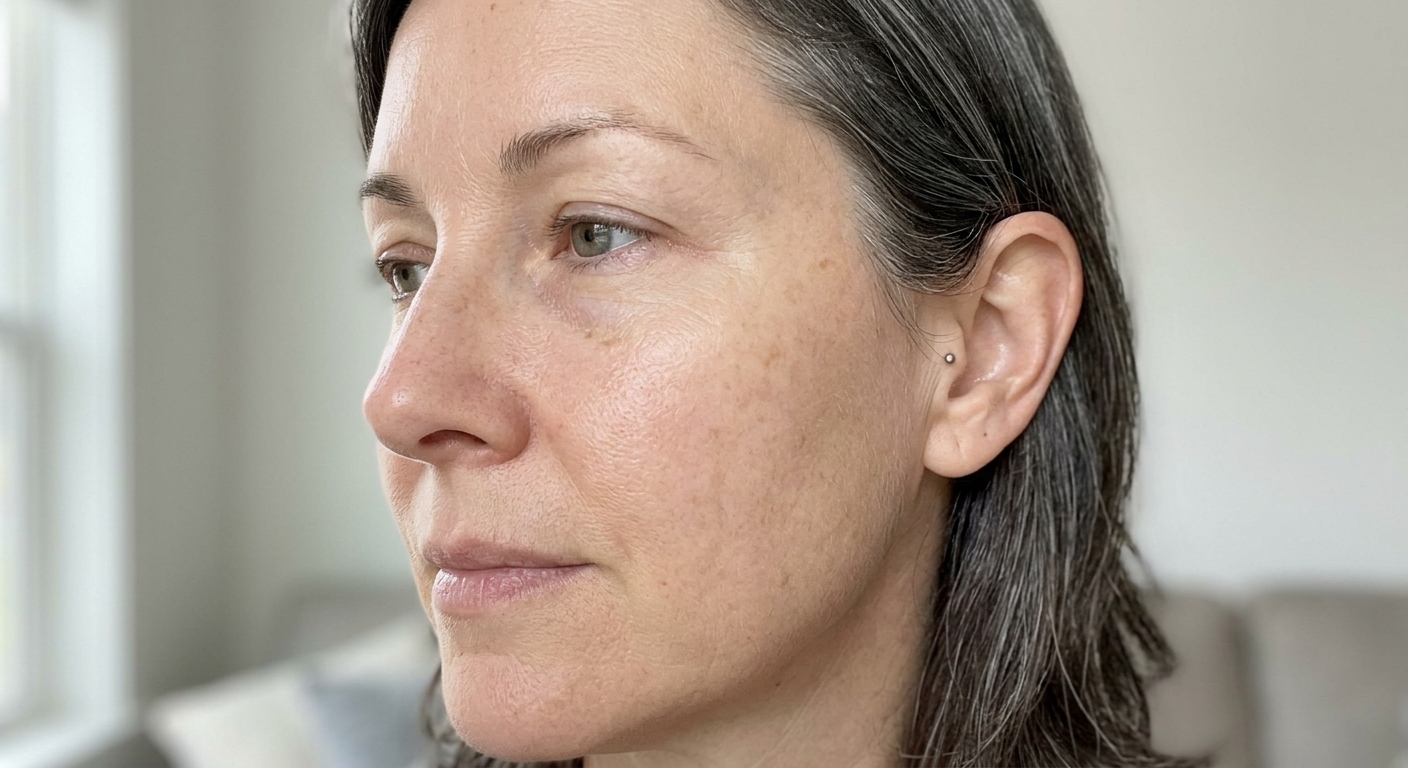
Sun damaged skin rarely arrives as a single complaint. It’s a cluster:
If you have ever pressed the back of your hand next to your inner arm — the skin that almost never sees daylight — you have run your own controlled experiment.
- Dyspigmentation — solar lentigines (sunspots), freckling, and uneven tone from overstimulated melanocytes. A recent tan sits on top of all of this and clears on its own schedule, explained in how to remove sun tan from your face.
- Textural change — roughness, enlarged-looking pores, and a dull, thickened surface.
- Fine lines and wrinkles — the visible signature of degraded dermal collagen.
- Loss of firmness — as elastin fragments and clumps into disorganized “solar elastosis,” skin loses its snap.
- Broken capillaries and redness — especially on thinner, more exposed areas.
If several of these are appearing together on your face, hands, chest, or forearms, you’re not looking at a dozen separate problems. You’re looking at one process — and it responds to one coordinated strategy. Part of that strategy is recognizing where exposure is still happening, including the indoor hours beside a window, which we break down in sunscreen indoors.
Can Sun Damage Really Be Reversed?
Prevention and repair are two different jobs, and the evidence supports both. On the prevention side, a landmark randomized trial followed 903 adults for four and a half years; those assigned to daily broad-spectrum sunscreen showed 24% less skin aging than the group using it only occasionally [3]. That is one of the cleanest demonstrations in dermatology that a cheap daily habit measurably slows the clock, provided the dose is right, which our guide to how much sunscreen to use works through.
But prevention only stops new damage. To repair what’s already there, you need to intervene in the collagen cycle directly — and the most studied tool for that is topical vitamin A.
Retinoids: The Reversal Workhorse
The reason retinoids dominate every serious conversation about sun damaged skin is that they act on the exact mechanisms above. Prescription tretinoin (retinoic acid) has been shown in double-blind, vehicle-controlled trials to visibly improve photoaged skin, with measurable increases in new collagen formation in treated areas [4]. It does what sunscreen can’t: it tells the skin to rebuild.
The retinol is encapsulated inside biomimetic lipid nanoparticles — particles engineered to look, to your skin, like the body’s own cells.
Over-the-counter retinol is the gentler cousin. Once absorbed, skin converts it into retinoic acid — and a head-to-head study found that topical retinol drives the same categories of histological and molecular change as retinoic acid, including significant wrinkle reduction, just at a smaller magnitude [5]. Retinol effectively down-regulates the collagen-shredding MMPs while up-regulating fresh procollagen. It works both sides of the equation.
There is, however, a catch that no amount of marketing can hide.
The Delivery Problem Nobody Talks About
Retinol only works if it actually reaches the fibroblasts in the dermis where collagen is made. Conventional retinol is a fragile, oil-loving molecule, and the skin barrier is specifically built to keep such things out. So most legacy formulas try to force the issue — leaning on solvents and penetration enhancers that loosen the barrier’s lipids to shove retinol through. That’s precisely why traditional retinol is famous for redness, flaking, and stinging: the irritation is the barrier being pried open. And with damaged, sun-weakened skin, that trade-off is even less appealing.
This is the problem North Biomedical set out to solve with Nanoretinol. Instead of breaking through the skin barrier, Nanoretinol slips past it. The retinol is encapsulated inside biomimetic lipid nanoparticles — particles engineered to look, to your skin, like the body’s own cells. Recognized as “self,” they’re allowed through the epithelial barrier intact, then release their cargo deep where it can act. It’s the same class of nanoparticle delivery used in advanced drug-delivery medicine, redirected to skin repair.
Because delivery is so much more efficient, Nanoretinol needs only a stabilized 0.2% retinol concentration to outperform. In North Biomedical’s clinical testing, Nanoretinol proved 232% more effective at collagen recovery and 73% more effective at elastin recovery than conventional retinol — the two exact structures UV destroys — while being dramatically gentler on skin cells. In use, participants saw a 61% increase in firmness and a 56% increase in elasticity over 56 days. For skin already battered by the sun, “more repair, less irritation” is the whole game.
Building a Sun-Repair Routine
You don’t need ten products. You need the right few, used consistently:
- Morning: antioxidant + sunscreen. A vitamin C serum helps neutralize UV-generated free radicals before they trigger MMPs, and broad-spectrum SPF 30+ is non-negotiable, and if a chalky finish is what keeps you from applying it, see mineral sunscreen with no white cast — it’s the only step proven to prevent further damage. See our guides to the best vitamin C serums and sunscreen for aging skin.
- Night: a retinoid. This is your repair engine. Start two or three nights a week and build up. A well-delivered retinol lets you skip the “purge-and-peel” initiation phase most people dread.
- Support the barrier. Pair your retinoid with ceramides and hyaluronic acid so the skin stays resilient while it remodels.
- Don’t forget the map of damage. Sun damage isn’t only on the face — treat the hands, the neck, and the chest too, since these often show it first.
Patience is the final ingredient. Collagen remodeling operates on a timeline of months, not days. Most photoaging studies run 12 to 24 weeks before results plateau, so give any serious routine at least three months before you judge it. For a deeper look at what UV does specifically to facial skin, see our companion piece on sun damage on the face.
The Takeaway
Sun damaged skin is the rare aging concern where biology is on your side. The same fibroblasts that were switched off by years of UV can be switched back on — if you stop the ongoing breakdown with daily sun protection and antioxidants, and actively rebuild with a retinoid that actually reaches the dermis. Do both, consistently, and the arm-versus-hand experiment starts running in reverse.
References
- Pittayapruek P, Meephansan J, Prapapan O, Komine M, Ohtsuki M. “Role of Matrix Metalloproteinases in Photoaging and Photocarcinogenesis.” International Journal of Molecular Sciences. 2016;17(6):868. doi:10.3390/ijms17060868
- Quan T, Qin Z, Xia W, Shao Y, Voorhees JJ, Fisher GJ. “Matrix-degrading Metalloproteinases in Photoaging.” Journal of Investigative Dermatology Symposium Proceedings. 2009;14(1):20-24. doi:10.1038/jidsymp.2009.8
- Hughes MCB, Williams GM, Baker P, Green AC. “Sunscreen and Prevention of Skin Aging: A Randomized Trial.” Annals of Internal Medicine. 2013;158(11):781-790. doi:10.7326/0003-4819-158-11-201306040-00002
- Weiss JS, Ellis CN, Headington JT, Tincoff T, Hamilton TA, Voorhees JJ. “Topical Tretinoin Improves Photoaged Skin. A Double-Blind Vehicle-Controlled Study.” JAMA. 1988;259(4):527-532. PMID:3336176
- Kong R, Cui Y, Fisher GJ, et al. “A Comparative Study of the Effects of Retinol and Retinoic Acid on Histological, Molecular, and Clinical Properties of Human Skin.” Journal of Cosmetic Dermatology. 2016;15(1):49-57. doi:10.1111/jocd.12193