Cleansing Balm: Why Oil Removes What Water Cannot
The phase change that makes a solid balm rinse clean, and the one job it does better than anything else
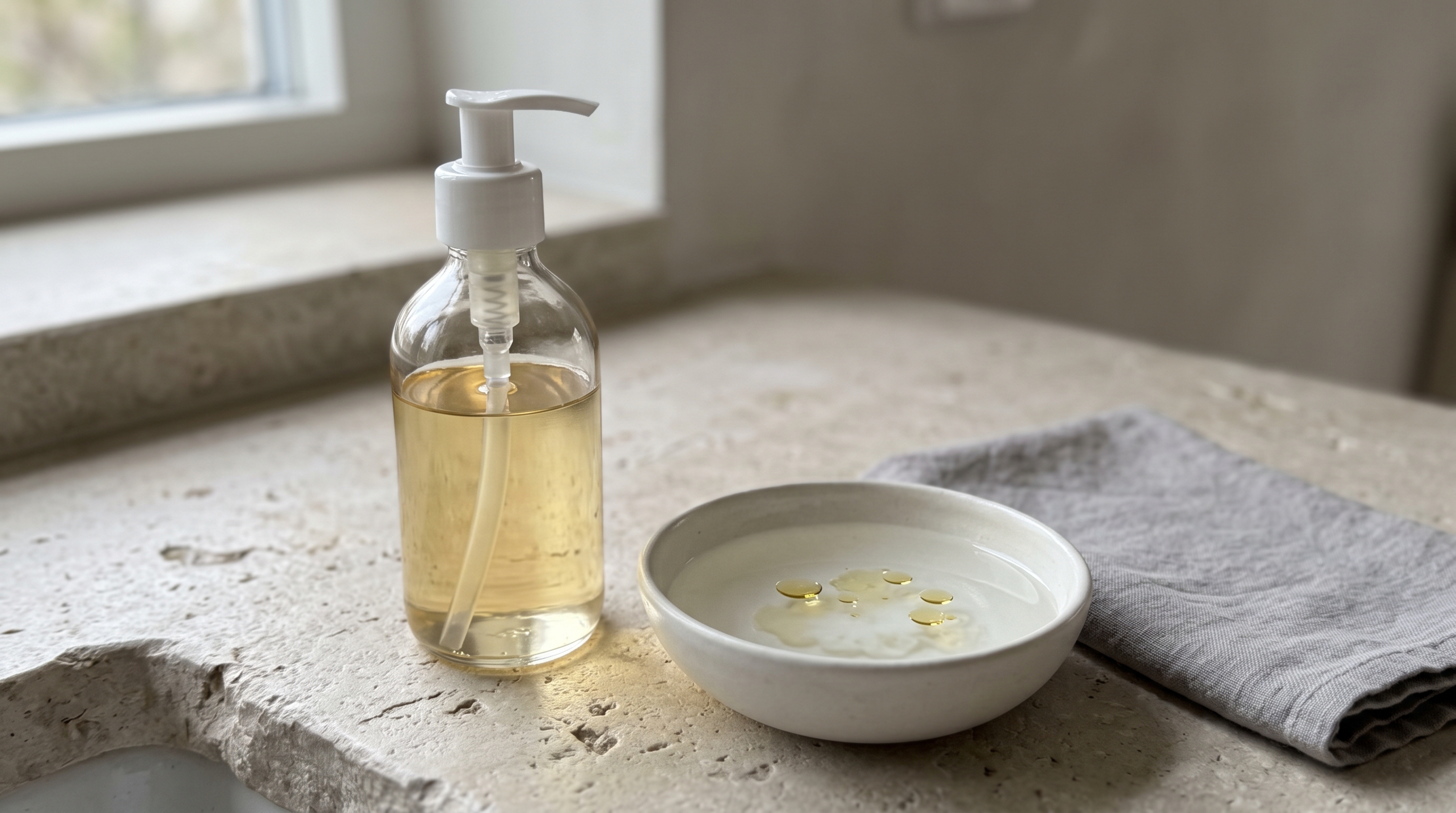
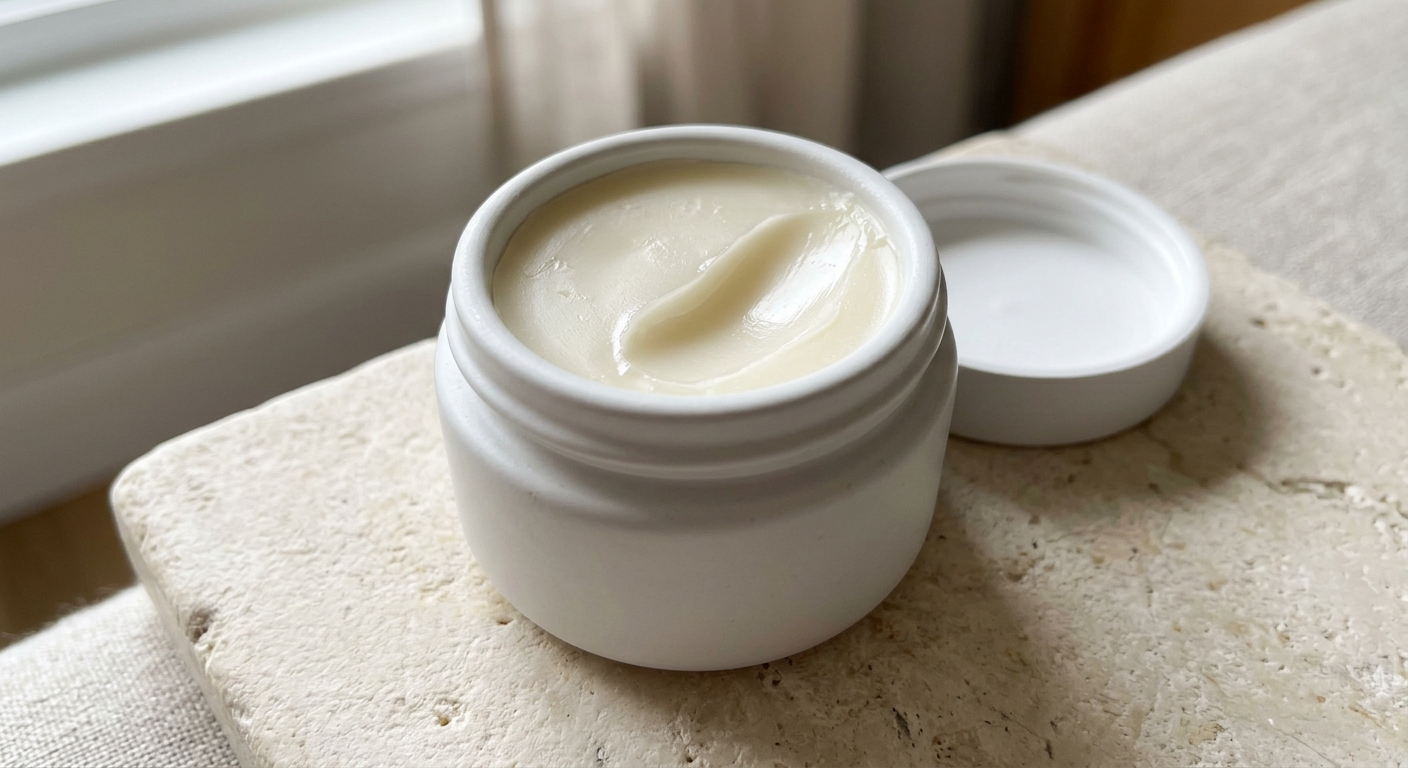
A cleansing balm makes no sense until you understand one thing: it contains no water at all. Scoop it out and it is a solid. Touch it to warm skin and it turns to oil. Add water and it turns milky and rinses away. Three states in about forty seconds, and each one is doing a specific job.
That sequence explains why a product made almost entirely of oil ends up cleaning better than most things made of water.
Like dissolves like
The rule governing all of this is old and simple. Substances dissolve in solvents chemically similar to themselves. Oil-soluble things go into oil; water-soluble things go into water.
What sits on your face at the end of the day is overwhelmingly in the first category. Skin surface lipids are a complex mixture of triglycerides, wax esters, squalene and free fatty acids, produced by sebaceous glands and serving real functions in barrier maintenance and environmental defence [1]. Layered on top of that are cosmetic products built in oil or silicone bases, and sunscreen filters suspended in the same.
Water has no chemical grip on any of it. That is the entire reason a rinse with water leaves your face feeling coated.
What sits on your face at the end of the day is overwhelmingly in the first category.
The trick is the emulsifier, not the oil
If a balm were only oil, it would dissolve your makeup and then sit on your face permanently. What makes the format work is a second ingredient class doing quiet work in the background.
Cleansing balms are formulated with emulsifiers blended into the oil phase. While the balm is anhydrous they do nothing. The moment you add water at the sink, they let oil and water combine into an emulsion, and the whole mixture, including everything the oil has dissolved, becomes rinsable. That milky turn under the tap is the phase change happening [2].
This is why emulsifier content, rather than which oils are on the label, decides whether a balm leaves a film. Two balms with identical oil blends can behave completely differently at the rinse. If a balm consistently leaves your skin greasy, the formulation is under-emulsified for your water and your technique, and no amount of extra rinsing fixes it.
The sunscreen problem it solves
There is one job where the evidence is unusually direct. Researchers compared cleansing methods for removing sunscreen from skin, testing water alone against an aqueous cleanser against a cleansing oil, and found the oil-based method the most effective at clearing sunscreen residue [3].
That result should change how you think about your evening routine. Modern sunscreens are deliberately engineered to be water-resistant, film-forming and difficult to rub off, because a sunscreen that washes away in sweat is a sunscreen that fails. Those properties do not switch off at 10pm. Daily sunscreen use is the single most valuable anti-aging habit available, as covered in our piece on sunscreen and aging skin, and it comes with an obligation to remove the film properly at night.
If a balm breaks you out, the usual culprit is incomplete rinsing rather than the oil itself, which points back to emulsifier content.
An oil-phase first step also lets the second cleanse be far gentler than it would otherwise need to be, which is the actual argument for double cleansing. The balm handles the oil-soluble load; a mild wash handles the rest.
What this does to your barrier
Cleansing always costs something. Surfactant-based products remove the stratum corneum’s own lipids alongside the dirt, and the free fatty acid fraction of those lipids is directly involved in keeping the barrier intact during washing [4]. Clinical measurement shows the effect is real and quantifiable: comparing several cleansing products in volunteers produced measurable differences in transepidermal water loss and erythema depending on which product was used [5]. The mild-cleansing literature exists precisely because this trade-off was recognised decades ago [6].
An oil-based first cleanse changes the arithmetic. Because the balm dissolves the oil-soluble load without needing high surfactant concentrations to do it, the wash that follows can be short and mild. People who move from scrubbing at waterproof mascara with a foaming cleanser to a balm-then-wash sequence often find their damaged skin barrier settles down within a couple of weeks, largely because the mechanical friction disappears along with the harsh surfactant.
The common objection is breakouts. Worth knowing that comedogenicity data on cosmetic oils comes largely from animal models such as the rabbit ear assay, which is a screening tool rather than a prediction of what will happen on a human face [7]. A rinse-off product has contact time measured in seconds. If a balm breaks you out, the usual culprit is incomplete rinsing rather than the oil itself, which points back to emulsifier content.
Choosing one, briefly
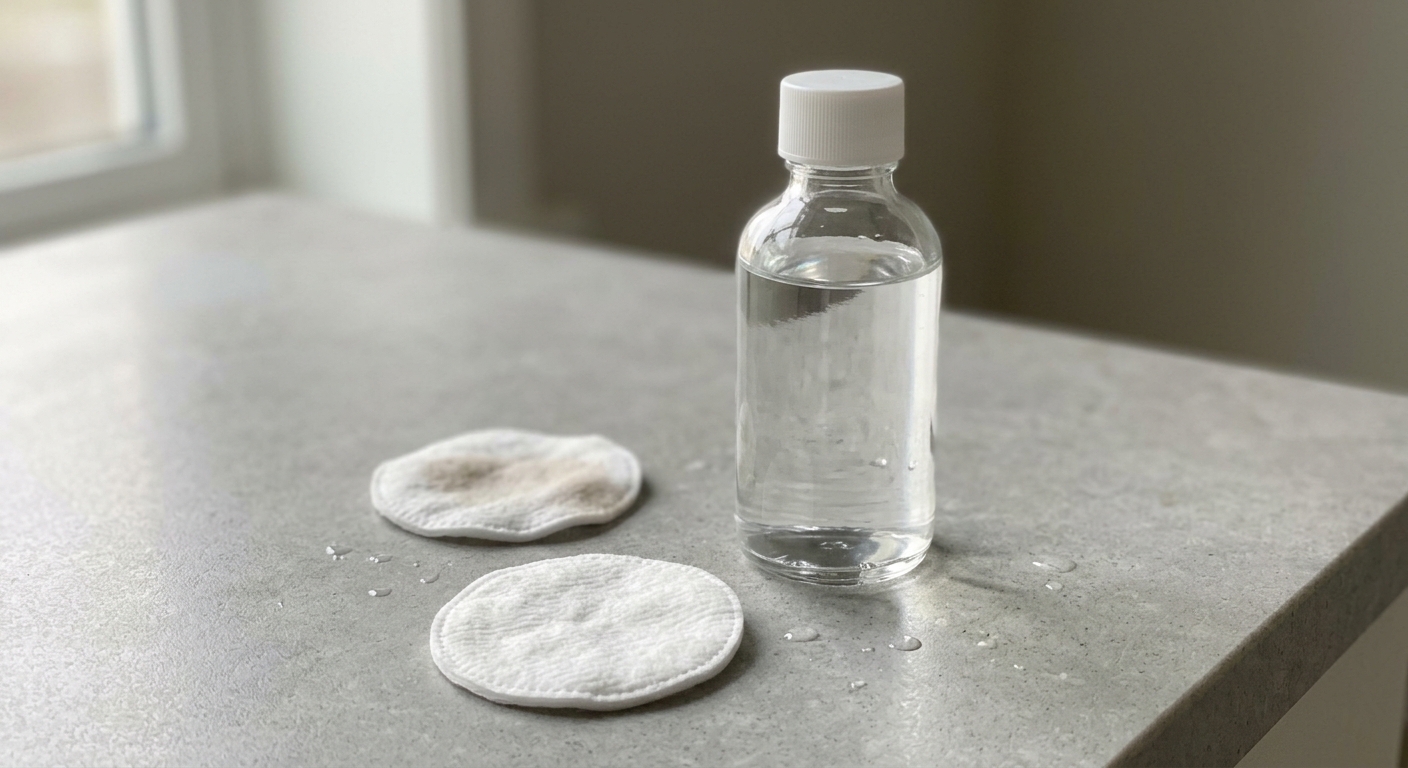
Judge a balm on how it rinses, not how it feels in the jar. It should emulsify to a light milk within a few seconds of contact with water and leave skin clean rather than squeaky or slick. Fragrance is the most common irritant in the category and the easiest thing to drop. For light makeup and no sunscreen, micellar water is plenty and a balm is overkill.
The same problem, from the inside
There is a symmetry here worth noticing. A balm works because lipid solubility governs what can be lifted off skin. Lipid solubility also governs what can get into it, and that is where most anti-aging products quietly fail. Retinol has the strongest evidence base of any topical anti-aging active, and conventional formulations still struggle to get meaningful quantities past the epithelial barrier. Their usual workaround is to break the barrier down chemically, which is where the redness and peeling come from.
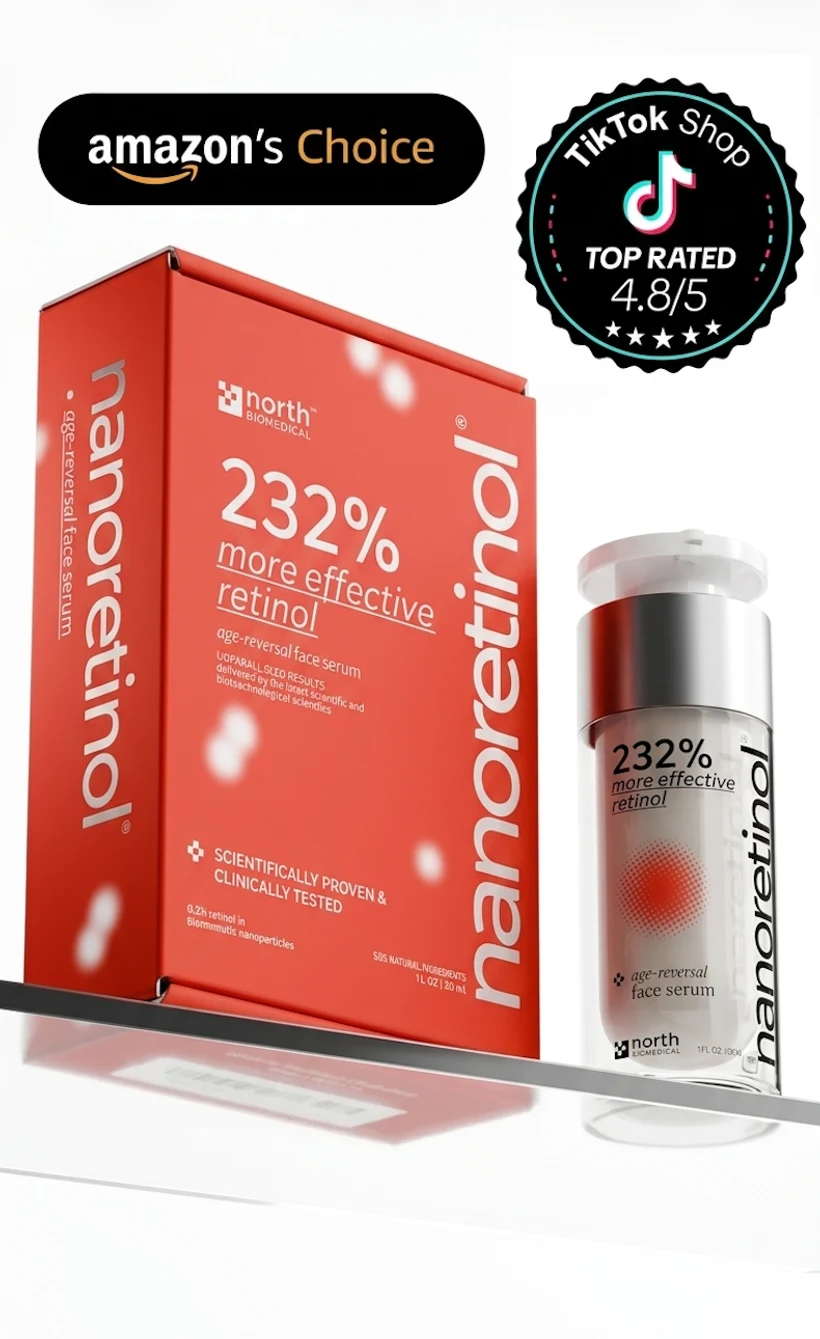
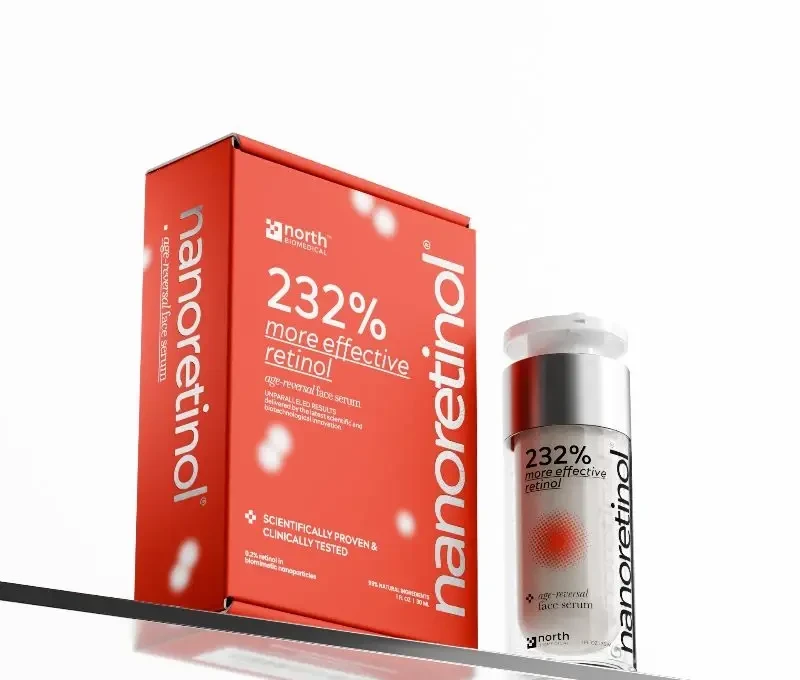
Nanoretinol solves the inbound half of the problem the way a balm solves the outbound half, using lipid chemistry rather than force. Its 0.2% retinol travels inside biomimetic lipid nanoparticles the skin recognises as self and admits intact. Measured against conventional retinol it achieved 232% greater collagen recovery and 73% greater elastin recovery, with drastically reduced cytotoxicity, and across 56 days of use delivered 61% greater skin firmness and 56% greater elasticity.
Worth the jar
A cleansing balm is not a luxury step. If you wear sunscreen or long-wear makeup, it is the most reliable way to get either off your face without abrading the skin underneath. Get the removal right and every product you apply afterwards lands on skin that can actually receive it.
References
- De Luca C, Valacchi G. “Surface lipids as multifunctional mediators of skin responses to environmental stimuli.” Mediators of Inflammation. 2010;2010:321494. doi:10.1155/2010/321494
- Walters RM, Mao G, Gunn ET, Hornby S. “Cleansing formulations that respect skin barrier integrity.” Dermatology Research and Practice. 2012;2012:495917. doi:10.1155/2012/495917
- Chen W, He M, Xie L, Li L. “The optimal cleansing method for the removal of sunscreen: water, cleanser or cleansing oil?” Journal of Cosmetic Dermatology. 2020;19(1):180-184. doi:10.1111/jocd.12995
- Ananthapadmanabhan KP, Mukherjee S, Chandar P. “Stratum corneum fatty acids: their critical role in preserving barrier integrity during cleansing.” International Journal of Cosmetic Science. 2013;35(4):337-345. doi:10.1111/ics.12042
- Khosrowpour Z, Ahmad Nasrollahi S, Ayatollahi A, Samadi A, Firooz A. “Effects of four soaps on skin trans-epidermal water loss and erythema index.” Journal of Cosmetic Dermatology. 2019;18(3):857-861. doi:10.1111/jocd.12758
- Subramanyan K. “Role of mild cleansing in the management of patient skin.” Dermatologic Therapy. 2004;17(Suppl 1):26-34. doi:10.1111/j.1396-0296.2004.04s1003.x
- Nguyen SH, Dang TP, Maibach HI. “Comedogenicity in rabbit: some cosmetic ingredients/vehicles.” Cutaneous and Ocular Toxicology. 2007;26(4):287-292. doi:10.1080/15569520701555383