Collagen Eye Cream: What It Can and Cannot Do for Under-Eye Lines
Collagen is too large to reach the layer where wrinkles form. Here is what a collagen eye cream does, how to spot real collagen builders on a label, and what works for crow's feet
Collagen is the protein that keeps skin firm, and the skin around the eyes loses it early. It is thin, it moves thousands of times a day, and it gets little protection from oil glands. So a cream that promises to put collagen back where the fine lines are forming is an easy sell.
The problem is getting it there. Collagen applied to the surface does not travel down to the layer where wrinkles form. A collagen eye cream can still be worth buying, but for different reasons than the label suggests. This guide explains what collagen does in an eye cream, how to tell it apart from ingredients that make your skin build its own, and what has evidence for crow’s feet and under-eye lines.
Why collagen stays on the surface
The outer layer of skin is a very effective filter. A widely cited rule in dermatology holds that a molecule generally needs to weigh less than about 500 daltons to pass through it, and almost every drug designed to work through the skin falls under that limit [1].
Your skin blocks almost every molecule above 500 daltons, and a single collagen molecule is roughly 600 times larger than that.
Whole collagen weighs around 300,000 daltons. Hydrolyzed collagen, which is collagen broken into smaller fragments, is lighter, but most of those fragments are still far above the limit. Neither form reaches the deeper layer, called the dermis, where your own collagen sits and where wrinkles take shape. Our guide to whether collagen creams work covers this in more detail.
What a collagen eye cream can honestly do
That does not make collagen useless. Collagen and hydrolyzed collagen are good moisturizing ingredients. A review of hydrolyzed collagen describes it as a safe cosmetic ingredient with good moisturizing properties in the outer layer of the skin [2]. Those moisturizing claims are about the surface, not about rebuilding collagen underneath.
Your skin blocks almost every molecule above 500 daltons, and a single collagen molecule is roughly 600 times larger than that.
In practice, a collagen eye cream can:
- Hydrate: collagen attracts and holds water, which helps the thin, dry skin under the eyes.
- Soften the look of fine lines: well-hydrated skin reflects light more evenly, so shallow dryness lines look less obvious for a few hours.
- Form a smooth film: this can help concealer sit better and crease less.
What it cannot do is replace lost collagen or make the skin produce more. Those effects need ingredients small and active enough to signal the cells that make collagen.
Ingredients that make your skin build collagen
When you shop for a collagen eye cream, the more useful question is whether it contains something that prompts your skin to make its own. These ingredients have that evidence.
Retinol. Retinol is the best-studied option for collagen in aging skin. Applying it to naturally aged skin increased collagen production and reduced the enzymes that break collagen down [3]. In a 24-week trial in elderly volunteers, 0.4% retinol lotion reduced fine wrinkling and raised collagen production compared with the plain base [4]. Another study found that 4 weeks of retinol increased the genes and proteins for two main types of collagen, and 12 weeks reduced facial wrinkles in image analysis [5].
Your skin around the eyes needs 12 weeks or more of a collagen-building ingredient before fine lines change, far longer than the instant smoothing a collagen cream gives.
Peptides. Some short signal peptides are small enough to work in the upper layers of skin. In a 12-week split-face trial in 93 women, a moisturizer with the peptide palmitoyl pentapeptide-4 reduced wrinkles and fine lines more than the same moisturizer without it [6]. Our guide to peptide eye cream explains how to judge that category.
Your skin around the eyes needs 12 weeks or more of a collagen-building ingredient before fine lines change, far longer than the instant smoothing a collagen cream gives.
Supporting ingredients. Hyaluronic acid, glycerin and ceramides do not build collagen, but they help the eye area hold water and tolerate stronger actives.
How to read a collagen eye cream label
A few checks will tell you what you are buying:
- “Collagen” or “hydrolyzed collagen”: a moisturizer, not a collagen builder.
- “Retinol”, “retinal” or “retinyl” esters: a retinoid, the strongest evidence for rebuilding.
- “Palmitoyl” followed by “peptide” or “tripeptide”: a signal peptide.
- “Collagen-boosting” with none of the above: marketing language with no active behind it.
Many products combine collagen with a real collagen builder, which is a reasonable choice. The collagen adds comfort and short-term smoothing while the active does the slower work.
Texture and packaging for the eye area
The skin under the eyes is among the thinnest on the body, so formula matters as much as ingredients. Look for a fragrance-free product, because fragrance is a common trigger for irritation around the eyes. Choose a texture that matches the job: a light gel or lotion for mornings under concealer, and a richer cream for night if your skin is dry.
Packaging matters most when the cream contains retinol or peptides. An airless pump or a tube protects them from air and light better than a jar. Apply a small amount with your ring finger along the orbital bone, and keep it away from the lash line.
Crow’s feet and the limits of any cream
Lines that appear only when you smile come from muscle movement, and no cream stops that movement. Creams work best on the fine, crinkly lines that stay when your face is at rest, and on the thin texture under the eyes. Our guide to crow’s feet covers when a cream is enough and when other treatments make sense.
Sunscreen is the other half of the plan. Sun exposure breaks down collagen, and the eye area is easy to miss with sunscreen, so daily protection plus sunglasses preserves whatever your eye cream builds.
A retinol made for the eye area
Retinol has the strongest case for under-eye lines, but it is also the ingredient people most fear using there. Conventional retinol often stings, reddens and peels the thin skin around the eyes, largely because the formula pushes retinol in by loosening the skin’s protective lipids. Our guide to using retinol around the eyes explains how to introduce it carefully.
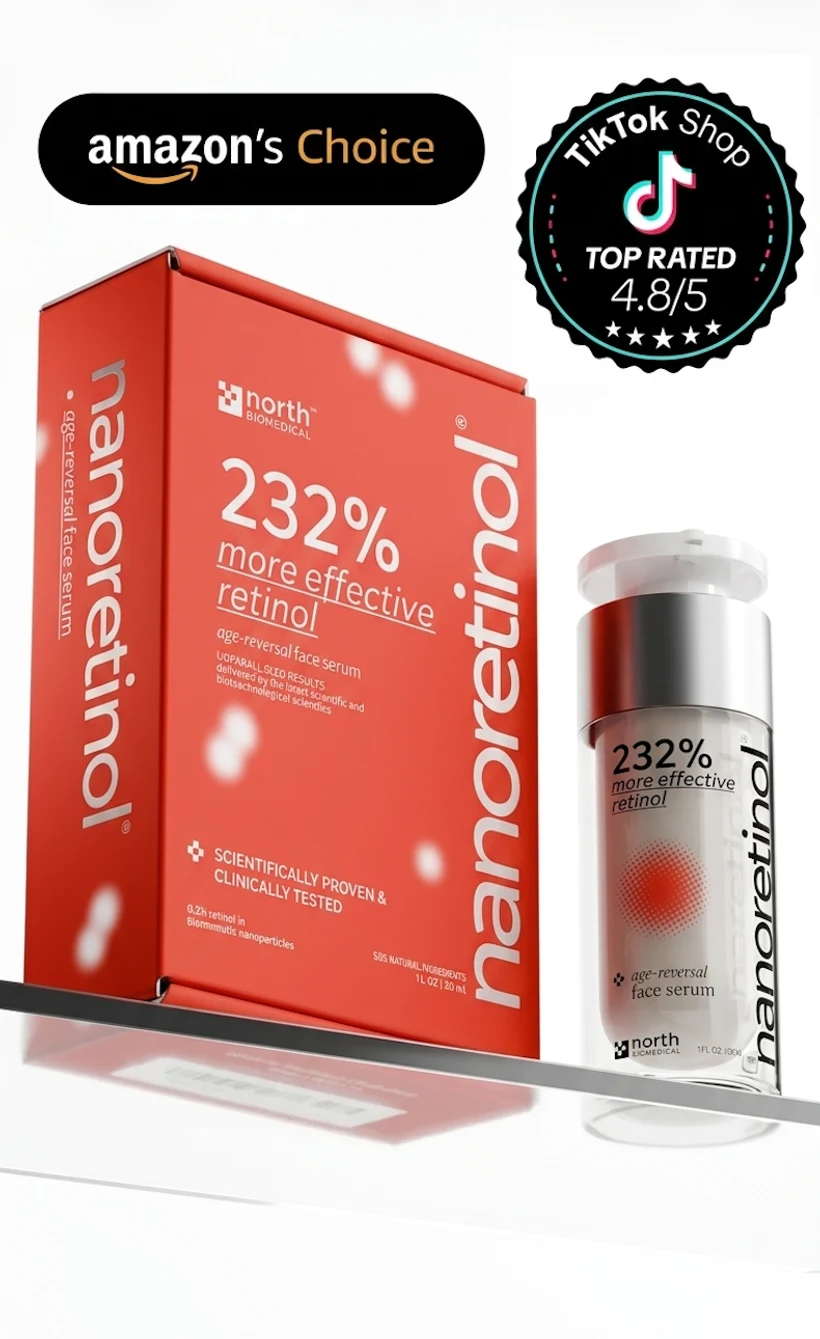
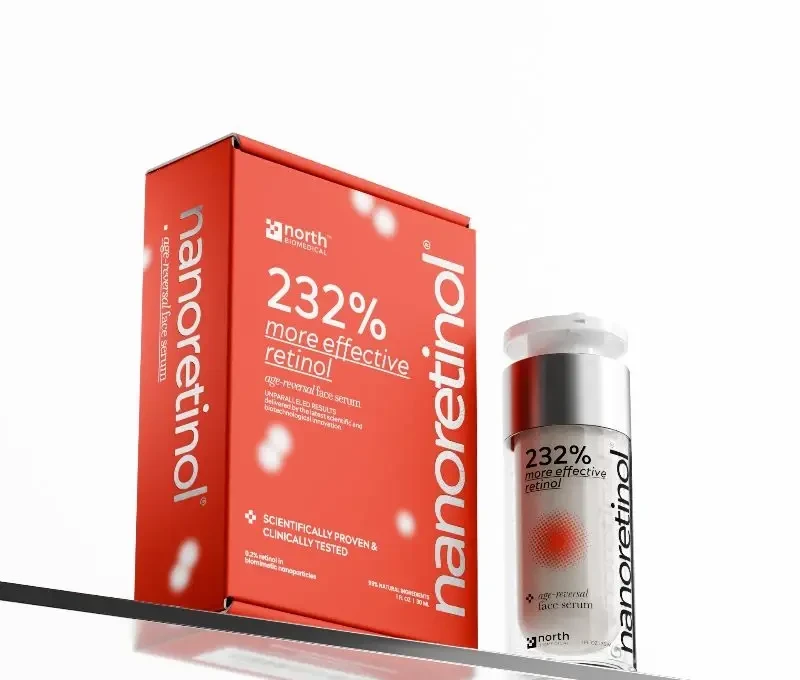
Nanoretinol is designed to avoid that problem. It delivers 0.2% stabilized retinol inside biomimetic lipid nanoparticles that the skin recognizes as its own, so retinol reaches skin cells without breaking down the barrier first. It is suitable for sensitive skin and safe for the eye contour. In North Biomedical’s study summary, Nanoretinol was 232% more effective in collagen recovery and 73% more effective in elastin recovery than conventional retinol, and clinical testing found minimal side effects that were milder than those of conventional retinol [7].
Apply it at night around the orbital bone, not on the eyelids or into the eyes, and keep a collagen or hyaluronic acid cream for the morning if you like the extra hydration. That way the cream handles comfort and the retinol handles the collagen.
References
- Bos JD, Meinardi MM. “The 500 Dalton rule for the skin penetration of chemical compounds and drugs.” Experimental Dermatology. 2000;9(3):165-169. doi:10.1034/j.1600-0625.2000.009003165.x
- Aguirre-Cruz G, León-López A, Cruz-Gómez V, Jiménez-Alvarado R, Aguirre-Álvarez G. “Collagen Hydrolysates for Skin Protection: Oral Administration and Topical Formulation.” Antioxidants. 2020;9(2):181. doi:10.3390/antiox9020181
- Varani J, Warner RL, Gharaee-Kermani M, et al. “Vitamin A antagonizes decreased cell growth and elevated collagen-degrading matrix metalloproteinases and stimulates collagen accumulation in naturally aged human skin.” Journal of Investigative Dermatology. 2000;114(3):480-486. doi:10.1046/j.1523-1747.2000.00902.x
- Kafi R, Kwak HS, Schumacher WE, et al. “Improvement of naturally aged skin with vitamin A (retinol).” Archives of Dermatology. 2007;143(5):606-612. doi:10.1001/archderm.143.5.606
- Kong R, Cui Y, Fisher GJ, et al. “A comparative study of the effects of retinol and retinoic acid on histological, molecular, and clinical properties of human skin.” Journal of Cosmetic Dermatology. 2016;15(1):49-57. doi:10.1111/jocd.12193
- Robinson LR, Fitzgerald NC, Doughty DG, et al. “Topical palmitoyl pentapeptide provides improvement in photoaged human facial skin.” International Journal of Cosmetic Science. 2005;27(3):155-160. doi:10.1111/j.1467-2494.2005.00261.x
- North Biomedical LLC. “Nanoretinol vs. Conventional Retinol: Efficacy in Collagen and Elastin Recovery.” Clinical Study Summary, 2024. Study summary