Cyclopentasiloxane in Skincare: What It Does and Is It Safe?
The volatile silicone behind silky serums and primers: why it evaporates, how little reaches your body, and why Europe is restricting it anyway
Cyclopentasiloxane is one of those ingredients most people have used for years without noticing. It sits near the top of the label on many primers, foundations, silky serums, sunscreens, hair serums and antiperspirants. It is the reason a product glides on like satin, feels weightless and then seems to disappear.
It is also an ingredient with a split reputation. Safety reviewers have found little reason to worry about it on skin, yet the European Union has been phasing it out of cosmetics. Both facts are true, and the reason they coexist tells you a lot about how ingredient decisions are made.
What Cyclopentasiloxane Is
Cyclopentasiloxane, often shortened to D5, is a silicone. Its full chemical name is decamethylcyclopentasiloxane: a ring of five alternating silicon and oxygen atoms, with two small methyl groups on each silicon. The “D” refers to that repeating unit and the “5” to the number of units in the ring.
It belongs to a family of cyclic silicones. D4 has four units and D6 has six. “Cyclomethicone” on a label usually means a blend of these rings, mostly D5.
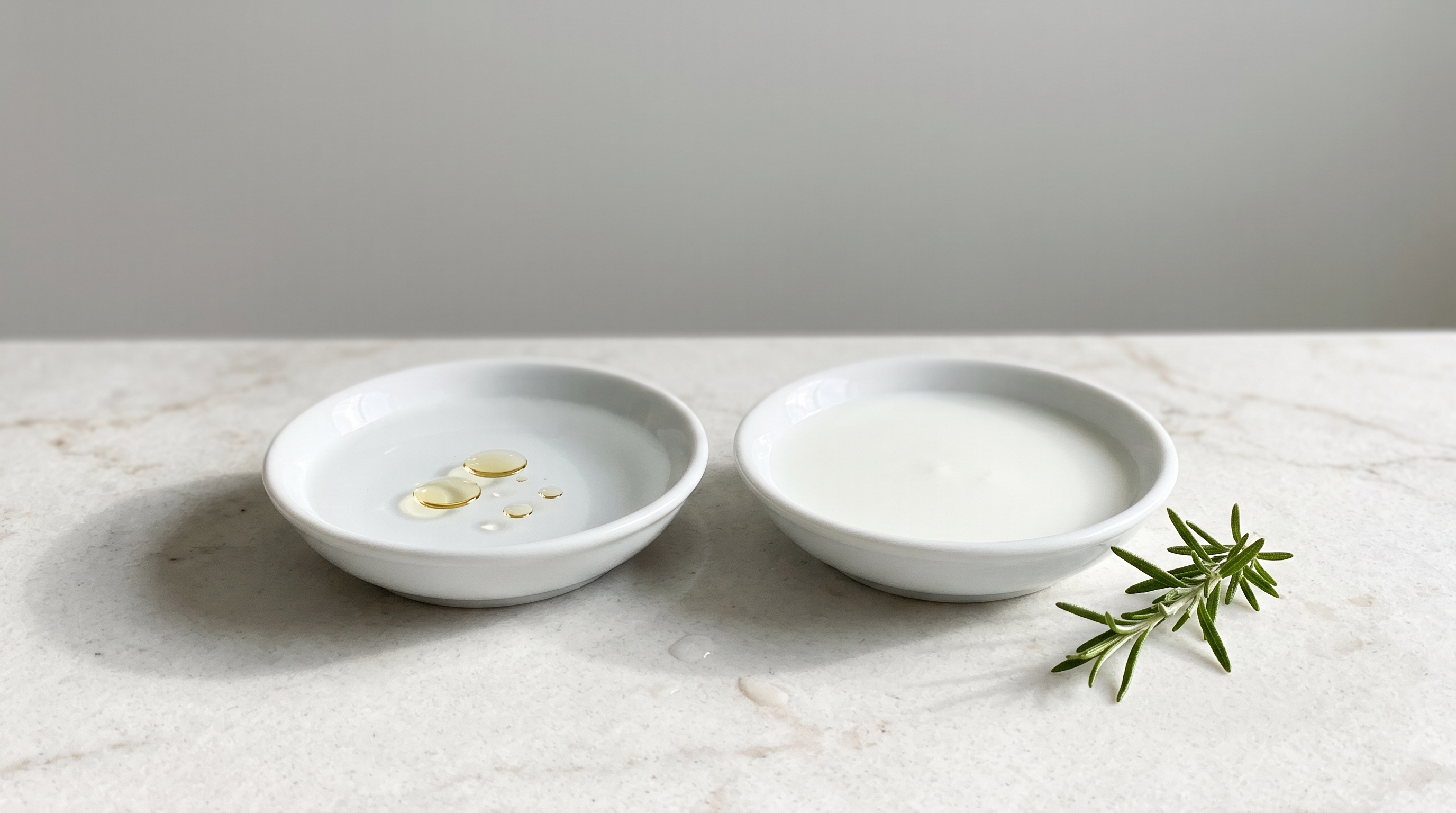
The ring shape is what sets it apart from dimethicone, the most common silicone in skincare. Dimethicone is a long chain that stays on the skin as a smooth, breathable film. Cyclopentasiloxane is a small ring that is volatile. Like alcohol, but much more slowly, it evaporates at room and skin temperature.
How Much Your Skin Actually Absorbs
Because it is designed to leave, very little of it stays on or enters the skin. In human volunteers who had D5 applied to the underarm, researchers tracked the chemical in exhaled air and blood, then modeled the results. About 0.05% of the applied dose reached the circulation, and more than 83% of the small absorbed amount was breathed out within 24 hours [1].
Your skin absorbs only about 0.05% of the cyclopentasiloxane you apply, far less than most people assume, because the rest simply evaporates.
Your skin absorbs only about 0.05% of the cyclopentasiloxane you apply, far less than most people assume, because the rest simply evaporates.
A separate study applied marketed antiperspirants and skin care products to volunteers and measured how much D5 remained to be washed off at later time points. A significant share evaporated during normal wear, and only a very small fraction of the original amount ended up in wash water [2].
Why Formulators Love It
Volatility is the whole point. Cyclopentasiloxane works as a temporary carrier:
- Slip and spread. It lets a thick formula spread thin and even, carrying pigments, sunscreen filters and heavier silicones across the skin.
- A dry, weightless finish. As it evaporates, it leaves no greasy residue, only whatever film formers were dissolved in it.
- Fast set. Makeup primers and long-wear foundations rely on it to set quickly without tackiness. Our guide to the best primer for mature skin explains why that smooth, blurring layer helps makeup sit better on fine lines.
It is not an active ingredient. It does not hydrate, repair or treat anything. Its job ends a short while after you apply it.
What the Safety Reviews Found
The Cosmetic Ingredient Review Expert Panel assessed cyclomethicone and the individual cyclic silicones from D4 to D7. It found minimal absorption through skin, no evidence of irritation or sensitization potential, and no likelihood of significant systemic exposure from cosmetics. Its conclusion: these ingredients are safe as used [3].
Allergy to cyclopentasiloxane is rare, and it is generally well tolerated by sensitive skin. That makes it a common base in products meant for reactive skin, including many silicone-heavy serums.
Exposure can still add up across products. A Canadian survey of 252 cosmetics found D5 in about 14% of them. The highest concentration was 680 mg per gram in an antiperspirant, and one diaper cream contained 150 mg per gram [4]. Most people’s exposure, though, is far from the doses used in toxicology studies.
Your skin keeps only a small fraction of a product’s cyclopentasiloxane after a few hours, far less than at the moment you smooth it on, because the silicone is designed to evaporate.
Why Europe Is Restricting It
If skin safety looks reassuring, why the restrictions? The answer is the environment.
D4, D5 and D6 last a long time in some environments, and European regulators classified them as persistent and potentially bioaccumulative. D4 is also classified in the EU as a suspected reproductive toxicant, and D5 can contain traces of it. The EU first limited D4 and D5 to below 0.1% in wash-off cosmetics such as shampoos and shower gels, from 2020, because those go straight down the drain. A 2024 regulation extended the 0.1% limit to D6 and, from June 2027, to leave-on cosmetics.
Not every regulator agrees. Canada reviewed D5 and its Board of Review concluded that it does not pose a danger to the environment. A later analysis found that D5 does not build up through food webs, likely because animals break it down, and that levels measured in the environment fall far below those linked to harm [5].
So the EU decision is a precautionary environmental one, not a finding that D5 harms the skin of people who use it. Your skin keeps only a small fraction of a product’s cyclopentasiloxane after a few hours, far less than at the moment you smooth it on, because the silicone is designed to evaporate.
What Replaces It
Brands reformulating for Europe have several substitutes:
- Isododecane and other light hydrocarbons, which are also volatile and give a similar quick-drying feel.
- Low-viscosity dimethicone, which spreads well but stays on the skin rather than evaporating.
- Light esters such as isopropyl myristate or coco-caprylate, which feel silky but behave differently on oily or acne-prone skin.
- Plant-derived alkanes (C13-15 alkane, for example), marketed as natural silicone alternatives.
If you love the feel of your current primer, check whether a reformulated version feels different. The change usually shows up as more slip or a slightly slower set.
How to Read It on a Label
- “Cyclopentasiloxane,” “cyclomethicone” or “D5” mean the volatile silicone described here.
- “Cyclohexasiloxane” is D6, often found alongside it.
- High on the list means the product will feel weightless and set fast.
- Paired with dimethicone or “dimethicone crosspolymer” means it is carrying a blurring silicone film.
If you prefer to avoid it for environmental reasons, that is a reasonable personal choice. If you were worried about it for your skin, the evidence is reassuring.
Silicone Carriers and Retinol
Many retinol serums are built on a silicone base, often with cyclopentasiloxane, because it gives a silky, fast-absorbing feel. The base evaporates, and the retinol is left on the surface to penetrate as best it can. Conventional retinol barely crosses the epithelial barrier on its own, and many formulas rely on chemicals and petroleum derivatives that loosen barrier lipids to push it through, which is what causes burning, redness and peeling.
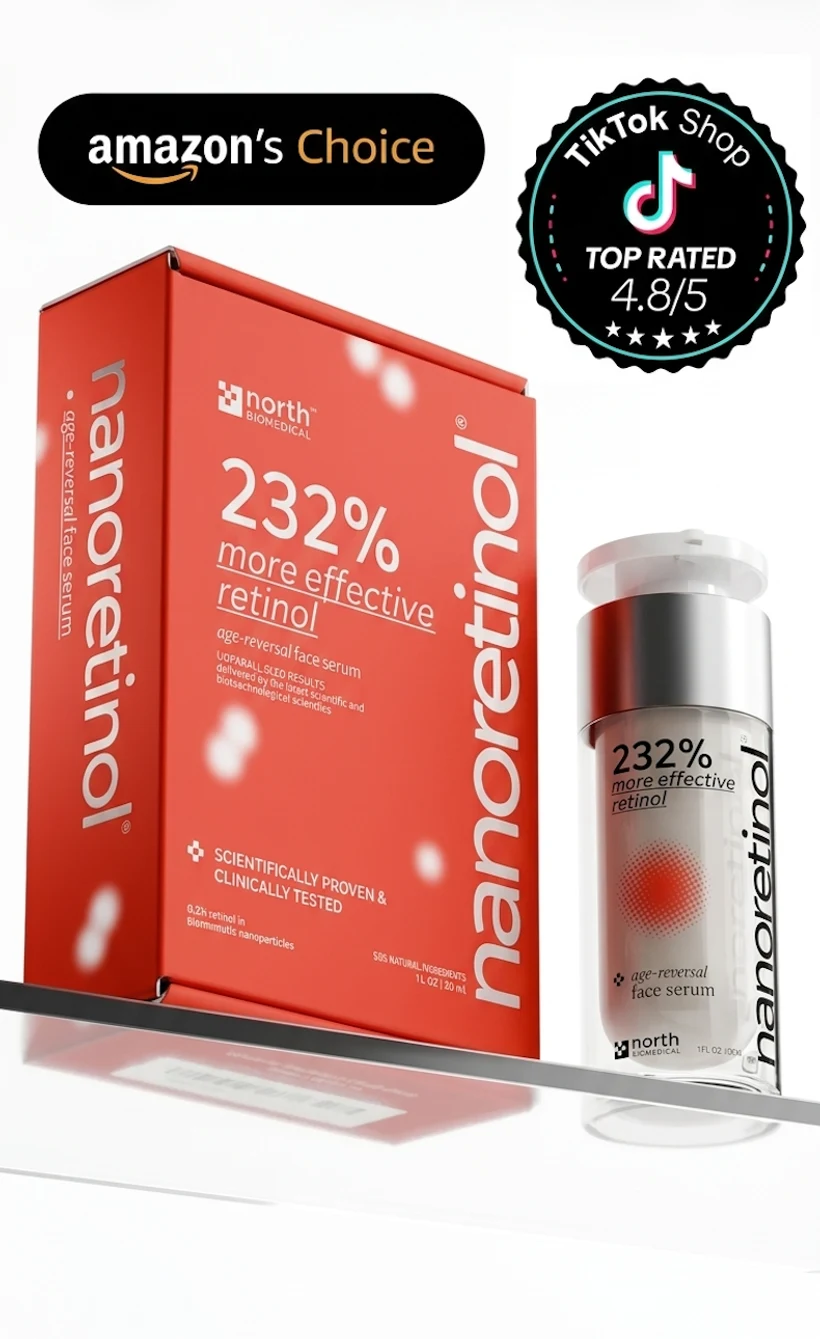
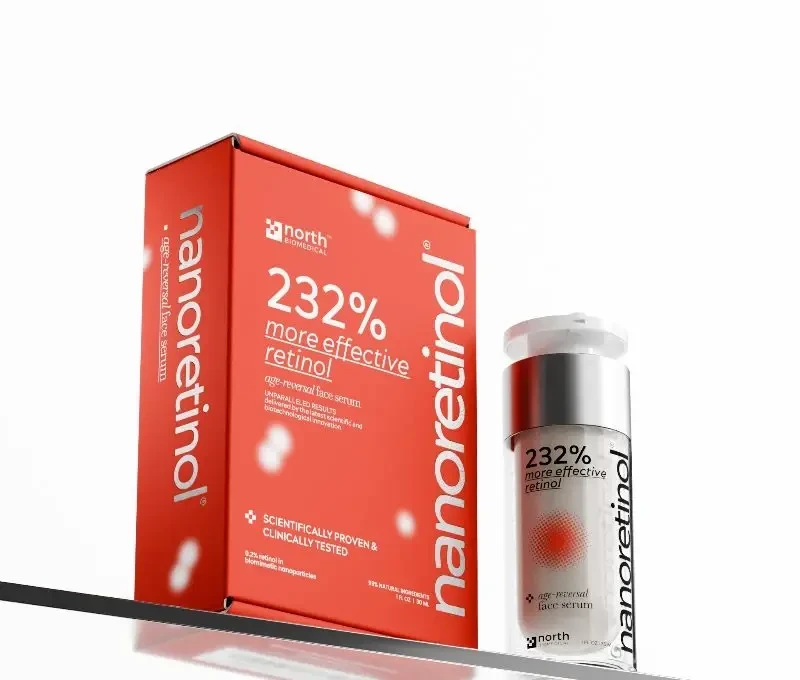
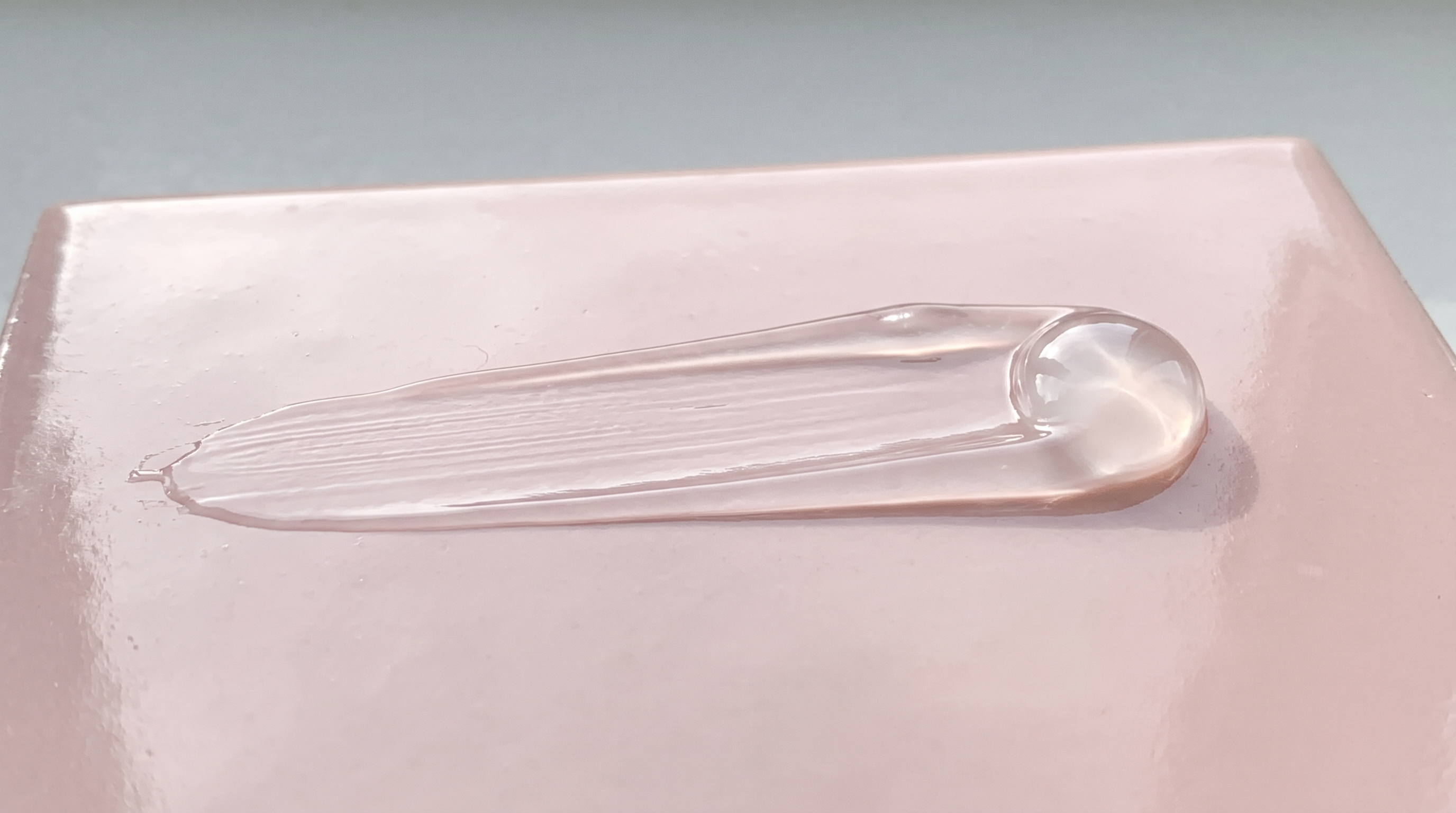
Nanoretinol takes a different route. It is a water-based, gel-like formula in which 0.2% retinol is encapsulated in biomimetic lipid nanoparticles. The skin recognizes them as “self,” so they pass the epithelial barrier without damaging it, and as they release their retinol, skin cells absorb the phospholipids in the particle membranes. It leaves a smooth matte finish without a silicone base. In North Biomedical’s study it was 232% more effective in collagen recovery than regular retinol, and in clinical use it increased skin elasticity by 56% in 56 days.
References
- Reddy MB, Looney RJ, Utell MJ, Plotzke KP, Andersen ME. “Modeling of human dermal absorption of octamethylcyclotetrasiloxane (D(4)) and decamethylcyclopentasiloxane (D(5)).” Toxicological Sciences. 2007;99(2):422-431. doi:10.1093/toxsci/kfm174
- Montemayor BP, Price BB, van Egmond RA. “Accounting for intended use application in characterizing the contributions of cyclopentasiloxane (D5) to aquatic loadings following personal care product use: antiperspirants, skin care products and hair care products.” Chemosphere. 2013;93(5):735-740. doi:10.1016/j.chemosphere.2012.10.043
- Johnson W Jr, Bergfeld WF, Belsito DV, et al. “Safety assessment of cyclomethicone, cyclotetrasiloxane, cyclopentasiloxane, cyclohexasiloxane, and cycloheptasiloxane.” International Journal of Toxicology. 2011;30(6 Suppl):149S-227S. doi:10.1177/1091581811428184
- Wang R, Moody RP, Koniecki D, Zhu J. “Low molecular weight cyclic volatile methylsiloxanes in cosmetic products sold in Canada: implication for dermal exposure.” Environment International. 2009;35(6):900-904. doi:10.1016/j.envint.2009.03.009
- Gobas FA, Xu S, Kozerski G, et al. “Fugacity and activity analysis of the bioaccumulation and environmental risks of decamethylcyclopentasiloxane (D5).” Environmental Toxicology and Chemistry. 2015;34(12):2723-2731. doi:10.1002/etc.2942