Dermaplaning: What It Actually Does for Your Skin and Whether It's Worth It
The exfoliation method that removes dead skin and peach fuzz — here's what dermatologists say about the benefits and risks
What Dermaplaning Actually Is
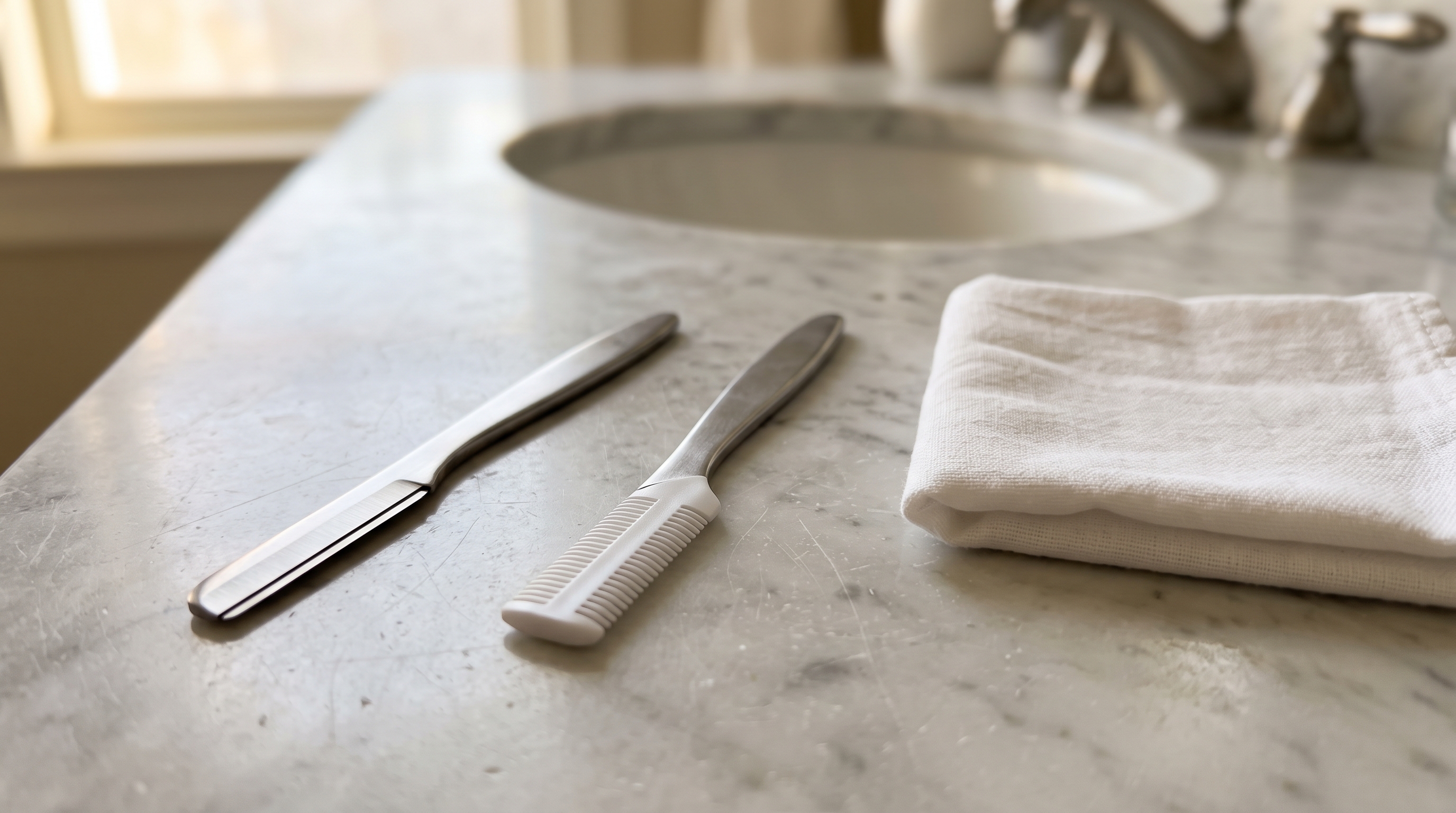
Dermaplaning is one of those treatments that sounds more dramatic than it is. A trained aesthetician or dermatologist takes a sterile surgical scalpel — held at a 45-degree angle — and gently scrapes the surface of your skin, removing the outermost layer of dead cells along with fine vellus hair (what most people call peach fuzz). The whole procedure takes about 20 to 30 minutes, it’s painless, and you walk out with noticeably smoother skin.
Unlike chemical peels that dissolve dead cells with acids, or microdermabrasion that uses abrasive particles, dermaplaning is purely mechanical. The blade physically removes what’s sitting on top of your skin without penetrating deeper layers. This makes it one of the gentlest forms of professional exfoliation available — which is partly why it’s become enormously popular, particularly among women over 40 who want results without the downtime of more aggressive treatments.
But popularity and efficacy aren’t the same thing. Let’s look at what dermaplaning can and can’t do, based on the available evidence.
The Immediate Benefits Are Real
The most honest thing to say about dermaplaning is that its immediate effects are dramatic and consistent, even though the long-term evidence base is thinner than for treatments like retinoids or chemical peels.
Smoother Skin Texture
By removing 15 to 25 layers of dead corneocytes — the flat, keratinized cells that make up the stratum corneum — dermaplaning reveals the fresher, smoother skin underneath. The tactile difference is immediate: your face feels like glass. This isn’t a gimmick; it’s basic skin biology. The stratum corneum naturally builds up over time, and after 40, the desquamation cycle (your skin’s natural shedding process) slows considerably [1]. Manual removal of that buildup creates an instant texture improvement.
Enhanced Product Absorption
This is where dermaplaning becomes genuinely useful from a skincare perspective. The stratum corneum is your skin’s primary barrier — it’s designed to keep things out. While that’s protective, it also means your expensive serums and active ingredients are fighting through a wall of dead cells to reach the living tissue where they actually work.
Removing that barrier through exfoliation has been shown to significantly increase transdermal penetration of topical agents [2]. The clinical implication is straightforward: any active ingredient you apply immediately after dermaplaning — whether it’s vitamin C, niacinamide, or retinol — will absorb more effectively and reach its target cells more efficiently.
Peach Fuzz Removal
Vellus hair — the fine, nearly colorless hair that covers most of your face — serves a thermoregulatory function, but it also traps oil, makeup, and dead skin cells. Removing it creates a smoother surface for makeup application and eliminates the slight shadow that vellus hair can cast, making skin appear brighter.
A trained aesthetician or dermatologist takes a sterile surgical scalpel — held at a 45-degree angle — and gently scrapes the surface of your skin, removing the outermost layer of dead cells along with fine vellus hair (what most people call peach fuzz).
The persistent myth that shaving or dermaplaning causes hair to grow back thicker is definitively false. Vellus hair regrowth after cutting maintains the same diameter, color, and texture as before — it only feels stubbier initially because the cut end is blunt rather than tapered [3]. Cleveland Clinic, the American Academy of Dermatology, and virtually every dermatology textbook confirm this.
What Dermaplaning Can’t Do
Here’s where expectations need managing:
It won’t reduce wrinkles. While some providers claim anti-aging benefits, dermaplaning only addresses the very surface of the skin. It doesn’t stimulate collagen synthesis, reach the dermis, or trigger the wound-healing cascade that treatments like microneedling or retinoids initiate. Fine lines may look less pronounced temporarily because smoother skin reflects light more evenly, but the wrinkles themselves are unchanged.
It won’t treat acne. In fact, dermaplaning on active inflammatory acne can spread bacteria and worsen breakouts. The treatment is contraindicated for inflamed lesions, cystic acne, and skin conditions like rosacea flares or active eczema [4].
It won’t permanently change your skin. Because the procedure only removes what’s already on the surface, results are temporary. Your stratum corneum regenerates in approximately two to four weeks, and vellus hair regrows within three to four weeks. Regular treatments (every three to four weeks) are needed to maintain results.
At-Home vs. Professional: What the Evidence Says
The at-home dermaplaning market has exploded, with single-blade razors marketed as DIY dermaplaning tools available for a few dollars at any drugstore. Can you get the same results at home?
Technically, yes — you’re removing the same dead cells and vellus hair. Practically, there are meaningful differences. Professional dermaplaning uses a No. 10 surgical scalpel held at a precise angle, performed by someone who can see and navigate around moles, raised lesions, and active breakouts. The margin for error is smaller than most people realize.
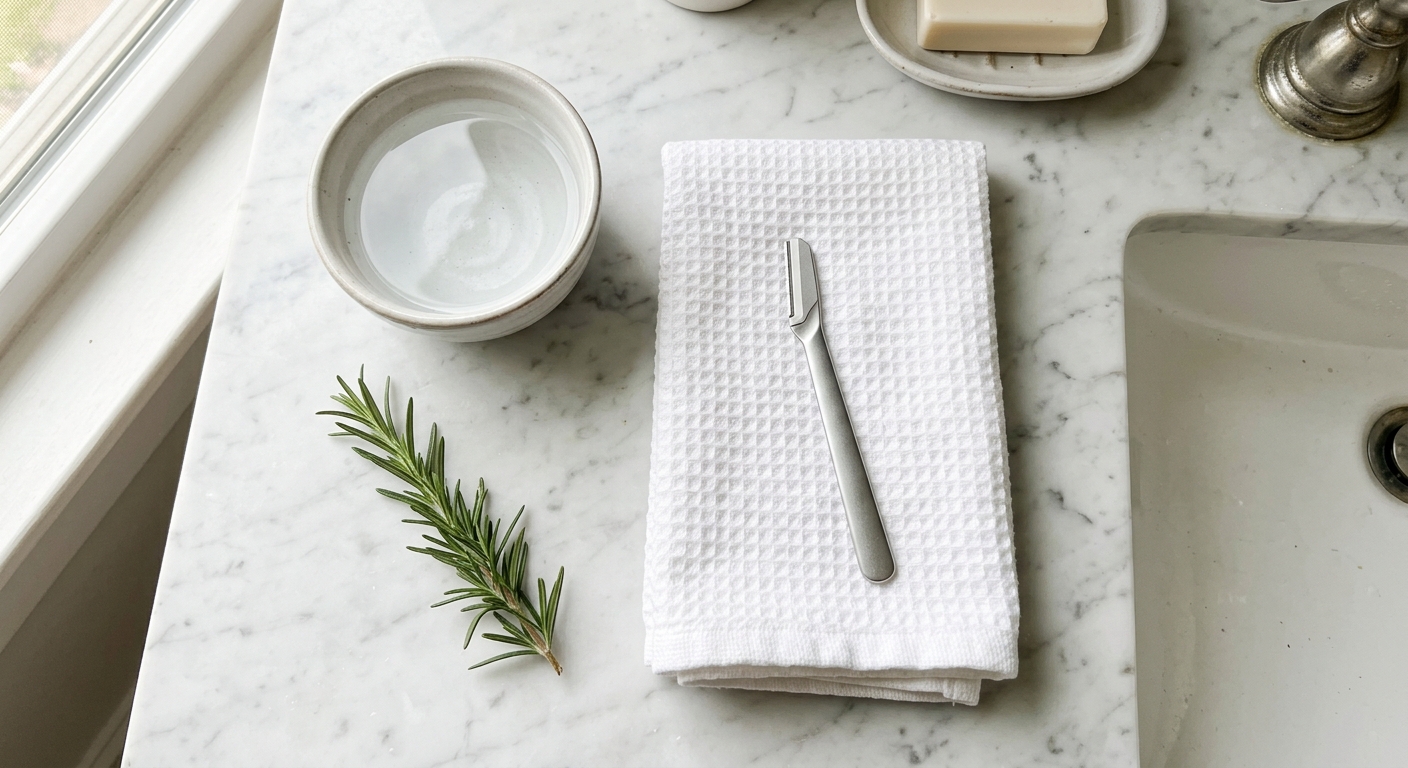
The primary risks of at-home dermaplaning include nicks and cuts (especially around the jawline and nose), infection from non-sterile blades, and post-inflammatory hyperpigmentation in darker skin tones [3]. If you’re going to do it at home, use a clean, single-use blade every time, shave in short downward strokes on taut skin, and never go over the same area more than twice.
Where Dermaplaning Fits in an Anti-Aging Routine
Dermaplaning works best as a preparation step — not a standalone anti-aging treatment, much like the exfoliation phase of an oxygen facial. Think of it as removing the roadblock so your active ingredients can actually reach their destination.
Think of it as removing the roadblock so your active ingredients can actually reach their destination.
Here’s how it integrates intelligently:
Before retinoids: Enhanced penetration means your retinol or retinal will be more effective. However, this also means more potential for irritation. If you’re using a conventional retinol, consider applying a thinner layer after dermaplaning. With encapsulated formulations like Nanoretinol® — which uses lipid nanoparticles to deliver retinol gradually rather than all at once — the enhanced absorption after dermaplaning is actually an advantage without the corresponding irritation spike. The nanoparticles control the release rate even when penetration is increased.
Before chemical peels: Many aestheticians combine dermaplaning with a light chemical peel. The rationale is sound — removing dead cells first allows the acid to penetrate more evenly, which can improve results while reducing the concentration needed.
Before LED therapy: Light-based treatments work by photons reaching target chromophores in the skin. A smoother, debris-free surface allows more consistent light penetration.
Not before aggressive treatments: Avoid dermaplaning immediately before deep peels, ablative laser treatments, or any procedure that creates controlled wounds. A freshly dermabraded surface is more vulnerable.
Who Should Skip It
Dermaplaning isn’t for everyone. Avoid it if you have:
- Active inflammatory acne or pustules — risk of spreading bacteria
- Rosacea in an active flare — mechanical irritation can trigger worsening
- Cold sores (herpes simplex) — the blade can spread the virus across the face
- Blood-thinning medications — increased bleeding risk from any nicks
- Recent sunburn or compromised skin barrier — wait until fully healed
For everyone else, particularly women over 40 looking to maximize the effectiveness of their existing skincare routine, dermaplaning offers genuine value as a maintenance treatment — not because it’s transformative on its own, but because it helps everything else work better.
The Bottom Line on Dermaplaning
Dermaplaning is a legitimate cosmetic procedure with real, immediate benefits: smoother texture, better product absorption, and effective peach fuzz removal. What it isn’t is a wrinkle treatment, an acne solution, or a substitute for evidence-based active ingredients.
The smartest approach is to treat it as an enhancer. Get a professional treatment every three to four weeks (or learn proper at-home technique), and pair it with ingredients that actually drive lasting skin changes — retinoids for collagen, antioxidants for protection, and sunscreen for prevention.
When exfoliation clears the path and active ingredients do the heavy lifting, you get the best of both worlds. If you are doing this at home rather than in a treatment room, the guard and the edge quality matter more than the price, which is worth reading about before choosing a dermaplaning tool.
References
-
Milstone LM. “Epidermal desquamation.” Journal of Dermatological Science. 2004;36(3):131-140. doi:10.1016/j.jdermsci.2004.05.004
-
Haque T, Talukder MMU. “Chemical Enhancer: A Simplistic Way to Modulate Barrier Function of the Stratum Corneum.” Advanced Pharmaceutical Bulletin. 2018;8(2):169-179. doi:10.15171/apb.2018.021
-
Kang CN, Shah M, Lynde C, Fleming P. “Hair Removal Practices: A Literature Review.” Skin Therapy Letter. 2021;26(5):6-11. PMID: 34524781
-
Cleveland Clinic. “Dermaplaning: What It Is, Benefits & Side Effects.” Medical Review. 2023. Available at: https://my.clevelandclinic.org/health/treatments/22680-dermaplaning
-
Dong J, et al. “Effects of Mechanical Exfoliation on Skin Barrier Recovery and Subsequent Cosmetic Product Absorption.” Journal of Cosmetic Dermatology. 2019;18(5):1250-1258. doi:10.1111/jocd.12780