
Glyceryl Stearate in Skincare: What It Does and Is It Safe?
The quiet emulsifier behind almost every cream: how it holds oil and water together, what the safety reviews found, and why the formula around it matters more
Turn over almost any face cream, body lotion or hand cream and you will find glyceryl stearate somewhere in the middle of the ingredient list. It rarely gets a mention on the front of the box, yet without it, many creams would separate into a greasy layer floating on top of a watery one.
This guide explains what glyceryl stearate is, how it gives creams their texture, what the safety reviews concluded, and why the rest of the formula tells you far more than this one ingredient does.
What Glyceryl Stearate Is
Glyceryl stearate, also called glyceryl monostearate, is made by joining glycerin, the familiar humectant, to stearic acid, a fatty acid found in plant oils and animal fats. Most cosmetic grades are made from vegetable sources such as palm or soybean oil.
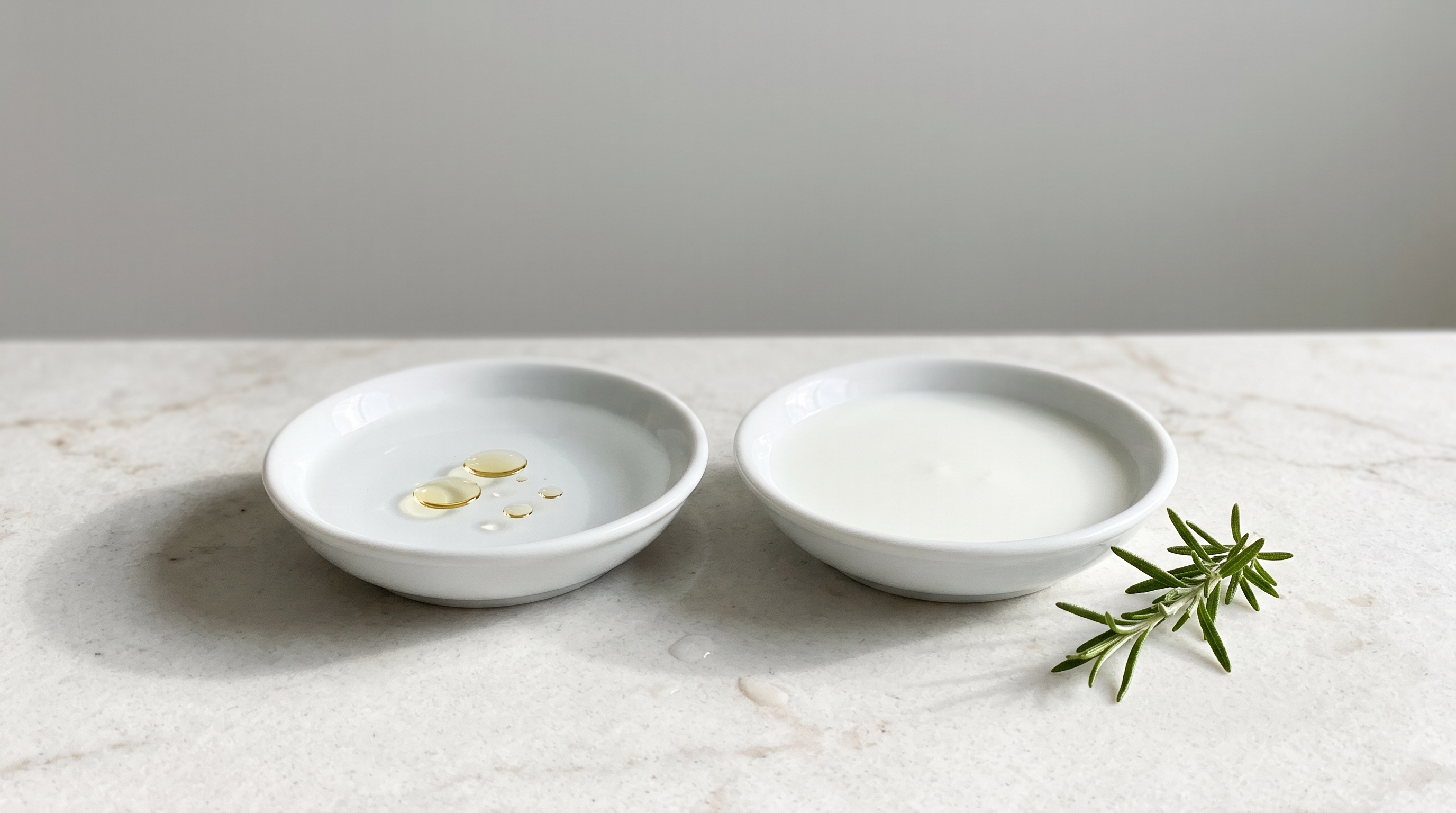
The result is a waxy, off-white solid with a split personality. The glycerin end of the molecule is attracted to water, while the long fatty tail is attracted to oil. Ingredients built this way are called emulsifiers, because they can sit at the boundary between oil and water and keep the two mixed.
Commercial glyceryl stearate is not a single pure molecule. It is a blend of mono-, di- and triglycerides, with the monoester making up most of it [1]. The same family of ingredients is used widely in food, where it appears as the additive E 471 in bread, ice cream and margarine.
Plain Versus SE: What the Letters Mean
You will often see “glyceryl stearate SE” on labels. SE stands for self-emulsifying. This version contains a small amount of a soap, such as sodium or potassium stearate, that makes it a stronger emulsifier on its own [2].
Your skin barely notices glyceryl stearate as an allergen, with only a handful of case reports published in more than 60 years of everyday use.
Plain glyceryl stearate is a weak emulsifier and is usually paired with a partner, such as PEG-100 stearate, polysorbates or cetyl alcohol. The SE version can carry more of the load by itself, which is why it shows up in simpler formulas. Because it contains soap, it is slightly more alkaline, so formulators balance the pH elsewhere in the product.
How It Builds Cream Texture
An emulsifier does more than stop separation. In a cream, glyceryl stearate teams up with fatty alcohols such as cetyl alcohol and with water to form layered sheets called a lamellar gel network.
Picture a stack of extremely thin pastry layers, with water trapped between each layer. That stacked network fills the space between oil droplets and gives a cream its body, its soft peak in the jar and its cushion as you rub it in. Studies of semisolid creams have shown that this swollen gel network is what turns a runny lotion into a thick cream, and that adding the wrong polymer can collapse it into a thin, unstable product [3].
This is one reason the difference between a lotion and a cream is about more than oil content. Our guide to lotion vs cream explains how the ratio of water, oil and structuring ingredients changes the feel.
Is Glyceryl Stearate Safe?
The safety record is about as clean as cosmetic ingredients get. Your skin barely notices glyceryl stearate as an allergen, with only a handful of case reports published in more than 60 years of everyday use.
The Cosmetic Ingredient Review expert panel assessed glyceryl stearate and glyceryl stearate SE in 1982 and concluded they were safe as used in cosmetics [2]. A later review of the wider glyceryl monoester family found little acute or long-term toxicity in animals and noted that the skin breaks these molecules down into glycerin and fatty acids, both of which the body already uses [1]. The panel has continued to re-review related glyceryl monoesters and has kept the same conclusion [4].
Your skin can end up with a slightly weaker barrier after 7 weeks of the wrong cream than it had with no cream at all.
Food regulators reached the same place. When the European Food Safety Authority re-evaluated mono- and diglycerides of fatty acids in 2017, it found no evidence of carcinogenic, genotoxic or reproductive effects and concluded that no numerical acceptable daily intake was needed [5].
Allergy is rare. A 1988 report from the Netherlands described cosmetic allergy to stearic acid and glyceryl stearate [6], and a few other case reports exist. Given how common the ingredient is, that is a very small number. A 2017 survey of 178 facial wipes found glyceryl stearate in 31.5% of them, so a great many people use it every day without trouble [7].
Does It Clog Pores?
Some online comedogenic charts give glyceryl stearate a low-to-moderate pore-clogging score. Those charts come from rabbit-ear tests of raw ingredients at full strength, which exaggerate the risk for human skin. Glyceryl stearate typically makes up only a few percent of a finished cream, and how comedogenic a product is depends on the whole formula, not one line on the label. If you are acne-prone, judge the product itself, ideally one labelled non-comedogenic after testing on human skin.
Why the Whole Formula Matters
Your skin can end up with a slightly weaker barrier after 7 weeks of the wrong cream than it had with no cream at all.
That finding comes from a randomized trial at Uppsala University. Seventy-eight volunteers applied one of five test products to one forearm for seven weeks. Three simplified creams and a lipid-free gel increased water loss through the skin and made it more reactive to an irritant, while a fuller cream containing 5% urea strengthened the barrier [8]. Every product was non-irritating in short tests, so the difference only appeared with long-term use.
Moisturizer researchers have long noted that ingredients once considered inactive helpers, emulsifiers included, can affect the skin more than expected, and that some emulsifiers may weaken the barrier [9]. That is not a mark against glyceryl stearate in particular, which is one of the milder options. It is a reminder that a moisturizer works as a system. The oils, humectants and repair lipids around the emulsifier, the kind of combination our emollient cream guide covers, matter more than any single helper ingredient. Solubilizers such as polysorbate 20 raise the same question in lighter products.
From Creams to Nanoparticles
Glyceryl stearate has a second life in drug delivery. Its solid, skin-friendly fat makes it a popular building block for solid lipid nanoparticles, tiny fat spheres that carry fragile actives. Researchers have used glyceryl monostearate nanoparticles to encapsulate tretinoin, reaching particle sizes of about 175 nanometers [10]. In another study, solid lipid nanoparticles of isotretinoin protected the drug from light and were significantly less irritating than a commercial gel [11].
The lesson is that how a retinoid is carried changes how skin tolerates it. Many conventional retinol formulas rely on chemicals and petroleum derivatives that loosen the barrier’s lipids to push retinol through, which is a large part of why they cause redness and peeling.
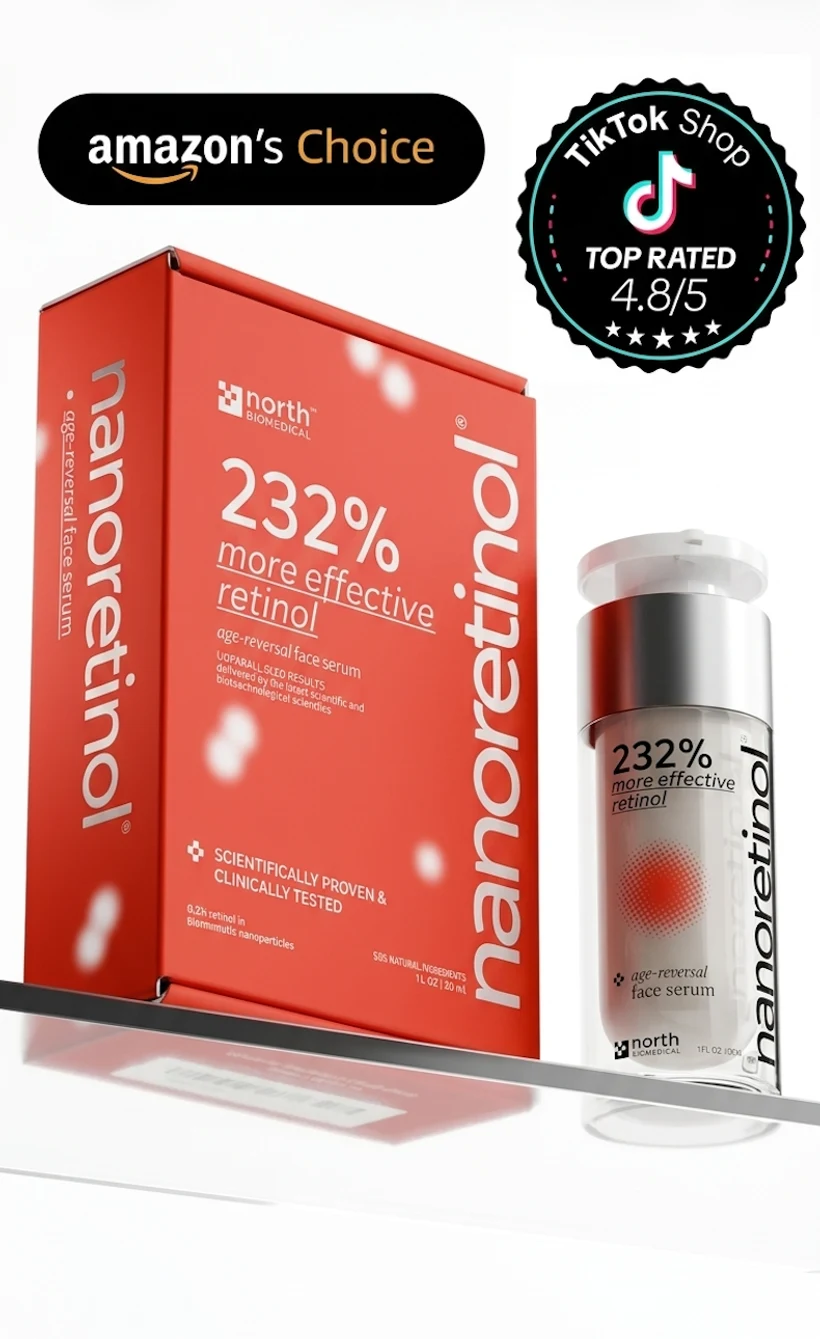
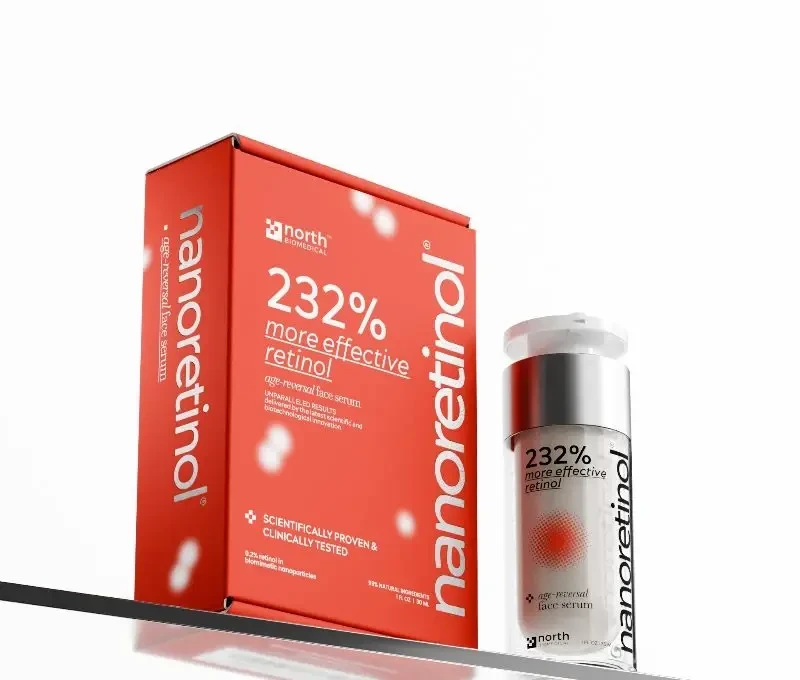
Nanoretinol takes the nanoparticle route. Its 0.2% retinol sits inside biomimetic lipid nanoparticles that the skin recognizes as its own, so the retinol crosses the barrier without damaging it. It comes in a light, water-based gel made with 99% natural ingredients rather than a heavy cream emulsion. In North Biomedical’s study, Nanoretinol was 232% more effective in collagen recovery and 73% more effective in elastin recovery than conventional retinol, with a 61% increase in firmness and a 56% increase in elasticity after 56 days of use [12]. It is applied once daily at night, with sunscreen the next morning.
What to Take Away
Glyceryl stearate is a gentle, food-grade emulsifier that gives creams their body and rarely causes problems. You do not need to avoid it, and you will not find a cream that works better just because it leaves it out. Look instead at the full formula: what it carries, how it supports your barrier over weeks of use, and how your skin actually responds.
References
- Cosmetic Ingredient Review. “Final report of the amended safety assessment of Glyceryl Laurate, Glyceryl Laurate SE, Glyceryl Laurate/Oleate, Glyceryl Adipate, Glyceryl Alginate, and related glyceryl monoesters.” International Journal of Toxicology. 2004;23 Suppl 2:55-94. doi:10.1080/10915810490499064
- Cosmetic Ingredient Review Expert Panel. “Final Report on the Safety Assessment of Glyceryl Stearate and Glyceryl Stearate/SE.” Journal of the American College of Toxicology. 1982;1(4):169-192. doi:10.3109/10915818209021268
- Ribeiro HM, Morais JA, Eccleston GM. “Structure and rheology of semisolid o/w creams containing cetyl alcohol/non-ionic surfactant mixed emulsifier and different polymers.” International Journal of Cosmetic Science. 2004;26(2):47-59. doi:10.1111/j.0412-5463.2004.00190.x
- Nguyen T, Bergfeld WF, Belsito DV, et al. “Re-Review Summary of Glyceryl Monoesters: Glyceryl Isostearates and Glyceryl Stearate/Acetate.” International Journal of Toxicology. 2026. doi:10.1177/10915818261484910
- EFSA Panel on Food Additives and Nutrient Sources added to Food (ANS), Younes M, Aggett P, et al. “Re-evaluation of mono- and di-glycerides of fatty acids (E 471) as food additives.” EFSA Journal. 2017;15(11):e05045. doi:10.2903/j.efsa.2017.5045
- de Groot AC, van der Meeren HL, Weyland JW. “Cosmetic allergy from stearic acid and glyceryl stearate.” Contact Dermatitis. 1988;19(1):77-78. doi:10.1111/j.1600-0536.1988.tb02885.x
- Aschenbeck KA, Warshaw EM. “Allergenic Ingredients in Facial Wet Wipes.” Dermatitis. 2017;28(6):353-359. doi:10.1097/DER.0000000000000268
- Buraczewska I, Berne B, Lindberg M, Törmä H, Lodén M. “Changes in skin barrier function following long-term treatment with moisturizers, a randomized controlled trial.” British Journal of Dermatology. 2007;156(3):492-498. doi:10.1111/j.1365-2133.2006.07685.x
- Lodén M. “Role of topical emollients and moisturizers in the treatment of dry skin barrier disorders.” American Journal of Clinical Dermatology. 2003;4(11):771-788. doi:10.2165/00128071-200304110-00005
- Shah KA, Joshi MD, Patravale VB. “Biocompatible microemulsions for fabrication of glyceryl monostearate solid lipid nanoparticles (SLN) of tretinoin.” Journal of Biomedical Nanotechnology. 2009;5(4):396-400. doi:10.1166/jbn.2009.1048
- Shiva G, Somaye M, Reza JM. “Improved photostability, reduced skin permeation and irritation of isotretinoin by solid lipid nanoparticles.” Acta Pharmaceutica. 2012;62(4):547-562. doi:10.2478/v10007-012-0032-z
- North Biomedical LLC. “Nanoretinol vs. Conventional Retinol: Efficacy in Collagen and Elastin Recovery.” Clinical Study Summary, 2024. Study summary