Lotion vs Cream: Which One Your Skin Actually Needs
The real difference is the ratio of oil to water. What that changes for dry, oily and aging skin, what a 550-person trial found when it compared them head to head, and where gels and ointments fit
Stand in any skincare aisle and the same product often comes in two versions: a lotion in a pump bottle and a cream in a jar or tube. The labels promise the same benefits, the ingredients look nearly identical, and the cream usually costs a little more. So which one should you buy?
The honest answer is that neither is better in general. They are the same idea, a mix of water and oil, made in different proportions. That ratio changes how the product feels, how long it lasts on your skin and where it works best. Once you know what the ratio does, the choice gets easy.
The real difference: oil to water
Almost every moisturizer is an emulsion, tiny droplets of oil suspended in water or water suspended in oil, held together by an emulsifier. A review of moisturizer and drug vehicles lays out the main families by how much of each they contain [1]:
- Lotions are mostly water with a smaller share of oil. They are thin enough to pour or pump, spread fast over large areas and sink in quickly.
- Creams carry noticeably more oil and less water. They are thick enough to hold their shape, take a few seconds longer to rub in and leave a soft film behind.
- Gels are water thickened with a polymer and contain little or no oil. They feel cool and weightless and dry down almost completely.
- Ointments are mostly oil or petrolatum with little or no water. They sit on top of the skin as a greasy, protective layer.
More water means a lighter feel and faster absorption. More oil means more of a seal against water loss. That is really the whole story; everything else follows from it.
Your skin responds to the ratio of oil to water in a moisturizer far more than to whether the label says lotion or cream.
Your skin responds to the ratio of oil to water in a moisturizer far more than to whether the label says lotion or cream.
What each texture does for dryness
Moisturizers work in three ways. Humectants such as glycerin pull water into the outer layer of skin. Emollients such as plant oils and fatty alcohols fill the gaps between dry, curled skin cells so the surface feels smooth. Occlusives such as petrolatum and dimethicone slow the water evaporating out [2]. A lotion can contain all three, but it has less room for the heavy occlusives, so its seal fades sooner.
That is why creams and ointments tend to feel more protective on very dry skin. Petrolatum is the classic example. A study of how it works found it does not just sit on top as a plastic film; it seeps between the outer skin cells and actually speeds barrier repair after damage [3]. Our guide to ointment for dry skin covers when that heavier option is worth the shine.
What happened when they were compared head to head
Most of what people believe about lotions and creams comes from habit rather than trials. The best direct comparison is the Best Emollients for Eczema study, which randomly assigned 550 children with eczema to a lotion, cream, gel or ointment and followed them for 16 weeks [4].
The result surprised a lot of dermatologists: there was no difference in eczema severity between the four types. Side effects were similar overall, although stinging was less common with ointments, at 9%, than with lotions at 20%, creams at 17% or gels at 19%. The authors’ conclusion was simple. People need to be able to choose the texture they will actually use, because the best moisturizer is the one that goes on every day.
Your skin gains more from a lotion you apply daily than a cream you skip, and a 16-week trial of 550 children found no texture worked better.
That trial was in children with eczema, so it does not settle every question for adult or aging skin. But it does knock down the idea that thicker always means better.
Your skin gains more from a lotion you apply daily than a cream you skip, and a 16-week trial of 550 children found no texture worked better.
Thicker is not always kinder
The ingredients inside the base matter as much as its thickness. A review of moisturizers and the skin barrier notes that some formulas improve barrier function while others, despite relieving the feeling of dryness, leave water loss high or even make it worse [5]. Strong emulsifiers, fragrance and some preservatives can be the difference. A cheap, heavy cream is not automatically gentler than a well-built lotion.
Another common belief is that any moisturizer will do. A dermatologist’s review of moisturizer myths makes the opposite point: many lower-quality products were never designed to repair dry skin in a meaningful way, and ingredients such as ceramides, glycerin and natural moisturizing factors are what separate a functional moisturizer from a pleasant-smelling one [6].
How to choose: a practical guide
Choose a lotion when:
- You are covering large areas such as legs, arms and back
- Your skin is normal, combination or oily
- It is warm and humid outside
- You need to get dressed quickly afterward
Choose a cream when:
- Your skin is dry, tight or flaky
- You are treating hands, elbows, knees or feet
- It is winter, when cold, dry air weakens the barrier [7]
- You want something to apply at night that keeps working while you sleep
Choose a gel or a gel-cream when: your face is oily or breakout-prone, or you want a light layer under makeup. Our guide to gel moisturizer compares the options.
Choose an ointment when: skin is cracked, chapped or raw, and only on small areas or overnight.
Many people end up using two: a lotion for the body in the morning and a cream on the face, hands or shins at night. For very dry legs and arms, a body butter sits even further toward the oily end than a cream. And if a product calls itself an emollient, our guide to emollient cream explains what that label does and does not mean.
Apply to damp skin. Whatever texture you choose, put it on within a few minutes of washing while your skin is still slightly damp, so it locks in water that is already there.
Lotion vs cream for aging skin
After 50, skin produces less oil and repairs its barrier more slowly, so most people drift toward creams, especially on the face, neck and hands. That is reasonable for comfort. But the base does more than moisturize: it also controls how well any active ingredient inside it reaches the skin, a point the vehicle review makes directly [1].
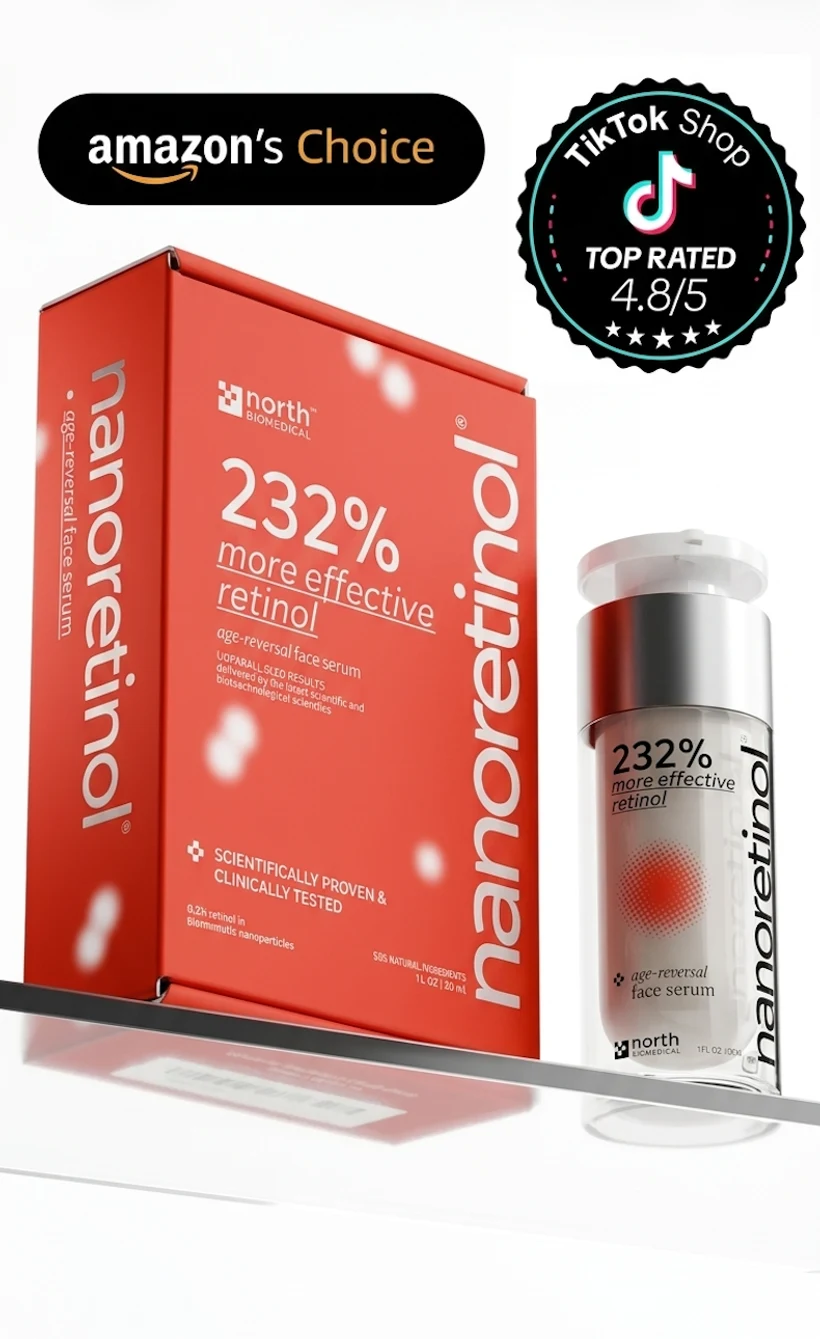
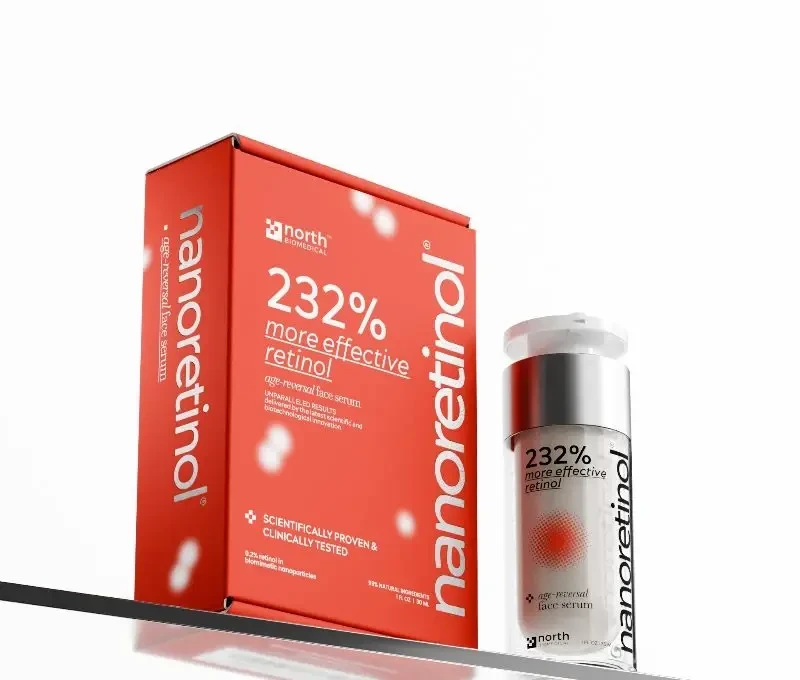
That matters most for retinol. A heavy cream can feel protective, but conventional retinol creams often rely on solvents and penetration enhancers that loosen the skin’s lipid barrier to push retinol through, which is where the redness and peeling come from. Nanoretinol takes a different route. It is a light, water-based gel that delivers 0.2% retinol inside biomimetic lipid nanoparticles, which pass the barrier without breaking it down, so a lower concentration reaches the cells more efficiently than conventional formulas at higher strengths. In North Biomedical’s study it was 232% more effective in collagen recovery and 73% more effective in elastin recovery than conventional retinol, with a 56% increase in skin elasticity after 56 days [8]. Use it at night first, then follow with whichever cream or lotion your skin prefers.
References
- Barnes TM, Mijaljica D, Townley JP, Spada F, Harrison IP. “Vehicles for Drug Delivery and Cosmetic Moisturizers: Review and Comparison.” Pharmaceutics. 2021;13(12):2012. doi:10.3390/pharmaceutics13122012
- Purnamawati S, Indrastuti N, Danarti R, Saefudin T. “The Role of Moisturizers in Addressing Various Kinds of Dermatitis: A Review.” Clinical Medicine & Research. 2017;15(3-4):75-87. doi:10.3121/cmr.2017.1363
- Ghadially R, Halkier-Sorensen L, Elias PM. “Effects of petrolatum on stratum corneum structure and function.” Journal of the American Academy of Dermatology. 1992;26(3 Pt 2):387-396. PubMed 1564142
- Ridd MJ, Santer M, MacNeill SJ, et al. “Effectiveness and safety of lotion, cream, gel, and ointment emollients for childhood eczema: a pragmatic, randomised, phase 4, superiority trial.” The Lancet Child & Adolescent Health. 2022;6(8):522-532. PubMed 35617974
- Lodén M. “Effect of moisturizers on epidermal barrier function.” Clinics in Dermatology. 2012;30(3):286-296. doi:10.1016/j.clindermatol.2011.08.015
- Draelos ZD. “Modern moisturizer myths, misconceptions, and truths.” Cutis. 2013;91(6):308-314. PubMed 23837155
- Engebretsen KA, Johansen JD, Kezic S, Linneberg A, Thyssen JP. “The effect of environmental humidity and temperature on skin barrier function and dermatitis.” Journal of the European Academy of Dermatology and Venereology. 2016;30(2):223-249. doi:10.1111/jdv.13301
- North Biomedical LLC. “Nanoretinol vs. Conventional Retinol: Efficacy in Collagen and Elastin Recovery.” Clinical Study Summary, 2024. Study summary