Cetyl Alcohol in Skincare: The 'Alcohol' That Does Not Dry Your Skin
Why a fatty alcohol on your moisturizer label is nothing like the alcohol in a toner, what it actually does in a formula, and who should still watch for it
Turn over almost any moisturizer, conditioner or body lotion and you will find it a few lines down the ingredient list: cetyl alcohol. For anyone who has been told to avoid alcohol in skincare, that can look alarming. Alcohol is supposed to dry out the skin, sting on contact and strip the barrier.
Cetyl alcohol does none of those things. It belongs to a different family of chemicals that happen to share the word “alcohol” with the stuff in hand sanitizer, and in skincare it does almost the opposite job. Here is what it is, what it does, and the small group of people who should still pay attention to it.
Two Very Different Kinds of Alcohol
In chemistry, “alcohol” describes a molecule with a particular hydroxyl group attached to a carbon chain. What matters for your skin is how long that chain is.
The alcohols that can dry and irritate skin are short. Ethanol, listed as alcohol, alcohol denat. or SD alcohol, has two carbons. Isopropyl alcohol has three. These small molecules evaporate quickly, dissolve oils and can loosen the lipids that hold the outer layer of skin together. That is why they feel cooling and tightening and why ethanol is used as a penetration enhancer: it helps other substances cross the skin more easily, and at high strength it can irritate, especially in people who process alcohol poorly [1].
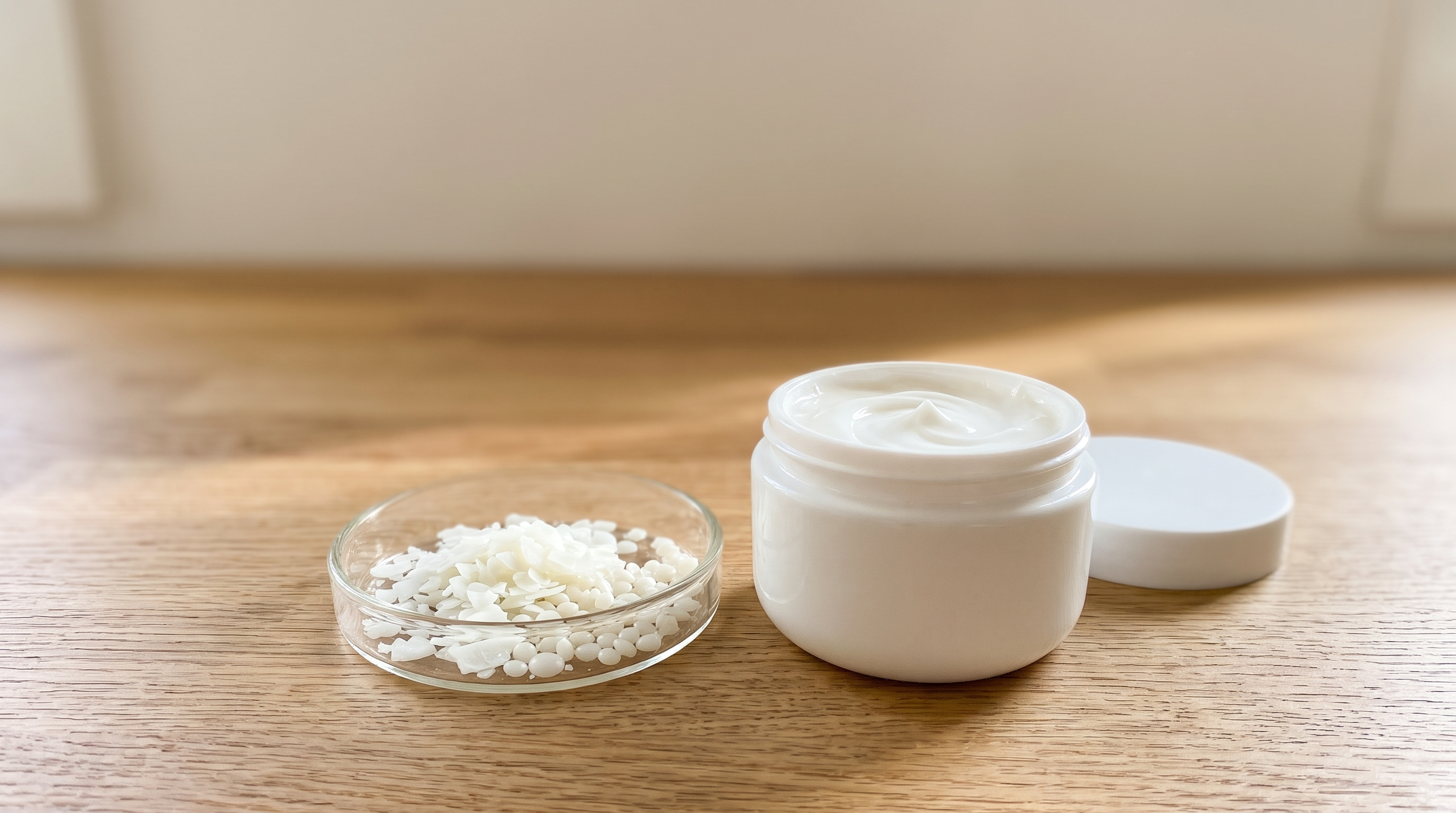
Cetyl alcohol has a chain of sixteen carbons. Your skin can treat cetyl alcohol as a softener rather than a solvent, because its 16-carbon chain is 8 times longer than the 2 carbons in ethanol. At room temperature it is a white, waxy solid, closer in feel to candle wax than to a liquid. It does not evaporate, does not dissolve your skin’s lipids and leaves a soft, smooth film. Its close relatives, stearyl alcohol (eighteen carbons) and cetearyl alcohol (a blend of the two), behave the same way. Together they are known as fatty alcohols.
Even short-chain alcohols are less harsh than their reputation suggests. Dermatologists who study hand hygiene have found that alcohol rubs irritate skin far less than repeated washing with soap and water [2]. But a toner built on a high percentage of alcohol denat. is still a different product from a cream thickened with a few percent of cetyl alcohol, and the two should never be lumped together. If you are curious about the drinking kind, our piece on alcohol’s effects on skin covers what a night out does to your face.
Your skin can treat cetyl alcohol as a softener rather than a solvent, because its 16-carbon chain is 8 times longer than the 2 carbons in ethanol.
What Cetyl Alcohol Does in a Formula
Cetyl alcohol rarely works alone. In most products it plays three or four roles at once.
- Emollient. It fills the tiny gaps between flaking skin cells and makes the surface feel smoother and softer, the same job described in our guide to emollient cream.
- Thickener. A few percent turns a runny lotion into a cream that sits on a fingertip.
- Emulsion stabilizer. Creams are mixtures of oil and water that want to separate. Fatty alcohols help keep them blended for the life of the product.
- Texture builder. Paired with an emulsifier and water, cetyl alcohol forms what chemists call a lamellar gel network: stacked, swollen layers of fat and water that give a cream its body. Lab studies of creams made with cetyl alcohol show this network is what holds the structure together, and changing other ingredients can collapse it into a runnier product [3].
That last role is why cetyl alcohol is hard to replace. It is a large part of why a good cream feels rich without feeling greasy, and why it stays the same from the first scoop to the last. Silicones such as dimethicone do some of the same sensory work, and many formulas use both.
Moisturizers in general work by combining these kinds of ingredients: emollients that smooth, humectants that draw in water and occlusives that slow its escape [4]. Cetyl alcohol sits mostly in the emollient group, with a mild occlusive effect.
Is Cetyl Alcohol Safe for Sensitive Skin?
For nearly everyone, yes. Fatty alcohols have been used in creams for decades and are among the most widely tolerated ingredients in skincare.
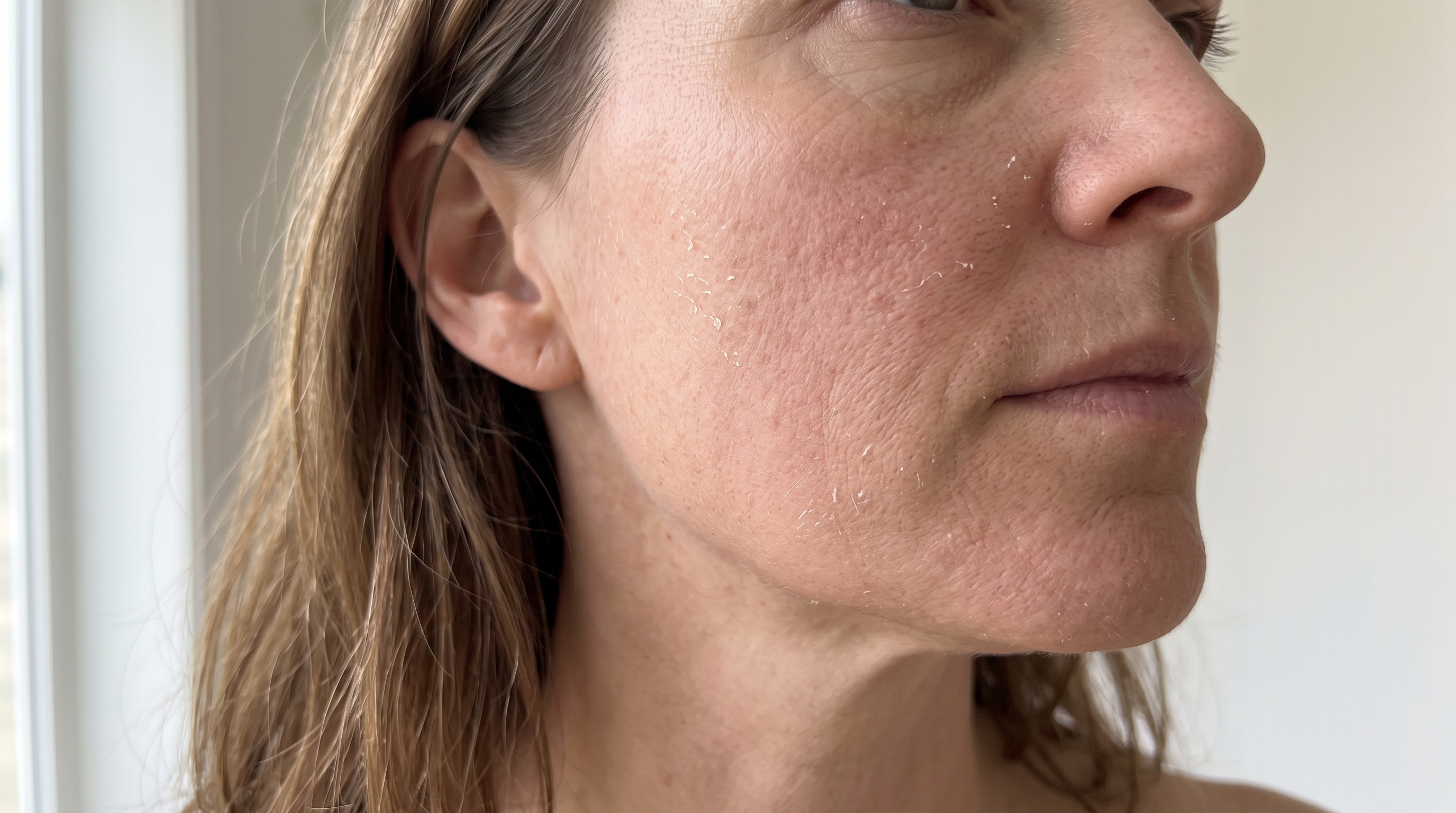
Your skin can sting for a few seconds when a cream touches a crack, but that burning is irritation, not an allergy, and it fades far faster than a true reaction.
Allergy is possible but uncommon. Case reports describe people who reacted to cetyl alcohol [5], and a Japanese clinic reported seven patients over six years whose reactions to medicated creams were traced to stearyl alcohol; two of the three who were also tested with cetyl alcohol reacted to it [6]. Those cases involved medicated creams used on skin that was already irritated, such as itchy rashes and fungal infections, which makes sensitization more likely.
Your skin can sting for a few seconds when a cream touches a crack, but that burning is irritation, not an allergy, and it fades far faster than a true reaction. If a product keeps causing a red, itchy rash where you apply it, a dermatologist can patch test you for fatty alcohols along with the other usual suspects.
Does Cetyl Alcohol Clog Pores?
Some older comedogenicity lists rank fatty alcohols as mildly pore-clogging. Those lists came largely from tests on rabbit ears, which are far more prone to forming blackheads than human faces, and they tested raw ingredients at full strength rather than in finished products.
When researchers tested finished cosmetics directly on the backs of people prone to blackheads, products containing ingredients from those lists were often not comedogenic at all [7]. What matters is the whole formula and how much of each ingredient it contains. If you break out easily, judge the finished product rather than one name on the label, and look for brands that test finished products on human skin, as explained in our guide to non-comedogenic moisturizers.
How to Read It on a Label
- Cetyl, stearyl, cetearyl, behenyl or myristyl alcohol are fatty alcohols. They condition and soften.
- Alcohol, alcohol denat., SD alcohol, ethanol and isopropyl alcohol are the short, drying ones. They are fine low on a list or in a fast-drying gel, but be cautious when one sits near the top of a toner or serum you use on dry or sensitive skin.
- Benzyl alcohol and phenoxyethanol are mostly used as preservatives in small amounts. They are a different story again.
An “alcohol-free” claim usually means free of ethanol. Most alcohol-free creams still contain cetyl or cetearyl alcohol, and that is not a contradiction.
Why Formulation Matters as Much as the Active
The cetyl alcohol story is really a story about formulation: the same word on a label can mean an ingredient that harms the barrier or one that protects it. That distinction matters most with retinol. Many conventional retinol products use solvents and petroleum derivatives that loosen the skin barrier to push the retinol through, which is a big part of why retinol earns its reputation for redness and peeling.
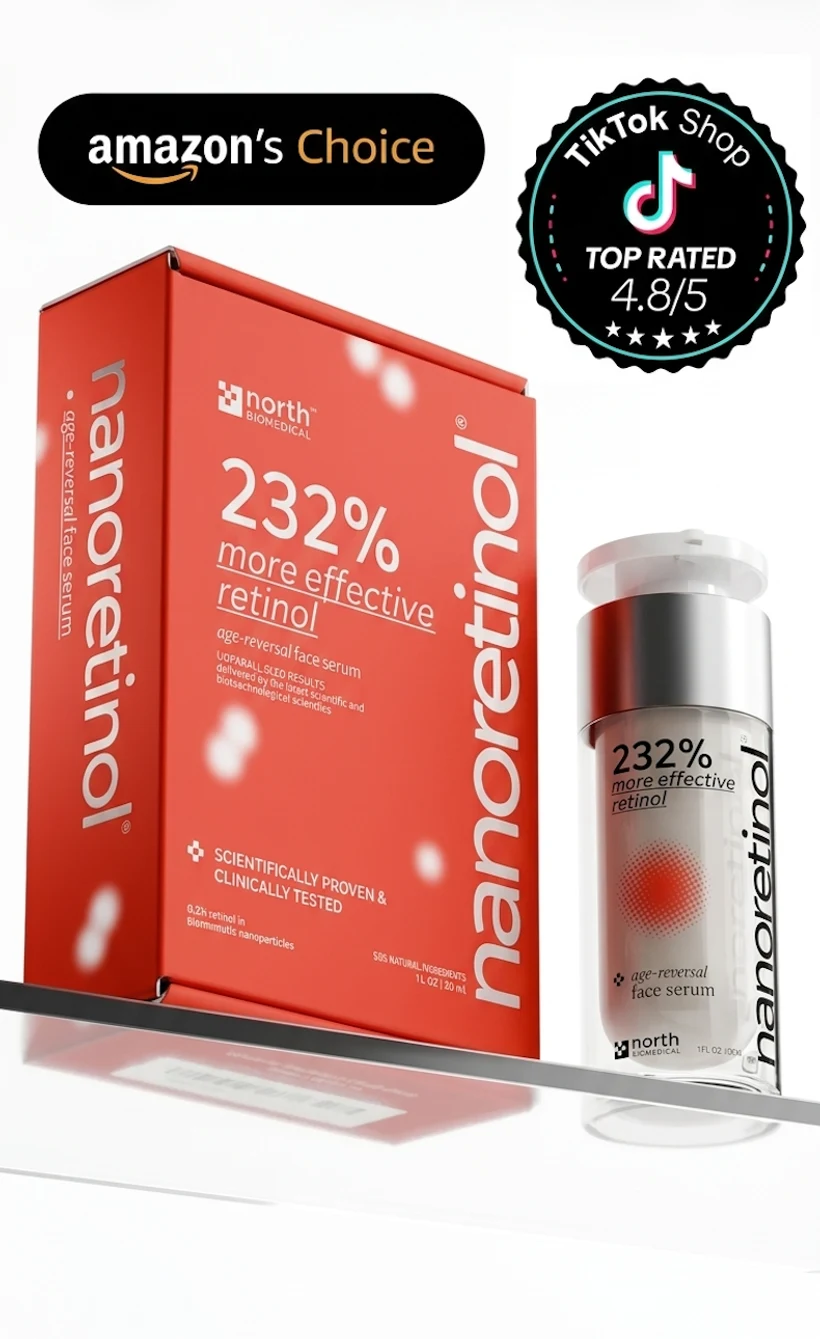
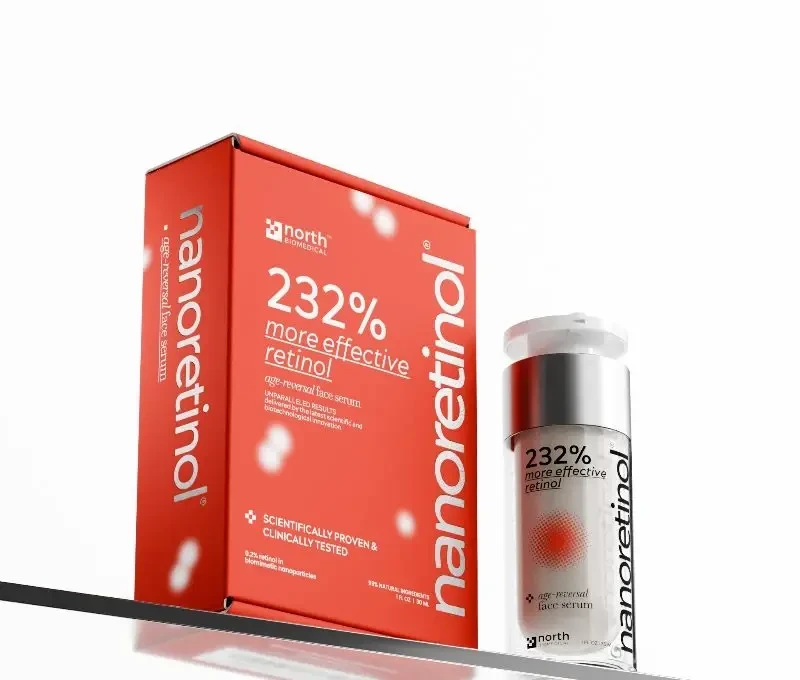
Nanoretinol was built the other way round. Its 0.2 percent retinol sits inside biomimetic lipid nanoparticles, and cetyl alcohol is one of the ingredients that make up those particles, alongside phosphatidylcholine, glycerin and a form of vitamin E. Because the particles look like the skin’s own cells, the retinol gets through without damaging the barrier. In North Biomedical’s study, Nanoretinol was 232 percent more effective in collagen recovery than conventional retinol, and users saw a 61 percent increase in firmness and a 56 percent increase in elasticity after 56 days [8]. It is a water-based gel, applied once a day at night, followed by sunscreen the next morning.
The Takeaway
Cetyl alcohol is a fatty, waxy conditioning ingredient, not a drying solvent. It softens skin, holds creams together and rarely causes problems. Save your caution for the short-chain alcohols near the top of a label, and judge every product by how your skin feels after a few weeks rather than by a single word on the back.
References
- Lachenmeier DW. “Safety evaluation of topical applications of ethanol on the skin and inside the oral cavity.” Journal of Occupational Medicine and Toxicology. 2008;3:26. doi:10.1186/1745-6673-3-26
- Löffler H, Kampf G. “Hand disinfection: how irritant are alcohols?” Journal of Hospital Infection. 2008;70(Suppl 1):44-48. PubMed 18994681
- Ribeiro HM, Morais JA, Eccleston GM. “Structure and rheology of semisolid o/w creams containing cetyl alcohol/non-ionic surfactant mixed emulsifier and different polymers.” International Journal of Cosmetic Science. 2004;26(2):47-59. doi:10.1111/j.0412-5463.2004.00190.x
- Lodén M. “Role of topical emollients and moisturizers in the treatment of dry skin barrier disorders.” American Journal of Clinical Dermatology. 2003;4(11):771-788. doi:10.2165/00128071-200304110-00005
- Aakhus AE, Warshaw EM. “Allergic contact dermatitis from cetyl alcohol.” Dermatitis. 2011;22(1):56-57. PubMed 21291645
- Nishioka K, Koizumi A, Takita Y. “Seven cases of contact dermatitis due to stearyl alcohol contained in topical medications.” Journal of Dermatology. 2022;49(5):515-518. doi:10.1111/1346-8138.16325
- Draelos ZD, DiNardo JC. “A re-evaluation of the comedogenicity concept.” Journal of the American Academy of Dermatology. 2006;54(3):507-512. doi:10.1016/j.jaad.2005.11.1058
- North Biomedical LLC. “Nanoretinol vs. Conventional Retinol: Efficacy in Collagen and Elastin Recovery.” Clinical Study Summary, 2024. Study summary