Glycolic Acid Cleanser: What a Rinse-Off Acid Can and Cannot Do
A glycolic acid face wash is the most searched way to try an exfoliating acid. Here is what a minute of contact really achieves, why pH beats percentage, and who should skip it
Glycolic acid is the smallest of the alpha hydroxy acids, the family of fruit and sugar acids that loosen the “glue” holding dead surface cells together [1]. Its size lets it work quickly, and that makes it a natural fit for a face wash. A glycolic acid cleanser is often the first acid people try, because it feels low-commitment: lather, rinse, done.
That convenience is also its limit. Nearly all of the impressive glycolic acid research, from smoother texture to thicker skin, comes from products that stay on the skin for hours. A cleanser stays on for about a minute. Understanding that difference is the key to buying the right one and expecting the right results.
How glycolic acid exfoliates
The outer layer of your skin is a wall of flattened, dead cells held together by protein links. Glycolic acid weakens those links, so the oldest cells release more easily and the surface looks smoother and reflects light more evenly [1]. That is why skin often looks brighter the morning after an acid product.
How much happens depends on four things: concentration, pH, contact time and how much “free” acid the formula actually contains [2]. The percentage on the front of the bottle is only one of them.
The contact-time problem
When glycolic acid is left on the skin for months, it can do more than polish. In a pilot study, people applied a lotion containing 25% glycolic, lactic or citric acid to one forearm for an average of six months. Treated skin was about 25% thicker, with more collagen and better-quality elastic fibers in the upper dermis [3].
A wash cannot replicate that. Most of a cleanser’s acid goes down the drain within 30 to 60 seconds, and some of it is buffered by the surfactants and water around it. There are no published trials showing that a glycolic rinse-off alone changes collagen.
Your face wash spends about a minute on your skin, while the glycolic acid studies that showed real structural change used products left on for months.
Your face wash spends about a minute on your skin, while the glycolic acid studies that showed real structural change used products left on for months.
What a cleanser can deliver is a gentle, cumulative surface effect: less roughness, fewer flaky patches and a fresher look, especially on oily or sun-dulled skin. That is a legitimate benefit, as long as you do not expect it to do a serum’s job. Our guide to glycolic acid serums covers the leave-on option in detail.
Why pH matters more than percentage
An acid only exfoliates while it is in its “free” form, and how much free acid a formula has depends on its pH. A 10% glycolic product buffered to a near-neutral pH can be weaker on the skin than a 5% product at a lower pH.
To limit irritation, the U.S. Cosmetic Ingredient Review panel recommended that consumer alpha hydroxy acid products contain no more than 10% acid at a pH of 3.5 or higher [1]. Brands rarely print the pH, so a wash described as “buffered” or made for sensitive skin is the safer bet if you are new to acids.
Cleanser pH matters for another reason too. Harsh, alkaline cleansers swell the outer layer of skin and strip its lipids, while products closer to the skin’s natural pH of about 5.5 are less damaging [4]. A mildly acidic glycolic wash built on gentle synthetic surfactants can actually be kinder to the barrier than an old-fashioned soap bar [5].
Who a glycolic wash suits, and who should skip it
A glycolic acid cleanser tends to suit:
- Oily or combination skin that feels congested and looks shiny by midday.
- Rough, dull or sun-weathered skin that benefits from steady, light exfoliation.
- People new to acids who want to test their tolerance before committing to a leave-on product.
In a small open-label study of people with mild acne, a regimen pairing a salicylic acid cleanser with a leave-on gel containing 10% buffered glycolic acid cut inflamed blemishes substantially within six weeks and was well tolerated [6]. The design cannot separate the two steps, but it shows how an acid wash fits into a wider routine.
Your sunscreen matters more than your cleanser, because exfoliated skin can burn faster than you expect for up to 7 days after you stop using an acid.
Consider skipping one if your skin is already sensitive, reactive or recovering from a peel or procedure, or if you use prescription retinoids. Alpha hydroxy acids can cause stinging, burning, swelling and itching in some people [2], and a daily acid wash adds to whatever else your routine is doing.
The sun-sensitivity rule still applies
Exfoliating acids make skin more vulnerable to UV light. In a randomized, double-blind study, 10% glycolic acid applied daily for four weeks increased sunburn cell formation and lowered the amount of UV needed to cause redness, an effect that faded within a week of stopping [7].
That study used a leave-on product, and a cleanser’s exposure is much shorter. Even so, the safest assumption is that any regular glycolic product calls for daily broad-spectrum sunscreen.
Your sunscreen matters more than your cleanser, because exfoliated skin can burn faster than you expect for up to 7 days after you stop using an acid.
How to choose and use one
Look for:
- Strength: glycolic acid listed near the top of the ingredients, with the percentage stated and no higher than 10%.
- Base: mild surfactants and added humectants, such as glycerin, so the wash cleans without leaving skin tight.
- Extras: no fragrance or added scrub beads, because combining an acid with physical grit doubles the exfoliation and the irritation risk.
Start two or three times a week, massage for 30 to 60 seconds, rinse thoroughly with lukewarm water and moisturize. Increase only if your skin stays comfortable. Our guide to how often to exfoliate your face explains how to count total exfoliation across your whole routine, and if you already use a leave-on acid, a glycolic acid toner and a glycolic wash on the same night is usually one acid too many.
The anti-aging work happens after you rinse
A glycolic cleanser is a polish, not a reset. For fine lines and loss of firmness, the evidence points to retinoids, which change how skin cells behave and stimulate new collagen rather than simply removing old cells. In adults with an average age of 87, a 0.4% retinol lotion improved fine wrinkling and boosted new collagen production within 24 weeks [8]. Our comparison of glycolic acid vs retinol explains why the two work best as partners rather than rivals.
The catch is that conventional retinol can sting and peel, and adding an acid wash on the same night makes that worse. Many people give up on retinol for exactly this reason.
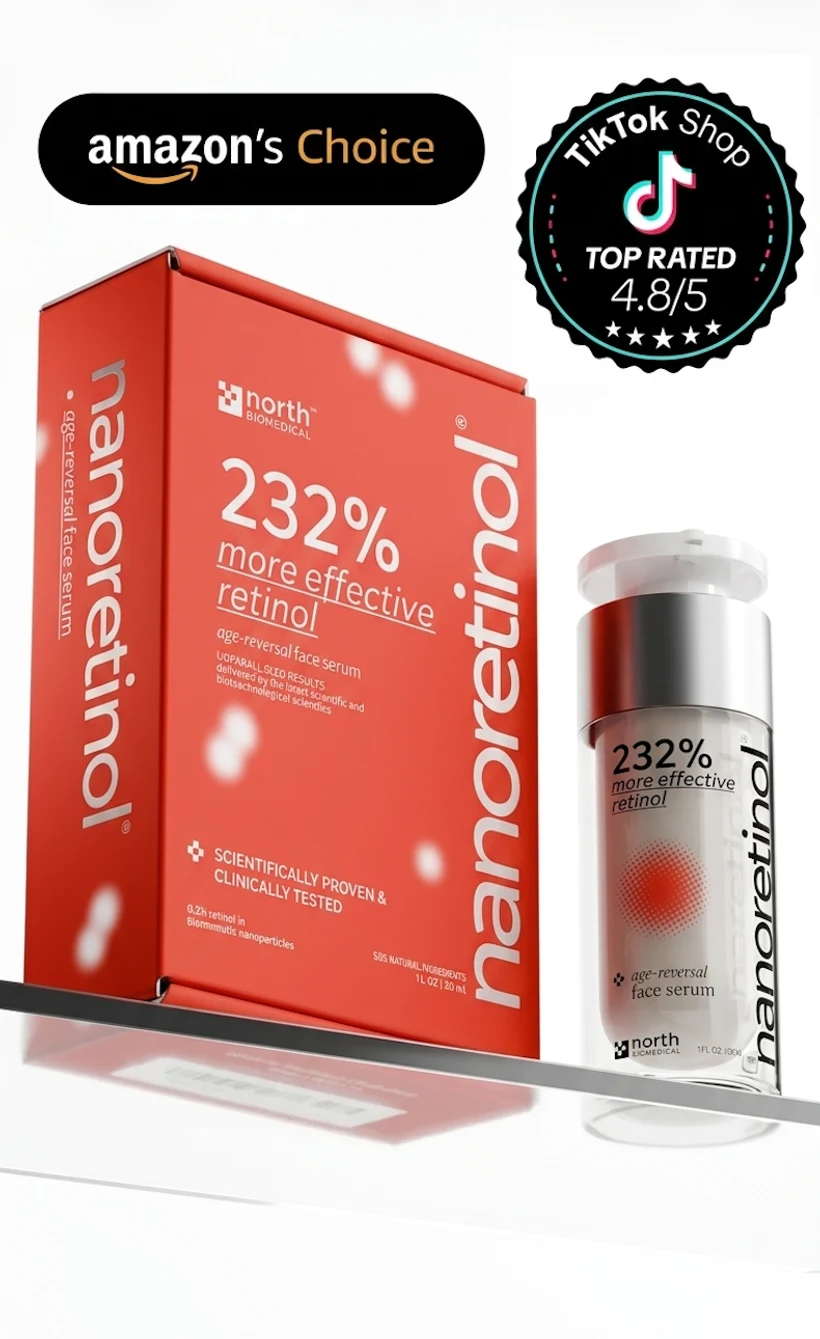
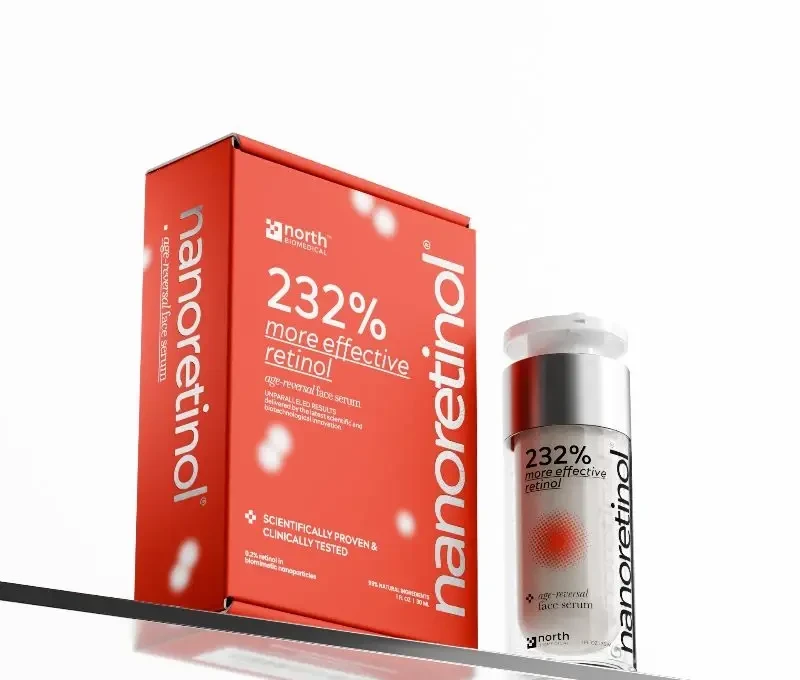
That is where Nanoretinol fits. It delivers 0.2% stabilized retinol in biomimetic lipid nanoparticles that the skin recognizes as its own, so it reaches skin cells without breaking down the barrier the way conventional formulations can. In North Biomedical’s study summary, Nanoretinol was 232% more effective in collagen recovery and 73% more effective in elastin recovery than conventional retinol, with side effects that were minimal and milder [9].
A practical routine: use the glycolic wash in the morning a few times a week, followed by sunscreen, and keep evenings simple with a gentle cleanser and Nanoretinol. Let the cleanser polish and let the retinol rebuild.
References
- Kornhauser A, Coelho SG, Hearing VJ. “Applications of hydroxy acids: classification, mechanisms, and photoactivity.” Clinical, Cosmetic and Investigational Dermatology. 2010;3:135-142. doi:10.2147/CCID.S9042
- Tang SC, Yang JH. “Dual Effects of Alpha-Hydroxy Acids on the Skin.” Molecules. 2018;23(4):863. doi:10.3390/molecules23040863
- Ditre CM, Griffin TD, Murphy GF, et al. “Effects of alpha-hydroxy acids on photoaged skin: a pilot clinical, histologic, and ultrastructural study.” Journal of the American Academy of Dermatology. 1996;34(2 Pt 1):187-195. PubMed:8642081
- Ananthapadmanabhan KP, Moore DJ, Subramanyan K, Misra M, Meyer F. “Cleansing without compromise: the impact of cleansers on the skin barrier and the technology of mild cleansing.” Dermatologic Therapy. 2004;17(Suppl 1):16-25. doi:10.1111/j.1396-0296.2004.04s1002.x
- Draelos ZD. “The science behind skin care: Cleansers.” Journal of Cosmetic Dermatology. 2018;17(1):8-14. doi:10.1111/jocd.12469
- Bhatia AC, Jimenez F. “Rapid treatment of mild acne with a novel skin care system containing 1% salicylic acid, 10% buffered glycolic acid, and botanical ingredients.” Journal of Drugs in Dermatology. 2014;13(6):678-683. PubMed:24918557
- Kaidbey K, Sutherland B, Bennett P, et al. “Topical glycolic acid enhances photodamage by ultraviolet light.” Photodermatology, Photoimmunology & Photomedicine. 2003;19(1):21-27. doi:10.1034/j.1600-0781.2003.00013.x
- Kafi R, Kwak HS, Schumacher WE, et al. “Improvement of naturally aged skin with vitamin A (retinol).” Archives of Dermatology. 2007;143(5):606-612. doi:10.1001/archderm.143.5.606
- North Biomedical LLC. “Nanoretinol vs. Conventional Retinol: Efficacy in Collagen and Elastin Recovery.” Clinical Study Summary, 2024. Study summary