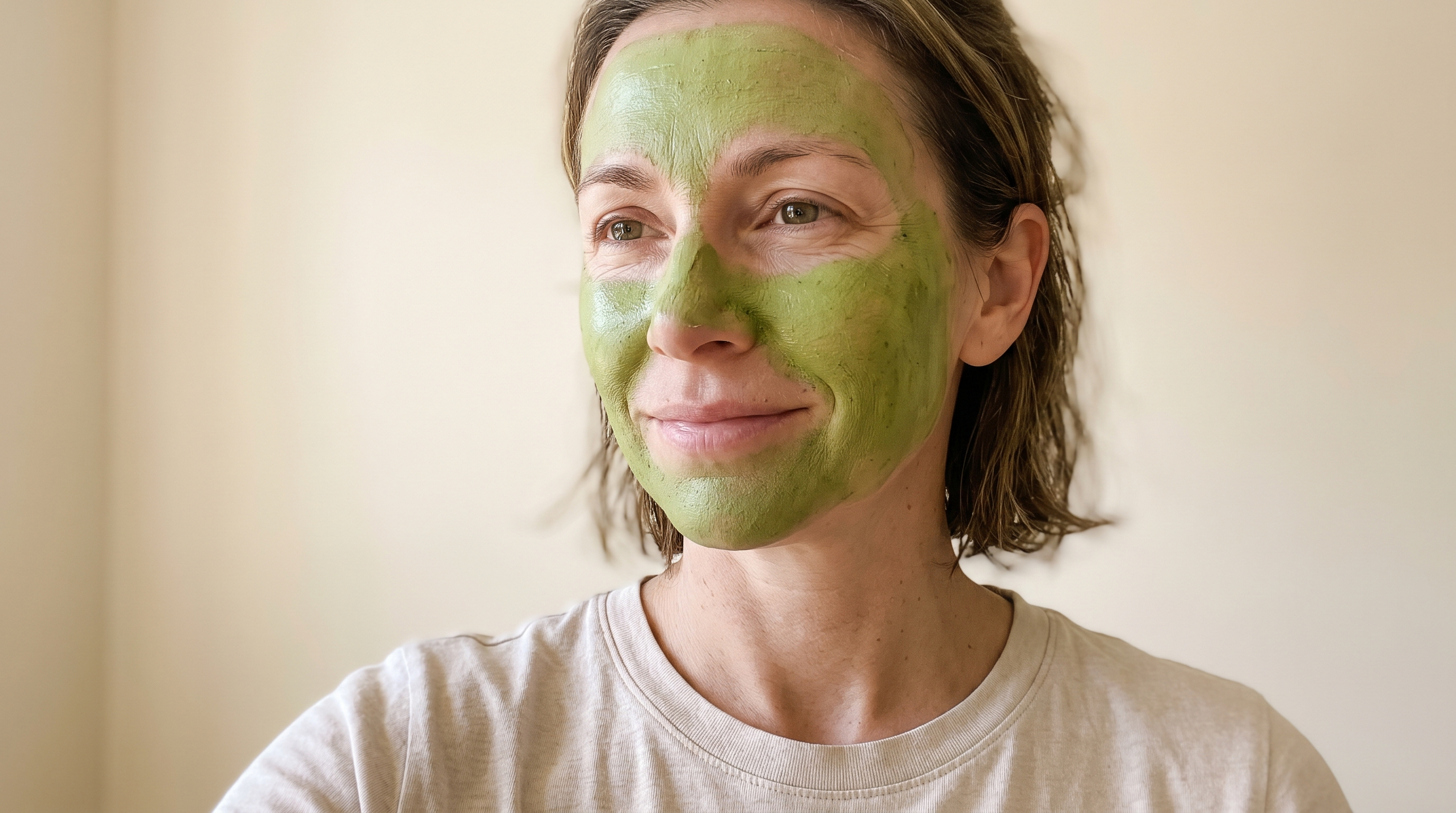
Green Tea Face Mask: What It Does for Oil, Redness and Breakouts
Green tea is one of the best-studied plant antioxidants in skincare. Here is what a mask can deliver, how brewed tea, matcha and bought masks compare, and where it fits in an anti-aging routine
Green tea masks are everywhere, from clay jars and sheet masks to the matcha paste people mix in their kitchens. They promise calmer, less oily, clearer skin, and unlike many plant extracts, green tea has a fair amount of research behind it.
That research comes with fine print. Most of it tested extracts at measured strengths, applied for weeks, not a spoonful of tea leaves left on the face for 15 minutes. This guide explains what is in green tea, what the studies actually found, how the different kinds of masks compare, and what a green tea mask can and cannot do for aging skin.
What is in green tea
Green tea is made from the leaves of Camellia sinensis, steamed or pan-fired soon after picking so the leaves do not oxidize. That keeps their main active compounds, a family of polyphenols called catechins, largely intact. The most abundant and most studied is epigallocatechin gallate, usually shortened to EGCG [1].
Catechins are antioxidants, and they also have anti-inflammatory and antimicrobial effects in laboratory studies [1]. Those three properties are the reason green tea is tested on oily skin, acne and sun-stressed skin. For a deeper look at the ingredient itself, our guide to green tea for skin covers the wider research.
What the research found
Oil. In a small study, 10 men applied a cream with 3% green tea extract to their cheeks for 8 weeks, and their skin oil fell significantly over the study [2]. A review of tea polyphenols and acne found that several topical and oral studies pointed in the same direction, while noting that most were small and short [1].
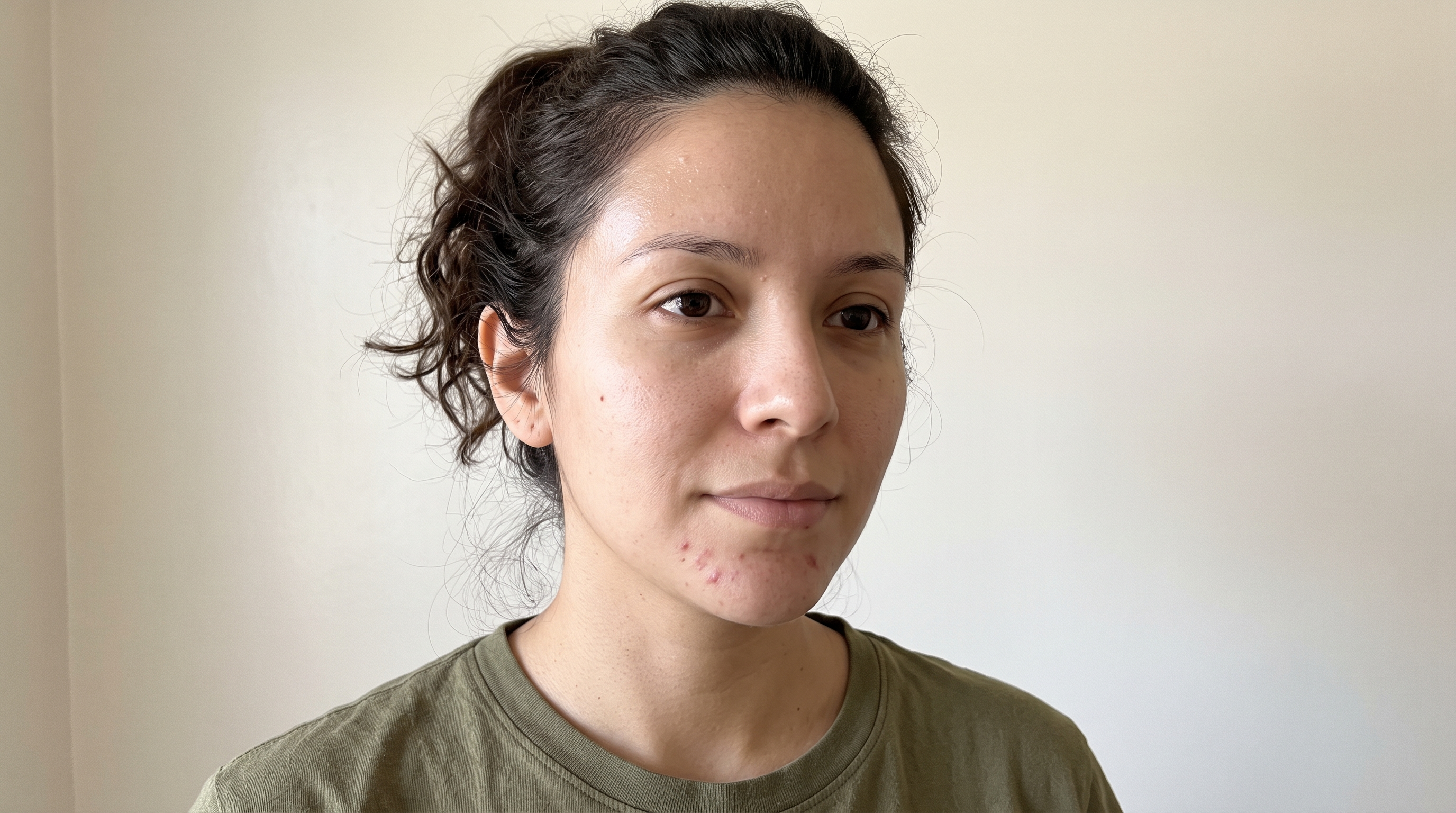
Breakouts. In an open study of 20 people with mild to moderate acne, a 2% green tea lotion used twice a day for 6 weeks cut the average count of inflamed spots from 24 to 10 [3]. There was no comparison group, so some of that change may have happened anyway, but it is one of the more encouraging results for a plant extract.
Your skin needed 6 weeks of twice-daily green tea lotion to show fewer breakouts in one acne study, far more contact than a weekly mask provides.
Your skin needed 6 weeks of twice-daily green tea lotion to show fewer breakouts in one acne study, far more contact than a weekly mask provides.
Redness from sun. When volunteers had green tea extract applied 30 minutes before a measured dose of UV light, the treated skin reddened less, and the effect grew with the dose. EGCG was among the most protective fractions [4]. Green tea is not a sunscreen, but it helps explain why it is so often used to calm skin that looks flushed or irritated.
Aging. This is where the evidence is weakest. In a trial of 40 women with sun-damaged skin, 8 weeks of a 10% green tea cream plus green tea capsules did not visibly improve wrinkles or texture compared with the inactive version, although skin samples showed some improvement in elastic tissue [5]. The green tea group also reported more irritation [5].
Why a mask is a short visit
EGCG is a fragile molecule. It breaks down quickly in water, especially at room temperature and in light, which is one of the main obstacles to getting it to work in products and supplements [6]. A cup of brewed tea left on the counter, or a homemade paste mixed hours before use, has already lost part of what made it useful.
Contact time matters too. A mask sits on the skin for 10 to 20 minutes and is then rinsed away. That is enough to cool, soothe and leave a light antioxidant film, but much less exposure than the leave-on lotions and creams used in the studies above.
Longer is not better, either. In a study of facial sheet masks, skin hydration rose at first and then fell, and people who kept a wet mask on for more than 25 minutes were more likely to end up dry and red [7].
Your skin can end up drier after 25 minutes under a wet mask than it was before, so 10 to 15 minutes is the sweet spot for most people.
Matcha, brewed tea and bought masks compared
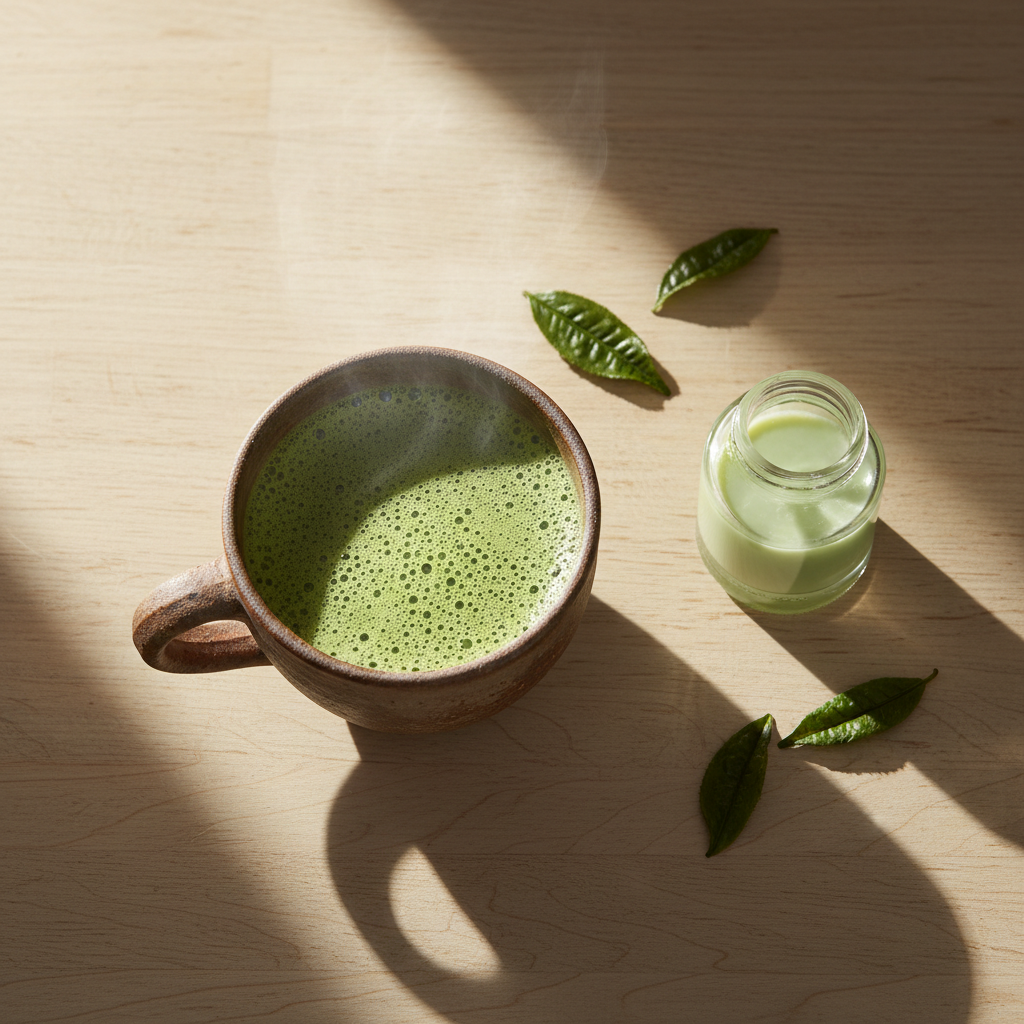
Matcha powder. Matcha is whole green tea leaf ground into a fine powder, so it carries more catechins per spoonful than brewed tea. Mix half a teaspoon with a little water, plain yogurt or honey into a smooth paste and apply it right away.
Your skin can end up drier after 25 minutes under a wet mask than it was before, so 10 to 15 minutes is the sweet spot for most people.
Brewed or cooled tea bags. Steep two bags in hot water, let them cool fully and press them over the cheeks or under the eyes for a few minutes. This is the gentlest option and works well on tired, warm skin.
Green tea and honey. Honey adds humectant moisture and a thicker texture, as our guide to the honey face mask explains. It is a good blend for dry or combination skin.
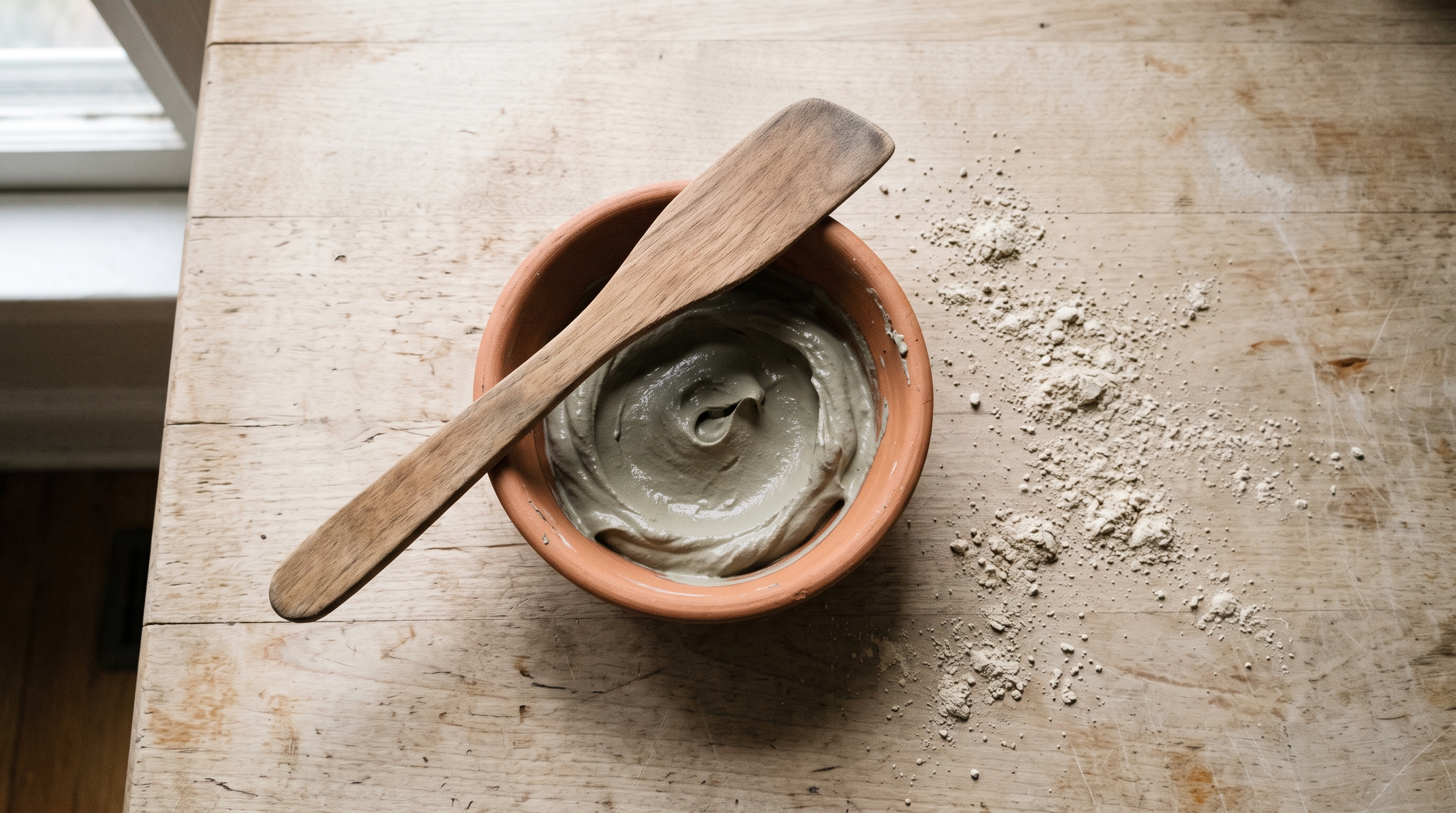
Green tea and clay. A clay base absorbs oil while the tea calms the surface, which makes this the usual choice for oily, breakout-prone skin. Our guide to the best clay mask compares the different clays.
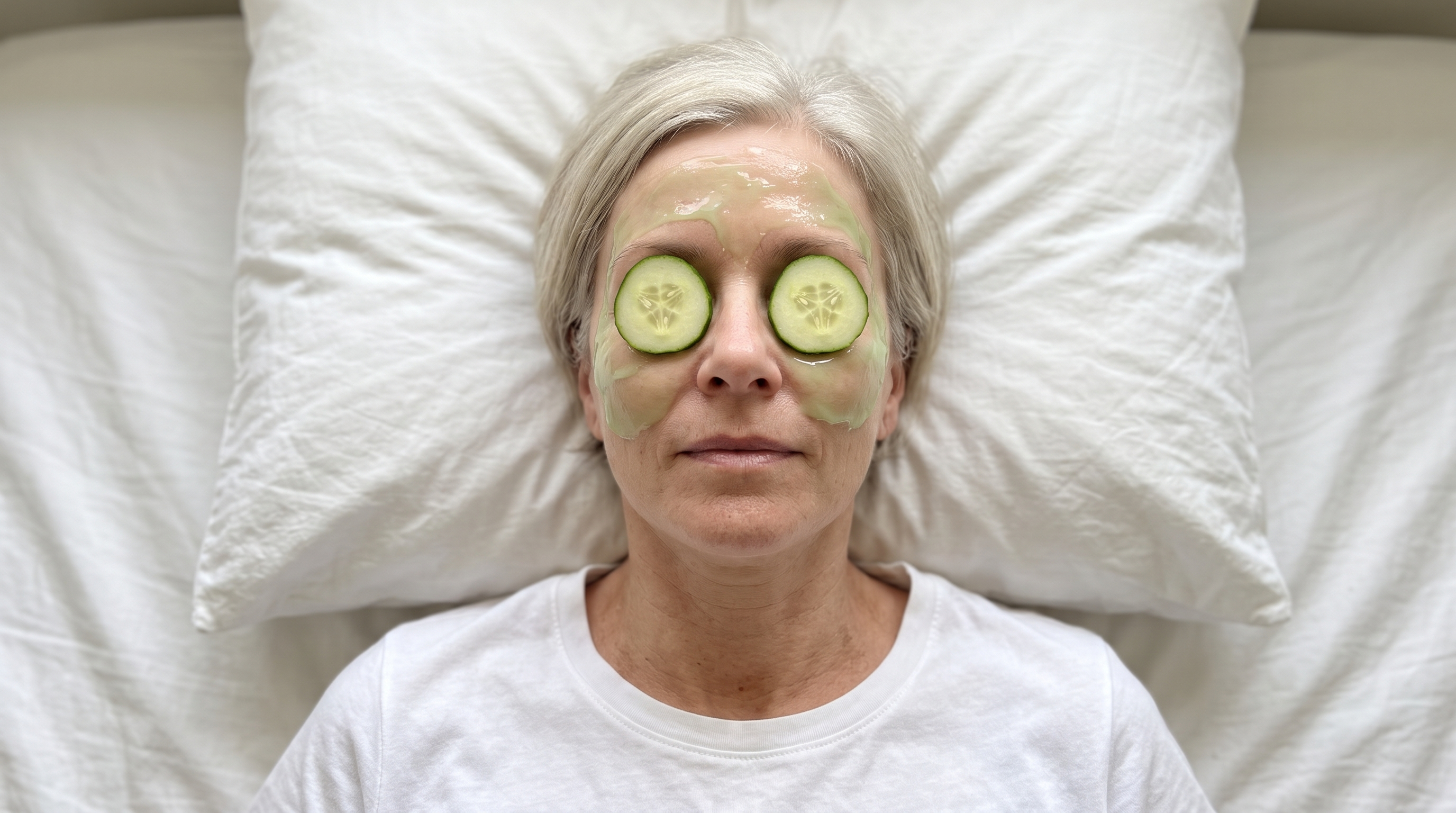
Sheet and gel masks. Ready-made versions combine green tea extract with glycerin, hyaluronic acid or aloe, which do most of the hydrating. Chilling them adds a cooling effect much like a cucumber face mask.
Skip lemon juice, baking soda, cinnamon and undiluted essential oils in DIY recipes. They can sting and redden skin, and lemon can cause dark marks after sun exposure.
How to use a green tea mask
- Start with clean skin. A mask works better without a layer of oil, sunscreen or makeup in the way.
- Make it fresh. Mix DIY masks right before use and throw away any leftovers.
- Apply a thin, even layer. Avoid the eye area with clay and powder masks.
- Rinse after 10 to 15 minutes. Do not let a clay mask dry until it cracks and pulls.
- Moisturize straight away. This locks in the water the mask added.
- Repeat once or twice a week. Oily skin can manage a little more often.
Patch-test new recipes on the inner arm or jawline first. Green tea is usually well tolerated, but the irritation reported in the photoaging trial is a reminder that plant extracts are not automatically gentle [5].
What a green tea mask cannot do
A green tea mask works on the surface. It can take the shine off oily skin for a few hours, calm a flushed face and add a short-lived antioxidant layer. It cannot rebuild the collagen and elastin that keep skin firm, and the best-designed trial in aging skin found no visible change in wrinkles [5].
That deeper work is what retinoids are for. In older adults, 24 weeks of 0.4% retinol significantly reduced fine wrinkles and increased collagen production compared with the inactive lotion [8]. The problem is that many people stop because conventional retinol dries and irritates skin, which is the opposite of what a green tea mask is meant to do.
Nanoretinol was designed to avoid that. It carries 0.2% retinol inside biomimetic lipid nanoparticles that the skin recognizes as its own, so the retinol passes through the barrier without damaging it. In North Biomedical’s study, it was 232% more effective in collagen recovery and 73% more effective in elastin recovery than conventional retinol, and users saw a 61% increase in skin firmness after 56 days [9]. Its water-based gel suits oily and combination skin.
The two fit together easily. Use a green tea mask on one or two evenings a week to calm and de-shine, apply Nanoretinol on the other nights, and wear broad-spectrum sunscreen every morning.
References
- Saric S, Notay M, Sivamani RK. “Green tea and other tea polyphenols: effects on sebum production and acne vulgaris.” Antioxidants. 2016;6(1):2. doi:10.3390/antiox6010002
- Mahmood T, Akhtar N, Khan BA, Khan HM, Saeed T. “Outcomes of 3% green tea emulsion on skin sebum production in male volunteers.” Bosnian Journal of Basic Medical Sciences. 2010;10(3):260-264. doi:10.17305/bjbms.2010.2697
- Elsaie ML, Abdelhamid MF, Elsaaiee LT, Emam HM. “The efficacy of topical 2% green tea lotion in mild-to-moderate acne vulgaris.” Journal of Drugs in Dermatology. 2009;8(4):358-364. PubMed 19363854
- Elmets CA, Singh D, Tubesing K, Matsui M, Katiyar S, Mukhtar H. “Cutaneous photoprotection from ultraviolet injury by green tea polyphenols.” Journal of the American Academy of Dermatology. 2001;44(3):425-432. doi:10.1067/mjd.2001.112919
- Chiu AE, Chan JL, Kern DG, Kohler S, Rehmus WE, Kimball AB. “Double-blinded, placebo-controlled trial of green tea extracts in the clinical and histologic appearance of photoaging skin.” Dermatologic Surgery. 2005;31(7 Pt 2):855-860. doi:10.1111/j.1524-4725.2005.31731
- Secretan PH, Thirion O, Sadou Yayé H, Damy T, Astier A, Paul M, et al. “Simple approach to enhance green tea epigallocatechin gallate stability in aqueous solutions and bioavailability: experimental and theoretical characterizations.” Pharmaceuticals. 2021;14(12):1242. doi:10.3390/ph14121242
- Wang Y, Cao Y, Huang X, Zhang M, Hu J, Li L, et al. “Short-term skin reactions and changes in stratum corneum following different ways of facial sheet mask usage.” Journal of Tissue Viability. 2024;33(4):831-839. doi:10.1016/j.jtv.2024.06.012
- Kafi R, Kwak HS, Schumacher WE, Cho S, Hanft VN, Hamilton TA, et al. “Improvement of naturally aged skin with vitamin A (retinol).” Archives of Dermatology. 2007;143(5):606-612. doi:10.1001/archderm.143.5.606
- North Biomedical LLC. “Nanoretinol vs. Conventional Retinol: Efficacy in Collagen and Elastin Recovery.” Clinical Study Summary, 2024. Study summary