Cucumber Face Mask: What It Can Do for Tired, Puffy Skin and What It Cannot
Cucumber slices are the oldest spa shortcut there is. Here is what is actually in a cucumber, what the research measured, how to make or choose a mask, and where it fits in an anti-aging routine
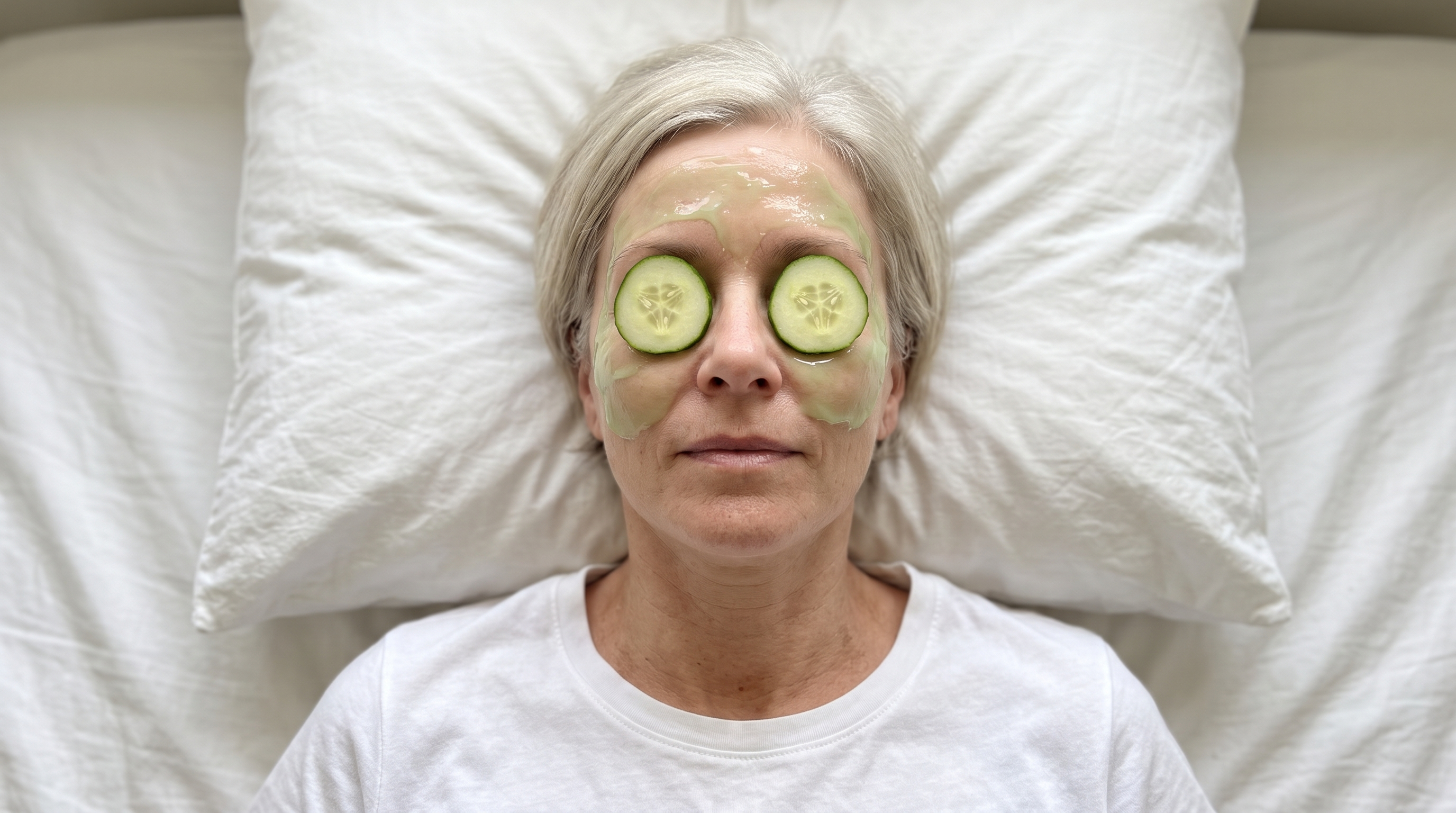
Two cucumber slices over the eyes is the most recognizable image in skincare. It shows up in spa photos, films and cartoons, and it has turned cucumber into one of the most popular ingredients in masks, gels and sheet masks.
Cucumber does have a place on tired skin. It is cool, mild and very unlikely to irritate. But it is also mostly water, and the reasons it feels so good are more physical than chemical. This guide explains what a cucumber contains, what the research has measured, what a cucumber mask can realistically do, and how to use one without expecting it to do a retinoid’s job.
What is actually in a cucumber
Cucumber is a member of the same plant family as melons and squash. It is very high in water and very low in everything else [1]. The small remainder includes vitamin C, plant pigments called flavonoids, tannins, and bitter compounds called cucurbitacins [1, 2].
Traditional medicine has long used fresh cucumber juice to soothe irritated skin, calm sunburn and reduce swelling [1]. A review of the plant’s chemistry described these uses but also noted that comparatively few studies have looked at what cucumber actually does [1].
In the lab, a water extract of cucumber fruit neutralized free radicals and had a pain-relieving effect in animals, which the researchers linked to its flavonoids and tannins [2]. That supports cucumber’s reputation as a mild antioxidant and soother, though a lab dish is very different from a slice resting on your face.
Your skin feels the cold of a chilled cucumber within seconds, but a lab test found skin temperature was back to normal 7 minutes after a cooling product went on.
Why cucumber feels so soothing
Much of the cucumber effect is temperature. A chilled slice or mask cools the skin as it touches it and again as its water evaporates. Cold briefly narrows small blood vessels, which can make skin look less flushed and slightly less puffy.
Your skin feels the cold of a chilled cucumber within seconds, but a lab test found skin temperature was back to normal 7 minutes after a cooling product went on.
That effect is short-lived. In a thermal imaging study of cooling skin formulas, skin temperature fell on application and returned to its baseline in about 7 minutes [3]. The researchers also found that how cool a product felt did not reliably match the skin’s actual temperature [3]. In practice, a cucumber mask is a pleasant way to take the heat out of skin for a few minutes, not a lasting treatment.
The one human trial of a cucumber product on skin was in a demanding setting. In 153 people having radiotherapy for breast cancer, herbal creams containing cucumber, centella or another plant extract did not prevent radiation skin reactions compared with no treatment, though the cucumber cream appeared to help skin recover afterwards [4]. One author worked for the foundation that makes the creams, and the trial says little about everyday masks, but it fits the picture of cucumber as a gentle, soothing ingredient rather than an active one.
What a cucumber mask can realistically do
A cucumber mask can cool skin after sun, heat or exercise. It can add a short burst of hydration, mostly from water and any humectants in the formula. It can calm the look of morning puffiness for a little while, and it is a gentle option for skin that reacts to stronger products.
Hydration from a mask is temporary. In a controlled study of facial sheet masks, skin hydration rose at first and then fell back, and wearing a plain water mask for longer than 25 minutes left many people with dryness and redness [5]. Water that evaporates from the skin can take some of the skin’s own moisture with it unless something seals it in.
Your skin can end up drier than before after 25 minutes under a wet mask, so a short session followed by moisturizer works better than a long soak.
Fresh, DIY and ready-made cucumber masks
Chilled slices. Simple and cheap. Use them for 5 to 10 minutes over the eye area or cheeks.
Your skin can end up drier than before after 25 minutes under a wet mask, so a short session followed by moisturizer works better than a long soak.
Blended cucumber paste. Blend half a peeled cucumber, apply for 10 minutes and rinse. Use it fresh, since raw vegetable purée spoils quickly at room temperature.
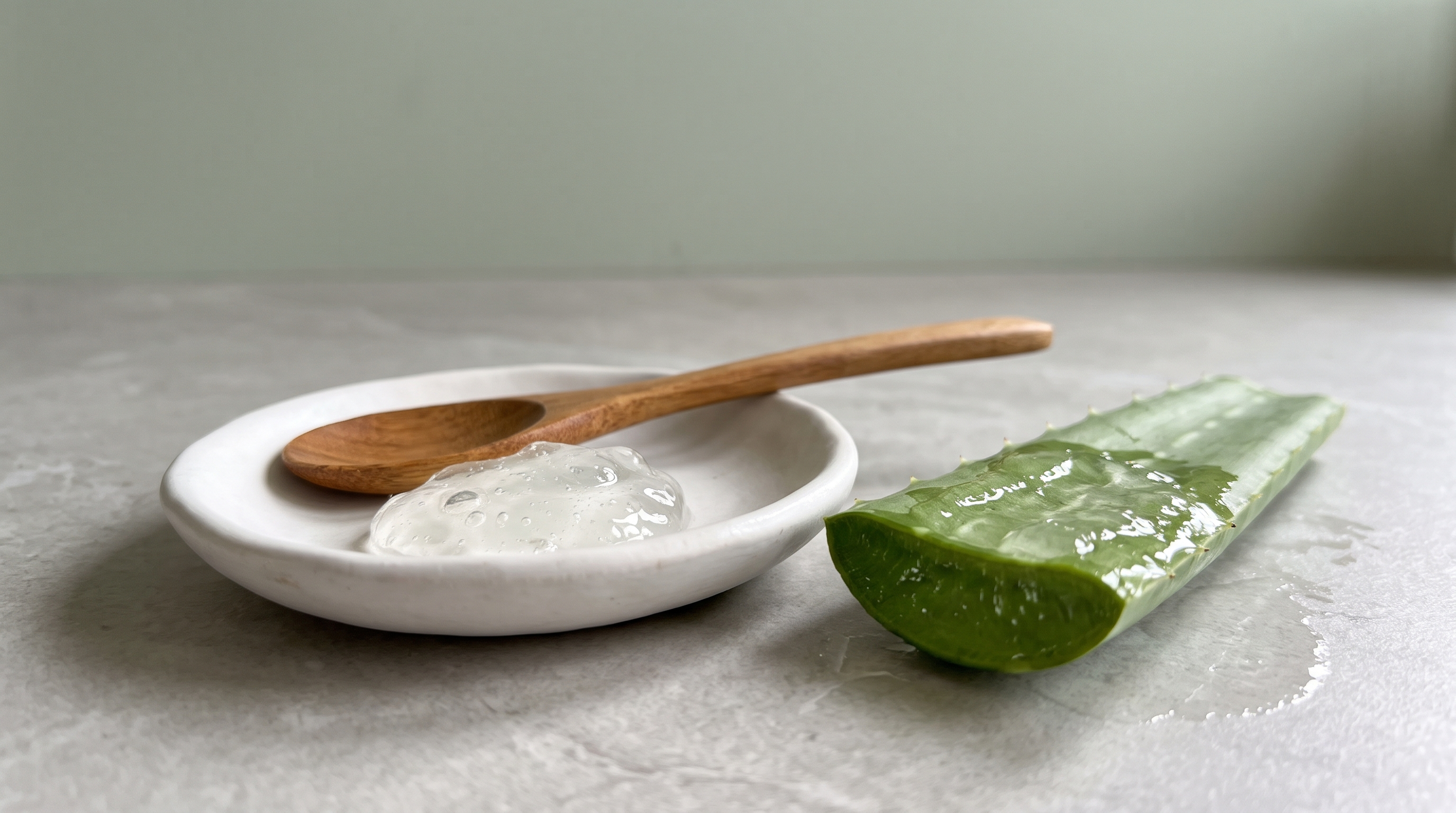
Cucumber and aloe. A good pairing for sun-warmed skin. Our guide to the aloe vera face mask covers what aloe adds.
Cucumber and honey. Honey brings humectant moisture and a thicker texture, as our guide to the honey face mask explains.
Gel and sheet masks. Ready-made versions usually contain cucumber extract plus glycerin, hyaluronic acid or aloe, which are doing most of the hydrating. Keep them in the fridge for extra cooling.
Skip lemon juice, baking soda and undiluted essential oils in DIY recipes. They can irritate skin, and lemon juice can cause dark marks on sun-exposed skin.
How to use a cucumber mask well
- Cleanse first, then apply the mask to slightly damp skin.
- Keep it short: 10 to 15 minutes for most masks, and well under 25 minutes for sheet masks [5].
- Seal in the water. Follow with a moisturizer, since moisturizers support the skin barrier and reduce water loss [6].
- Use it for puffiness in the morning. A chilled mask is a quick fix before makeup. For the causes of puffiness and what helps longer term, see our guide to puffy eyes.
- Pair it with retinoid nights. A cooling mask is a comfortable way to calm skin on the evenings you take a break from a retinoid.
For a cooling lift during the day, a hydrating face mist does a similar job in seconds.
Where the cucumber mask ends and retinol begins
A cucumber mask is comfort care. It can cool, calm and briefly plump the surface, but it does not reach the collagen and elastin that keep skin firm, and it cannot soften lines or fade sun damage. Those changes need a leave-on active used for months. In a controlled trial in older adults, a 0.4% retinol lotion applied to the arm up to three times a week for 24 weeks reduced fine wrinkling and increased collagen production compared with the same lotion without retinol [7].
Many people give up retinol because conventional formulas leave skin red, dry and peeling. Nanoretinol was designed to avoid that. It is a light, water-based gel with aloe leaf juice in its base, and it carries 0.2% retinol inside biomimetic lipid nanoparticles that the skin recognizes as its own, so the retinol passes through the barrier without damaging it. In North Biomedical’s study, it was 232% more effective in collagen recovery and 73% more effective in elastin recovery than conventional retinol, and users saw a 61% increase in skin firmness and a 56% increase in skin elasticity after 56 days [8].
Keep cucumber for the evenings and mornings when skin needs calming. Apply Nanoretinol at night for lasting change, and wear broad-spectrum sunscreen every day.
References
- Mukherjee PK, Nema NK, Maity N, Sarkar BK. “Phytochemical and therapeutic potential of cucumber.” Fitoterapia. 2013;84:227-236. doi:10.1016/j.fitote.2012.10.003
- Kumar D, Kumar S, Singh J, Narender, Rashmi, Vashistha B, et al. “Free radical scavenging and analgesic activities of Cucumis sativus L. fruit extract.” Journal of Young Pharmacists. 2010;2(4):365-368. doi:10.4103/0975-1483.71627
- Koprowski R, Wilczyński S, Wróbel Z, Błońska-Fajfrowska B. “Dynamic thermal imaging analysis in the effectiveness evaluation of warming and cooling formulations.” Computers in Biology and Medicine. 2014;54:129-136. doi:10.1016/j.compbiomed.2014.08.029
- Thanthong S, Nanthong R, Kongwattanakul S, Laebua K, Trirussapanich P, Pitiporn S, et al. “Prophylaxis of radiation-induced dermatitis in patients with breast cancer using herbal creams: a prospective randomized controlled trial.” Integrative Cancer Therapies. 2020;19:1534735420920714. doi:10.1177/1534735420920714
- Wang Y, Cao Y, Huang X, Zhang M, Hu J, Li L, et al. “Short-term skin reactions and changes in stratum corneum following different ways of facial sheet mask usage.” Journal of Tissue Viability. 2024;33(4):831-839. doi:10.1016/j.jtv.2024.06.012
- Rajkumar J, Chandan N, Lio P, Shi V. “The skin barrier and moisturization: function, disruption, and mechanisms of repair.” Skin Pharmacology and Physiology. 2023;36(4):174-185. doi:10.1159/000534136
- Kafi R, Kwak HS, Schumacher WE, Cho S, Hanft VN, Hamilton TA, et al. “Improvement of naturally aged skin with vitamin A (retinol).” Archives of Dermatology. 2007;143(5):606-612. doi:10.1001/archderm.143.5.606
- North Biomedical LLC. “Nanoretinol vs. Conventional Retinol: Efficacy in Collagen and Elastin Recovery.” Clinical Study Summary, 2024. Study summary