High Frequency Facial Wand: What the Violet Ray Actually Does to Your Skin
A Victorian electrode, a faint smell of ozone, and a modern anti-aging claim the evidence does not support.
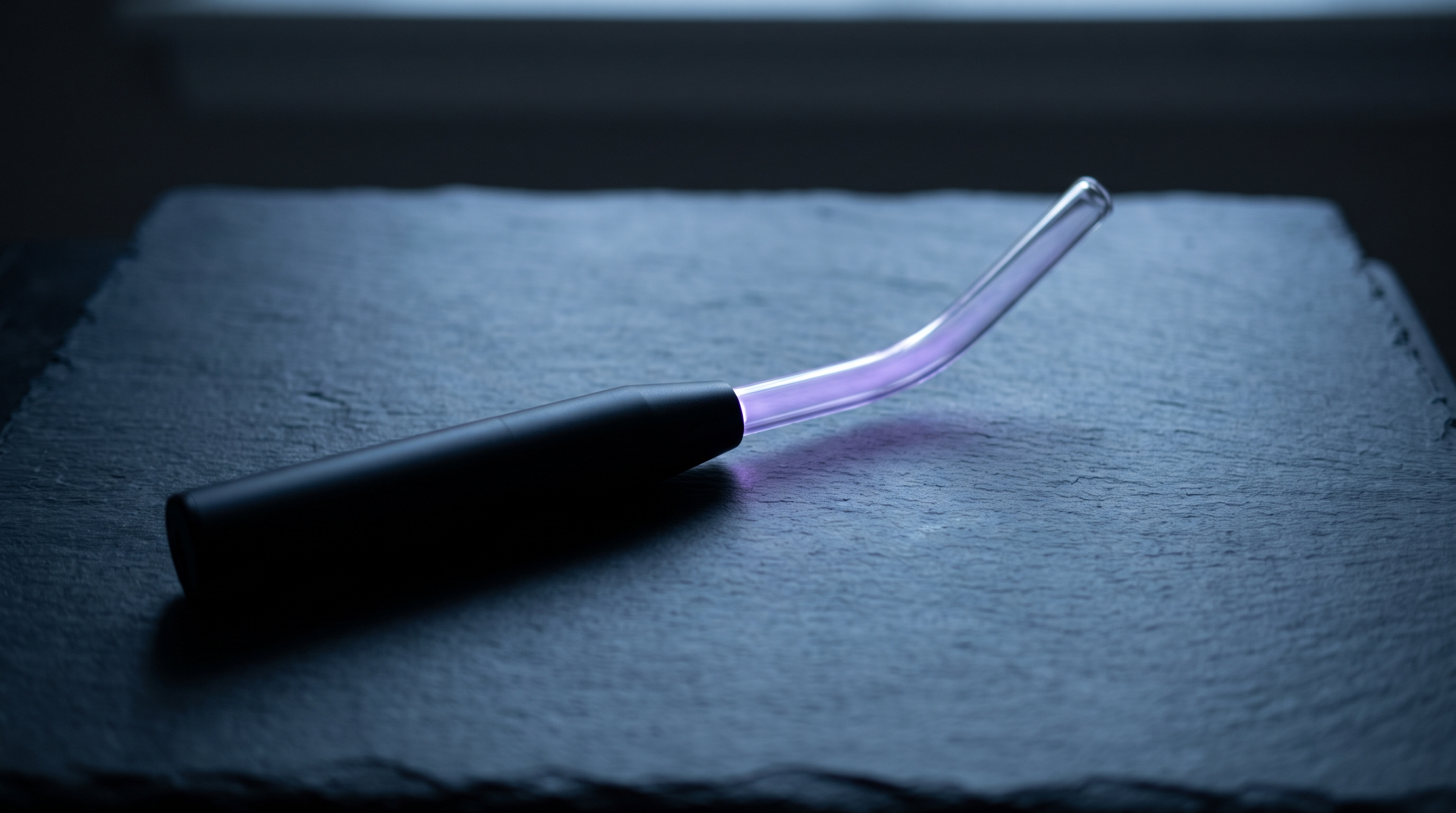
Switch one on in a dark bathroom and the effect is genuinely theatrical. A glass electrode fills with violet light, a faint crackle rises as you bring it toward your cheek, and the air picks up the sharp swimming-pool smell of ozone. High frequency facial wands sell for anywhere between thirty and two hundred dollars, and the marketing copy that surrounds them is expansive: clearer skin, tightened pores, stimulated collagen, reduced fine lines.
The device is not a fraud. It does something specific and physically measurable. The gap worth understanding is between what it measurably does and what the fourth item on that list would require.
A Victorian Instrument With a Modern Deck
The technology is older than most people assume. High frequency wands descend directly from the violet ray devices sold across America in the 1910s and 1920s, built on Tesla-coil principles and marketed as a cure for essentially everything, from baldness to insomnia to kidney disease. Regulators eventually took the medical claims apart. The hardware survived in salons.
What is inside has barely changed. A handle steps household current up to a high-frequency, low-amperage output and feeds it into a sealed glass electrode containing a rarefied gas. Argon glows violet, neon glows orange. That color difference drives a surprising amount of online debate and means nothing therapeutically, because the gas is only there to conduct and glow. The therapeutic story, such as it is, happens outside the glass.
What the Electrode Actually Produces
As the electrode discharges across the small air gap to your skin, it ionizes oxygen molecules in that gap and forms ozone. That is the smell, and it is the entire active mechanism. Everything a high frequency wand claims to do rests on a thin layer of ozone sitting on your stratum corneum for a few minutes, plus a mild warming sensation.
Ozone is not inert, which is why the acne argument is the strongest one in the wand’s favor.
If you are treating a surface with bacteria on it, ozone is a plausible tool.
The Acne Case Has Some Ground Under It
Ozone is a documented antimicrobial. In vitro work evaluating ozone therapy has demonstrated bactericidal activity alongside signals of improved wound healing at defined concentrations [1], and a review of clinical trials using ozone across dermatological conditions found reasonable safety and some efficacy signals, largely in wound care and infection contexts [2]. If you are treating a surface with bacteria on it, ozone is a plausible tool.
Modern acne research complicates the leap from there to your face. Current understanding holds that acne is not simply a matter of too many Cutibacterium acnes organisms to be killed off. It involves a loss of diversity within the skin microbiome and an activated innate immune response, with specific phylotypes rather than raw bacterial load driving inflammation [3]. A treatment that indiscriminately oxidizes surface flora is a blunt instrument against a problem that turns out to be about balance.
So the fair verdict on the acne claim is “plausible mechanism, thin clinical evidence, probably modest.” That is a defensible thing to buy a gadget for. It is not what most of these wands are sold for.
The Part the Product Page Omits
Ozone has a second literature, and it is not flattering. Ambient ozone is a recognized skin stressor. Research using reconstructed human skin models found that ozone exposure depletes antioxidant reserves, drives lipid peroxidation, and alters matrix metalloproteinase activity, with a topical antioxidant required to blunt the damage [4].
Read that alongside the anti-aging pitch and the tension is hard to miss. Matrix metalloproteinases are the enzymes that break collagen down. A device whose only mechanism is generating an oxidant that has been shown to push skin toward oxidative stress and MMP activity is an odd candidate for a collagen-building tool.
Water-based, 99% natural, and gentle enough to use every night, it does the slow structural work that genuinely rebuilds collagen.
The exposures are not equivalent, and a few minutes of low-concentration surface ozone is not the same as chronic urban air pollution. But the burden of proof runs the other way here, and nobody has discharged it.
What an Evidence-Backed Home Device Looks Like
It is worth knowing what the bar actually is, because some home devices clear it. A systematic review of home-based dermatological devices assessed the modalities with graded evidence and found reasonable support for intense pulsed light in hair removal, diode laser in alopecia, low-power radiofrequency for wrinkles, and LED for acne [5]. High frequency wands do not appear in that company.
For contrast, a controlled trial of red and near-infrared light treatment in 136 subjects reported improvements in patient satisfaction, fine lines, skin roughness, and, critically, intradermal collagen density measured by ultrasonographic assessment [6]. That is what a real efficacy claim looks like: a control group, a measured endpoint in the dermis, and a published result. Whatever you think of at-home light therapy or microcurrent devices, those categories have shown up and been counted.
The Question Every Device Has to Answer
Visible aging is a structural failure in the dermis. Photoaging research has mapped the mechanism in detail: ultraviolet exposure upregulates matrix-degrading metalloproteinases that cleave the collagen network while simultaneously suppressing new procollagen synthesis, so the scaffold degrades faster than it is rebuilt [7]. Any treatment claiming to reverse that has to move one of those two variables.
Topical retinoids do. A systematic review and meta-analysis of randomized controlled trials covering more than 1,300 patients found that tretinoin significantly improved fine and coarse wrinkle scores against vehicle control and increased type I procollagen synthesis [8]. That is a direct hit on both halves of the equation, demonstrated repeatedly, over months of daily use.
Where Nanoretinol Fits
The catch with retinoids has never been whether they work. It is whether people can tolerate them long enough to find out. The skin barrier turns away much of what you apply, and conventional formulations that force the issue chemically produce the burning, flaking, and redness that end most retinol experiments early.
Nanoretinol approaches the barrier differently. It wraps retinol in biomimetic lipid nanoparticles that the skin recognizes as “self” and allows through intact, so the active arrives without the barrier being broken down to let it in. That is why a mild 0.2% concentration outperforms harsher conventional formulas: in North Biomedical’s clinical testing it produced 232% more collagen recovery and 73% more elastin recovery than conventional retinol, with users showing a 61% increase in firmness and a 56% increase in elasticity over 56 days. Water-based, 99% natural, and gentle enough to use every night, it does the slow structural work that genuinely rebuilds collagen.
So Should You Buy One?
If you like the ritual, want a mild antibacterial pass over breakout-prone skin, and go in understanding that you are buying a plausible acne adjunct rather than an anti-aging treatment, a high frequency wand is a defensible thirty-dollar purchase. Avoid it near the eyes, skip it entirely if you are pregnant or have a pacemaker or a seizure disorder, and do not use it over active rosacea or broken skin.
What it will not do is change the architecture of your face. That job belongs to something that reaches the dermis and stays there night after night, and no amount of violet light in a glass tube substitutes for it.
References
- Borges GÁ, Elias ST, da Silva SM, et al. “In vitro evaluation of wound healing and antimicrobial potential of ozone therapy.” Journal of Cranio-Maxillo-Facial Surgery. 2017;45(3):364-370. doi:10.1016/j.jcms.2017.01.005
- Machado AU, Contri RV. “Effectiveness and Safety of Ozone Therapy for Dermatological Disorders: A Literature Review of Clinical Trials.” Indian Journal of Dermatology. 2022;67(4):479. doi:10.4103/ijd.ijd_152_22
- Dréno B, Pécastaings S, Corvec S, Veraldi S, Khammari A, Roques C. “Cutibacterium acnes (Propionibacterium acnes) and acne vulgaris: a brief look at the latest updates.” Journal of the European Academy of Dermatology and Venereology. 2018;32(Suppl 2):5-14. doi:10.1111/jdv.15043
- Pecorelli A, McDaniel DH, Wortzman M, Nelson DB. “Protective effects of a comprehensive topical antioxidant against ozone-induced damage in a reconstructed human skin model.” Archives of Dermatological Research. 2021;313(3):139-146. doi:10.1007/s00403-020-02083-0
- Cohen M, Austin E, Masub N, Kurtti A, George C, Jagdeo J. “Home-based devices in dermatology: a systematic review of safety and efficacy.” Archives of Dermatological Research. 2022;314(3):239-246. doi:10.1007/s00403-021-02231-0
- Wunsch A, Matuschka K. “A Controlled Trial to Determine the Efficacy of Red and Near-Infrared Light Treatment in Patient Satisfaction, Reduction of Fine Lines, Wrinkles, Skin Roughness, and Intradermal Collagen Density Increase.” Photomedicine and Laser Surgery. 2014;32(2):93-100. doi:10.1089/pho.2013.3616
- Quan T, Qin Z, Xia W, Shao Y, Voorhees JJ, Fisher GJ. “Matrix-degrading metalloproteinases in photoaging.” Journal of Investigative Dermatology Symposium Proceedings. 2009;14(1):20-24. doi:10.1038/jidsymp.2009.8
- Huang HY, Lee LTJ. “Tretinoin for Photodamaged Facial Skin: Systematic Review and Meta-Analysis of Randomized Controlled Trials.” Dermatology Practical & Conceptual. 2025;15(4):e20255172. doi:10.5826/dpc.1504a5172