At-Home Facial: The Steps That Actually Do Something
Most home facial routines are mostly theatre. Here is which parts hold up to measurement.
An at-home facial is one of the few skincare rituals that is genuinely worth the hour, and also one of the easiest to do in a way that leaves your skin worse than when you started. The difference is almost entirely about which steps you keep and how far apart you space them.
Here is what each stage of the standard routine actually does, judged by measurement rather than by how luxurious it feels.
Cleansing: the step most people overdo
The purpose of the first step is to take off sunscreen, makeup, and the day’s sebum without dismantling the barrier underneath. That distinction matters, because surfactant-based cleansers can strip barrier lipids and proteins and push skin surface pH away from its normally acidic range near 5.5 [1]. The tight, squeaky feeling people read as “clean” is the signature of exactly that damage.
For a facial, a gentle two-stage approach is genuinely useful: an oil or balm to dissolve sunscreen and makeup, then a mild low-foam cleanser. Double cleansing earns its place here specifically because it lets you remove stubborn products without scrubbing at your face with a harsh formula.
Steam: useful, but not for the reason you were told
What steam does do is hydrate the stratum corneum, and that turns out to be worth something. Raising the water content of the surface layer increases the permeability of the skin to substances applied afterward, an effect thoroughly documented in the occlusion and percutaneous absorption literature [2]. Softened, water-swollen keratin is simply easier for an active to move through.
So a facial steamer is a legitimate step, just not a pore-cleaning one. Five to eight minutes is plenty. Its value is entirely in what you apply next, which means steaming and then doing nothing is the one version guaranteed to waste the effort.
If you already exfoliate on a schedule, your facial should use that session as the week’s exfoliation rather than adding to it.
Exfoliation: the mechanism, and the honest limit
Chemical exfoliants work by loosening the corneodesmosomes, the protein rivets holding dead surface cells together, which accelerates normal shedding. Ultrastructural work on glycolic acid showed exactly this pattern of accelerated desquamation without gross structural damage to the barrier at typical cosmetic concentrations [3].
That thinner, better-organized surface layer is what produces the immediate glow, and it is also why the treatment applied afterward performs better than usual. The limit is that this is a step you can very easily repeat too often. If you already exfoliate on a schedule, your facial should use that session as the week’s exfoliation rather than adding to it. Our guide to how often to exfoliate covers the frequency question by skin type.
Masks: clay has actual numbers behind it
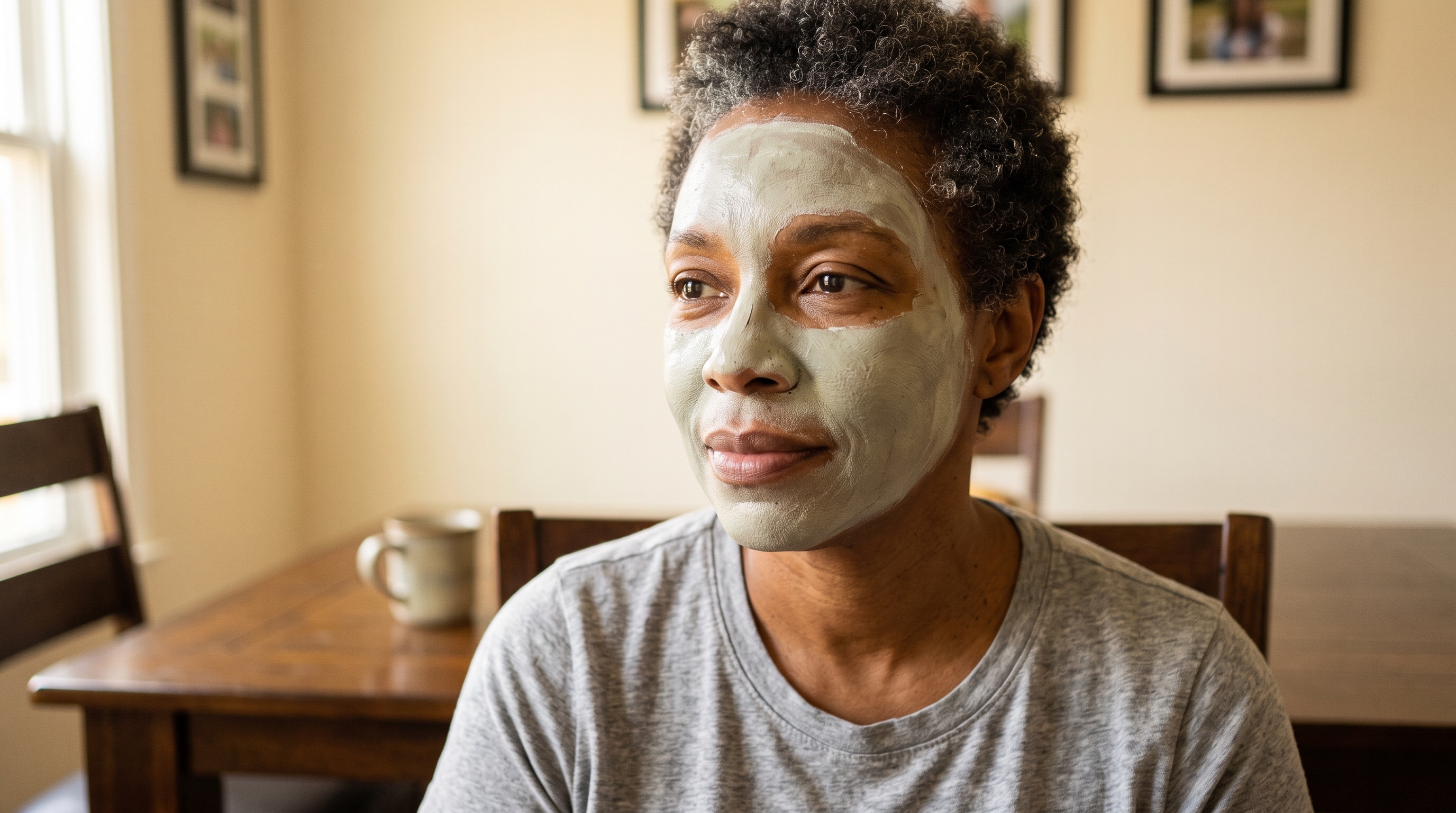
Masks are the step most likely to be pure ritual, with one clear exception. In an instrumented study using Sebumeter and Corneometer readings, a clay mask cut measured sebum by roughly 69% immediately after use and improved stratum corneum hydration by up to about 30% over four weeks [4].
The sebum effect is short-lived, since your glands simply refill. The hydration improvement is the more interesting finding, and it argues for clay as a periodic step for oilier skin rather than a weekly obligation for everyone. If your skin runs dry, a hydrating or occlusive mask does more for you than clay ever will.
Massage: real, modest, and pleasant
Facial massage has more evidence behind it than skeptics expect and far less than the marketing claims. A controlled study of a facial massage roller found that a short session measurably increased local skin blood flow, with repeated use over several weeks improving vascular responsiveness [5].
That is a real physiological effect. It is also a circulatory one, which means it produces temporary flush and reduced puffiness rather than structural lifting. Gua sha and roller work belong in an at-home facial because they feel good, help move fluid, and cost nothing to include. Expectations should stop there.
If your skin runs dry, a hydrating or occlusive mask does more for you than clay ever will.
The treatment step is the whole point
Everything before this exists to set up one moment: applying an active to skin that is hydrated, freshly desquamated, and warm. This is where the results of a facial actually come from, and it is the step most home routines rush because it looks the least like a spa.
The rule almost every home facial guide skips
Do not stack every disruptive step into one session.
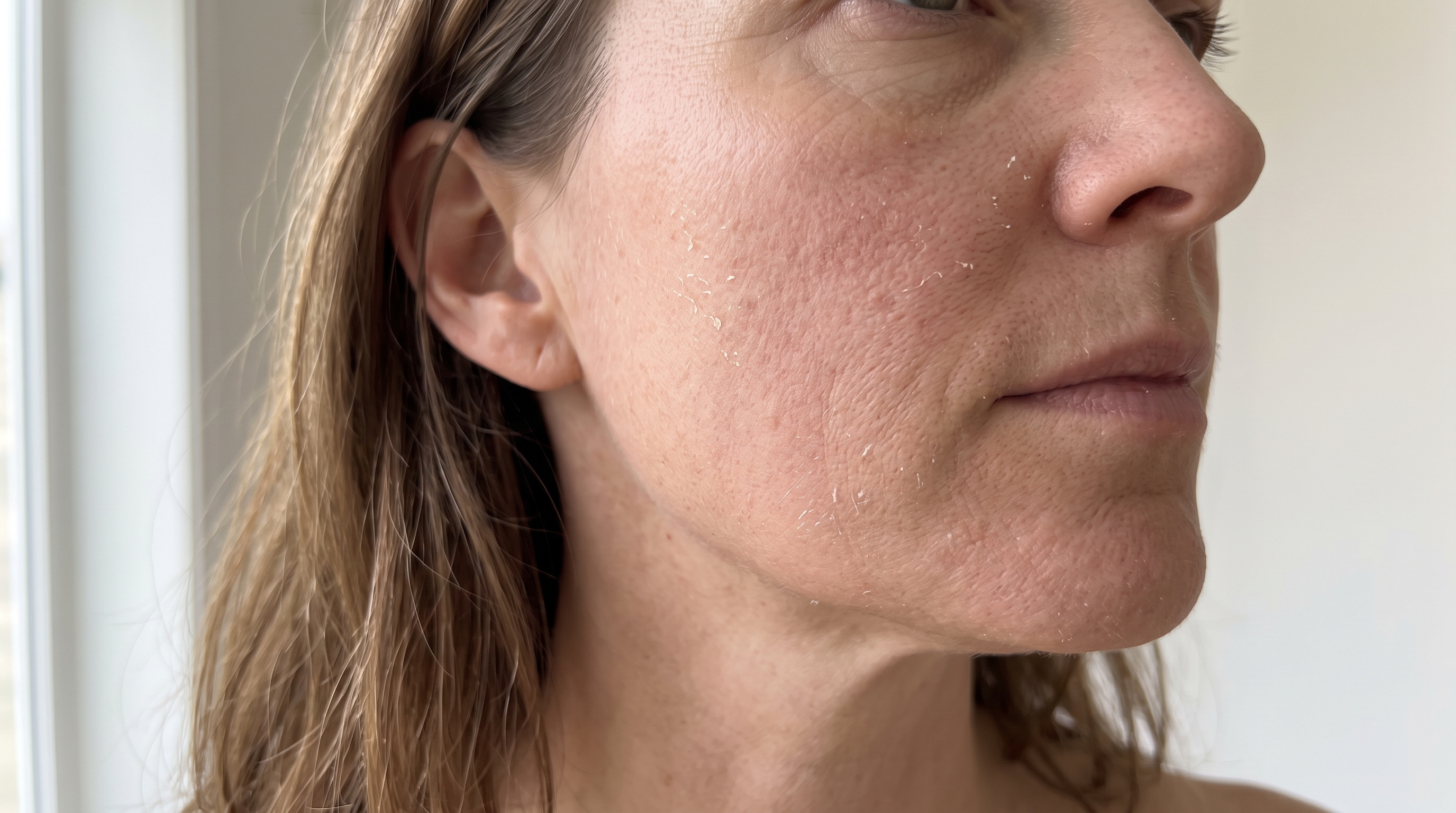
When the barrier is compromised, the resulting increase in water loss is itself the signal that triggers the lipid synthesis needed to repair it, and that repair process runs over a day or more rather than minutes [6]. Exfoliating, then using a strong clay mask, then applying a retinoid on the same evening does not compound your results. It compounds the disruption, and you spend the following three days with tight, flaking, reactive skin.
This is especially true for retinoids. Retinoid irritation is common in the early weeks and the standard way to manage it is to reduce application frequency rather than to push through it [7]. Put plainly: on facial night, exfoliate or use your retinoid, never both.
Where the treatment step usually falls down
The reason the payoff from a home facial is often smaller than expected is that even perfectly prepared skin still presents a barrier the active has to cross. Steam and exfoliation improve the odds at the margin. They do not change the fundamental problem, which is that conventional retinol is poorly suited to crossing the epithelial barrier and is typically formulated with chemicals and petroleum derivatives that force their way through by destabilizing that barrier. That mechanism is where the burning and peeling come from.
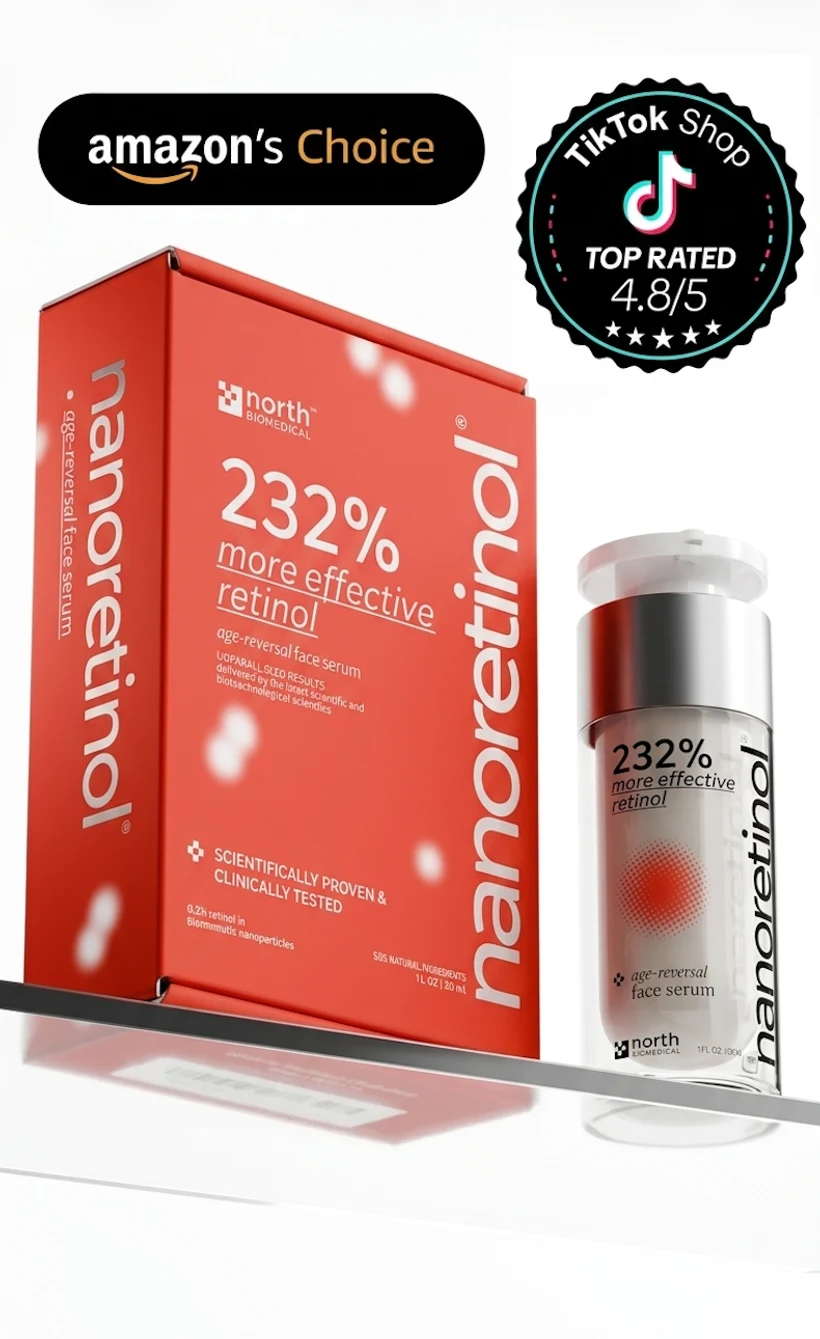
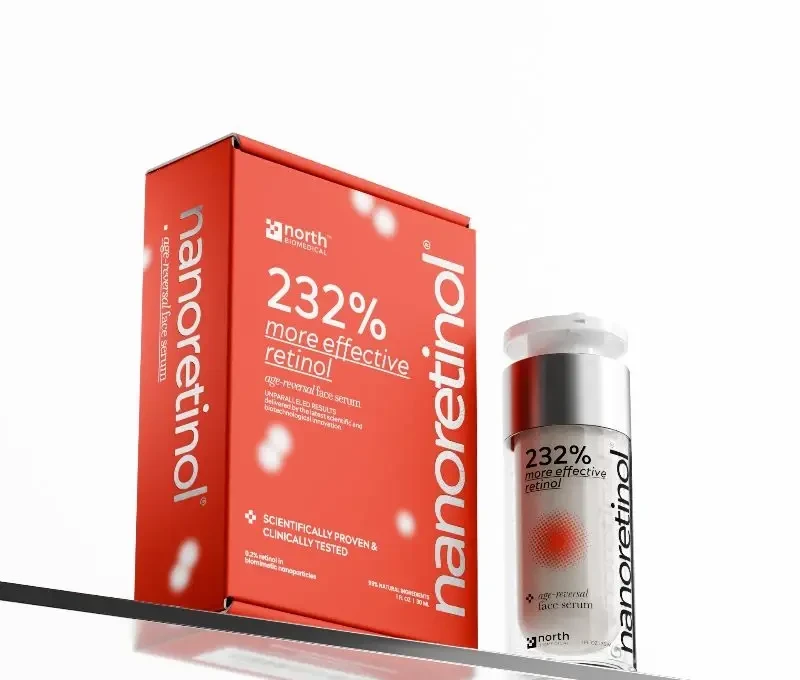
Nanoretinol was developed to remove that trade-off. Retinol is encapsulated in biomimetic lipid nanoparticles that are externally similar enough to skin cells that the body recognizes them as “self” and permits passage through the epithelial barrier without damaging it. North Biomedical’s clinical study found the delivery system 232% more effective than conventional retinol in collagen recovery and 73% more effective in elastin recovery, with drastically reduced cytotoxicity, at a concentration of only 0.2% retinol [8]. In a 56-day trial it produced a 61% increase in skin firmness and a 56% increase in elasticity.
For a facial routine specifically, the water-based gel format matters as much as the numbers. It absorbs completely into freshly hydrated skin instead of sitting on top of it.
A sequence worth repeating
Cleanse gently, steam for five to eight minutes, then choose one active step rather than three. Apply your treatment to skin still slightly damp from the steam, follow with a moisturizer to hold the water in, and massage while everything absorbs. Finish there. Skip the retinoid that night if you exfoliated, and use sunscreen without fail the next morning, because a freshly exfoliated face is a more vulnerable one.
Done every week or two, that version delivers most of what an in-office facial does. Done every three days with every step included, it is the fastest route to a damaged barrier that this article can describe.
References
- Ananthapadmanabhan KP, Moore DJ, Subramanyan K, Misra M, Meyer F. “Cleansing Without Compromise: The Impact of Cleansers on the Skin Barrier and the Technology of Mild Cleansing.” Dermatologic Therapy. 2004;17(Suppl 1):16-25. PubMed: 14728695
- Zhai H, Maibach HI. “Effects of Skin Occlusion on Percutaneous Absorption: An Overview.” Skin Pharmacology and Applied Skin Physiology. 2001;14(1):1-10. doi:10.1159/000056328
- Fartasch M, Teal J, Menon GK. “Mode of Action of Glycolic Acid on Human Stratum Corneum: Ultrastructural and Functional Evaluation of the Epidermal Barrier.” Archives of Dermatological Research. 1997;289(7):404-409. PubMed: 9248619
- Zhang X, Zhang Z, Tao H, He X, Hsu K, Wang W, Fang X, Steel A. “Comprehensive Assessment of the Efficacy and Safety of a Clay Mask in Oily and Acne Skin.” Skin Research and Technology. 2023;29(11):e13513. doi:10.1111/srt.13513
- Miyaji A, Sugimori K, Hayashi N. “Short- and Long-term Effects of Using a Facial Massage Roller on Facial Skin Blood Flow and Vascular Reactivity.” Complementary Therapies in Medicine. 2018;41:271-276. PubMed: 30477852
- Grubauer G, Elias PM, Feingold KR. “Transepidermal Water Loss: The Signal for Recovery of Barrier Structure and Function.” Journal of Lipid Research. 1989;30(3):323-333. PubMed: 2723540
- Mukherjee S, Date A, Patravale V, Korting HC, Roeder A, Weindl G. “Retinoids in the Treatment of Skin Aging: An Overview of Clinical Efficacy and Safety.” Clinical Interventions in Aging. 2006;1(4):327-348. PubMed: 18046911
- North Biomedical LLC. “Nanoretinol vs. Conventional Retinol: Efficacy in Collagen and Elastin Recovery.” Clinical Study Summary, 2024. Study summary