How Long Does Filler Last? The Two Clocks Nobody Explains
Why the same syringe lasts twice as long in one part of the face as another
Ask three injectors how long filler lasts and you will get three answers, all of them ranges, all of them roughly six to eighteen months. The range is so wide because the question is underspecified. Longevity depends on which product went in, which part of the face received it, and what your body does with it afterwards.
There is also a second question hiding inside the first, and almost nobody separates them. How long the material stays in your face and how long the result looks good are two different clocks, and they run at very different speeds.
The same product, very different lifespans
The clearest data on this comes from a prospective volumetric study that measured retention by facial region rather than by product. At twelve weeks after injection, hyaluronic acid retention was 79.2% in the malar and extended midface, 62.7% in the upper perioral region, 54.1% at the lip and perioral junction, and just 37.2% in the cutaneous lips [1].
Read that spread again. The same class of material, measured the same way at the same timepoint, held roughly twice as well in the mid-cheek as in the lips.
Two mechanisms explain most of it. Movement is the first: lips are in near-constant motion from speaking, eating and expression, and mechanical stress accelerates the breakdown and displacement of a soft gel. Blood flow is the second: the perioral region is densely vascular, and everything that degrades hyaluronic acid arrives through the circulation.
That degradation happens along two separate routes. Hyaluronidase, the enzyme that breaks down hyaluronic acid, is a large molecule and can only act at the surface of an injected bolus. Free radicals are small enough to penetrate the pores of the crosslinked gel and break chains the enzyme cannot reach [2]. A dense, highly crosslinked filler resists the enzyme well and the free radicals less well, which is part of why laboratory durability and clinical durability diverge.
If you are weighing specific products, our pages on Juvederm and cheek filler go into the formulations area by area.
If you are weighing specific products, our pages on Juvederm and cheek filler go into the formulations area by area.
Your filler is probably still there
Here is where the two clocks separate. Patients are routinely told their hyaluronic acid filler is gone at twelve to eighteen months, at which point they book a top-up.
A review of 33 magnetic resonance imaging studies of the mid-face found filler still present in every single patient examined, with no complete dissipation at two years and detectable material in some patients between eight and fifteen years after injection [3].
The result faded long before the material did. Hyaluronic acid gels absorb water and swell, and as they slowly degrade they lose that hydrating capacity before they lose their mass. The visible correction goes first. This is also why repeated top-ups over many years can accumulate into a heaviness that nobody planned, particularly under the eyes, where even small volumes show. Our page on under eye filler covers that area’s specific behaviour.
The practical takeaway is that “it will be gone by next year” describes appearance rather than anatomy, and planning repeat treatment around it deserves more care than it usually gets.
The biostimulators run on a different clock entirely
Poly-L-lactic acid and calcium hydroxylapatite are frequently grouped with hyaluronic acid under the single word filler, and they work in a fundamentally different way. They provide some immediate volume, then they provoke your own tissue to make collagen, and they are eventually resorbed themselves.
Histology confirms the mechanism rather than merely suggesting it. Two months after subdermal injection of calcium hydroxylapatite, biopsies stained with picrosirius red and examined under circularly polarised microscopy showed a significant increase in newly formed type III collagen compared with untreated skin [4].
In photodamaged human skin, ten to twelve months of daily tretinoin produced an 80% increase in newly synthesised type I procollagen, against a 14% decrease with vehicle alone.
That changes the longevity question. With a biostimulator, some of what remains at two years is tissue you grew rather than product you bought. The result often builds over months rather than appearing immediately, and it fades more gradually.
It also means the two product classes are not really competing on the same axis. One replaces volume now. The other recruits your biology to build a bit of structure, on your body’s timeline and subject to your body’s capacity.
What no filler is doing
Both clocks concern volume. Neither concerns skin quality, and this is the distinction that decides whether a face treated with filler actually looks younger or merely looks fuller.
The skin sitting over any filler continues to thin on its own schedule. The foundational measurements of skin thickness, collagen content and density across ages established that dermal collagen declines progressively with age, and that women carry less at every age [5]. That decline is the origin of the widely repeated figure of roughly 1% collagen lost per year, and it does not pause because there is gel underneath.
This is why a face can be well filled and still read as aged. Volume is restored, and the surface above it is crepey, thin and less light-reflective than it used to be. Adding more filler to a skin-quality problem is the single most common way that aesthetic work starts looking like aesthetic work. Alternatives for the folds themselves are covered in smile line filler alternatives.
The skin-quality clock has a genuinely evidence-backed intervention, and it is topical rather than injected. In photodamaged human skin, ten to twelve months of daily tretinoin produced an 80% increase in newly synthesised type I procollagen, against a 14% decrease with vehicle alone [6]. Retinoids rebuild the dermis itself.
Tolerance has always been the limiting factor. Conventional retinol reaches the dermis by chemically disrupting the skin barrier, producing the redness, burning and peeling that ends most people’s attempts inside a month, and that is a particularly unwelcome trade in the weeks around an injectable appointment.
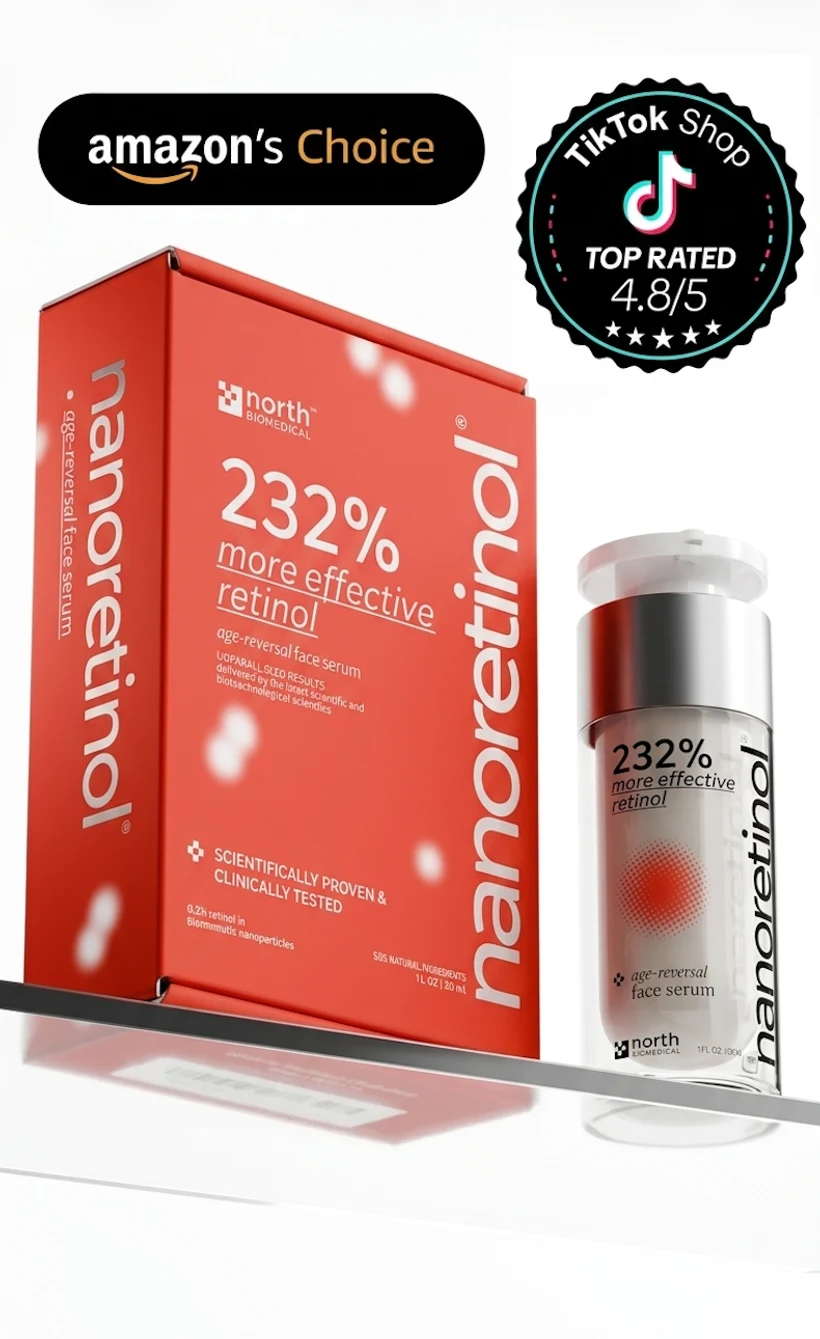
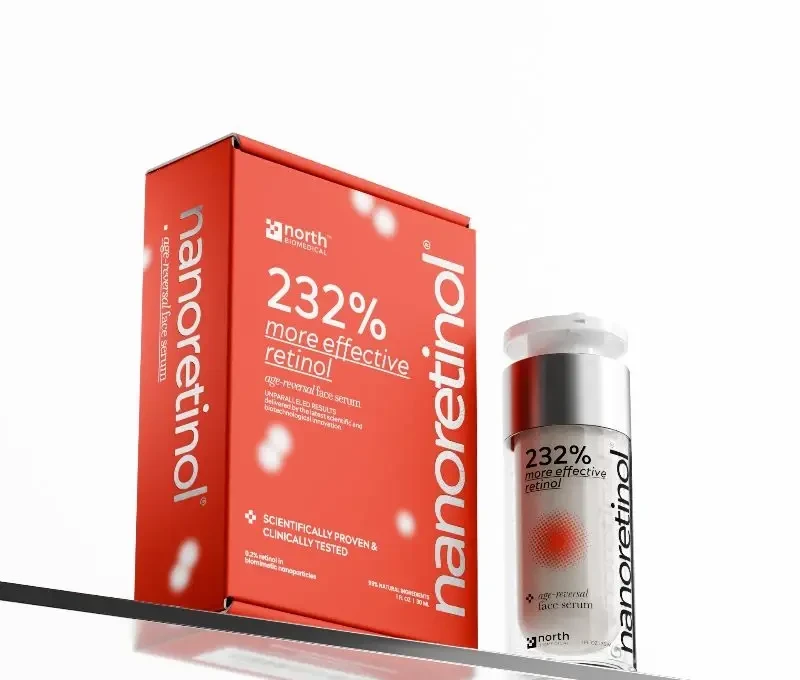
Nanoretinol addresses the delivery problem rather than the dose. Its 0.2% retinol travels inside biomimetic lipid nanoparticles that the skin recognises as self and admits intact, without needing to damage the barrier to get through, in a water-based, 99% natural formulation suitable for sensitive skin. Against conventional retinol it achieved 232% greater collagen recovery and 73% greater elastin recovery with drastically reduced cytotoxicity, and over 56 days delivered a 61% increase in firmness and a 56% increase in elasticity.
Filler dissolves on a schedule you do not control. Collagen you build stays until you stop building it, which is the more useful asset over a decade.
Planning the next appointment
If you want more from each syringe, the levers are real but modest. Choose the region honestly, since lip results will always be the shortest lived. Ask which product is going in and whether it is a hyaluronic acid or a biostimulator, because the follow-up interval differs. Wear sunscreen, since ultraviolet exposure generates the free radicals that degrade the gel from the inside.
And treat the skin above the filler as a separate project with its own timeline. The volume clock and the collagen clock run independently, and only one of them keeps running in your favour between appointments.
References
- Davis HD, Mazzaferro D, Habarth-Morales TE, Messa CA 4th, Talwar AA, Desai AA, McAuliffe PB, Broach RB, Serletti JM, Percec I. “A Large Prospective Volumetric and Patient-Reported Outcome Analysis of Hyaluronic Acid Facial Fillers.” Plastic and Reconstructive Surgery. 2025;156(4):550-559. doi:10.1097/PRS.0000000000012135
- Hong GW, Wan J, Chang K, Park Y, Yi KH. “Decomposition and Changes in In Vivo Post-HA Filler Injection: A Review.” Journal of Cosmetic Dermatology. 2024;24(1):e16652. doi:10.1111/jocd.16652
- Master M, Azizeddin A, Master V. “Hyaluronic Acid Filler Longevity in the Mid-face: A Review of 33 Magnetic Resonance Imaging Studies.” Plastic and Reconstructive Surgery - Global Open. 2024;12(7):e5934. PMID: 39015357
- Zerbinati N, Calligaro A. “Calcium Hydroxylapatite Treatment of Human Skin: Evidence of Collagen Turnover Through Picrosirius Red Staining and Circularly Polarized Microscopy.” Clinical, Cosmetic and Investigational Dermatology. 2018;11:29-35. doi:10.2147/CCID.S143015
- Shuster S, Black MM, McVitie E. “The Influence of Age and Sex on Skin Thickness, Skin Collagen and Density.” British Journal of Dermatology. 1975;93(6):639-643. doi:10.1111/j.1365-2133.1975.tb05113.x
- Griffiths CEM, Russman AN, Majmudar G, Singer RS, Hamilton TA, Voorhees JJ. “Restoration of Collagen Formation in Photodamaged Human Skin by Tretinoin (Retinoic Acid).” New England Journal of Medicine. 1993;329(8):530-535. doi:10.1056/NEJM199308193290803