
Kybella: How the Double-Chin Injection Works, What to Expect, and the Step Most People Skip
An FDA-approved injectable that permanently destroys fat under the chin — plus the skin-firming half of the equation no one mentions.
The area under the chin is one of the most stubborn places on the body. A bit of fullness there — what dermatologists call submental fat — refuses to respond to weight loss or exercise for many people, and it can make an otherwise youthful face look heavier and older. Kybella was the first injectable approved specifically to dissolve it, and it has become a go-to for people who want to avoid surgery. But the full story of how it works, and what it leaves behind, is more nuanced than the clinic brochures suggest.
What Kybella Is
Kybella is the brand name for an injectable form of deoxycholic acid. Deoxycholic acid is not a foreign chemical — it is a molecule your own body already makes to help break down dietary fat in the gut. When a purified, synthetic version is injected directly into the pocket of fat beneath the chin, it does there what it does in digestion: it breaks down fat.
It earned a notable distinction as the first injectable lipolytic substance approved by the FDA for reducing fat in this area [4]. That approval was not a formality — it rested on a substantial body of clinical trial evidence. In essence, Kybella uses a molecule your own body already makes to digest fat, redirected to dissolve the pocket under your chin.
How It Actually Works
The mechanism is direct and, importantly, permanent. When deoxycholic acid is injected into subcutaneous fat, it disrupts the membranes of fat cells — a process called adipocytolysis. The cell walls rupture, the fat cells die, and the body’s cleanup crew of immune cells gradually clears away the debris over the following weeks [4].
Because those fat cells are destroyed rather than merely shrunk, they do not come back. This is the key difference between Kybella and approaches that temporarily reduce fat volume. Once a treated fat cell is gone, it is gone for good — though significant future weight gain can still enlarge any remaining cells.
Among those who received the active treatment, 66.5% achieved a meaningful improvement of at least one grade, compared with 22.2% on placebo, and the volume reduction was confirmed objectively by MRI imaging.
The trade-off for that permanence is patience. The fat does not vanish overnight. Because the result depends on an inflammatory clearance process, the reduction is gradual and unfolds over several weeks to months, often across two to six treatment sessions spaced about a month apart.
The Clinical Evidence
Kybella’s reputation is built on real data. In a phase III randomized controlled trial, adults bothered by moderate or severe submental fullness were treated with either deoxycholic acid or a placebo. Among those who received the active treatment, 66.5% achieved a meaningful improvement of at least one grade, compared with 22.2% on placebo, and the volume reduction was confirmed objectively by MRI imaging [1]. A separate phase III placebo-controlled study reported the same pattern of results, with treated patients showing clear, measurable reductions in submental fat [2].
The benefit also held up across a range of severity. A later double-blind, placebo-controlled phase 3b study confirmed that the treatment worked for people with both milder and more extreme submental fat, and that satisfaction with the appearance of the chin and jaw improved alongside the physical change [3].
What Recovery Looks Like
The most common experience after a Kybella session is swelling — sometimes substantial. Because the treatment works by triggering a controlled inflammatory response, a swollen, tender, “puffier-before-it-gets-better” chin is expected for several days. Bruising, numbness, and firmness in the area are also common. Most of these effects are localized to the injection site and resolve on their own [1].
In a landmark study, treating photodamaged skin with a topical retinoid produced an 80% increase in new collagen formation.
More serious complications are uncommon but real, which is why Kybella should only ever be administered by a trained, qualified injector who understands the anatomy of the neck. The review literature documents that improper technique can lead to nerve injury affecting the smile, difficulty swallowing, or skin damage [4]. This is not a treatment to bargain-shop for; the skill of the person holding the needle matters enormously.
The Step Most People Skip
Here is what the before-and-after photos rarely address. Removing fat from under the chin changes the volume beneath the skin — but it does nothing for the quality of the skin itself. In some people, especially those over 40 whose skin has already lost collagen and elasticity, taking away the underlying fat can reveal or even accentuate looseness in the overlying skin. You solve the fat problem and uncover a firmness problem. Dissolving the fat under your chin reshapes the volume beneath the skin, but it does nothing to firm the skin on top of it.
This is where the conversation should turn to collagen. The neck and jaw skin firms and tightens to the degree that the dermis underneath is dense with collagen and elastin — and those are exactly the proteins we lose with age. The single most evidence-backed way to rebuild them topically is the retinoid family. In a landmark study, treating photodamaged skin with a topical retinoid produced an 80% increase in new collagen formation [5]. More collagen in the dermis means skin that holds its shape better over a freshly contoured jawline.
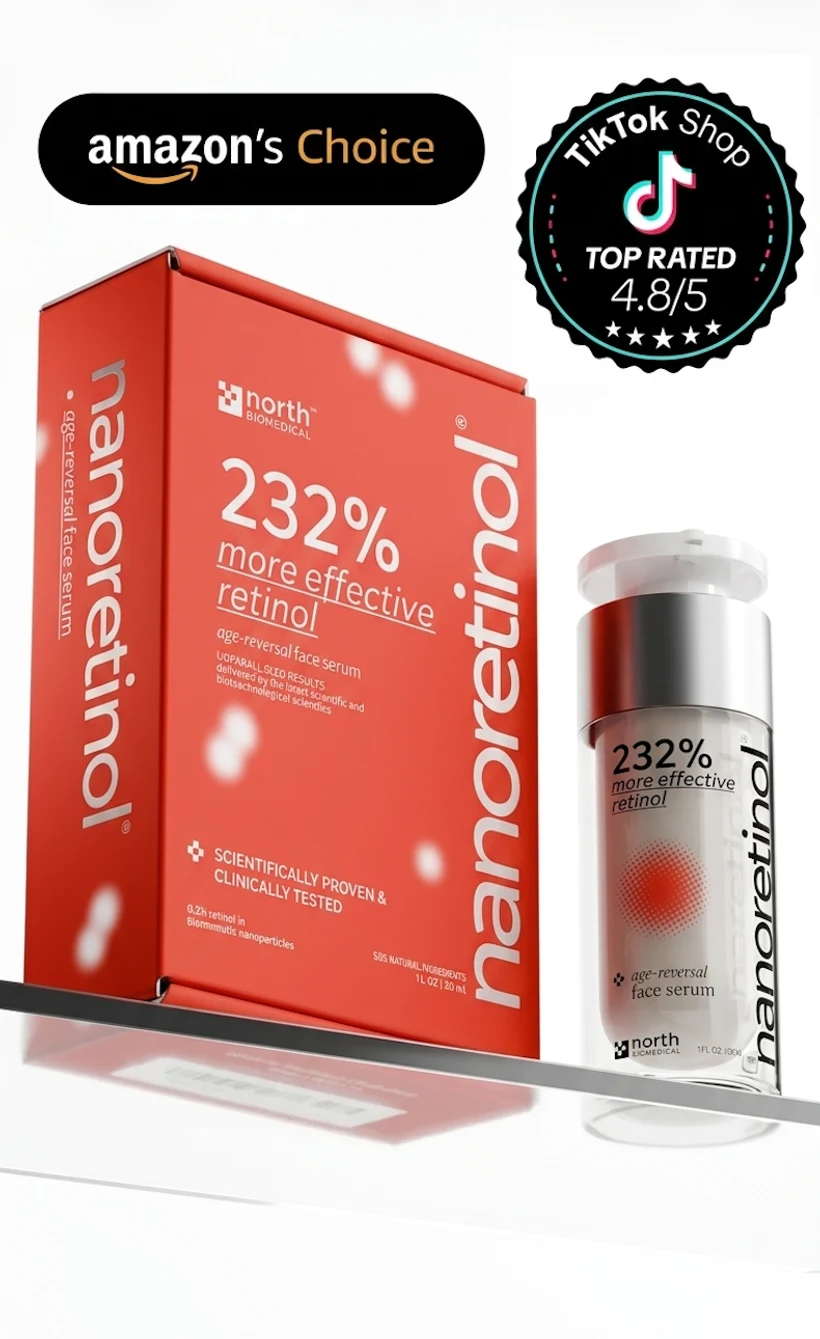
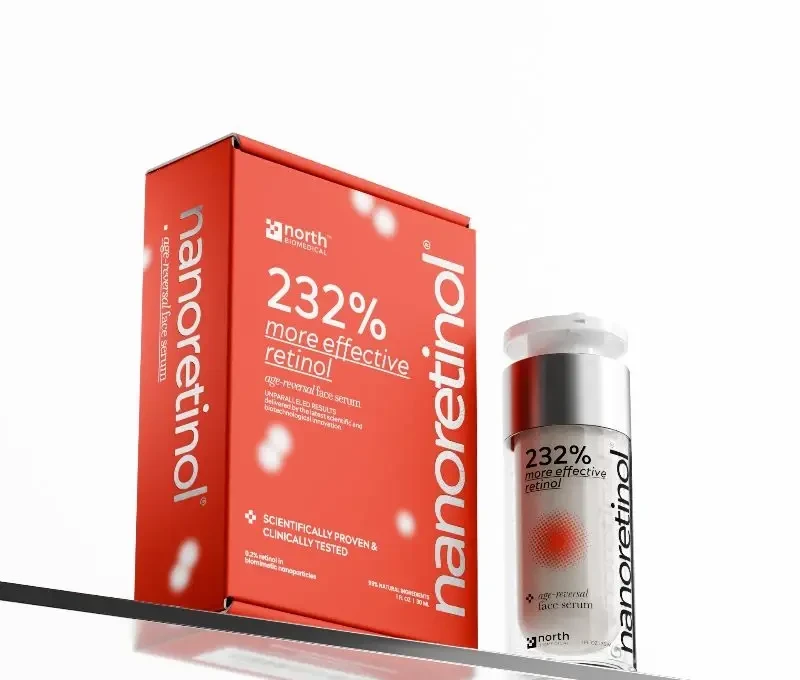
The complication is that traditional retinoids are harsh, and the thin, sensitive skin of the neck is one of the places people tolerate them worst. That is the gap Nanoretinol was designed to close. Instead of forcing raw active across the skin barrier and triggering the usual redness and peeling, it encapsulates a stabilized retinol inside biomimetic lipid nanoparticles that the body recognizes as “self” and allows through gently. In North Biomedical’s clinical study, this encapsulated form was 232% more effective in collagen recovery and 73% more effective in elastin recovery than conventional retinol, and delivered a 61% increase in skin firmness and a 56% increase in elasticity over 56 days — with drastically reduced cytotoxicity. At a gentle 0.2% in a water-based, 99% natural formula, it is suited to the delicate neck and jaw area where firmness matters most after fat reduction.
The smart approach treats the two problems as a pair: let an injectable handle the fat, and let a gentle, daily collagen-builder handle the skin. One without the other often disappoints — which is why the people happiest with their results tend to be the ones who planned for both.
The Bottom Line on Kybella
Kybella is a legitimate, FDA-approved, permanently effective way to reduce a stubborn double chin without surgery, backed by solid clinical trials. It asks for patience through a swelling-filled recovery and several spaced-out sessions, and it demands a skilled injector. But the part worth remembering is the one the marketing leaves out: dissolving fat is only half of a great jawline. Firm, collagen-rich skin is the other half — and that is the half you build, gently and consistently, at home.
References
- Humphrey S, Sykes J, Kantor J, et al. “ATX-101 for reduction of submental fat: A phase III randomized controlled trial.” Journal of the American Academy of Dermatology. 2016;75(4):788-797.e7. doi:10.1016/j.jaad.2016.04.028
- Rzany B, Griffiths T, Walker P, Lippert S, McDiarmid J, Havlickova B. “Reduction of unwanted submental fat with ATX-101 (deoxycholic acid), an adipocytolytic injectable treatment: results from a phase III, randomized, placebo-controlled study.” British Journal of Dermatology. 2014;170(2):445-453. doi:10.1111/bjd.12695
- Glogau RG, Glaser DA, Callender VD, et al. “A Double-Blind, Placebo-Controlled, Phase 3b Study of ATX-101 for Reduction of Mild or Extreme Submental Fat.” Dermatologic Surgery. 2019;45(12):1531-1541. doi:10.1097/DSS.0000000000001850
- Farina GA, Cherubini K, de Figueiredo MAZ, Salum FG. “Deoxycholic acid in the submental fat reduction: A review of properties, adverse effects, and complications.” Journal of Cosmetic Dermatology. 2020;19(10):2497-2504. doi:10.1111/jocd.13619
- Griffiths CE, Russman AN, Majmudar G, Singer RS, Hamilton TA, Voorhees JJ. “Restoration of collagen formation in photodamaged human skin by tretinoin (retinoic acid).” New England Journal of Medicine. 1993;329(8):530-535. doi:10.1056/NEJM199308193290803