Barrier Cream: The Three Types, What Each One Does, and Which Your Skin Needs
A barrier cream can shield skin, feed it lipids or simply hold in water. Here is how to tell the types apart, what the trials show, and how to use one with retinol
“Barrier cream” is printed on everything from diaper ointments to luxury face creams, and the label tells you surprisingly little about what is inside. Some barrier creams form a protective film on top of the skin. Others supply the fats the skin uses to rebuild its own barrier. A third group mainly pulls water into the surface and holds it there.
This guide explains the three types, what the research shows for each, how to read a label, and how a barrier cream fits into a routine that includes retinol.
What the skin barrier is
The outer layer of the skin, the stratum corneum, works like a brick wall. Flattened dead cells are the bricks, and a mortar of fats holds them together. That mortar is made mainly of three lipids: ceramides, cholesterol and free fatty acids [4]. When harsh cleansers, cold wind, over-exfoliation or strong actives thin that mortar, water escapes, irritants get in, and the skin feels tight, rough and stingy.
A barrier cream aims to help in one of two ways: by covering the wall so less damage reaches it, or by supplying fresh mortar. Our guide to skin barrier repair covers the whole recovery process; this one focuses on choosing the product.
Type 1: protectant creams
Protectant creams sit on the surface and form a film. The classic ingredients are petrolatum, dimethicone and zinc oxide, which is why the same words appear on hand creams for healthcare workers and on diaper creams.
For years, dermatologists assumed that a heavy occlusive like petroleum jelly would slow the skin’s own repair, because sealing mouse skin under an impermeable film had been shown to do exactly that. A study in human volunteers found the opposite. Petrolatum sped up barrier recovery after the skin was damaged, and microscopy showed that it does not simply sit on top: it slips into the spaces of the outer layer between the cells [3].
Your skin gains surprisingly little from a protectant cream used alone, since workplace trials found 29% of users still developed hand rashes, barely fewer than the 33% who skipped it.
Dimethicone, a silicone, makes a lighter film that feels silky rather than greasy. It shelters the surface but does not rebuild anything, which our guide to dimethicone for skin explains in detail.
The evidence for protectant creams on the hands is more modest than the marketing. A Cochrane review of workplace trials found that 29% of people who used a barrier cream still developed irritant hand dermatitis, compared with 33% of those who used nothing, a difference the reviewers judged may not be clinically important [2]. A review of barrier creams also noted that applying them the wrong way can do more harm than good [1].
Your skin gains surprisingly little from a protectant cream used alone, since workplace trials found 29% of users still developed hand rashes, barely fewer than the 33% who skipped it.
Type 2: physiological lipid creams
These creams try to replace the mortar itself. The key ingredients are ceramides, cholesterol and fatty acids such as linoleic acid, the same lipids the skin makes.
The ratio matters more than most labels admit. In studies by dermatologists at the University of California, San Francisco, carried out mostly in mice with early confirmation in human skin, applying only one or two of the three lipids actually delayed barrier recovery. An equal mix of all three allowed normal repair, and raising any one of them up to three times the others sped it up [4]. In skin of people around 80 years old, a mix with cholesterol as the dominant lipid accelerated barrier recovery within 6 hours [5].
That is why a ceramide cream that also lists cholesterol and fatty acids is usually a better bet than one that leads with a single ceramide. Our guide to the best ceramide moisturizer compares formulas on exactly that point.
Your skin handled a new retinoid better in a trial lasting 10 weeks when its moisturizer was built to strengthen the barrier rather than simply wet the surface.
Type 3: humectant repair creams
The third group leans on humectants such as glycerin, hyaluronic acid and urea, often with soothing ingredients like panthenol or niacinamide. These creams draw water into the outer layer, which makes skin feel softer and calmer within minutes. Moisturizers of this kind are a core part of how dermatologists care for dry, barrier-damaged skin and many forms of dermatitis [6]. Most good barrier creams blend all three approaches, with a humectant for water, lipids for repair and a light occlusive to hold everything in place.
How to read the label
- Look for a lipid trio. Ceramides (often listed as ceramide NP, AP or EOP), cholesterol and a fatty acid together are the strongest sign of a repair formula.
- Check where the occlusive sits. Petrolatum or dimethicone near the top of the list means a protective, heavier cream. Near the bottom, it is mainly there for texture.
- Skip fragrance and essential oils. A stressed barrier is more reactive than usual, so the fewer potential irritants the better.
- Match the product to the job. Thick zinc oxide creams are built to withstand moisture and friction in the diaper area and on chapped hands. They feel heavy and chalky on the face and can clog pores.
Barrier creams and retinol
Retinol is the most proven anti-aging ingredient you can buy without a prescription, and it is also the one most likely to leave the barrier dry and irritated in the first weeks. A barrier cream is one of the easiest ways to get through that adjustment period.
The idea has been tested. In a 10-week split-face trial, women applied two moisturizers twice daily, one on each side of the face, and started a prescription retinoid two weeks in. The side that used a moisturizer containing barrier-supporting vitamins (niacinamide, panthenol and vitamin E) handled the retinoid better and showed a stronger treatment response [7].
Your skin handled a new retinoid better in a trial lasting 10 weeks when its moisturizer was built to strengthen the barrier rather than simply wet the surface.
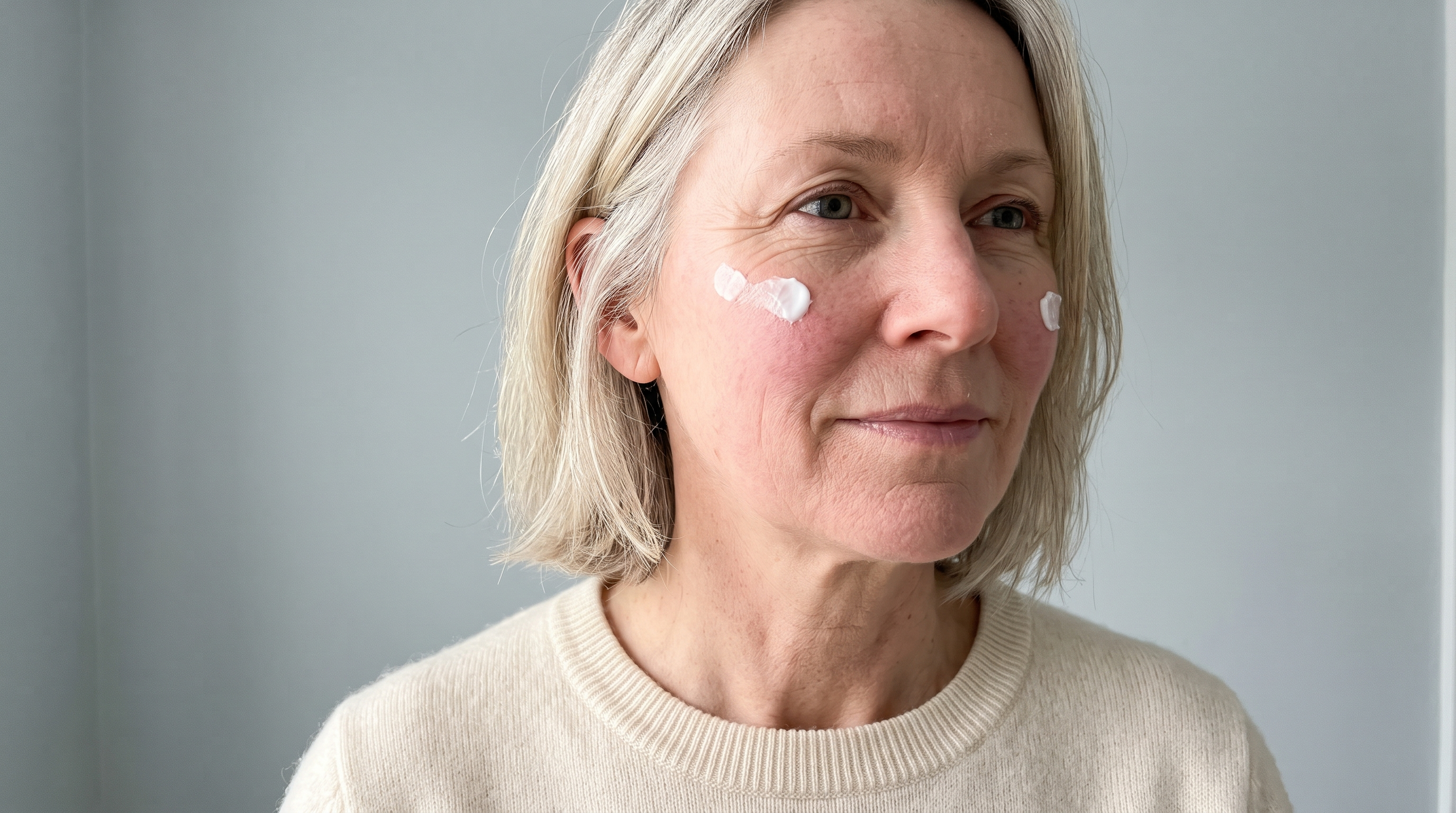
In practice, apply retinol at night on dry skin, wait a few minutes, then apply a fragrance-free lipid barrier cream. If your skin is very reactive, put the barrier cream on first as a buffer; our guide to the retinol sandwich method shows how to layer a buffer and when to stop using one.
Where Nanoretinol fits
A barrier cream protects the surface, but it cannot rebuild the collagen and elastin in the deeper skin that hold the face firm. That is the job of a retinoid. In a controlled trial in older adults, a 0.4% retinol lotion applied up to three times a week for 24 weeks reduced fine wrinkling and increased collagen production compared with the lotion without retinol [8].
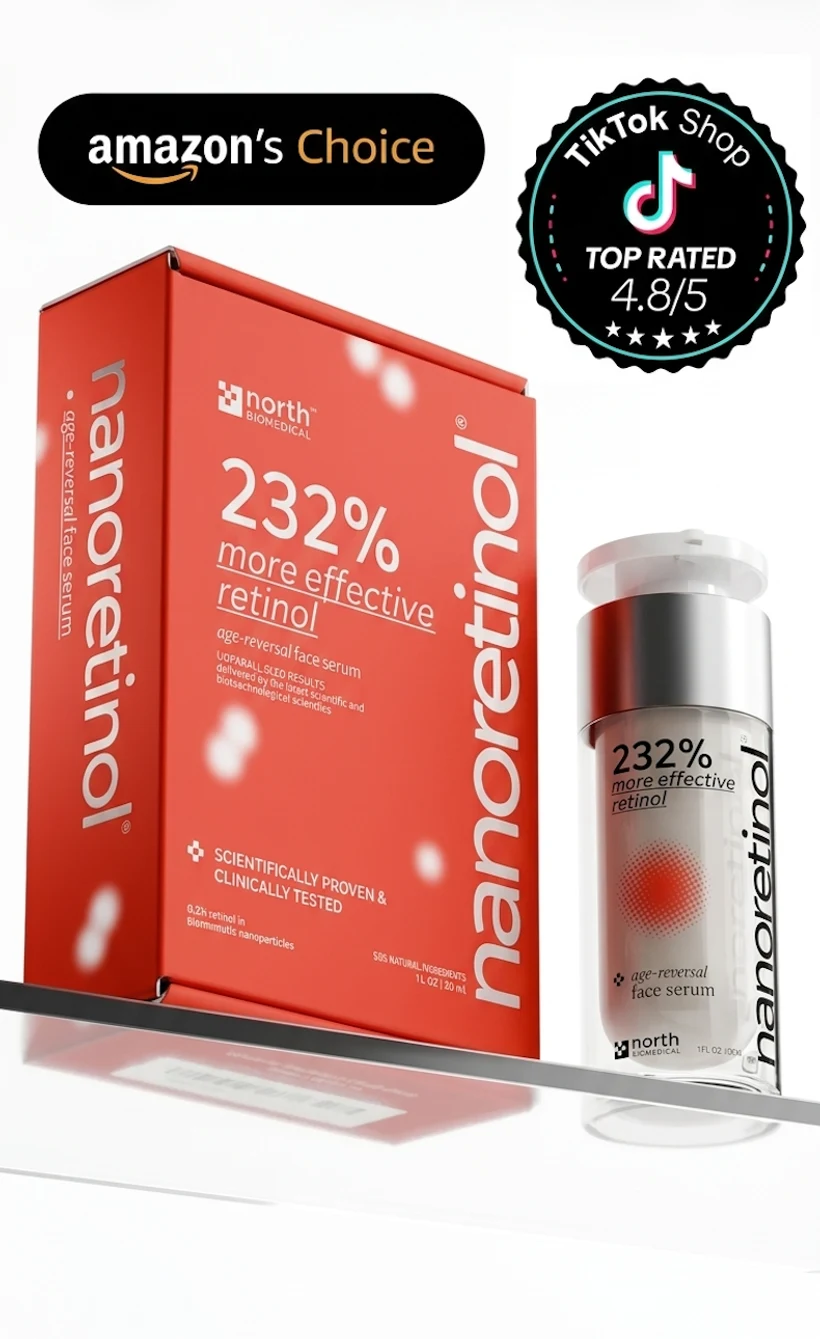
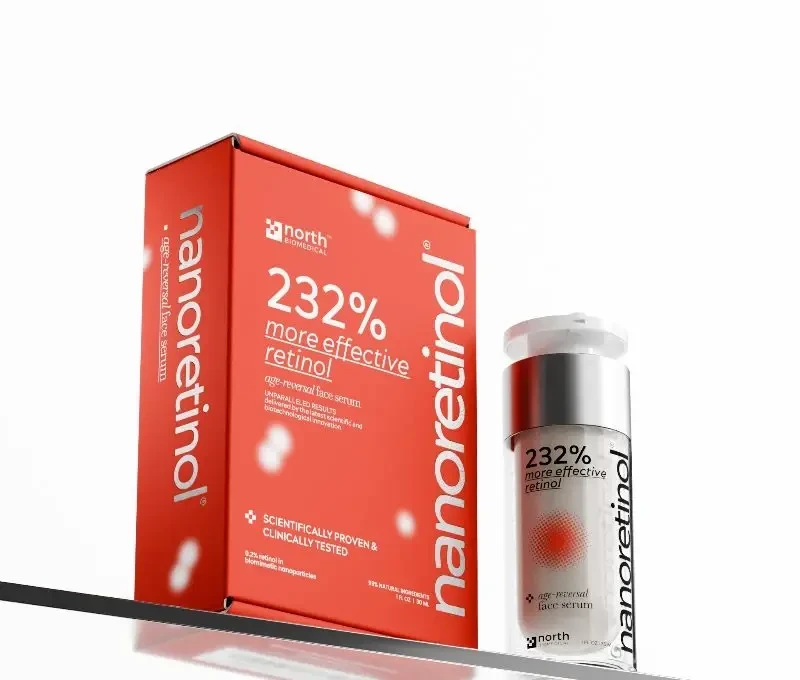
Many people reach for a barrier cream because conventional retinol has already irritated their skin. Nanoretinol addresses the cause of that irritation. Conventional formulas often use chemicals and petroleum derivatives that break down the barrier to push retinol through it. Nanoretinol instead carries 0.2% retinol inside biomimetic lipid nanoparticles that the skin recognizes as its own, so the retinol crosses the barrier without damaging it. In North Biomedical’s study, it was 232% more effective in collagen recovery and 73% more effective in elastin recovery than conventional retinol, and users saw a 61% increase in skin firmness after 56 days [9].
Its light, water-based gel layers easily under a ceramide barrier cream at night. Follow with broad-spectrum sunscreen the next morning, and let the barrier cream do the protecting while the retinol does the rebuilding.
References
- Zhai H, Maibach HI. “Barrier creams—skin protectants: can you protect skin?” Journal of Cosmetic Dermatology. 2002;1(1):20-23. PubMed:17134447
- Bauer A, Rönsch H, Elsner P, Dittmar D, Bennett C, Schuttelaar MLA, et al. “Interventions for preventing occupational irritant hand dermatitis.” Cochrane Database of Systematic Reviews. 2018;4(4):CD004414. doi:10.1002/14651858.CD004414.pub3
- Ghadially R, Halkier-Sorensen L, Elias PM. “Effects of petrolatum on stratum corneum structure and function.” Journal of the American Academy of Dermatology. 1992;26(3 Pt 2):387-396. PubMed:1564142
- Man MQ, Feingold KR, Thornfeldt CR, Elias PM. “Optimization of physiological lipid mixtures for barrier repair.” Journal of Investigative Dermatology. 1996;106(5):1096-1101. doi:10.1111/1523-1747.ep12340135
- Zettersten EM, Ghadially R, Feingold KR, Crumrine D, Elias PM. “Optimal ratios of topical stratum corneum lipids improve barrier recovery in chronologically aged skin.” Journal of the American Academy of Dermatology. 1997;37(3 Pt 1):403-408. PubMed:9308554
- Purnamawati S, Indrastuti N, Danarti R, Saefudin T. “The Role of Moisturizers in Addressing Various Kinds of Dermatitis: A Review.” Clinical Medicine & Research. 2017;15(3-4):75-87. doi:10.3121/cmr.2017.1363
- Draelos ZD, Ertel KD, Berge CA. “Facilitating facial retinization through barrier improvement.” Cutis. 2006;78(4):275-281. PubMed:17121065
- Kafi R, Kwak HS, Schumacher WE, Cho S, Hanft VN, Hamilton TA, et al. “Improvement of naturally aged skin with vitamin A (retinol).” Archives of Dermatology. 2007;143(5):606-612. doi:10.1001/archderm.143.5.606
- North Biomedical LLC. “Nanoretinol vs. Conventional Retinol: Efficacy in Collagen and Elastin Recovery.” Clinical Study Summary, 2024. Study summary