Eye Serum vs Eye Cream: Which One Your Under-Eye Area Actually Needs
The two words describe texture, not strength — and confusing the two is why most people buy the wrong one
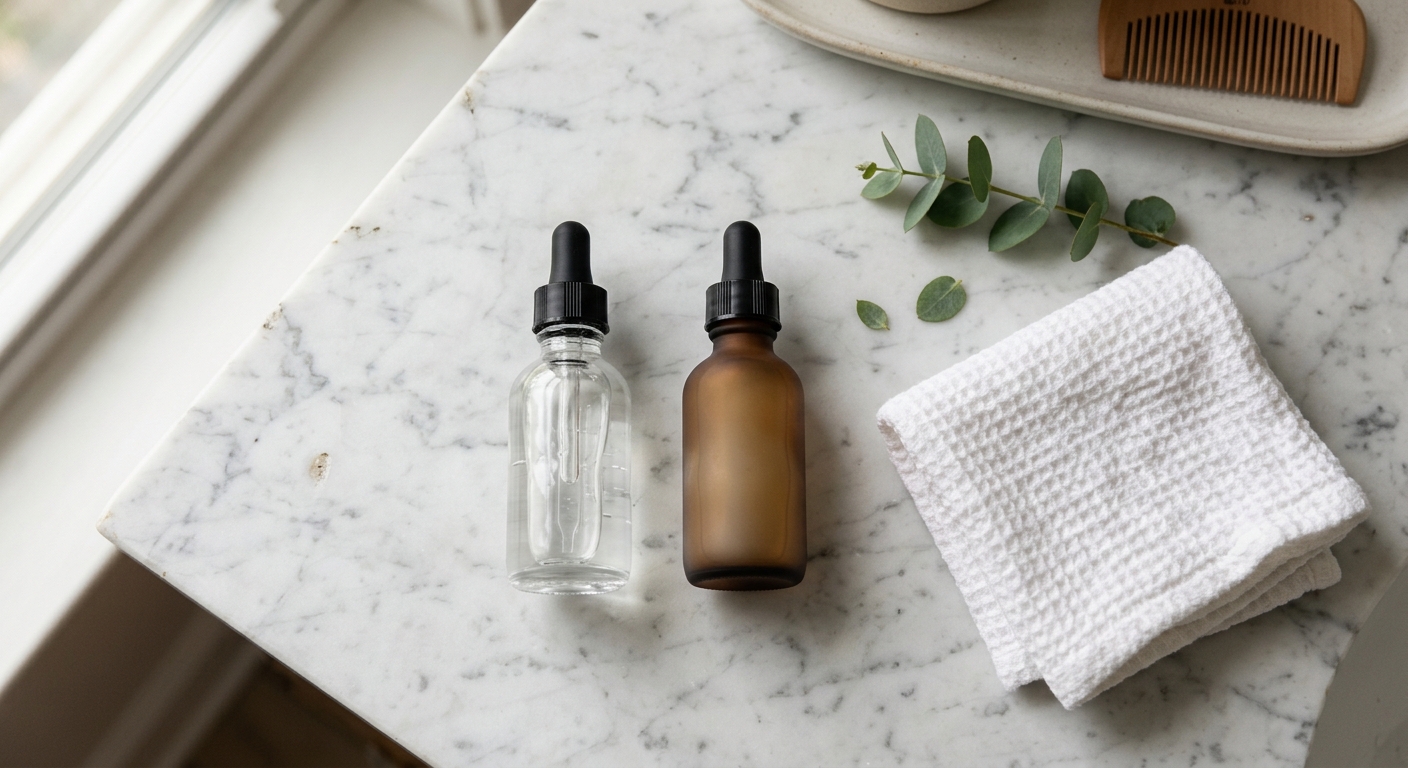
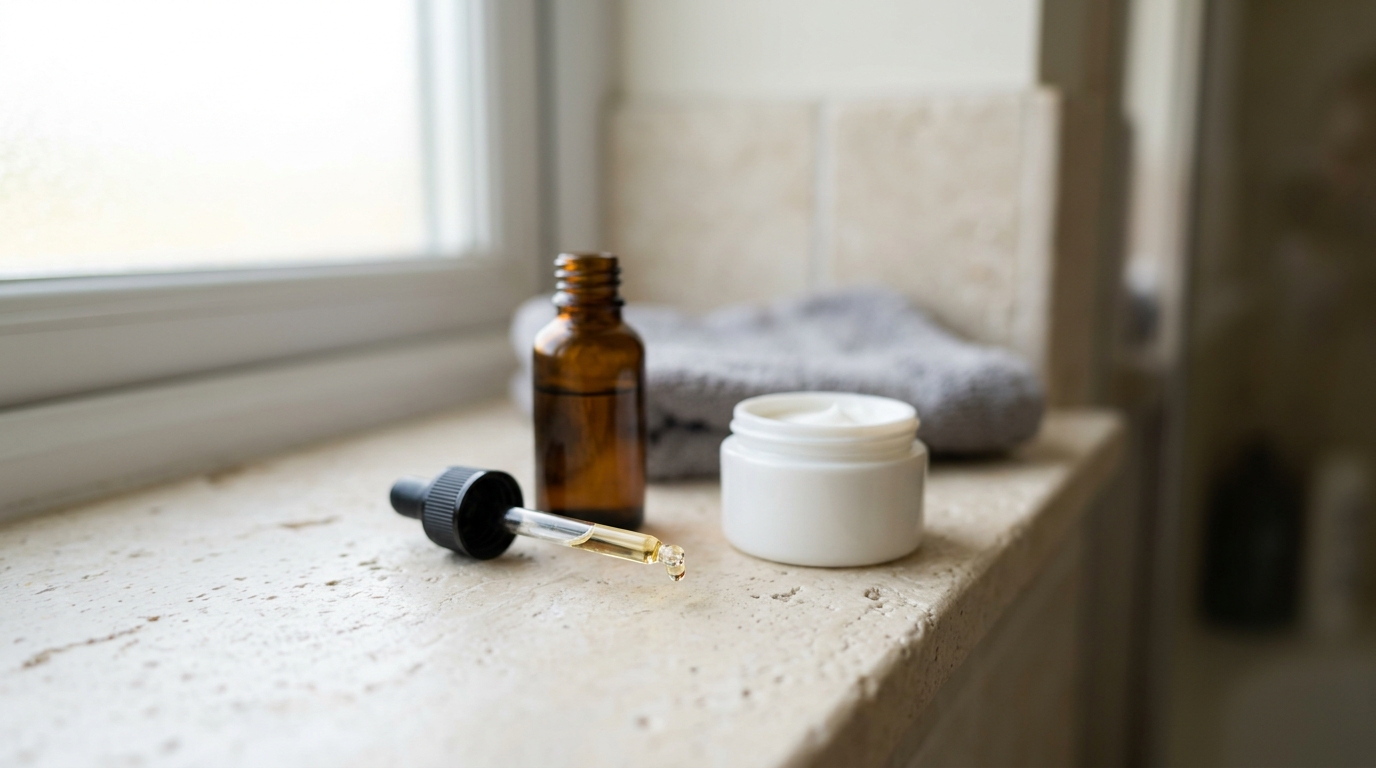
You are standing in front of two products from the same brand, aimed at the same problem. One is a 15 ml serum in a glass dropper. The other is a 15 ml cream in a jar, usually costing a little less. The marketing copy for both promises firmer, smoother, brighter eyes. Nothing on either label tells you which one your face needs.
Here is the part the packaging will not say: the words “serum” and “cream” are cosmetic marketing categories, not regulatory ones. No agency defines them. No minimum active concentration attaches to either. A brand can take a single emulsion, thicken it slightly, and sell it under either name.
What genuinely differs between the two is the vehicle — the base carrying the active ingredients. And the vehicle turns out to matter enormously, just not in the way the price difference implies.
What the Vehicle Actually Changes
Formulation science is unambiguous that the base changes outcomes. In a review of how topical emulsions behave, the emulsion type, the oil phase, the emulsifier system, and the water content all measurably alter how much of an active reaches the epidermis and dermis, rather than sitting on the surface [1]. Two products with identical ingredient lists and identical percentages can deliver different amounts of active to living tissue.
Broadly, the split works like this. A serum is usually a low-viscosity, water-rich, low-occlusion vehicle. That lets it carry a higher load of water-soluble actives, absorb quickly, and layer under other products without pilling. A cream is a higher-oil, higher-occlusion emulsion. Occlusion slows water loss from the skin surface, which raises stratum corneum hydration and, over hours, changes how the barrier behaves — a well-documented effect with real benefits for dry skin and real limits, since sustained heavy occlusion can itself perturb normal barrier function [2].
Nothing on either label tells you which one your face needs.
Neither is inherently stronger. A serum is not a “concentrated” version of a cream. It is a lighter delivery system that happens to suit certain actives, and an emollient shortfall that happens to matter for certain skin.
Why the Eye Area Rewrites the Rules
Everything above applies to the whole face. The eye contour is where it stops being academic.
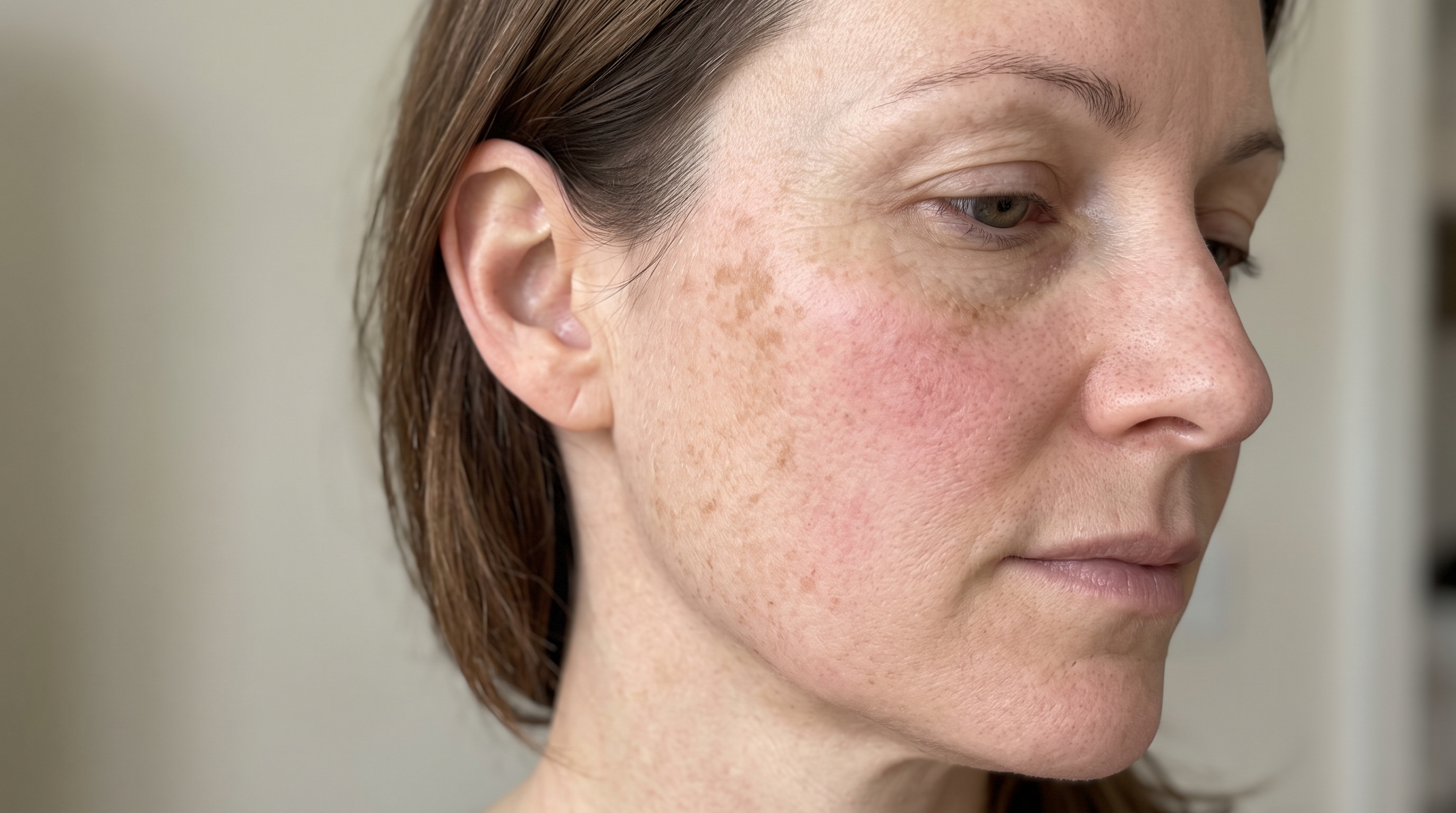
Skin thickness varies substantially by body region, and the periorbital area sits at the thin end of the range — measurably thinner than cheek or forehead skin, with correspondingly different hydration and elasticity readings [3]. Thin skin means actives penetrate more readily at the same concentration, which cuts both ways: better efficacy, and a much lower irritation threshold. It is also the most mobile skin on the face, folding thousands of times a day, and it sits directly above a mucous membrane that will not forgive a product that migrates.
That geometry drives three practical rules. Heavy occlusive creams can feel wonderful on crepey lids but tend to travel into the eye overnight and can encourage milia in some people. Potent actives that your cheeks shrug off can produce stinging and flaking here. And whatever you apply has to survive being folded in half every time you blink.
Matching the Format to the Problem
Fine lines and crepey texture. This is a structural problem, and it needs an active with structural evidence — which in practice means a retinoid. Retinol applied to naturally aged skin produced significant improvement in fine wrinkling in a vehicle-controlled trial, alongside increased glycosaminoglycan and procollagen expression [4]. Peptides are the gentler option with supporting data: topical palmitoyl pentapeptide improved fine lines and wrinkle appearance in photoaged facial skin over twelve weeks [5]. Either can be formulated as a serum or a cream. If your lids are dry, a cream base buffers the irritation; if they are not, a serum lets you layer a moisturizer only where you need it. Our guide to what actually smooths under-eye wrinkles covers the mechanisms in more depth, and our breakdown of eye creams for wrinkles walks through ingredient selection.
If your lids are dry, a cream base buffers the irritation; if they are not, a serum lets you layer a moisturizer only where you need it.
Puffiness and shadowing. These respond to different chemistry entirely. A pad formulation containing caffeine and vitamin K produced measurable reduction in under-eye darkness and puffiness in a clinical evaluation [6]. Caffeine is water-soluble and works best in a light, fast-absorbing base — this is the clearest case where a serum or gel genuinely beats a cream.
Dryness, tightness, and flaking. No contest: a cream. You have a barrier and water-loss problem, and occlusion is the direct fix. A serum here is simply the wrong tool.
Makeup that creases. A serum, applied thinly, with concealer over it. Occlusive creams are the single most common cause of concealer sliding into the lines you were trying to conceal.
Do You Need Both?
Often, yes — and it is less redundant than it sounds. The logic is the same one that governs serums and moisturizers on the rest of the face: the serum carries the active, the cream seals it and protects the barrier while the active does something irritating. Apply the serum first, let it absorb for a minute, then a small amount of cream on top. What you should not do is layer two products both trying to deliver the same active.
And if your budget only stretches to one, buy for the ingredient, not the category. A well-formulated retinoid in either base will do more for a lined eye contour than a beautifully textured cream with no meaningful active in it.
Where Delivery Beats Format
Notice what the whole serum-versus-cream question actually collapses into: not texture, but whether the active reaches living skin in a form thin eyelid tissue can tolerate. That is a delivery problem, and it is exactly the problem conventional retinol formulations struggle with. Traditional retinol barely crosses the epithelial barrier on its own, so most formulas rely on penetration enhancers that disrupt that barrier to work — which is precisely why so many people cannot use retinol anywhere near their eyes, as we discuss in our guide to using retinol around the eyes.
Nanoretinol takes a different route. Its 0.2% retinol is encapsulated in biomimetic lipid nanoparticles the skin recognizes as its own and permits through the barrier without damaging it, borrowing the same nanotechnology used in modern drug delivery. In North Biomedical’s testing, it proved 232% more effective than conventional retinol for collagen recovery and 73% more effective for elastin, with drastically reduced cytotoxicity. The base is water-based and gel-like rather than oily, absorbing completely to a matte finish — and it is gentle enough to be used on the eye contour, which sidesteps the format question altogether.
How to Decide in the Aisle
Read past the noun on the front of the box. Ask what active is in it, at what percentage, and whether your eyelids are currently dry or comfortable. If they are dry, buy the cream. If they are comfortable and your concern is lines, buy the active-led serum. If your concern is puffiness or shadow, buy the light one with caffeine. And if the label tells you nothing about what is inside, that is the most useful information the packaging has given you.
References
- Otto A, du Plessis J, Wiechers JW. “Formulation effects of topical emulsions on transdermal and dermal delivery.” International Journal of Cosmetic Science. 2009;31(1):1-19. doi:10.1111/j.1468-2494.2008.00467.x
- Zhai H, Maibach HI. “Occlusion vs. skin barrier function.” Skin Research and Technology. 2002;8(1):1-6. doi:10.1046/j.0909-752x.2001.10311.x
- Firooz A, Sadr B, Babakoohi S, Sarraf-Yazdy M, Fanian F, Kazerouni-Timsar A, Nassiri-Kashani M, Naghizadeh MM, Dowlati Y. “Variation of Biophysical Parameters of the Skin with Age, Gender, and Body Region.” The Scientific World Journal. 2012;2012:386936. doi:10.1100/2012/386936
- Kafi R, Kwak HSR, Schumacher WE, Cho S, Hanft VN, Hamilton TA, King AL, Neal JD, Varani J, Fisher GJ, Voorhees JJ, Kang S. “Improvement of Naturally Aged Skin With Vitamin A (Retinol).” Archives of Dermatology. 2007;143(5):606-612. doi:10.1001/archderm.143.5.606
- Robinson LR, Fitzgerald NC, Doughty DG, Dawes NC, Berge CA, Bissett DL. “Topical palmitoyl pentapeptide provides improvement in photoaged human facial skin.” International Journal of Cosmetic Science. 2005;27(3):155-160. doi:10.1111/j.1467-2494.2005.00261.x
- Shatalebi MA, Ahmadraji F. “Evaluation of the clinical efficacy and safety of an eye counter pad containing caffeine and vitamin K in emulsified Emu oil base.” Advanced Biomedical Research. 2015;4(1):10. doi:10.4103/2277-9175.148292