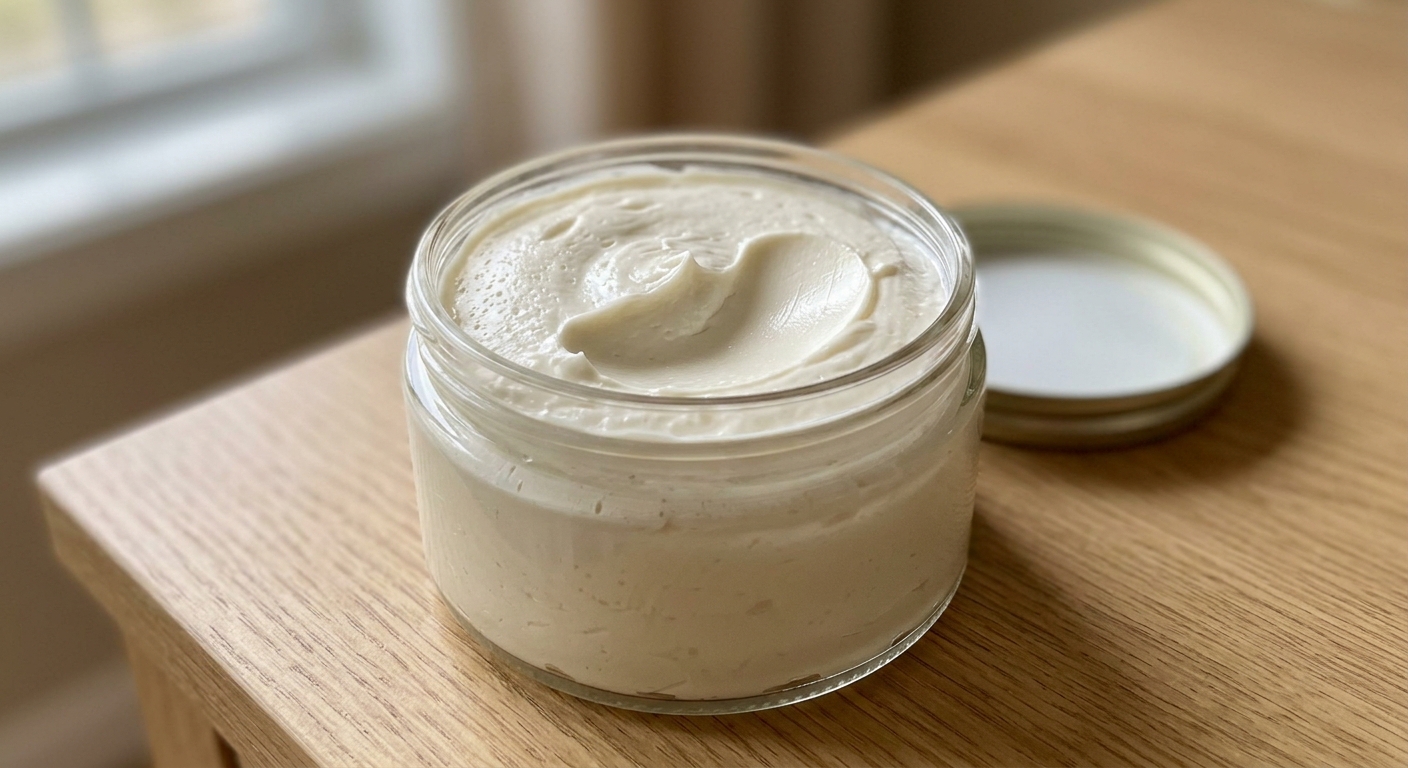
Body Butter for Dry Skin: What the Format Actually Does
Why a jar with almost no water in it fixes dryness, and the application detail that decides whether it works
Pick up a body lotion and a body butter and the difference feels like richness. Thicker, heavier, more of it. That framing is what leads people to buy the thickest jar on the shelf, apply it to bone-dry legs after a shower, and conclude a week later that their skin is exactly as dry as it was.
The real difference is not richness. It is water content, and it changes how the product has to be used.
A butter is a moisturiser with the water taken out
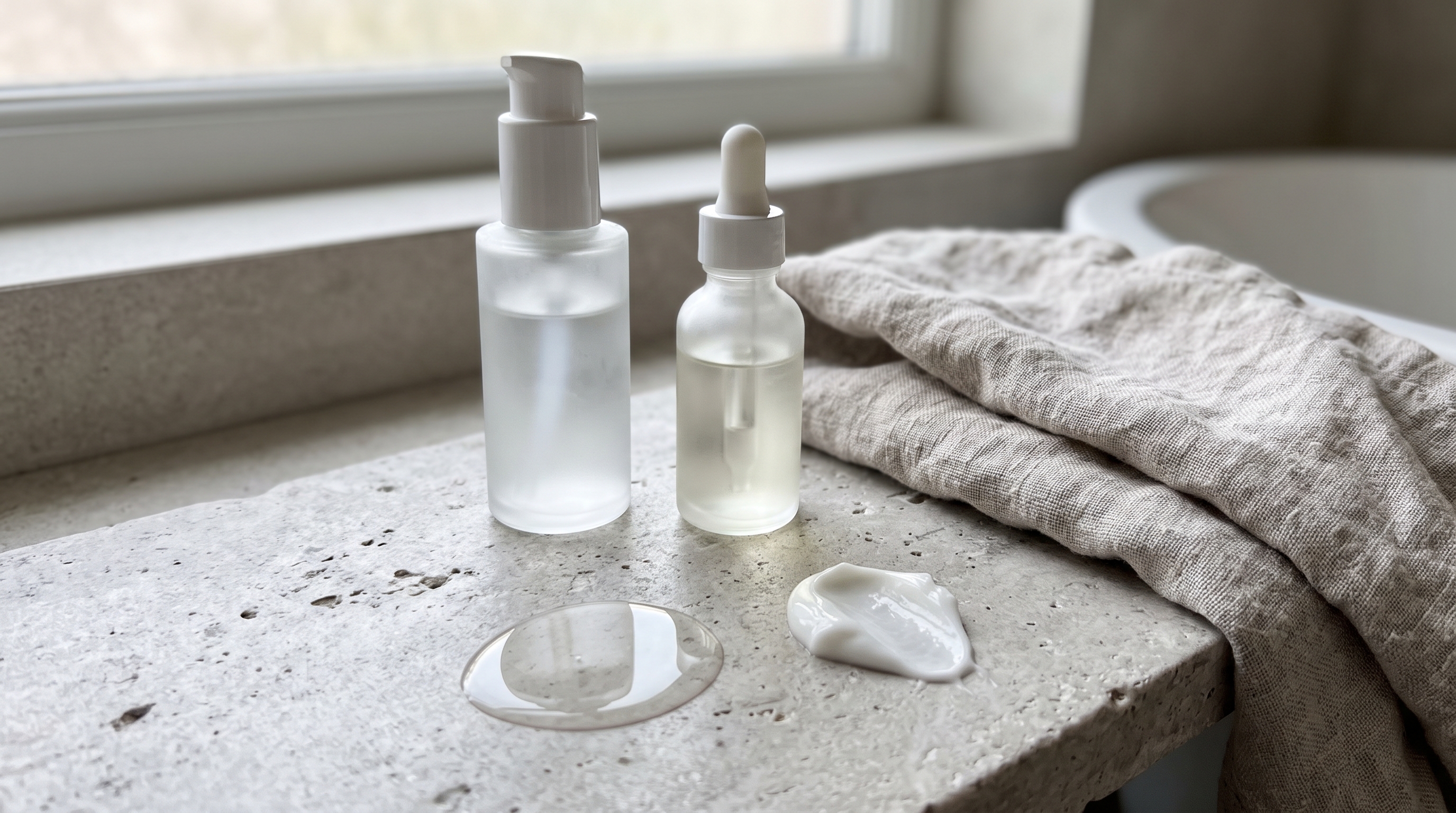
A body lotion is mostly water, held in emulsion with oils and a small amount of emulsifier. A cream is the same idea with less water and more oil. A body butter sits at the far end of that scale, essentially anhydrous, built from plant butters and oils with little or no water phase at all.
That single fact governs everything else. A lotion delivers water to the skin surface and then leaves a thin oil film behind. A butter delivers almost no water. It brings a barrier and nothing to put underneath it.
Which means the water has to come from somewhere else.
What “dry” is actually measuring
Dryness in dermatology is quantified through transepidermal water loss, the rate at which water evaporates outward through the skin. It has been the standard instrumented measure of barrier function since the European Society of Contact Dermatitis published its measurement guidelines, defining the individual, environmental and instrument variables that make a reading valid [1].
This reframes the problem usefully. Dry skin is generally not skin that was never given water. It is skin losing water faster than it can be replaced, because the barrier holding it in is compromised.
Petrolatum remains the most effective classic occlusive, and a concentration as low as 5% can reduce transepidermal water loss by more than 98%, offering roughly 170 times the resistance to water vapour loss of olive oil.
Occlusion is the entire mechanism
Occlusives are the ingredient class that physically blocks that outward evaporation, and the benchmark numbers are striking. Petrolatum remains the most effective classic occlusive, and a concentration as low as 5% can reduce transepidermal water loss by more than 98%, offering roughly 170 times the resistance to water vapour loss of olive oil [2].
Plant butters do not reach petrolatum’s numbers. They sit meaningfully above light lotions, they feel far better, and they are the reason the format exists at all. What matters is understanding that this is the job. A body butter is a lid.
A lid works when there is something underneath it worth keeping.
The application detail nobody mentions
This is where most body butter disappointment comes from, and there is clinical precedent for the fix.
The “soak and smear” technique tested a 20-minute water soak followed immediately by an occlusive applied to still-damp skin, in 28 patients with stubborn dry and eczematous conditions, and produced marked improvement in a group that had already failed other approaches [3]. The soak loads the stratum corneum with water. The occlusive traps it there.
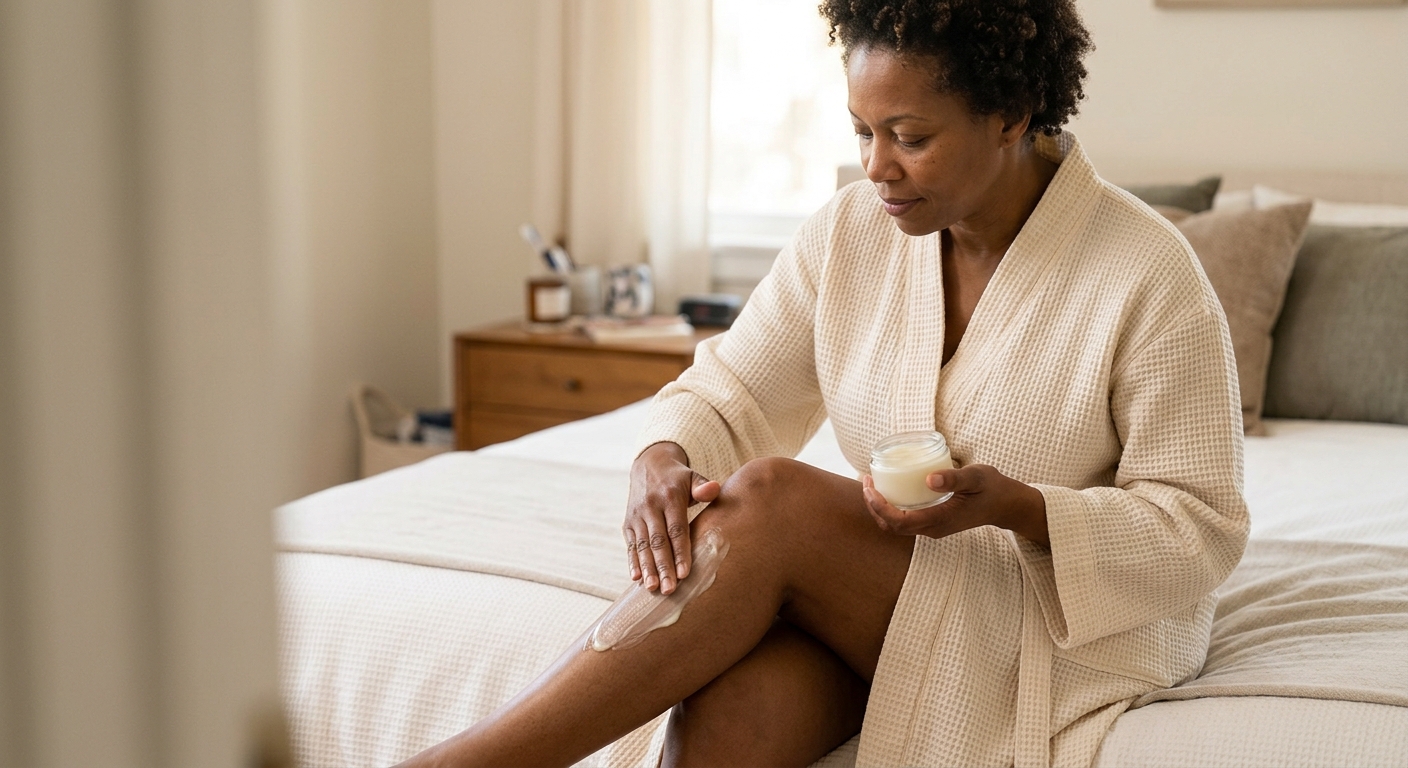
Practically: apply within about three minutes of stepping out of the shower, on skin patted rather than rubbed dry. The same jar of product produces a completely different result depending on which side of that window you use it.
Its 0.2% retinol travels inside biomimetic lipid nanoparticles that skin recognises as self and admits intact, in a water-based formulation with 99% natural ingredients, so nothing has to be broken down to let it through.
Why it can underperform in winter
The complaint that a butter “stopped working” in January is usually accurate, and the cause is environmental.
A systematic review of humidity and temperature effects found that low ambient humidity and low temperature directly reduce skin barrier function and raise susceptibility to irritants and mechanical stress, with cold dry weather increasing the prevalence of dermatitis flares [4]. Indoor heating produces exactly those conditions for months at a time.
An occlusive-only product has no answer to that. It can slow losses, and it has nothing to draw water in with. This is the case for pairing a butter with a humectant step underneath it, or choosing a formula that includes glycerin rather than pure butters and waxes.
Which butter, and which claims survive scrutiny
Shea butter is the workhorse of the category and has the best supporting data. In a trial of 34 children with atopic dermatitis, a shea butter extract emollient performed comparably to a ceramide-precursor product, with itch scores falling from 6.7 to 6.0 and quality of life scores improving over four weeks among those who tolerated it [5]. A review of 19 plant oils and butters found genuine barrier repair and anti-inflammatory effects across the class, with virgin coconut oil reducing severity scores and improving both water loss and skin capacitance in atopic dermatitis [6].
Cocoa butter is the cautionary tale. It smells wonderful and it carries a stretch mark reputation that the evidence does not support. In a double-blind, placebo-controlled trial of 210 pregnant women, stretch marks developed in 45.1% of the cocoa butter group and 48.8% of the placebo group, a difference of no significance at all [7]. As an emollient it is perfectly good. As a structural intervention it does nothing, which is worth knowing before paying for the claim.
Beyond that, judge by absorption and residue rather than thickness, skip fragrance if your skin is reactive, and treat “whipped” as a texture description rather than a performance one.
What no butter can do
Two limits are worth being clear about.
The first is barrier chemistry. Barrier repair depends on the three physiological stratum corneum lipids working together. In a barrier disruption model, applying only one or two of ceramides, cholesterol and free fatty acids actually delayed recovery, and only equimolar mixtures of all three restored normal repair [8]. Plant butters supply fatty acids generously and the other two barely, which is why severely damaged skin barrier cases often do better on a ceramide-containing formula than on a rich butter. Humectants operate on a different axis again, drawing water in rather than sealing it, and a trial in 197 atopic patients found 20% glycerin as effective as urea for dryness while causing far less stinging [9].
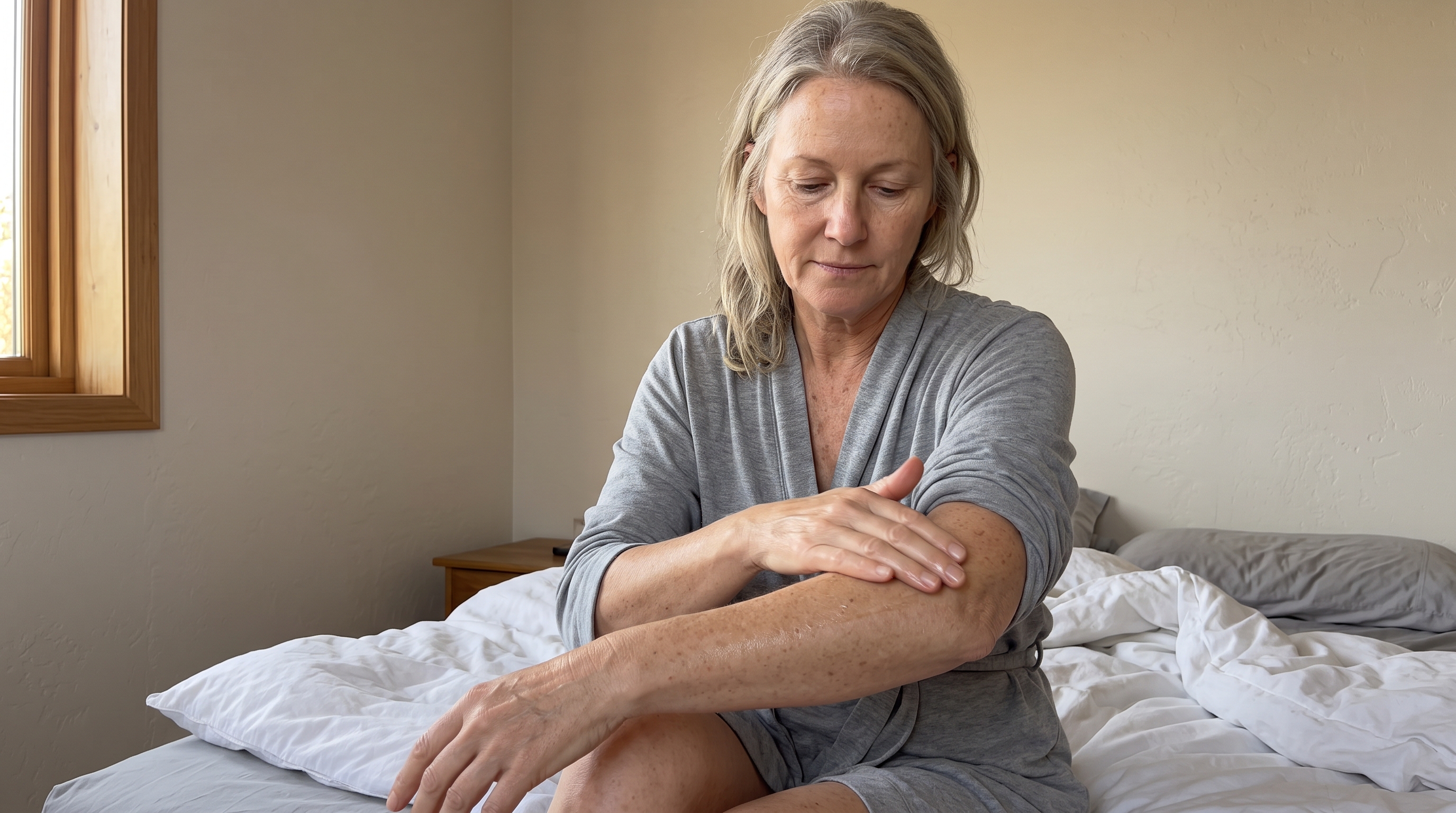
The second limit is structural, and it is the one that matters most after fifty. Crepey, finely wrinkled skin on the arms, legs and chest is a dermal collagen and elastin problem sitting well below where any occlusive reaches. A butter makes that skin look better while it is on, because hydrated stratum corneum reflects light more evenly. It changes nothing underneath. That distinction is covered further in our guides to crepey skin on the legs and to choosing a body lotion for aging skin.
Reaching the layer a butter cannot
Rebuilding dermal collagen requires an active that gets into the dermis, and retinoids remain the most evidence-backed option for that on body skin. The obstacle has always been delivery, since conventional retinol crosses the epithelial barrier poorly and most formulations compensate by degrading the barrier chemically. On already-dry body skin that trade is a bad one, which is the usual reason people abandon retinol for the body.
Nanoretinol takes the opposite route. Its 0.2% retinol travels inside biomimetic lipid nanoparticles that skin recognises as self and admits intact, in a water-based formulation with 99% natural ingredients, so nothing has to be broken down to let it through. Against conventional retinol it produced 232% greater collagen recovery and 73% greater elastin recovery with drastically reduced cytotoxicity, and over 56 days of use delivered 61% greater skin firmness and 56% greater elasticity.
Use the jar correctly, then ask more of your routine
A body butter earns its place by cutting water loss on skin that has water in it, which makes the three minutes after a shower the most important part of the whole routine. Get that right and the format delivers what it can. For the crepey texture underneath, the answer sits a layer deeper than any butter can travel.
References
- Pinnagoda J, Tupker RA, Agner T, Serup J. “Guidelines for transepidermal water loss (TEWL) measurement. A report from the Standardization Group of the European Society of Contact Dermatitis.” Contact Dermatitis. 1990;22(3):164-178. doi:10.1111/j.1600-0536.1990.tb01553.x
- Purnamawati S, Indrastuti N, Danarti R, Saefudin T. “The Role of Moisturizers in Addressing Various Kinds of Dermatitis: A Review.” Clinical Medicine & Research. 2017;15(3-4):75-87. doi:10.3121/cmr.2017.1363
- Gutman AB, Kligman AM, Sciacca J, James WD. “Soak and smear: a standard technique revisited.” Archives of Dermatology. 2005;141(12):1556-1559. doi:10.1001/archderm.141.12.1556
- Engebretsen KA, Johansen JD, Kezic S, Linneberg A, Thyssen JP. “The effect of environmental humidity and temperature on skin barrier function and dermatitis.” Journal of the European Academy of Dermatology and Venereology. 2016;30(2):223-249. doi:10.1111/jdv.13301
- Hon KL, Tsang YC, Pong NH, Lee VWY, Luk NM, Chow CM, Leung TF. “Patient acceptability, efficacy, and skin biophysiology of a cream and cleanser containing lipid complex with shea butter extract versus a ceramide product for eczema.” Hong Kong Medical Journal. 2015;21(5):417-425. doi:10.12809/hkmj144472
- Lin TK, Zhong L, Santiago JL. “Anti-Inflammatory and Skin Barrier Repair Effects of Topical Application of Some Plant Oils.” International Journal of Molecular Sciences. 2018;19(1):70. doi:10.3390/ijms19010070
- Osman H, Usta IM, Rubeiz N, Abu-Rustum R, Charara I, Nassar AH. “Cocoa butter lotion for prevention of striae gravidarum: a double-blind, randomised and placebo-controlled trial.” BJOG. 2008;115(9):1138-1142. doi:10.1111/j.1471-0528.2008.01796.x
- Man MQ, Feingold KR, Thornfeldt CR, Elias PM. “Optimization of physiological lipid mixtures for barrier repair.” Journal of Investigative Dermatology. 1996;106(5):1096-1101. doi:10.1111/1523-1747.ep12340135
- Lodén M, Andersson AC, Anderson C, Bergbrant IM, Frödin T, Öhman H, Sandström MH, Särnhult T, Voog E, Stenberg B, Pawlik E, Preisler-Häggqvist A, Svensson Å, Norlén L. “A double-blind study comparing the effect of glycerin and urea on dry, eczematous skin in atopic patients.” Acta Dermato-Venereologica. 2002;82(1):45-47. doi:10.1080/000155502753600885