Botox vs Filler: Which One Your Face Actually Needs
One relaxes a muscle, the other replaces lost volume, and using the wrong one is the most common reason people are disappointed
Most people arrive at this question with a line on their face and no framework for deciding. The two products are usually presented as interchangeable options on the same menu, which they are not. They do different jobs on different tissue, and choosing between them is mostly a matter of identifying what is actually causing the line you are looking at.
There is a test for that, and you can do it in a mirror right now.
The Fold Test
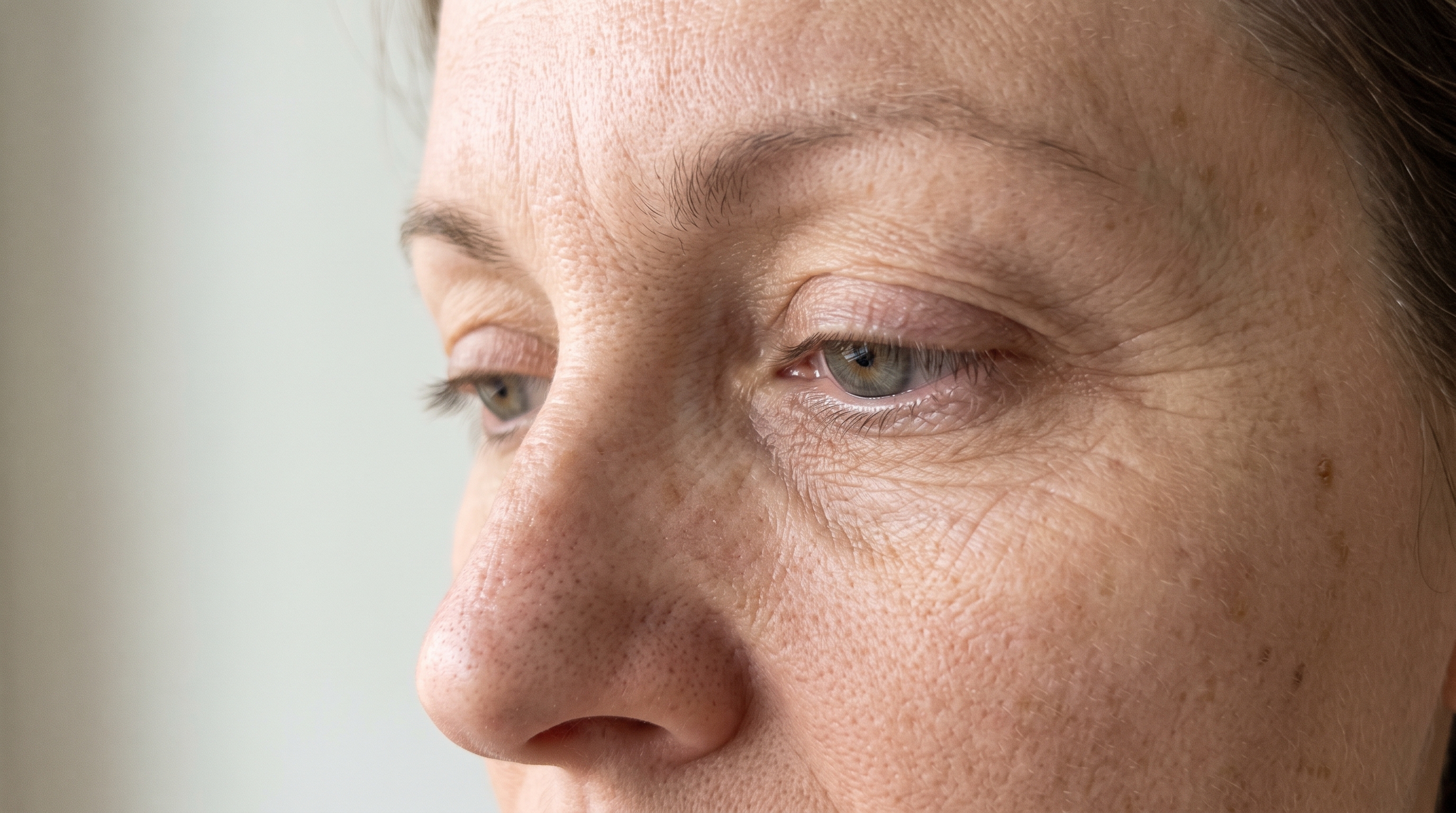
Relax your face completely. Look at the line.
If it disappears when your face is at rest and only appears when you frown, squint or raise your brows, it is a dynamic line. A muscle is creasing the skin above it. That is botulinum toxin territory.
If the line is still visible with your face completely still, it is a static line or a fold. The skin has either lost the structural support underneath it or the crease has been etched in by years of repetition. That is filler territory, or in some cases neither.
| Botulinum toxin | Hyaluronic acid filler | |
|---|---|---|
| What it does | Stops a muscle contracting [1] | Replaces or adds volume |
| Best for | Frown lines, forehead lines, crow’s feet | Cheek volume, nasolabial folds, tear troughs, lips |
| Typical duration | Around four months [2] | Six months to two years by product and site |
| Reversible | No, it wears off | Yes, enzymatically [5] |
| Works on skin quality | No | No |
How Botulinum Toxin Actually Works
The mechanism is precise and worth knowing, because it explains the limits.
Botulinum neurotoxin type A is an enzyme. Once inside the nerve terminal it selectively cleaves SNAP-25, a protein the cell needs in order to fuse acetylcholine-containing vesicles with the membrane and release them into the neuromuscular junction [1]. No release, no signal, no contraction. The muscle is not paralysed in any permanent sense; the nerve terminal simply cannot deliver its message until new protein is made and new terminal branches form.
That regeneration timeline is what sets the duration. In two multicentre randomised controlled trials of onabotulinumtoxinA for crow’s feet, response duration was four months or longer, with medians in the range of 119 to 144 days [2].
Botulinum toxin does not smooth your skin. It stops the muscle that is folding it, and the skin smooths itself.
The consequence is that a toxin only works where a muscle is the cause. Injecting a deep static fold that persists at rest produces very little, which is the single most common source of “it didn’t work for me”.
How Filler Actually Works
Hyaluronic acid filler is a cross-linked gel placed into or under the dermis to occupy space. The primary effect is mechanical: volume where volume was lost, or support under a crease so it no longer folds as deeply. In a randomised, double-blind, split-face comparison for nasolabial folds, a stabilised hyaluronic acid gel outperformed bovine collagen and maintained correction substantially longer [3].
There is a second, slower effect that gets less attention. When cross-linked hyaluronic acid is injected into photodamaged human skin, it mechanically stretches the surrounding fibroblasts, and those stretched cells respond by producing new type I procollagen [4]. Some of what a filler does in the months after injection is therefore genuine remodelling rather than pure volume.
Filler is also the reversible option. Hyaluronidase degrades hyaluronic acid gel and is used clinically to correct overcorrection, dissolve nodules, and manage vascular complications [5]. That reversibility is a real safety advantage and one of the strongest arguments for choosing a hyaluronic acid product over a semi-permanent alternative. If you are weighing duration specifically, we cover the variables in how long filler lasts.
Where People Choose Wrong
Treating a fold with a toxin. A nasolabial fold is largely a volume and support problem. Relaxing the muscles around it does very little and can flatten the face in unhelpful ways.
Treating volume loss as a wrinkle problem. Much of what reads as “aging” in the mid-face is facial volume loss: fat pads descending and deflating, bone remodelling underneath. Chasing the resulting shadows line by line rarely works.
Treating early dynamic lines with filler. Placing gel into a crease that only exists when you squint produces lumps and an odd appearance at rest.
The most expensive mistake in aesthetics is buying the right product for the wrong problem.
The Three Things Neither One Fixes
This is the part that usually goes unsaid in a consultation.
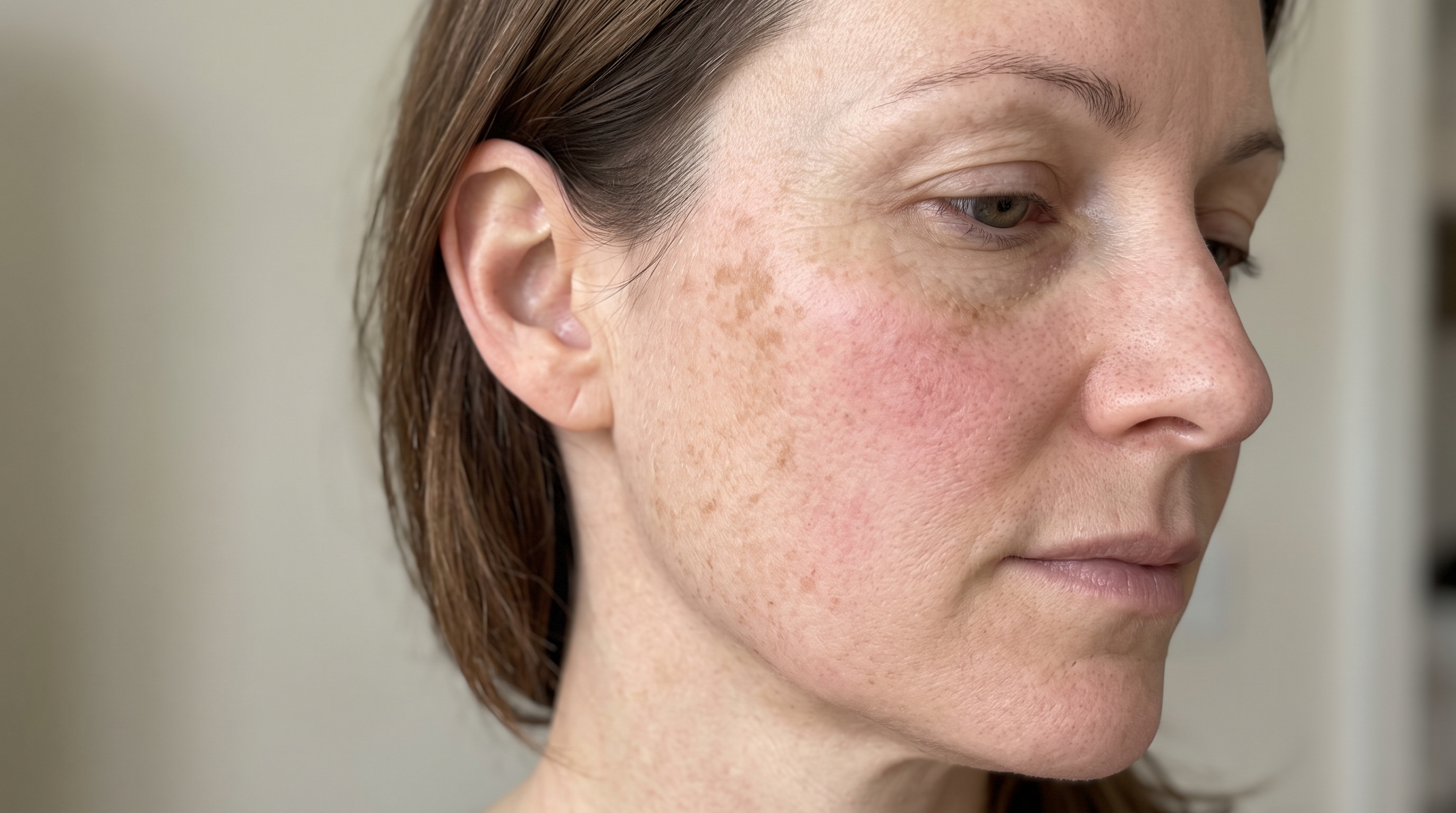
Skin texture. Roughness, enlarged pores, crepiness and the loss of light-reflecting smoothness are epidermal and upper-dermal properties. Neither a neurotoxin nor a filler touches them.
Pigment. Sun spots, mottled tone and uneven colour are unaffected by both.
Dermal quality itself. A filled cheek with thin, sun-damaged skin over it still reads as aged, because the tissue is the wrong quality even when the shape is right. This is the reason some very well-injected faces still look tired.
All three of those respond to the retinoid pathway. In a double-blind vehicle-controlled trial, topical tretinoin produced statistically significant improvement in photoaged skin, including fine wrinkling, compared with vehicle [6]. That is a different kind of improvement from an injection: slower, cumulative, and working on the material rather than the shape.
The practical problem has always been that conventional retinol has to breach the epithelial barrier to reach its target, and most formulations do so by damaging it, producing the redness and peeling that make people abandon the ingredient. Nanoretinol approaches delivery differently, encapsulating a stabilised 0.2% retinol in biomimetic lipid nanoparticles that the skin reads as self and allows through intact. In North Biomedical’s clinical study summary, that produced 232% greater collagen recovery and 73% greater elastin recovery than conventional retinol, with a 61% increase in firmness and a 56% increase in elasticity over 56 days.
For readers who want the non-injectable options laid out in full, our guide to botox alternatives covers what topical and device approaches can realistically achieve.
Deciding for Your Own Face
Do the fold test first. Dynamic lines that vanish at rest point to a toxin. Static folds and hollow areas point to filler, ideally a reversible hyaluronic acid one. Neither answers the question of what your skin is made of, and that question is the one that determines whether a good result looks natural or merely inflated. Most faces that age well are running all three layers at once: muscle, volume, and the tissue itself.
References
- Blasi J, Chapman ER, Link E, Binz T, Yamasaki S, De Camilli P, Südhof TC, Niemann H, Jahn R. “Botulinum neurotoxin A selectively cleaves the synaptic protein SNAP-25.” Nature. 1993;365(6442):160-163. doi:10.1038/365160a0
- Baumann L, Dayan S, Connolly S, Silverberg N, Lei X, Drinkwater A, Gallagher CJ. “Duration of Clinical Efficacy of OnabotulinumtoxinA in Crow’s Feet Lines: Results from Two Multicenter, Randomized, Controlled Trials.” Dermatologic Surgery. 2016;42(5):598-607. doi:10.1097/DSS.0000000000000757
- Narins RS, Brandt F, Leyden J, Lorenc ZP, Rubin M, Smith S. “A Randomized, Double-Blind, Multicenter Comparison of the Efficacy and Tolerability of Restylane Versus Zyplast for the Correction of Nasolabial Folds.” Dermatologic Surgery. 2003;29(6):588-595. doi:10.1046/j.1524-4725.2003.29150.x
- Wang F, Garza LA, Kang S, Varani J, Orringer JS, Fisher GJ, Voorhees JJ. “In Vivo Stimulation of De Novo Collagen Production Caused by Cross-linked Hyaluronic Acid Dermal Filler Injections in Photodamaged Human Skin.” Archives of Dermatology. 2007;143(2):155-163. doi:10.1001/archderm.143.2.155
- Cavallini M, Gazzola R, Metalla M, Vaienti L. “The Role of Hyaluronidase in the Treatment of Complications From Hyaluronic Acid Dermal Fillers.” Aesthetic Surgery Journal. 2013;33(8):1167-1174. doi:10.1177/1090820X13511970
- Weiss JS, Ellis CN, Headington JT, Tincoff T, Hamilton TA, Voorhees JJ. “Topical tretinoin improves photoaged skin. A double-blind vehicle-controlled study.” JAMA. 1988;259(4):527-532. doi:10.1001/jama.1988.03720040019020