Moisturizer for Peeling Skin: What Actually Stops the Flaking
Why skin peels after sun, cold weather or retinol, which moisturizer ingredients help the flakes let go, which ones sting, and how to keep peeling from coming back
Peeling skin looks like a surface problem, so most people reach for a scrub or start picking at the edges. Both make it worse. The flakes you can see are the end of a process that went wrong a few layers down, and the right moisturizer is the tool that fixes it.
This guide explains why skin peels in the first place, which moisturizer ingredients the research supports, which ones to keep away from raw skin, and how to get back to your anti-aging routine without starting the cycle again.
Why skin peels at all
Your outer layer, the stratum corneum, is a wall of flat dead cells held together by protein rivets called corneodesmosomes and a mortar of fats. In healthy skin, enzymes quietly cut those rivets so single cells drift away unseen.
Those enzymes need water to work. When the outer layer dries out, they slow down, the rivets stay intact, and cells come away in visible sheets and flakes instead of one at a time [1]. That is why peeling is so often a moisture problem rather than an exfoliation problem.
The usual triggers are:
- Sunburn. Cells damaged by UV are shed in bulk a few days after the burn.
- Cold, dry air. Winter wind and indoor heating pull water out of the outer layer.
- Retinoids. Retinol speeds up cell turnover and, in a harsh formula, weakens the barrier at the same time.
- Over-exfoliation. Strong acids, scrubs and cleansing brushes strip the fats that hold moisture in.
Your skin can usually rebuild a smooth surface in about 2 weeks once it holds water again, far sooner than it takes to recover from a habit of picking and scrubbing.
What a good moisturizer for peeling skin does
A moisturizer for flaking skin has three jobs: pull water into the outer layer, replace missing fats, and slow water loss while the barrier repairs. Look for a formula that covers all three.
Your skin can usually rebuild a smooth surface in about 2 weeks once it holds water again, far sooner than it takes to recover from a habit of picking and scrubbing.
Humectants: glycerin and urea
Glycerin is the most studied humectant in skincare. Beyond drawing in water, it improves barrier function, protects against irritants and helps the enzymes that break down corneodesmosomes, which is exactly the step that stalls in peeling skin [2]. It is cheap, fragrance-free and found in most good creams.
Urea does double duty. It is a humectant at low levels and gently loosens scale at higher ones, and a review of 81 studies found it effective for dry, scaly skin with mild irritation as the most common side effect [3]. Around 5% to 10% suits the face and body; save stronger urea for heels and elbows.
Barrier lipids: ceramides
Ceramides make up a large part of the fatty mortar between skin cells. In a randomized trial on dry shins, a ceramide cream improved hydration, water loss and skin pH more than a plain hydrophilic cream, and the benefit was still measurable a week after people stopped using it [4]. Ceramides suit peeling skin that also feels tight or stings.
Occlusives: petrolatum
An occlusive is the seal on top. Petrolatum is the gold standard, and it does more than sit on the surface: in human volunteers it spread through the outer layer and sped up barrier recovery after damage [5]. A thin layer of petrolatum or a balm over your cream at night is the fastest fix for raw, peeling patches. If you want a dedicated product, our guide to ointment for dry skin explains how ointments compare with creams.
Ingredients to avoid on peeling skin
While the skin is flaking, it is more permeable, so ingredients you normally tolerate can sting or inflame it. Skip these until the peeling stops:
- Fragrance and essential oils, the most common causes of irritation and allergy in skincare.
- Strong acid exfoliants such as high-strength glycolic acid.
- Drying alcohol high on the ingredient list.
- Scrubs, brushes and peel-off masks, which tear away cells that are not ready to go.
Your skin often peels in the first 2 to 4 weeks of retinol, then settles as it adapts, far sooner than the 12 weeks it takes to see smoother lines.
Low-strength lactic acid is the exception some dermatologists allow, because it is also a humectant, but only once the skin no longer stings.
How to use a moisturizer when your skin is peeling
Technique matters almost as much as the product.
- Wash with lukewarm water and a gentle cleanser. Hot water strips fats.
- Pat, do not rub. Leave the skin slightly damp.
- Apply your moisturizer within a minute or two, while the outer layer still holds water.
- Seal dry patches with a thin layer of petrolatum or balm at night.
- Never pull flakes. Peeled edges are still attached to living skin underneath. Trim loose edges with clean scissors if they catch.
- Reapply during the day whenever skin feels tight.
A richer emollient cream suits cold months and very dry skin; a lighter lotion suits oily skin that peels only in patches. If the flaking sits around the nose, mouth or eyebrows and comes with redness and greasy scale, see our guide to dry flaky skin on the face, and see a doctor if it does not improve in a few weeks, because that pattern can need medical treatment.
When retinol is the cause
Peeling is the most common reason people give up on retinol. A classic study in adults aged 80 and over showed what retinol can do for aged skin: a 0.4% retinol lotion applied to the arms for 24 weeks smoothed fine wrinkles and increased collagen production compared with the plain lotion [6]. The result is worth keeping, so the goal is to stop the peeling, not the retinol.
Your skin often peels in the first 2 to 4 weeks of retinol, then settles as it adapts, far sooner than the 12 weeks it takes to see smoother lines. To get through it:
- Drop to two or three nights a week while the skin is peeling.
- Apply a ceramide moisturizer before and after the retinol, the so-called sandwich method.
- Pause on any night your skin stings, then restart slowly.
- Wear sunscreen every morning, because new skin is more sensitive to UV.
Our full guide to retinol side effects covers redness, dryness and how long each one lasts.
A gentler way back to retinol
Much of the peeling from retinol comes from the formula rather than the retinol itself. Conventional retinol products often rely on chemicals that loosen the skin barrier to push the active through, which leads to dryness, redness and flaking.
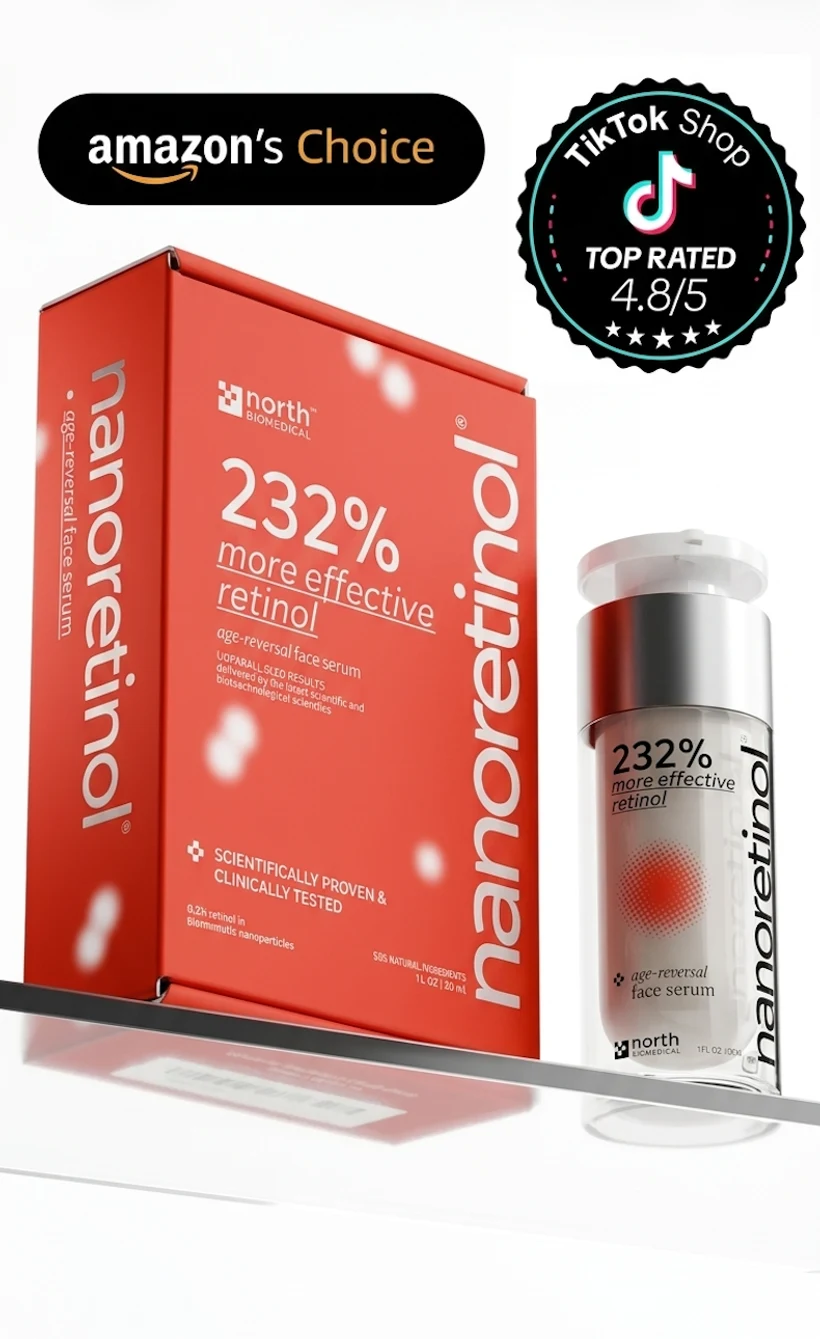
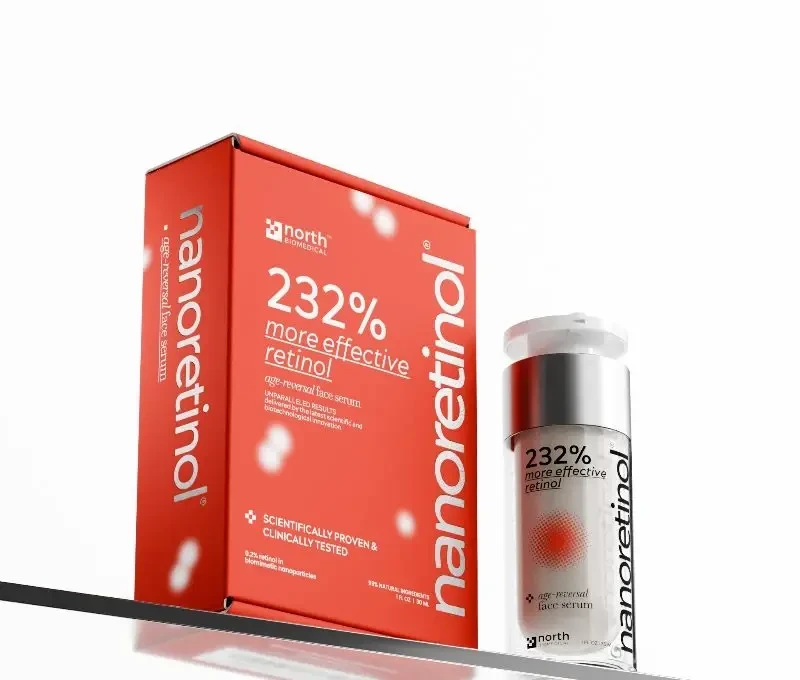
Nanoretinol takes a different route. Its retinol is encapsulated in biomimetic lipid nanoparticles that the skin recognizes as its own, so the active passes the barrier without damaging it, in a water-based, gel-like formula with 99% natural ingredients. In laboratory testing it was 232% more effective in collagen recovery than conventional retinol, and in 56 days of use it produced a 61% increase in skin firmness [7]. Clinical trials confirm minimal side effects, which, when present, are milder than those of conventional retinol.
Once your peeling has settled, start Nanoretinol at night two or three times a week over your moisturizer routine, and build up as your skin allows.
Peeling skin, in short
Peeling is a sign that your outer layer has lost water and can no longer shed cells in an orderly way. A fragrance-free moisturizer with glycerin or urea, ceramides and a petrolatum seal, applied to damp skin, fixes most cases within a couple of weeks. Avoid scrubs and strong acids while it heals, never pull the flakes, and if retinol is the cause, slow down rather than stop.
References
- Harding CR, Watkinson A, Rawlings AV, Scott IR. “Dry skin, moisturization and corneodesmolysis.” International Journal of Cosmetic Science. 2000;22(1):21-52. doi:10.1046/j.1467-2494.2000.00001.x
- Fluhr JW, Darlenski R, Surber C. “Glycerol and the skin: holistic approach to its origin and functions.” British Journal of Dermatology. 2008;159(1):23-34. doi:10.1111/j.1365-2133.2008.08643.x
- Pan M, Heinecke G, Bernardo S, Tsui C, Levitt J. “Urea: a comprehensive review of the clinical literature.” Dermatology Online Journal. 2013;19(11):20392. PubMed 24314769
- Lueangarun S, Tragulplaingam P, Sugkraroek S, Tempark T. “The 24-hr, 28-day, and 7-day post-moisturizing efficacy of ceramides 1, 3, 6-II containing moisturizing cream compared with hydrophilic cream on skin dryness and barrier disruption in senile xerosis treatment.” Dermatologic Therapy. 2019;32(6):e13090. doi:10.1111/dth.13090
- Ghadially R, Halkier-Sorensen L, Elias PM. “Effects of petrolatum on stratum corneum structure and function.” Journal of the American Academy of Dermatology. 1992;26(3 Pt 2):387-396. PubMed 1564142
- Kafi R, Kwak HS, Schumacher WE, Cho S, Hanft VN, Hamilton TA, et al. “Improvement of naturally aged skin with vitamin A (retinol).” Archives of Dermatology. 2007;143(5):606-612. doi:10.1001/archderm.143.5.606
- North Biomedical LLC. “Nanoretinol vs. Conventional Retinol: Efficacy in Collagen and Elastin Recovery.” Clinical Study Summary, 2024. Study summary