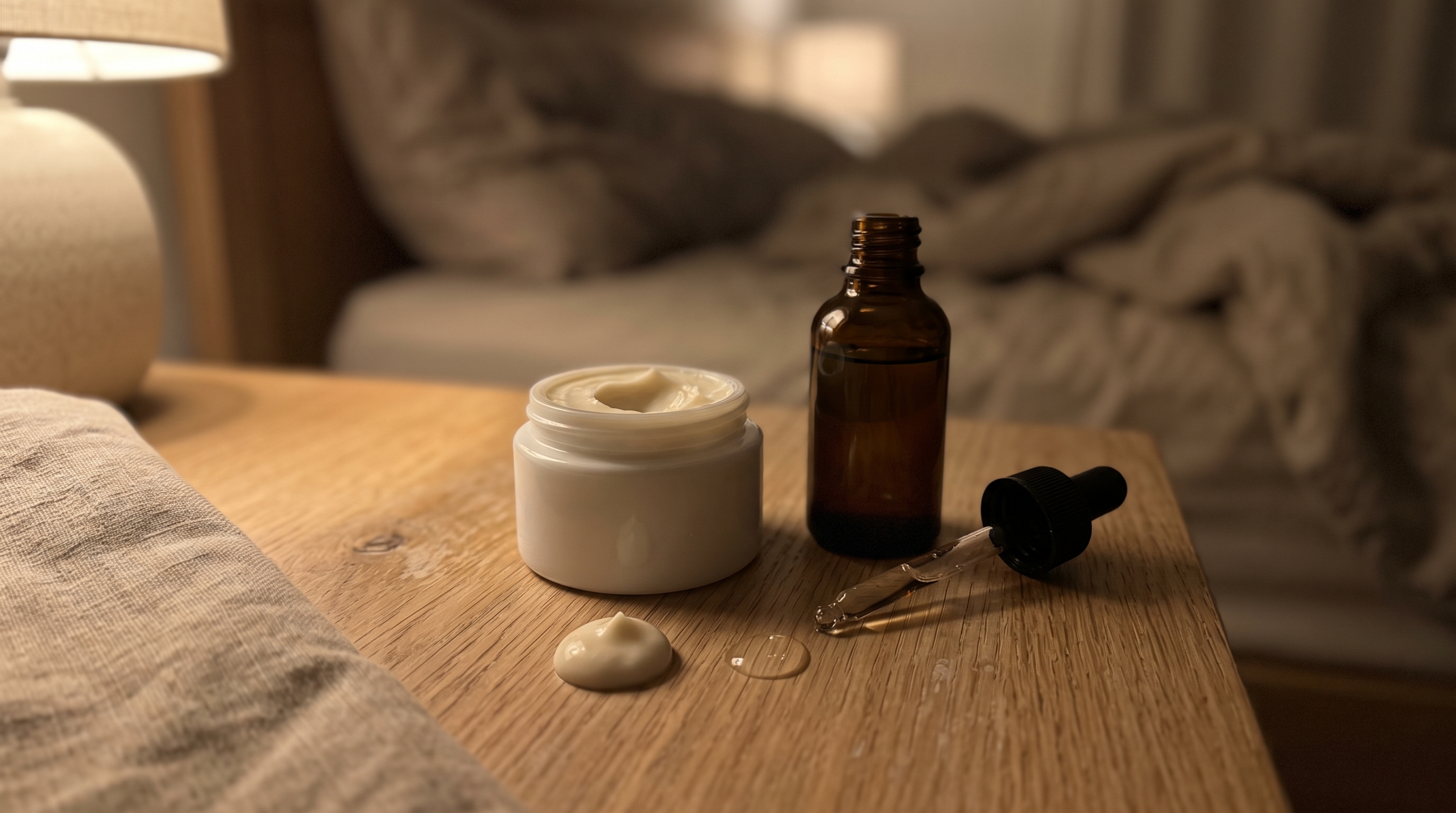
The Retinol Sandwich Method: Does Buffering With Moisturizer Actually Work?
The internet's favorite fix for retinol irritation has more clinical support than you would expect, and one significant blind spot
A Technique Born Out of Desperation
The retinol sandwich method is exactly what it sounds like. You apply moisturizer, then your retinol, then more moisturizer on top, putting the active ingredient between two protective layers instead of onto bare skin.
It spread through skincare forums for an obvious reason: an enormous number of people cannot tolerate retinol at full strength. In pooled clinical trial data, tretinoin 0.05% produced adverse events in 62% of patients, compared with 19% for adapalene 0.1% [1]. Those adverse events are not exotic. They are redness, flaking, stinging and tightness, and they are the single most common reason people abandon the most effective anti-aging ingredient available to them.
So the question is worth taking seriously rather than dismissing as internet folklore. Does putting moisturizer underneath your retinol protect your skin, and if it does, what does it cost you in results?
Why Retinol Irritates in the First Place
To judge whether buffering helps, you need to know what it is buffering against.
Retinol irritation is not a chemical burn. It is an inflammatory response. Research isolating the mechanism identified MCP-1 and IL-8, two signaling molecules that recruit inflammatory cells, as the primary mediators of retinol-induced irritation [4]. Your skin is not being dissolved. It is mounting a reaction.
That reaction is amplified by what conventional retinol formulations have to do to work at all. Retinol is a relatively large, fat-soluble molecule trying to cross a barrier specifically evolved to keep such things out. Most formulations solve this by compromising the barrier, using vehicles that increase permeability. The active gets through, and so does everything else, while the skin loses water outward at an increased rate. Redness, flaking and sensitivity follow, a chain we cover in detail in our guide to retinol and the skin barrier.
What the Controlled Trials Actually Show
Here is where the sandwich method earns more credit than skeptics give it.
The most useful evidence comes from a randomized, investigator-blinded split-face study in which subjects used tretinoin 0.05% on both sides of the face, with a ceramide-containing moisturizer added on one side only [2]. Both sides got full-strength active. The moisturized side showed meaningfully better tolerability, and the authors concluded that adjunctive moisturizer improves tolerance of the treatment [2]. Crucially, the active was not diluted or reduced. The moisturizer was added alongside it.
You apply moisturizer, then your retinol, then more moisturizer on top, putting the active ingredient between two protective layers instead of onto bare skin.
A second study went further and looked at sequencing. It found that improving stratum corneum barrier function before starting tretinoin, and continuing a barrier-enhancing moisturizer throughout, facilitated the early phase of facial retinization and augmented the treatment response [3]. Augmented, not blunted. The barrier support did not get in the way of the retinoid working; if anything it helped.
This is the part that surprises people. The intuitive fear about the sandwich method is that a layer of moisturizer underneath forms a shield that keeps the retinol from reaching living skin, trading efficacy for comfort. The trial evidence does not show that trade. It shows reduced irritation with preserved, and possibly improved, response.
There is a plausible reason why. Irritated, inflamed, barrier-disrupted skin is not skin that is absorbing your retinoid especially well. It is skin that is flaking off the very layer you are trying to treat and that you are likely to stop treating altogether. Keeping the barrier intact keeps the treatment survivable, and a treatment you continue for six months beats a stronger one you quit in three weeks.
What Buffering Does Not Fix
The sandwich method manages a symptom. It does not address the cause.
The cause is that conventional retinol needs to damage your barrier to deliver its payload. Layering moisturizer around it is a way of repairing that damage in parallel with inflicting it, which is a reasonable coping strategy and not a solution. You are running the repair and the injury at the same time.
Ceramide-based moisturizers genuinely do the repair half of that job. In a randomized trial, a ceramide-dominant cream and cleanser regimen significantly improved transepidermal water loss and hydration over 28 days, while the placebo group stayed flat or worsened [5]. That is real barrier restoration, and it explains why the moisturizer choice in a sandwich matters more than the sandwich itself. A basic occlusive gives you a physical buffer. A ceramide formulation gives you a buffer plus active repair. Our article on retinol and hyaluronic acid covers the hydration side of the same problem.
None of this changes what the retinoid is doing to the barrier on the way in.
Its 0.2% retinol sits inside biomimetic lipid nanoparticles that are externally identical to skin cells, so the body recognizes them as self and permits passage through the epithelial barrier.
The Delivery Problem, and the Real Fix
The more interesting body of research asks a different question. Instead of managing irritation after the fact, what if the retinoid never disrupted the barrier at all?
That work is well developed. A comprehensive review of strategies to reduce retinoid irritation found that liposomal tretinoin produced a mean erythema score of 0.2 compared with 1.70 for conventional tretinoin gel, and that nanostructured lipid carrier formulations showed no irritation where a commercial gel caused significant irritation [7]. The encapsulation is doing something the moisturizer sandwich cannot: changing how the molecule crosses the barrier rather than patching the barrier afterward.
This is not a fringe finding. Microencapsulated tretinoin has cleared phase 3 regulatory trials, where the encapsulated formulation was well tolerated and significantly outperformed vehicle [8]. Encapsulation technology has moved from theory into approved products.
And the efficacy on offer is worth protecting. In the landmark trial on photodamaged skin, tretinoin produced an 80% increase in collagen I formation while vehicle-treated skin showed a 14% decrease [6]. That is the payoff people are chasing when they start sandwiching in the first place.
How to Sandwich Properly, If You Are Going To
For anyone using conventional retinol tonight, the technique is worth doing correctly:
Apply a thin layer of a ceramide-containing moisturizer to clean, completely dry skin. Wait a few minutes so it absorbs rather than sitting wet. Apply your retinol. Follow with a second moisturizer layer. Avoid the immediate eye contour and the corners of the nose and mouth, where product pools and irritation concentrates. Start twice weekly rather than nightly, and do not add exfoliating acids in the same session. Our retinol for beginners guide covers the full ramp-up, and retinol for sensitive skin goes deeper on tolerance strategies.
Expect the buffering to reduce irritation, not eliminate it. In the split-face trial, most subjects experienced some irritation on both sides; the difference was in severity, not presence [2].
A Better Answer Than Buffering
There is a version of this problem that does not require the workaround at all.
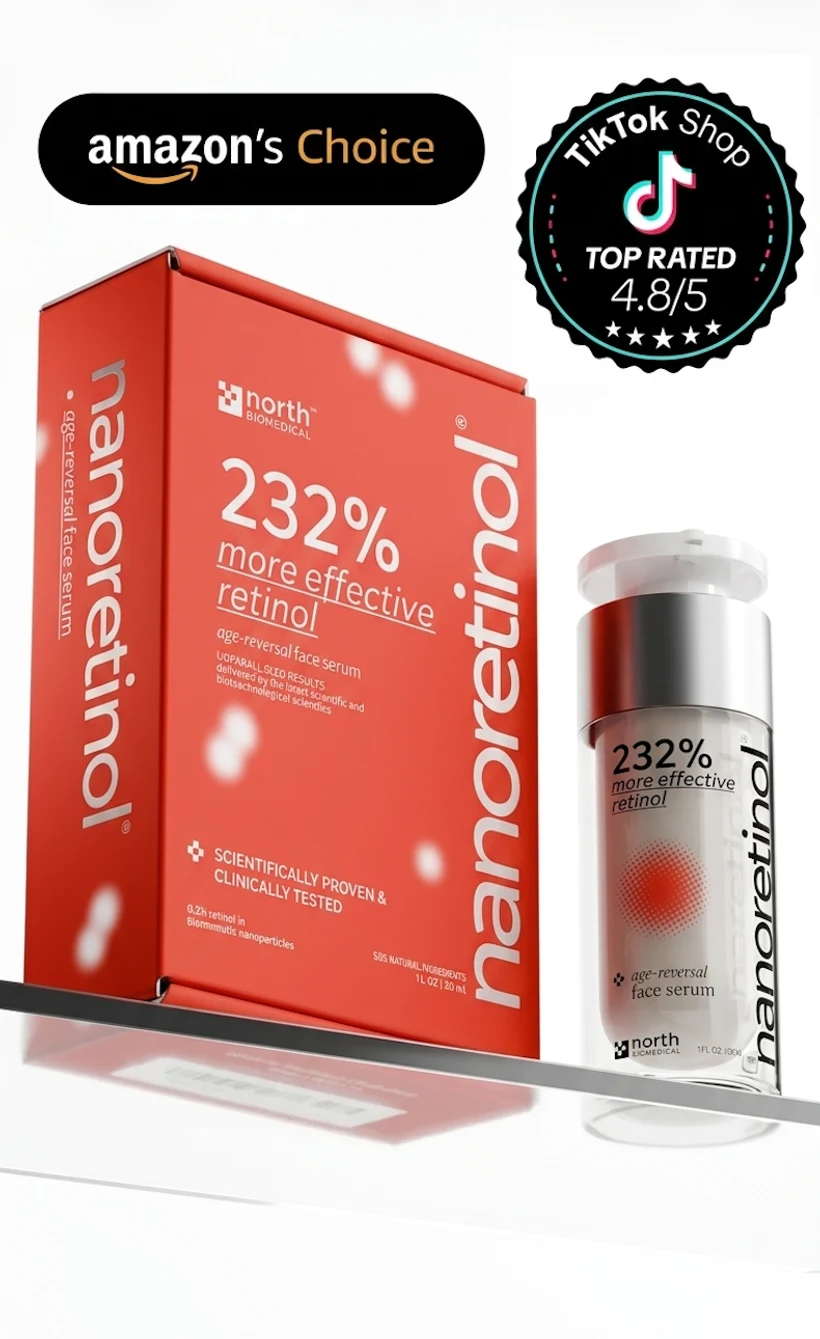
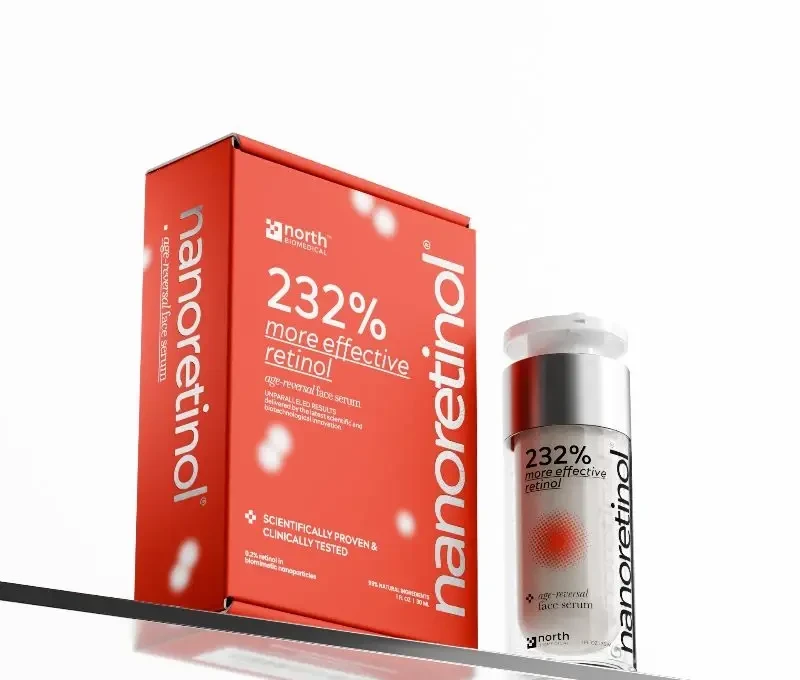
Nanoretinol was built around the delivery question rather than the irritation question. Its 0.2% retinol sits inside biomimetic lipid nanoparticles that are externally identical to skin cells, so the body recognizes them as self and permits passage through the epithelial barrier. Nothing has to be broken open for the active to get in, which is the same nanotechnology principle used in modern drug delivery.
The results reflect that. In North Biomedical’s clinical study, Nanoretinol was 232% more effective than conventional retinol in collagen recovery and 73% more effective in elastin recovery, with drastically reduced cytotoxicity confirmed by assays on cellular health. It is water-based, 99% natural, and gentle enough for sensitive skin and the eye contour. Over 56 days, skin firmness rose 61% and elasticity rose 56%.
When the delivery system stops depending on barrier disruption, the sandwich stops being necessary.
The Verdict on Buffering
The retinol sandwich method works, and the clinical literature supports it more strongly than most techniques that spread by word of mouth. Buffering with moisturizer reduces irritation without the efficacy penalty people fear, and with a ceramide formulation it actively repairs the barrier while the retinoid works.
It is still a workaround. It exists because conventional retinol damages skin on its way in, and the honest long-term answer is a delivery system that never needed the damage to begin with.
References
- Kolli SS, Pecone D, Pona A, Cline A, Feldman SR. “Topical Retinoids in Acne Vulgaris: A Systematic Review.” American Journal of Clinical Dermatology. 2019;20(3):345-365. doi:10.1007/s40257-019-00423-z
- Schorr ES, Sidou F, Kerrouche N. “Adjunctive Use of a Facial Moisturizer SPF 30 Containing Ceramide Precursor Improves Tolerability of Topical Tretinoin 0.05%: A Randomized, Investigator-Blinded, Split-Face Study.” Journal of Drugs in Dermatology. 2012;11(9):1104-1107. PMID: 23135655
- Draelos ZD, Ertel KD, Berge CA. “Facilitating Facial Retinization Through Barrier Improvement.” Cutis. 2006;78(4):275-281. PMID: 17121065
- Kim BH, Lee YS, Kang KS. “The Mechanism of Retinol-Induced Irritation and Its Application to Anti-Irritant Development.” Toxicology Letters. 2003;146(1):65-73. doi:10.1016/j.toxlet.2003.09.001
- Spada F, Harrison IP, Barnes TM, Greive KA, Daniels D, Townley JP, Mostafa N, Fong AT, Tong PL, Shumack S. “A Daily Regimen of a Ceramide-Dominant Moisturizing Cream and Cleanser Restores the Skin Permeability Barrier in Adults With Moderate Eczema: A Randomized Trial.” Dermatologic Therapy. 2021;34(4):e14970. doi:10.1111/dth.14970
- Griffiths CEM, Russman AN, Majmudar G, Singer RS, Hamilton TA, Voorhees JJ. “Restoration of Collagen Formation in Photodamaged Human Skin by Tretinoin (Retinoic Acid).” New England Journal of Medicine. 1993;329(8):530-535. doi:10.1056/NEJM199308193290803
- Narsa AC, Suhandi C, Afidika J, Ghaliya S, Elamin KM, Wathoni N. “A Comprehensive Review of the Strategies to Reduce Retinoid-Induced Skin Irritation in Topical Formulation.” Dermatology Research and Practice. 2024;2024:5551774. doi:10.1155/2024/5551774
- Del Rosso J, Sugarman J, Green L, Lain T, Levy-Hacham O, Mizrahi R, Gold LS. “Efficacy and Safety of Microencapsulated Benzoyl Peroxide and Microencapsulated Tretinoin for the Treatment of Acne Vulgaris: Results From Two Phase 3 Double-Blind, Randomized, Vehicle-Controlled Studies.” Journal of the American Academy of Dermatology. 2023;89(4):719-727. doi:10.1016/j.jaad.2023.05.093