Radiofrequency Skin Tightening: How It Works, At-Home vs In-Office, and What to Expect
The science of heating the dermis to rebuild collagen — and why your nightly routine decides how long the results hold.
The Slow Slide From Firm to Slack
Loose skin rarely arrives overnight. It creeps in: a jawline that blurs, cheeks that feel less plump, crepey skin along the neck and upper arms. The common thread is collagen — or rather, its slow disappearance. Fibroblasts, the cells that manufacture collagen, become less productive with age. When researchers measured collagen output from young versus elderly skin cells, the older cells made significantly less, and the dermal scaffold they maintain grew thinner and more disorganized [1]. Less scaffolding means skin that drapes instead of holding.
Radiofrequency (RF) skin tightening is one of the most popular non-surgical answers to that slide, and the reason is simple: it targets the problem at its source — the collagen-producing dermis — using nothing but controlled heat.
What Radiofrequency Actually Does to Skin
Radiofrequency is a form of electromagnetic energy. When an RF device passes that energy through skin, the tissue’s natural resistance converts it into heat — the same physics that warms a wire when current flows through it. Crucially, RF doesn’t rely on light or pigment the way a laser does, so it works across all skin tones and bypasses the surface to heat the deeper layers directly.
The goal is to raise the temperature of the dermis into a specific window — warm enough to remodel collagen, but not so hot that it burns the surface.
Crucially, RF doesn’t rely on light or pigment the way a laser does, so it works across all skin tones and bypasses the surface to heat the deeper layers directly.
The Two-Step Collagen Trick
Heating the dermis tightens skin in two phases, and understanding both explains why results take time. First comes immediate contraction: when collagen reaches a high enough temperature, its triple-helix structure partially unwinds and the fibers shrink, producing a subtle tightening you may notice within days. Second, and more important, the heat registers as a controlled injury, triggering an inflammatory wound-healing response that drives new collagen synthesis — neocollagenesis — beginning a few weeks later and continuing for months. A review of radiofrequency devices for cutaneous remodeling describes exactly this sequence: immediate collagen denaturation and contraction, followed by long-term neocollagenesis that firms and smooths the skin [2].
What the Research Shows
The histology backs up the theory. In an evidence-based study of radiofrequency facial rejuvenation, treated skin showed a statistically significant increase in collagen types I and III and in newly synthesized collagen, both at the end of treatment and three months later, alongside clear clinical improvement in laxity and wrinkles [3]. Newer fractional RF systems, which deliver energy through ultra-fine pins, produce the same remodeling in a more targeted way: a clinical and histologic evaluation found that the energy heats the superficial and deep dermis to create controlled thermal microwounds, prompting fresh collagen, elastin, and glycosaminoglycan formation in the surrounding tissue [4]. For the version that combines this with microneedling, see our deep dive on Morpheus8.
In-Office vs At-Home Devices
RF comes in two broad flavors. In-office systems — monopolar, bipolar, or fractional RF — use higher energy under professional control and tend to deliver more visible tightening in fewer sessions, though at a higher cost. At-home RF wands are gentler by design, which makes them safe to use without supervision but means results are subtler and depend on consistent, repeated use over months. Neither is a facelift, and neither should be confused with the high frequency facial wand, which shares neither the frequency range nor the heating mechanism; both RF formats work best on mild to moderate laxity. If your concern is significant sagging, an energy device will disappoint where a procedure that removes tissue would not — a distinction we cover in non-surgical skin tightening and how to tighten loose skin.
Whether it costs a thousand dollars in a clinic or two hundred on your bathroom shelf, an RF device shares one limitation: it stimulates collagen, but it cannot stop the decline that made you reach for it.
The Limit of Any Machine
Whether it costs a thousand dollars in a clinic or two hundred on your bathroom shelf, an RF device shares one limitation: it stimulates collagen, but it cannot stop the decline that made you reach for it. The fibroblasts keep aging. UV and inflammation keep breaking the scaffold down. Without something maintaining the signal, the firmness you earn slowly slips away — which is why “a few sessions and done” almost never holds up.
The Nightly Multiplier
This is where the real leverage lives. If RF works by coaxing fibroblasts to build collagen, the smartest move is to keep coaxing them every night — and the most evidence-backed way to do that topically is a retinoid. In a vehicle-controlled study, topical retinol applied to naturally aged skin significantly increased collagen production and improved fine wrinkles versus an inactive control [5]. Retinol and RF push the same lever from different directions, which is why pairing them tends to outperform either alone, as we explain in retinol and collagen.
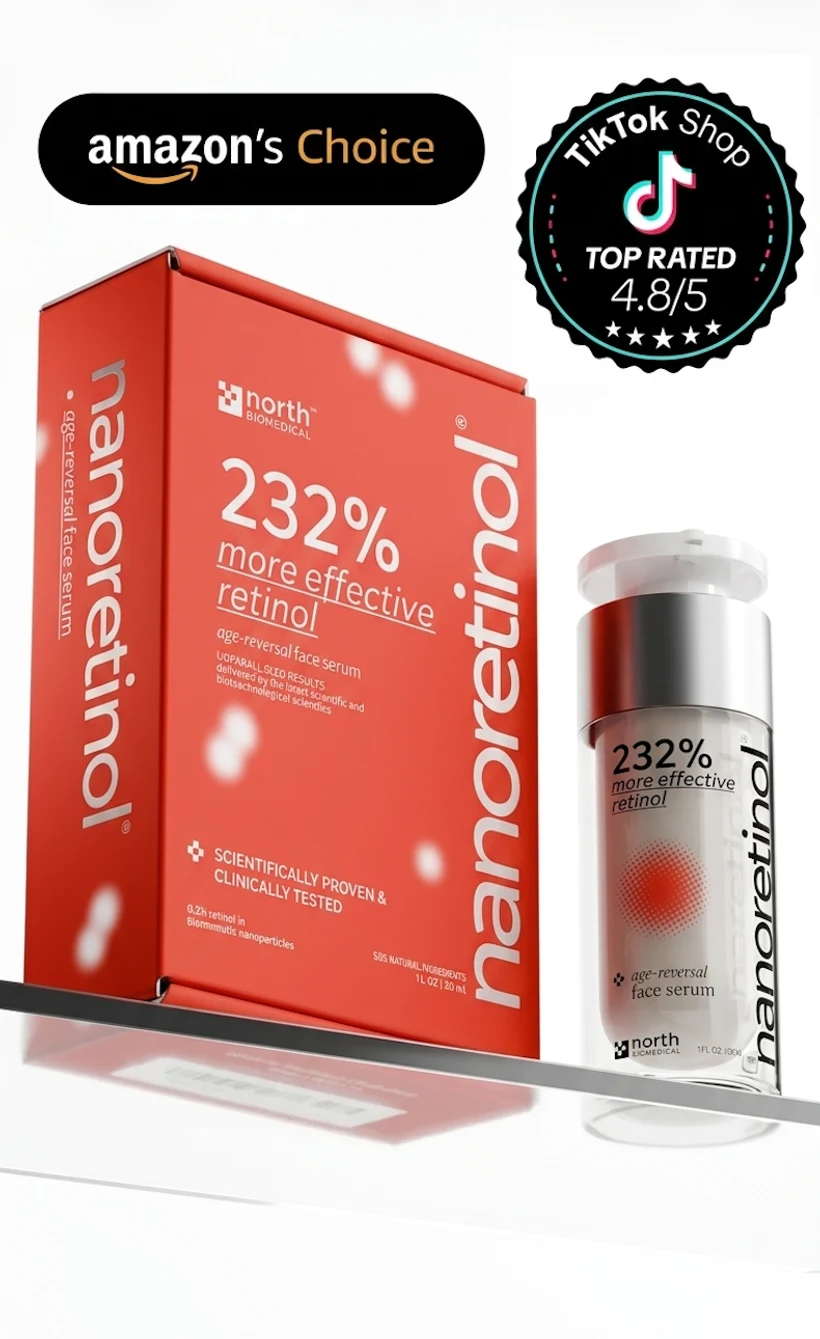
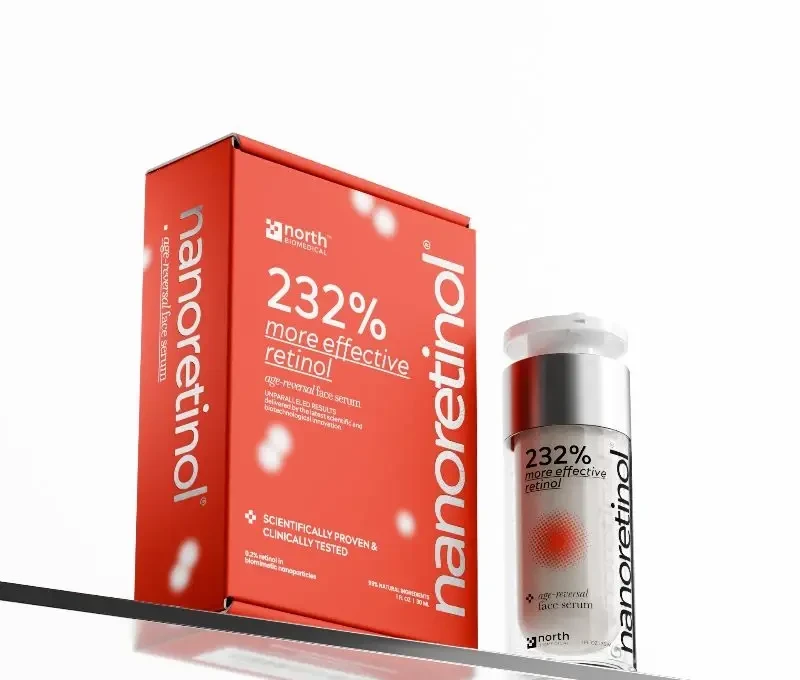
Conventional retinol has one persistent flaw: getting enough of it through the skin barrier without redness and peeling. Nanoretinol was designed to solve that delivery problem by wrapping retinol in biomimetic lipid nanoparticles the skin treats as its own, carrying the active into the dermis without breaking the barrier down. In North Biomedical’s clinical comparison, that system was 232% more effective at collagen recovery and 73% more effective at elastin recovery than conventional retinol, while users recorded a 61% increase in firmness and a 56% increase in elasticity over 56 days [6]. Because the formula is a gentle, water-based 0.2%, it suits the daily, long-term use that lasting RF results quietly depend on.
A radiofrequency device can switch your collagen factory back on. A proven nightly retinoid is what keeps the lights on after the heat fades.
References
- Varani J, Dame MK, Rittié L, Fligiel SEG, Kang S, Fisher GJ, Voorhees JJ. “Decreased Collagen Production in Chronologically Aged Skin: Roles of Age-Dependent Alteration in Fibroblast Function and Defective Mechanical Stimulation.” American Journal of Pathology. 2006;168(6):1861-1868. doi:10.2353/ajpath.2006.051302
- Elsaie ML. “Cutaneous Remodeling and Photorejuvenation Using Radiofrequency Devices.” Indian Journal of Dermatology. 2009;54(3):201-205. doi:10.4103/0019-5154.55625
- El-Domyati M, El-Ammawi TS, Medhat W, et al. “Radiofrequency facial rejuvenation: Evidence-based effect.” Journal of the American Academy of Dermatology. 2011;64(3):524-535. doi:10.1016/j.jaad.2010.06.045
- Kauvar ANB, Gershonowitz A. “Clinical and Histologic Evaluation of a Fractional Radiofrequency Treatment of Wrinkles and Skin Texture With Novel 1-mm Long Ultra-thin Electrode Pins.” Lasers in Surgery and Medicine. 2022;54(1):54-61. doi:10.1002/lsm.23452
- Kafi R, Kwak HS, Schumacher WE, Cho S, Hanft VN, Hamilton TA, King AL, Neal JD, Varani J, Fisher GJ, Voorhees JJ, Kang S. “Improvement of Naturally Aged Skin With Vitamin A (Retinol).” Archives of Dermatology. 2007;143(5):606-612. doi:10.1001/archderm.143.5.606
- North Biomedical LLC. “Nanoretinol vs. Conventional Retinol: Efficacy in Collagen and Elastin Recovery.” Clinical Study Summary, 2024. Study summary